I’m still catching my breath after writing Thursday’s big post on the life of Caroline Clark’s mentor, John G. McKindley. We’ll return to Caroline (Clark) Woodward, and see how her time with McKindley influenced her adult life and work, in just a bit.
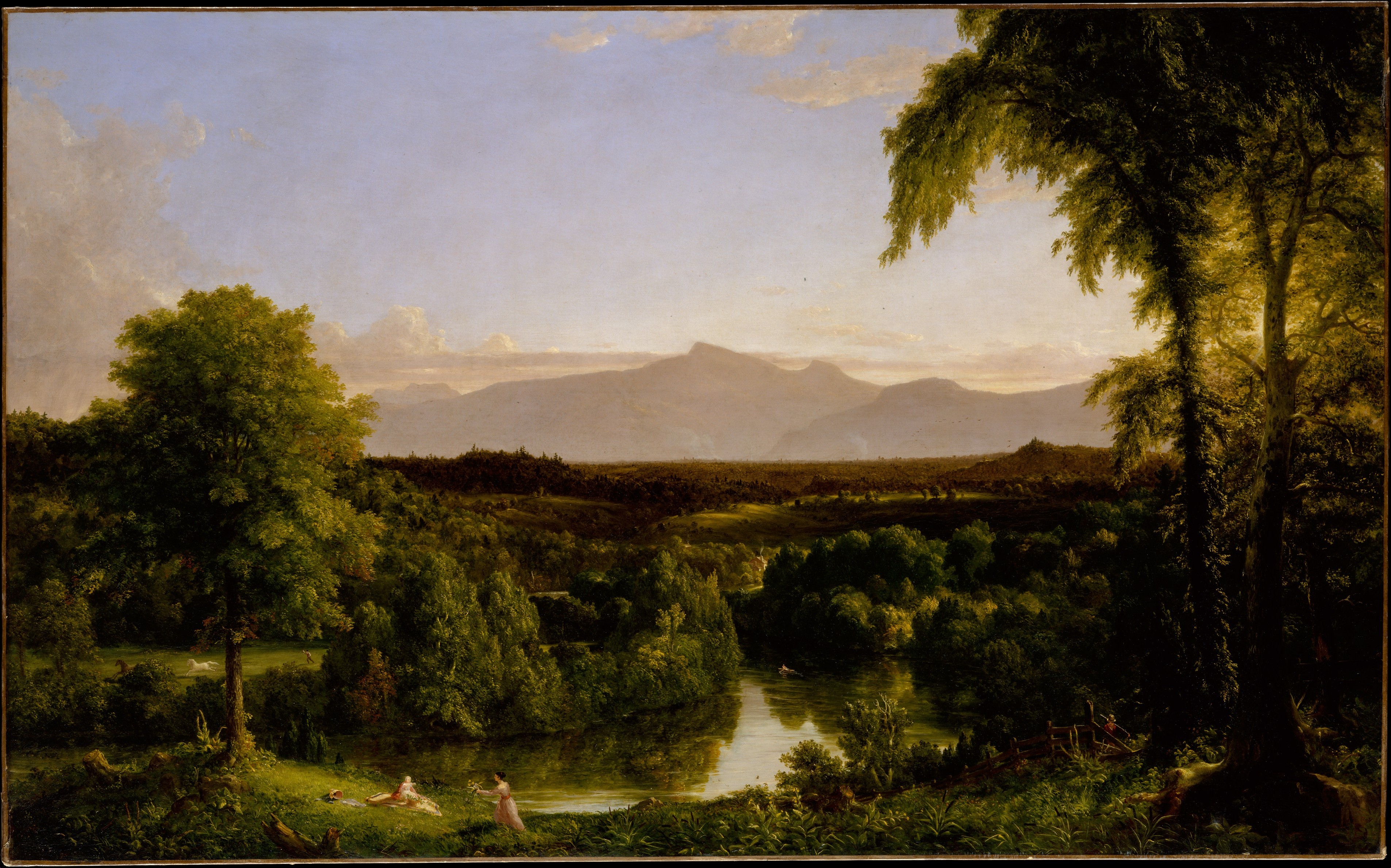
In the meantime, here’s a lovely fall scene that would have looked very familiar to Mary (Turck) Clark’s mother Rachael (Gay) Turck, and to Rachael’s Gay and Van Loon / Van Loan parents and ancestors:
Cole, Thomas, View on the Catskill—Early Autumn, 1836-1837. The Metropolitan Museum of Art, New York, gift in memory of Jonathan Sturges by his children, 1895. Public domain. Click to open larger image in new window.
I’m still sifting through a huge (mostly digital) pile of Caroline M. Clark and William W. Woodward sources and trying to organize them into a series of coherent and interesting posts for you. Sort of like assembling a bunch of hastily-drawn field surveys and turning them into accurate topographical maps or railroad construction plans:
Unknown photographer, W.W. Wright, Chf. Eng. & … Mil. RRds. United States, circa 1861 and 1866. Library of Congress. Click to open larger image in new window.
Caroline (Clark) Woodward, in our first Clark family endorsement!
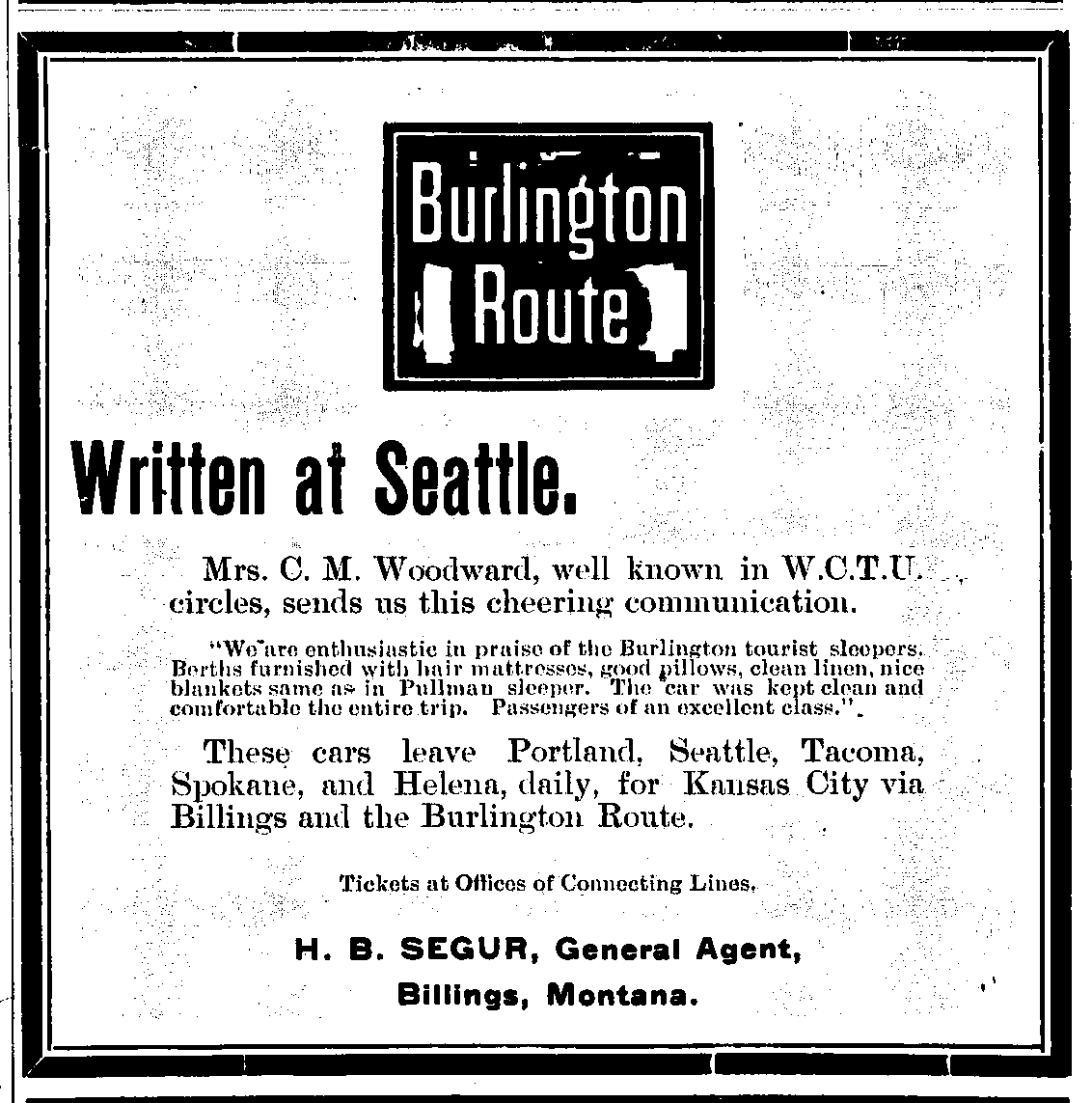
Here’s something new for Clark House Historian: a commercial endorsement from one of Jonathan and Mary Clark’s children! In June, 1900, our own Caroline M. (Clark) Woodward recommended travel on the Burlington Route in this newspaper ad…
Woodward, Caroline in railroad advertisement, Red Lodge Picket, Red Lodge, Montana, June 1, 1900, page 3. Click to open larger image in new window.
Mrs. C. M. Woodward, well known in W.C.T.U. circles sends us this cheering communication.
“We are enthusiastic in praise of the Burlington tourist sleepers. Berths furnished with hair mattresses, good pillows, clean linen, nice blankets, same as in Pullman sleeper. The car was kept clean and comfortable the entire trip. Passengers of an excellent class.”
UPDATED, Oct. 4, 2021, with a few minor edits and to add an additional footnote.
I’m still working on some longer posts; they should be ready soon. Meanwhile, I thought you might enjoy two lovely images, beginning with this nineteenth-century print, a view that would have been very familiar to a surprising number of our early Mequon immigrants:
These days—living and working inside our climate controlled, electrically illuminated spaces—it’s easy to miss nature’s seasonal changes. But you can be sure that our early Clark House residents, friends, and neighbors didn’t miss the start of autumn. Rural life was—and is—centered around the progression of the seasons, and autumn brought new farm and household chores to suit the changing weather and decreasing daylight.
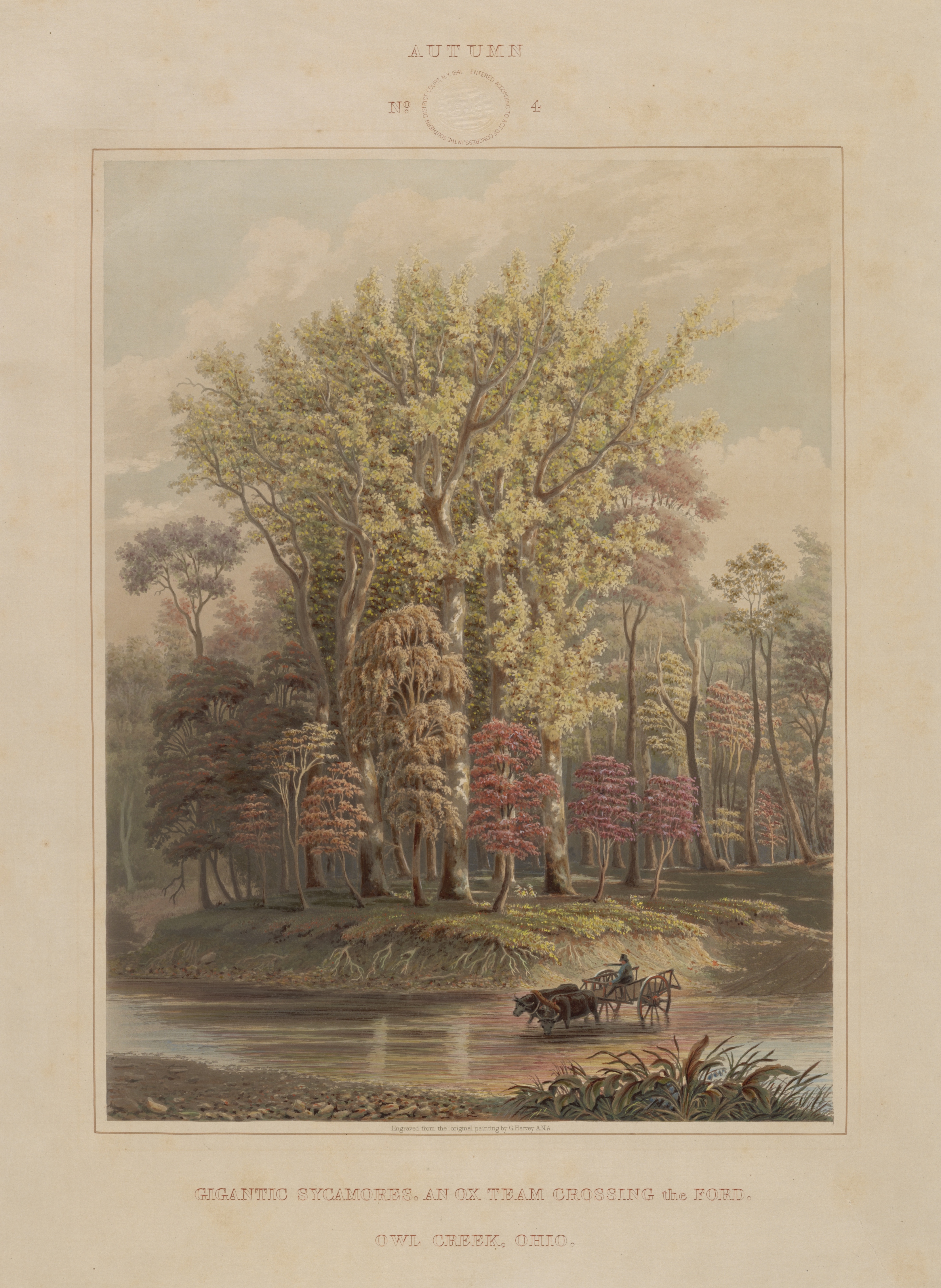
So pile up your haystacks, sharpen and oil your tools before you store them in the barn, fill up the root cellar with food for the next six months or more, and keep chopping firewood for the winter woodpile. It’s time to mark the end of summer and the start of fall with a handsome seasonal image from the Clark’s era:
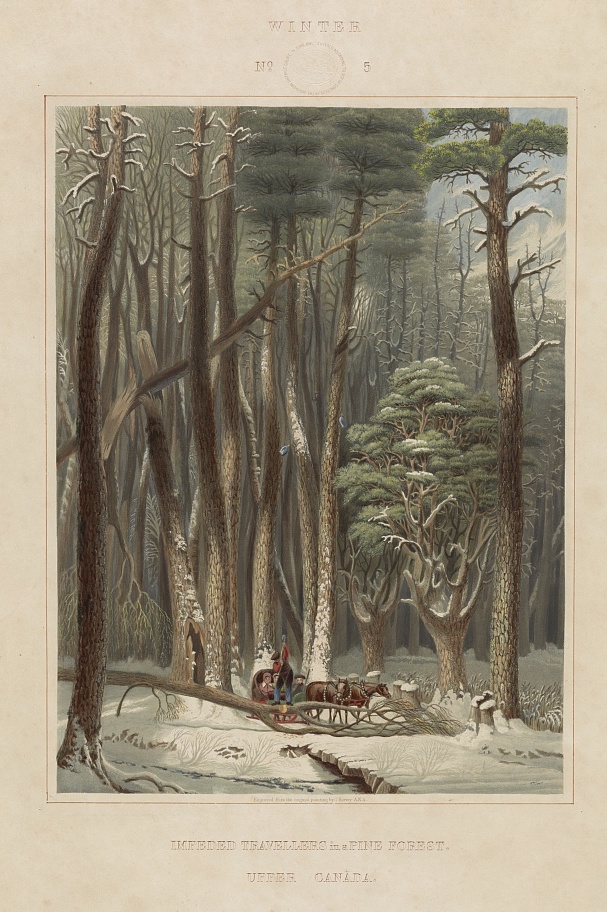
Autumn, No. 4: Gigantic sycamores. An ox team crossing the ford. Owl Creek, Ohio
More on JMC’s path from New York to Fort Howard, 1833
In our post How’d they get here? – JMC to Ft.Howard, 1833., I surmised that new army recruit Jonathan M. Clark mustered in at Ft. Niagara, New York, and then went from there to join his regiment at Fort Howard, Green Bay, Michigan (later Wisconsin) Territory. I’ve since discovered two newspaper items that support that surmise. Here’s one from Spring, 1833, about five months before JMC signed his enlistment papers in Utica, New York:
[Recruits travel from Ft Niagara to Buffalo], dateline Buffalo, May 22, reprinted in [Philadelphia] Daily Chronicle, May 29, 1833, page 3. genealogybank.com. Click image to open image in new window.
On May 22, 1833, ninety fresh U.S. Army recruits marched from the army’s personnel depot at Ft. Niagara to “Tonawanta,” presumably the New York village of Tonawanda, located where Tonawanda Creek, the final stretch of the westbound Erie Canal, meets the Niagara River:
UPDATED, September 17, 2021, to add a few details about the Morrison children, Jennie’s dental practice in the 1880s and ’90s, and the date of her divorce from second husband A. G. Widger.
Due to unforeseen circumstances, I won’t be blogging much this week. (Let’s just say that the cause of my hiatus has inspired today’s post, featuring a brief introduction to the life of the Clarks’ youngest child, Dr. Jennie M. Clark, D.D.S.)
Unknown photographer, [Dentist], daguerreotype with applied color, circa 1855. Smithsonian American Art Museum, Museum purchase from the Charles Isaacs Collection made possible in part by the Luisita L. and Franz H. Denghausen Endowment. CC0. si.edu. Click to open larger image in a new window.
Clark House dentists
I’m not sure who Mequon’s first dentist was, or when he set up shop. It’s entirely likely that the Jonathan Clark family did not visit a dentist until they moved to Milwaukee (and they still may not have seen a dentist once there). But Mequon’s Jonathan Clark House plays an important part in the lives of two Mequon/Milwaukee area dentists.
I had the day off from work yesterday, and spent most of it outside.
Winslow Homer, Making Hay, wood engraving from “Harper’s Weekly”, July 6, 1872, p.529. National Gallery of Art, Gift of Addie Burr Clark. Public domain. Click to open larger image in new window.
Fitz Henry Lane, painter (American, 1804-1865), Becalmed off Halfway Rock, 1860, oil on canvas, National Gallery of Art, Collection of Mr. and Mrs. Paul Mellon, in Honor of the 50th Anniversary of the National Gallery of Art. Public Domain. Click to open larger image in new window.
Previously, we turned our thoughts to the historic city of New Orleans, and the disastrous impact of then-ongoing Hurricane Ida. Once again the Crescent City was hit by a major hurricane. Ida has since moved on and lessened in intensity, but leaves in its wake significant wind and water damage; over one million Louisiana residents are currently without electricity, gasoline, and fresh water, and it looks like it will take weeks to restore services. We wish a speedy recovery for all those in the affected areas.
I have a more-than-passing interest in New Orleans because our Clark House family has ties to the city; Mary (Turck) Clark’s brother, Joseph Robert Turck (1823-1902), spent most of his adult life there.
New Orleans, Louisiana Sugar and Rice Exchange, c. 1891. Source and credits, below (note 1). Click to open larger image in new window.
Joseph R. Turck
Like his big sister Mary, Joseph R. Turck was born in Athens, Greene county, New York. He was about five years old when the family moved to Wayne county, New York, and about fourteen years old when the family migrated west to Mequon in 1837.
In February, 1845, Joseph purchased 40 acres of his father Peter Turck’s Mequon land.2 Joseph did not keep it long; he sold it back to his father in September of the same year. What happened next? We’re not sure. But by 1848 Joseph had left Wisconsin and relocated to New Orleans.