…against a swirling torrent of potentially Clark-related Lower Canada land grant documents. Progress is slower than expected. I’ll be back soon (I hope!) with some interesting results. Wish me luck.
And on a completely different subject, I wish a hearty Shana tova! to all my readers celebrating the start of Rosh Hashanah tonight.
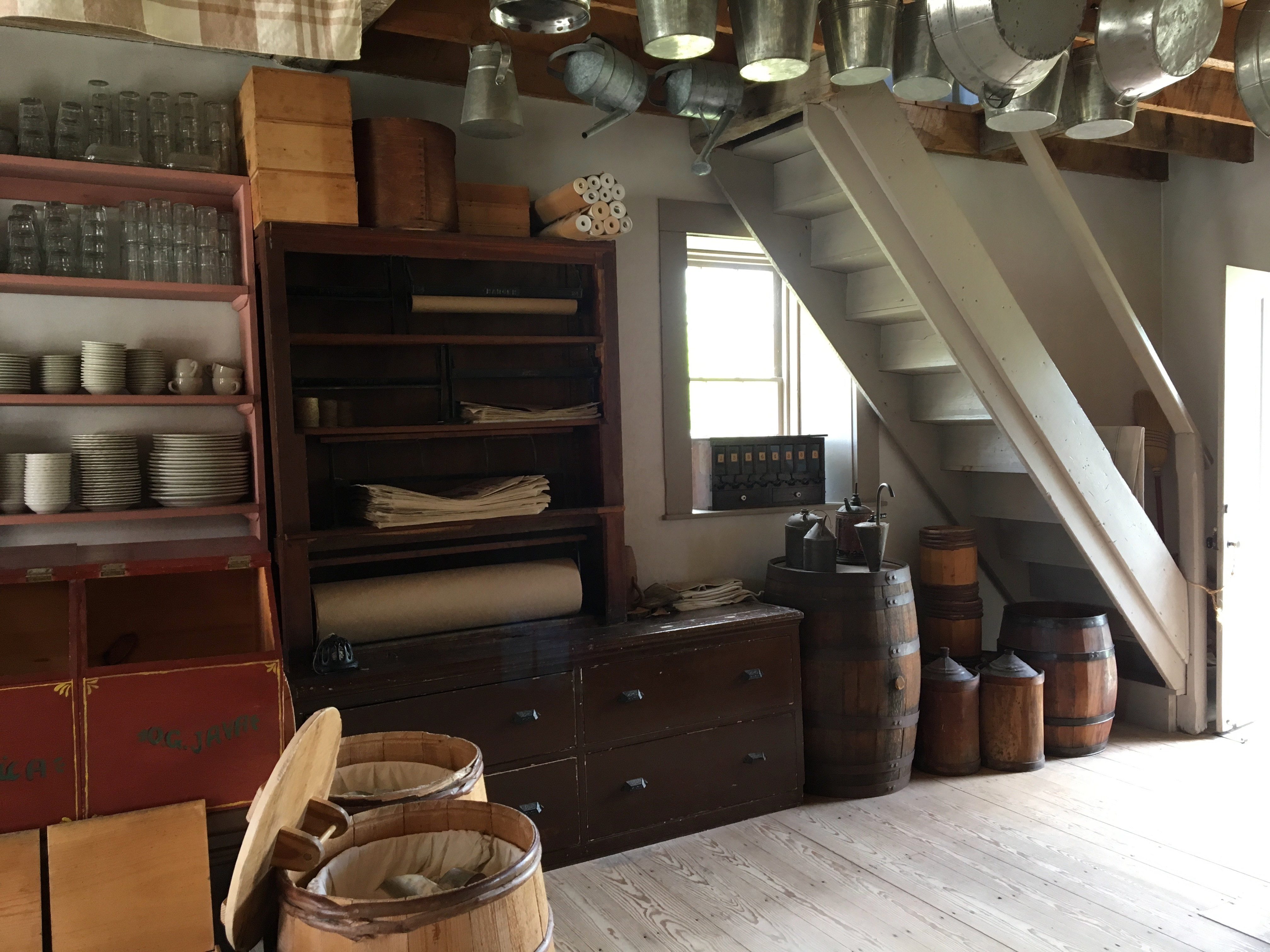
Even thought it’s Labor Day, the holiday celebrating the working men and women of our nation, I’ll be at work, back at our local mercantile establishment. You know, a store kind of like this one, stocked with just about anything you need for modern living:
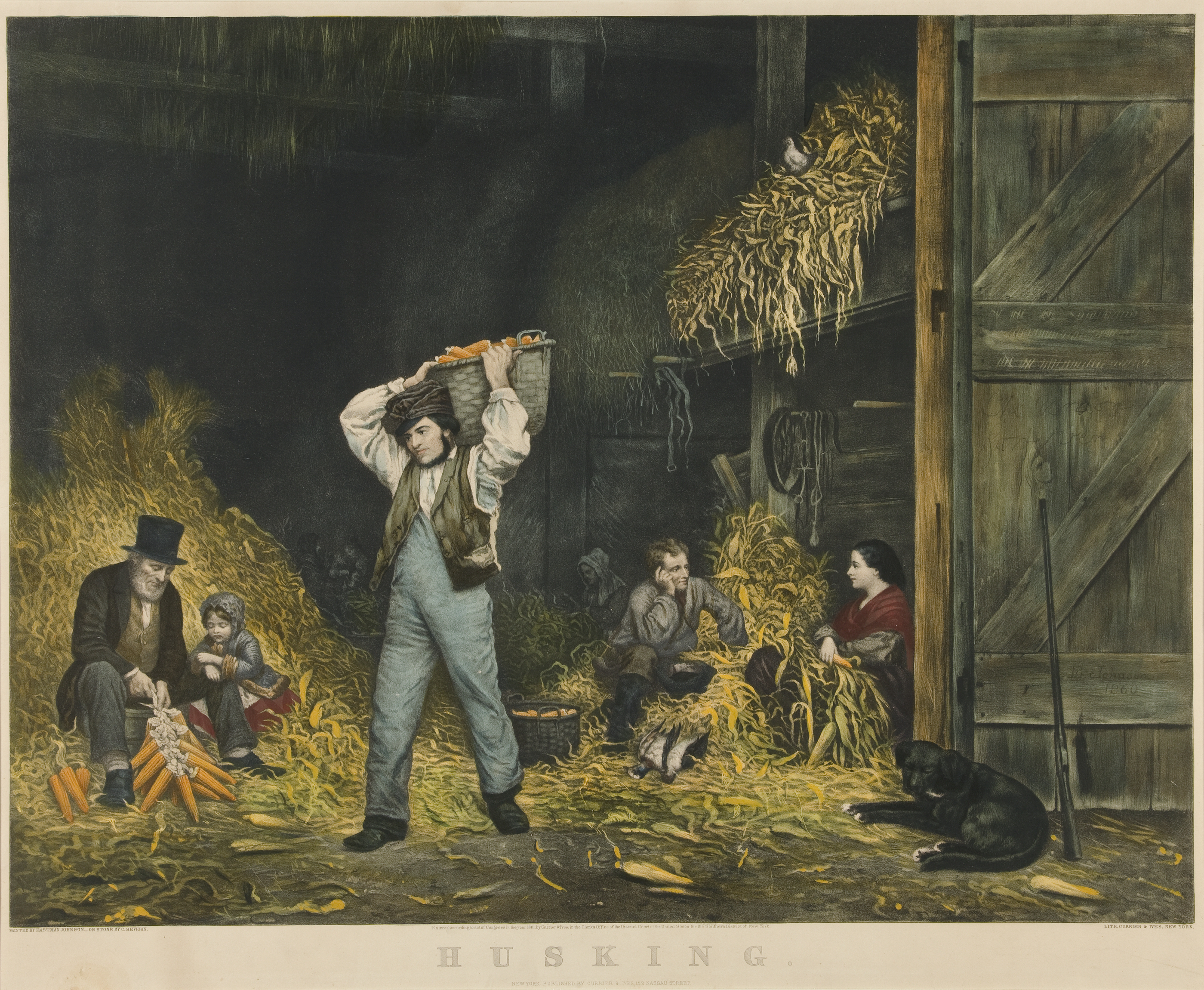
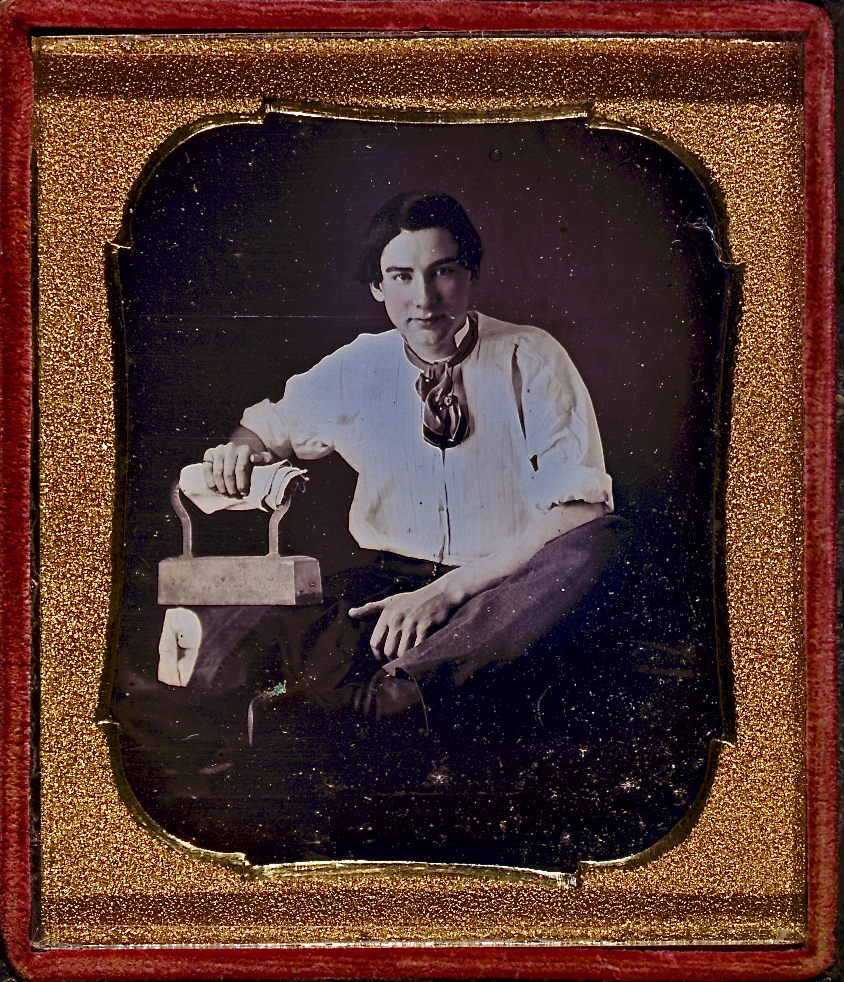
I don’t have the day off, and won’t be marching in a parade, but I’d still like to honor the holiday and salute the American worker, past and present. With that in mind, let’s revisit some of the nineteenth-century occupations we’ve talked about previously at Clark House Historian, highlighting a few of the many skills, trades, and occupations common during the Clark House era.
Since it is a holiday, I’m not going to add much commentary today. Enjoy the photos, and click the links to visit the original CHH posts with lots more information about the different skills and jobs, and for full image credits.
I was hoping to have a Monday: Map Day! post up for you yesterday as the opening item in a series of posts focused on new—or reevaluated—evidence from our continuing search for Jonathan M. Clark’s still-mysterious roots in northern Vermont and/or southern Québec. As you can tell, that didn’t happen. Instead, I spent some time ironing out a few wrinkles on the blog…
This is an expanded—and lavishly illustrated—version of a piece that first appeared in the Summer | August 2023 edition of the Jonathan Clark House Newsletter. I hope you enjoy the extra information, images, and the vintage writing tips. UPDATED: August 27, 2023, to clarify provenance of Robert Beveridge’s writing desk.
One of the ways we collect, preserve and share the history of the Jonathan Clark House and the early settlers of Mequon and Thiensville is by acquiring and interpreting furniture, tools, clothing, and various accessories that would have been familiar to the Clarks and their neighbors. One particularly fine item in our collection is this box, a treasured heirloom generously donated to the Clark House collection by JCH Friend Frederick Bock.
Photo courtesy of Tom Gifford (2023)
When closed it measures about 16 x 6 x 10 inches. It is made of wood, stained a rich golden brown. On the top is a brass plaque inscribed Rt.[Robert] Beveridge / 1854. And there’s a lock on the front. Why is that?
A late-summer look at Clark House Historian news and upcoming posts…
First, a few stats…
I missed publishing my annual review of CHH stats on the blog’s seventh (!) anniversary last March. But here are a few numbers for those of you keeping score at home, beginning with this year’s (incomplete) numbers, as of August 20, 2023:
• Number of visitors, 2023: 2,262 • Number of views, 2023: 4,660 • Number of posts, 2023: 38 • Number of words, 2023: 50.5K
For comparison, here are the numbers for all of last year: • Number of visitors, 2022: 2,424 • Number of views, 2022: 5,523 • Number of posts, 2022: 62 • Number of words, 2022: 68.2K
The blog’s all-time outreach on behalf of the Jonathan Clark House Museum (as of Aug.20, 2023), includes: • Number of visitors, all time: 8,985 • Number of views, all time: 26,819 • Number of posts, all time: 361 • Number of words, all time: circa 382K • Subscribers: 49
Full disclosure: In addition to sharing Clark House history with you all, I use the blog as a searchable archive of the facts, analyses, and images that I find or create during my work as Clark House Historian. I often search for and refer to previous blog posts as I prepare new posts and other work. So take the “visitor” and “views” stats with a grain of salt, and assume that at least a certain number of visits to the various blog posts are mine.
A bit of a ‘”Bonniwell break”…
I was at the Friends of the Clark House annual meeting back in January, 2022, and I overheard Clark House director Nina J. Look mention a little research project focused on the youngest—and least documented—member of the Mequon’s pioneer Bonniwell family: Clark House neighbor and brother-in-law, Alfred T. Bonniwell. I volunteered to help with a “short series” of related blog posts. After all, when I began this project, I had fewer than a dozen records documenting Alfred’s life. How long could a quick survey of those take? A month or so, at most?
Here’s the Summer | August, 2023 edition of the Jonathan Clark House Museum newsletter. It’s filled with Clark House news, notices of upcoming events, and recaps and photos of a variety of summer happenings. Click the image below to view and/or download your own PDF copy of the complete newsletter.
Thanks to all involved in producing a summer full of Jonathan Clark House activities, especially museum director Nina J. Look and our wonderful crew of docents, volunteers and board members. And a tip of the hat to Nina (and our savvy graphic designer, Shayla Krantz) for this latest edition of the newsletter.
Almost three weeks remain until Labor Day marks the unofficial end of summer, and already many Wisconsin families are preparing for the new school year. “Back to School” promotions and special merchandise can be found in many local, chain, and online retailers. The history of “Back to School” as a marketing theme in the U.S. is obscure, but from what I’ve observed, it seems very much a post-World War II phenomenon.
With our current the focus on three-ring binders, zippered pencil cases, and boxes of 64 Crayolas (with the built-in sharpener!), have you ever wondered what kind of school or office supplies might have been necessary or useful for Jonathan and Mary Clark, their children, and their neighbors? Just for fun, here are just two of the many informative advertisements from the columns of the local papers, in this case the [Milwaukee] Daily Free Democrat, November 2, 1850, page 4:
Your local book & stationery shop
Milwaukee book & stationery retailer Rood & Whittemore had a fine selection of supplies for the scholar, letter writer, or professional man or woman of 1850:
Something for everyone, including the “country traders” and teachers that often served as buyers and distributors of school textbooks for their rural areas. For their efforts, the traders and teachers received “liberal terms,” presumably some sort of discount (for cash accounts, of course), from Rood & Whittemore.
And as you might expect, even from its earliest days Milwaukee was not a one-store town. In the words of the immortal Ron Popiel…
Sorry for the lack of blog posts lately. My week began with several days devoted to an unexpected and very stressful issue that has now been resolved (or, at least, much improved) and I am researching and writing once again.
I’ll have more history for you here presently, and I have a brief but interesting piece coming up shortly in the next Jonathan Clark House newsletter. What’s that about? Let’s just say that something in today’s portrait of a rather posh Philadelphia silversmith is more relevant to the Clarks’ era—and the Jonathan Clark House Museum collection—than you might think.
I’m still thinning out my backlog of Bonniwell-related documents that currently crowd my computer desktop. Today’s post includes some multimedia links, too. I hope you enjoy them.
A long, narrow, disagreeable, ill-built town…
Unlike the glowing prose of the description of Chatham we discussed earlier in Bonniwell background: Chatham, Kent 1832, not everyone was impressed by the Bonniwell’s home town, at least not in the late-1700s. For example, Edward Hasted (1732-1812), in his monumental History and Topographical Survey of the County of Kent (second edition, vol. 4, Canterbury, 1798, pp. 191-226) had this to say:
THE TOWN OF CHATHAM, the greatest part of which has been built since the reign of queen Elizabeth, adjoins to that of Rochester, which, with Stroud [sic, Strood], makes one long street of more than two miles in length, of which Chatham is one, being commonly called the Three Towns, through which the high road leads from London to Dover, as above mentioned.
It is situated close to the bank of the Medway for about half a mile, after which the river leaving the town flows north-north east. It is like most sea ports, a long, narrow, disagreeable, ill-built town, the houses in general occupied by those trades adapted to the commerce of the shipping and seafaring persons, the Victualling-office, and the two breweries, and one or two more houses, being the only tolerable built houses in it.
The 12 volumes of the second edition of Hasted’s complete magnum opus have been digitized and made available at British History Online. The quoted bits above are a brief excerpt from Hasted’s almost 9,000 words devoted to the parish history of Chatham. Click the link for online access, or download a PDF copy here.
I discovered Hasted’s sour appraisal of 1798 Chatham while watching an interesting YouTube video devoted to the history of two major disasters that befell the town—and our Bonniwell and Hills families—in the early 1800s: