Labor Day – a photo essay

UPDATE: This was supposed to go out on Monday. I hit “publish” before the piece was ready. Here’s the updated 2025 version for your reading enjoyment. Sorry for any confusion (and, for you CHH subscribers, the premature email in your inbox).

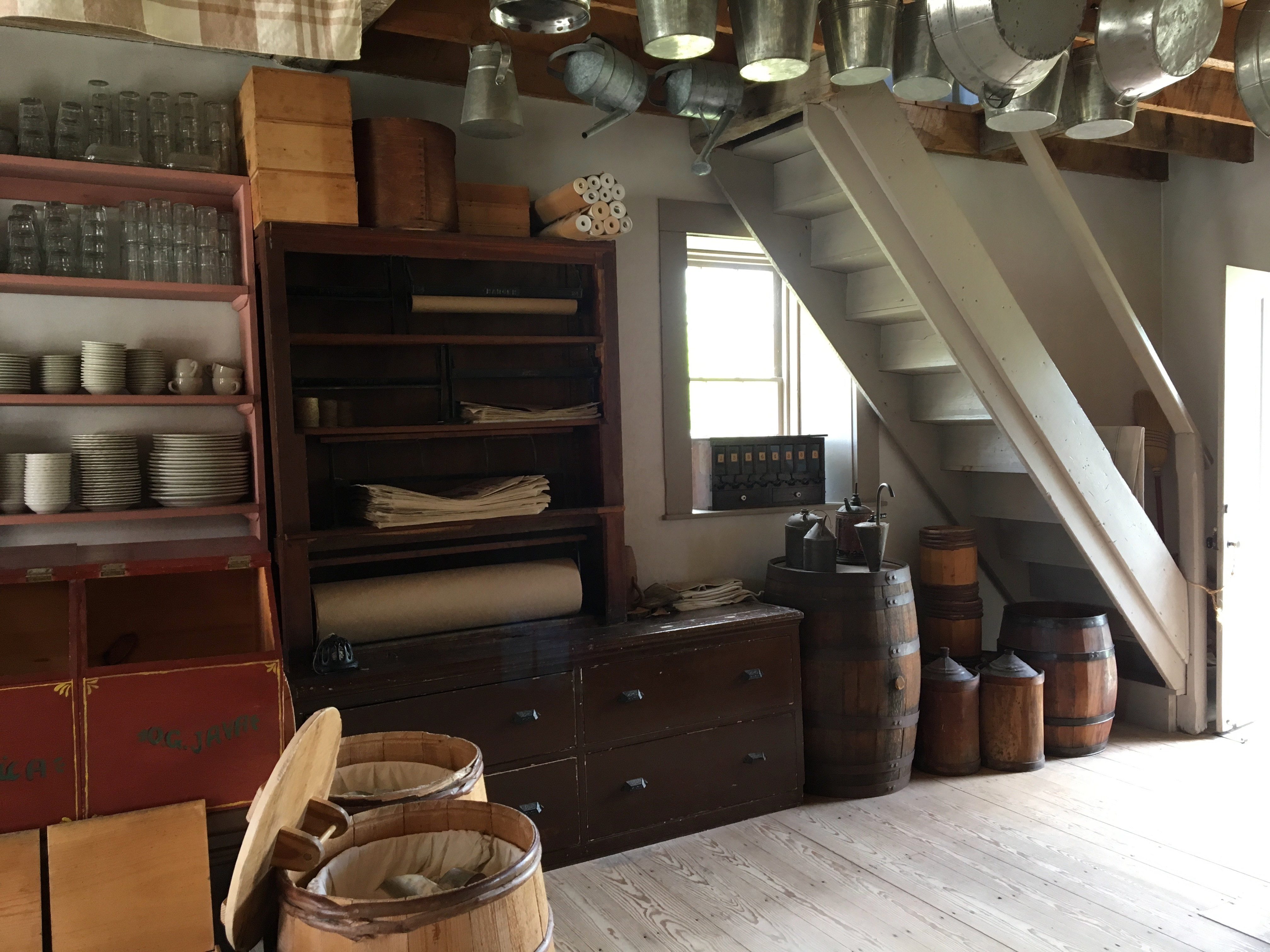
Monday, September 1st, is Labor Day, the holiday celebrating the working men and women of our nation, and I thought I’d commemorate the day with a lightly-revised re-post of this CHH piece from 2023. This Labor Day, as in 2023, I have to work a shift at our local mercantile establishment. You know, a store kind of like this one, only much bigger, stocked with just about anything you need for modern living:

Like many Americans, I don’t have the day “off” on Monday, and won’t be marching in a parade, but I’d still like to honor the holiday and salute the American worker, past and present. With that in mind, let’s revisit some of the nineteenth-century occupations we’ve talked about previously at Clark House Historian, highlighting a few of the many skills, trades, and occupations common during the Clark House era.

Since it is a holiday, I’m not going to add long commentaries to each photo. Enjoy the photo galleries, and be sure to click each gallery—and photo—to open and peruse larger versions of each image. And click the highlighted links to visit the original CHH posts, filled with lots more information about the different skills, tools, and jobs, and the full image credits.

Continue reading

Memorial Day, 2025

Lest We Forget

Our annual Memorial Day post, first published in 2020, more relevant with each passing year.

Graves of Unknown Union Soldiers, Memphis National Cemetery, photo by Clayton B. Fraser, (Library of Congress), public domain. Memphis National Cemetery is the final resting place of Mequon’s Watson Peter Woodworth, and almost 14,000 of his Union Army comrades.

Today is the day our nation officially observes Memorial Day. For many Americans, Memorial Day represents “the first day of summer,” and is traditionally celebrated with trips to the lake, picnics, parades, and sales on cars, appliances, and other consumer goods.

But for many of us, Memorial Day remains rooted in its origins as Decoration Day. The first national observance was in 1868, when retired general John A. Logan, commander and chief of the Grand Army of the Republic—the Union veterans’ organization—issued his General Order Number 11, designating May 30 as a memorial day “for the purpose of strewing with flowers or otherwise decorating the graves of comrades who died in defense of their country during the late rebellion, and whose bodies now lie in almost every city, village, and hamlet churchyard in the land.”

On this Memorial Day, let’s take a moment to remember what this day truly represents.

Continue reading

The Clarks, a family of readers…

Some of our recent and upcoming posts are focused on reading and evaluating source materials. The first of these posts, JCH Sources, part 1, was illustrated with this drawing…

Whistler, James McNeill, artist, Reading by Lamplight, etching and drypoint, 1859. MetMuseum. Bequest of Julia H. Manges, in memory of her husband, Dr. Morris Manges, 1960

This is James McNeill Whistler’s 1859 Reading by lamplight, an evocative drawing of a young woman, reading by the light of an oil lamp, a cup of tea at her side. The lamp is supported on a tall, slender metal stand. It’s light is raised even further by placing the lamp stand on a large, overturned bowl.

If I didn’t know better, I’d think this was Caroline Clark, or one of her other well-read sisters. Caroline would have been about 19 years old in 1859, when Whistler made this drawing. She was in the middle of her pioneering two-year high school course in Milwaukee, a talented, energetic young woman on the way to living a remarkable life of service. Here she is circa 1889-1900, around age 50, in the prime of life:

Continue reading

Christmas-Tide: an 1860s Turck family tale

A True Story! from an unexpected source

Christmas is here, and I thought you might enjoy a repeat of this seasonal Turck family anecdote, “a true story,” as related in the pages of Correct English magazine, written, edited and published by Mequon pioneer Peter Turck’s granddaughter—and Mary (Turck) Clark’s niece—Josephine Turck Baker, and later collected with other similar tales and published as a book, Correct English in the Home, Chicago, 1909.

In the foreword to her book, the author explains:

When I was a little girl, like most children, I was very fond of listening to stories; but unlike most children, I did not care for fairy tales, my first question invariably being, ” IS IT A TRUE STORY?” I don’t want a “once upon a time” story.

This is a true story. The children, their names, the incidents narrated, are all true. Beatrice, Roschen, and the “Boitie,” are my children […]


For those who like really true stories of really true people with really true names, this little book is written. That it may instruct and entertain all readers, both little and big, young and grown up, is the earnest wish of


Yours for Correct English,
Josephine Turck Baker

Our Protagonists

Photo credits and dates: see notes below. Click gallery for larger images

Continue reading

Organizing…

It’s been several weeks of seemingly endless organizing at my house. A useful and productive time, perhaps, spent sorting, reading, and filing paperwork, updating the household accounts, and getting ready to host our family’s Thanksgiving celebration. But not much time or energy for writing Clark House Historian posts. So in lieu of a new post, I thought you might enjoy an expanded reprise of this piece, first published here in March, 2022.

The need to sort, repair and organize is not limited to our era. I suspect the Clarks, Turcks, Bonniwells—and their neighbors—spent a good bit of time trying to catch up with their 19th-century chores, like this fellow, at work in his barn…

Guy, Seymour Joseph (1824–1910), Utilizing a Spare Moment, oil on canvas, c. 1860-1870. Yale University Art Gallery, public domain (CC0 1.0). Click to open larger image in new window.

Today’s image is an original oil painting from about 1860-1870, by the American artist Seymour Joseph Guy (1824-1910). It comes to us courtesy of the Yale University Art Gallery. The Yale curators had this to say about the work:

Continue reading

Labor Day – a photo essay

Today is Labor Day, the holiday celebrating the working men and women of our nation, and I thought I’d commemorate the day with a lightly-revised re-post of this piece from 2023.

This Labor Day, I’ll be at home, working on my upcoming lectures for the state DAR and the Cedarburg History Museum. Last year, I had to work at our local mercantile establishment. You know, a store kind of like this one, only much bigger, stocked with just about anything you need for modern living:

I don’t really have the day “off” today—too much writing to do—and won’t be marching in a parade, but I’d still like to honor the holiday and salute the American worker, past and present. With that in mind, let’s revisit some of the nineteenth-century occupations we’ve talked about previously at Clark House Historian, highlighting a few of the many skills, trades, and occupations common during the Clark House era.

Since it is a holiday, I’m not going to add long commentaries to each photo. Enjoy the photo galleries, and click each gallery to open larger versions of each image. And click the highlighted links to visit the original CHH posts, filled with lots more information about the different skills, tools, and jobs, and the full image credits.

Continue reading

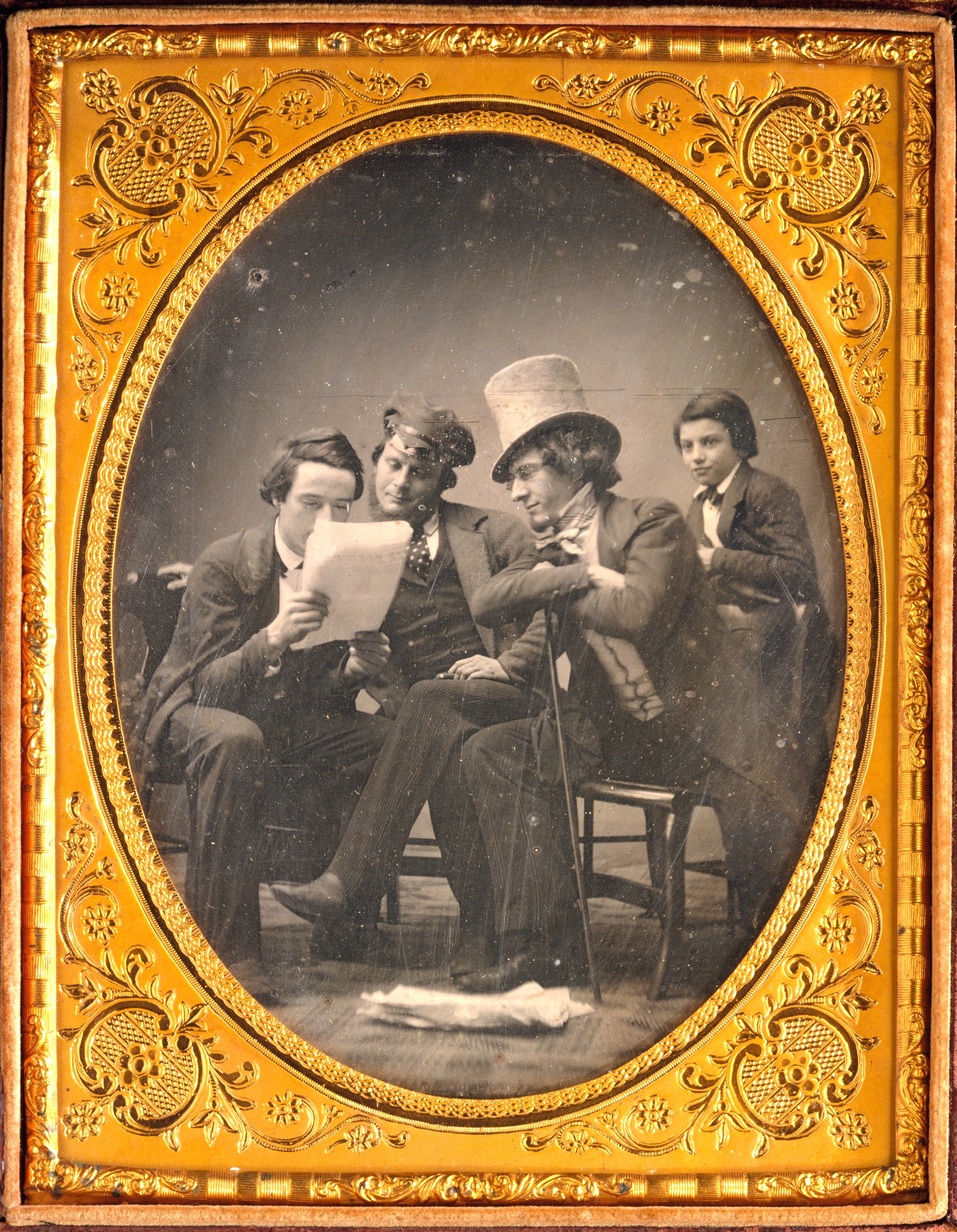
“Point-and-shoot” camera – Civil War style

Technology keeps evolving. Today, if you want to record an image of something interesting, all you have to do is reach in your pocket, whip out your phone, and click. In a instant, you can have a high-resolution, full-color photograph and share it with the world via the internet. Making photographs has never been faster or easier. This was not always the case.

In the earliest days of photography, from about 1839-1860, the predominant technology was the Daguerreotype. It was a brilliant development, but required a good supply of natural light as well as special techniques, cameras, chemicals, and long, motionless poses by the photographer’s subjects. With all those requirements, most photographers made their Daguerreotypes indoors, in improvised or designed-for-purpose studios.

But by the time of the American Civil War, 1861-1865, there were other photographic techniques, including albumen silver prints and tintype photographs that were less expensive and permitted the use of shorter exposure times and lighter and “more portable” equipment, such as this:

Continue reading

Memorial Day, 2024

Lest We Forget

Our annual Memorial Day post, first published in 2020. Updated for 2024 with new information about the Civil War service of Isham and Emily (Bigelow) Day’s eldest child, Cpl. James Lemon Day (1834-1863).

Graves of Unknown Union Soldiers, Memphis National Cemetery, photo by Clayton B. Fraser, (Library of Congress), public domain. Memphis National Cemetery is the final resting place of Mequon’s Watson Peter Woodworth, and almost 14,000 of his Union Army comrades.

Today is the day our nation officially observes Memorial Day. For many Americans, Memorial Day represents “the first day of summer,” and is traditionally celebrated with trips to the lake, picnics, parades, and sales on cars, appliances, and other consumer goods.

But for many of us, Memorial Day remains rooted in its origins as Decoration Day. The first national observance was in 1868, when retired general John A. Logan, commander and chief of the Grand Army of the Republic—the Union veterans’ organization—issued his General Order Number 11, designating May 30 as a memorial day “for the purpose of strewing with flowers or otherwise decorating the graves of comrades who died in defense of their country during the late rebellion, and whose bodies now lie in almost every city, village, and hamlet churchyard in the land.”

On this Memorial Day, let’s take a moment to remember what this day truly represents.

Continue reading

Trouble with the wireless

Sorry for the “radio silence” lately. I’ve been occupied with a number of tasks on- and off-line and then, early last morning, we had a big thunderstorm, and it seems that one or more of the storm’s lightning strikes managed to fry our family’s wi-fi modem-router. Imagine that. No internet! How does a blogger cope?

The cold realization of an off-line Monday was followed by the prospect of what lay ahead: going to my day job (meh), and then, after work, needing to choose and purchase a new modem-router (not too bad, perhaps) and then having to spend hours trying to follow the inevitable—and laughably & misleadingly-labeled—”few easy steps” to set up the new Wi-Fi hub and connect it to our existing internet service and other devices (I’ve done this before and, frankly, I’d rather visit the dentist).

What to do?

Continue reading