This blog, Clark House Historian, published its first post 10 years ago today! (And just to be clear, the Clark House Historian blog is ten years old today. Reed Perkins, the Jonathan M. Clark House historian and author of the blog is, alas, a good deal older…)
Time to celebrate!
Our first post was a modest, two-paragraph “welcome” post, reproduced—in its entirety—below:
In our previous post, we were introduced to the Desmond family, early Irish immigrants to old Washington/Ozaukee county and neighbors of Jonathan and Mary Clark. To our good fortune, one of the Desmond sons, Humphrey Desmond, wrote a memoir of his father Thomas that includes some unique family genealogy and tales of pioneer days in our area.
If you missed Part 1, I suggest you go ahead and read that post first. Then return here to continue with Part 2 of selections from A Memoir of Thomas Desmond, with a chapter on The Desmond Genealogy, by Humphrey J. Desmond, 77 pages, Milwaukee, 1905. And remember: you can read the complete memoir at this link, which is a part of the admirably organized and comprehensive online genealogy project The Desmond Archives.
Pioneer Days
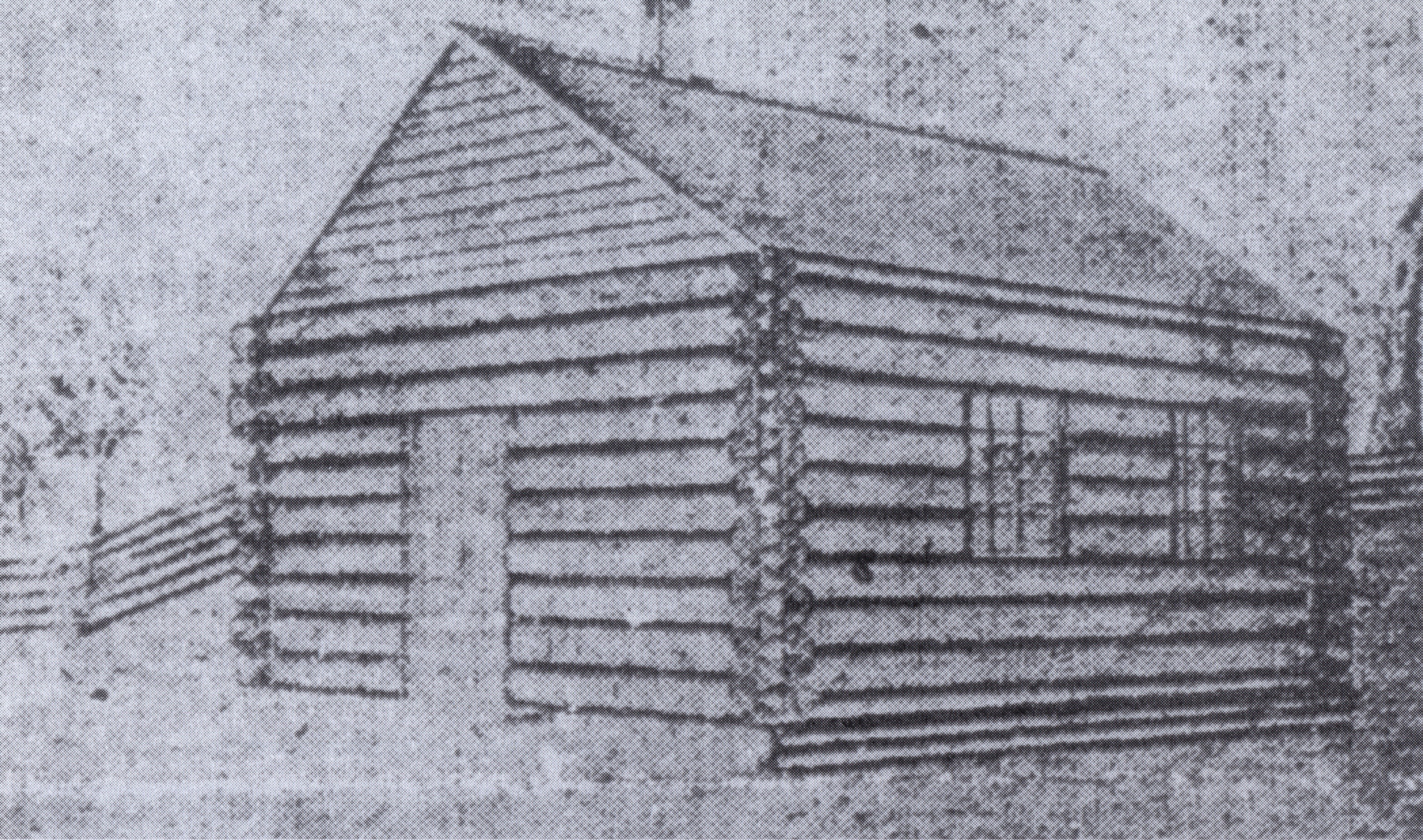
Chapter 3 of Desmond’s memoir will be of particular interest to CHH readers. It relates various early Mequon events, some involving the Desmond family’s Catholic faith, their Bonniwell neighbors, and the local school that the Bonniwells helped build in the early 1840s. That first “Bonniwell School,” located less than a mile west of the Jonathan Clark house on what is now the southeast corner of Bonniwell and Wauwatosa roads in Mequon, was sketched in 1864 by Evander Bonniwell. The sketch (above) is reproduced here from page 71 of George B. Bonniwell’s comprehensive family history, The Bonniwells: 1000 Years. (Used by permission.)
[31]        III.   PIONEER DAYS

THE "hazard of new fortunes" undertaken by the Desmond family involved the clearing away of woods with the ax of the pioneer and the building of a commodious log house.
    The pioneers of this neighborhood were the Bonniwell brothers, who had settled there about 1835 [sic, 1839], and it was known as the Bonniwell settlement.
    Indians still roamed the forests of southeastern Wisconsin in 1843. My [32] father, then ten years old, alone in the house one day, was visited by a brave to whom he gave a large loaf of bread. The Indian loosened his belt as he ate the loaf, and when it was all gone departed peaceably on his journey.
    There was a log school house to which my father went. Books were not plentiful in those days. He studied his spelling lesson during the noon hour from the book of a desk mate. He had to start at the foot of the class, but one day he got to the head and kept his place.
We’re having some very cold weather this weekend, not unusual for Wisconsin in mid-winter. But it got me thinking, wondering what sort of winter weather did the Clarks and Turcks and Bonniwells experience, and what effect the did the cold have on their daily lives?
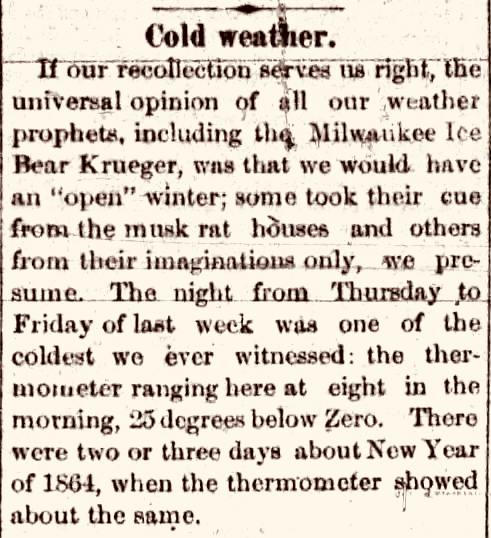
To find out, I started by searching digitized old newspapers, looking for the phrase “below zero,” in Wisconsin, between the years 1833-1899. Oh boy, did I get results! After narrowing my search to more local sources, I found this news item on page 2 of the Wednesday, January 2, 1884 issue of the Cedarburg News:
This article suggests that the winter of 1883-1884 was expected to be somewhat mild; an “open” winter was one with little or no snow cover on the ground. All the signs and predictions thought this would be the case. Apparently, the local muskrats had built their houses differently in 1883, as muskrats do when they expect a milder winter. The “universal opinion” of the “local weather prophets”—including Milwaukee’s famed “Ice Bear,” Henry Kroeger—thought so, too. But on the night of December 28-29, 1883, the thermometers in Cedarburg—just a few miles from the old Jonathan Clark farm—dropped to 25 degrees below zero (Farenheit). It was the coldest morning in decades.
But by the 1880s many of the older members of the Clark, Turck, and Bonniwell families had died, and many of the younger generation had left Ozaukee county and relocated to Milwaukee, Chicago, Minnesota, and elsewhere. Some or most of them may have missed this late-1883 cold snap. But this short article also mentions another, similar record cold spell, one that Mary Turck Clark and her children actually lived through, in Milwaukee, around the New Year of 1864.
As I write this, southeastern Wisconsin is in the midst of our first substantial snowfall of Winter, 2025-2026. In Jonathan and Mary Clark’s lifetime, the day after a storm like this meant it was time to hitch up the sleigh and have some fun “dashing through the snow.” Here’s a lightly-revised and expanded repeat of a post that celebrates Clark-era “sleighing time” and “jingle bells.” (And be sure to click the highlighted links for more vintage wintertime images and info.)
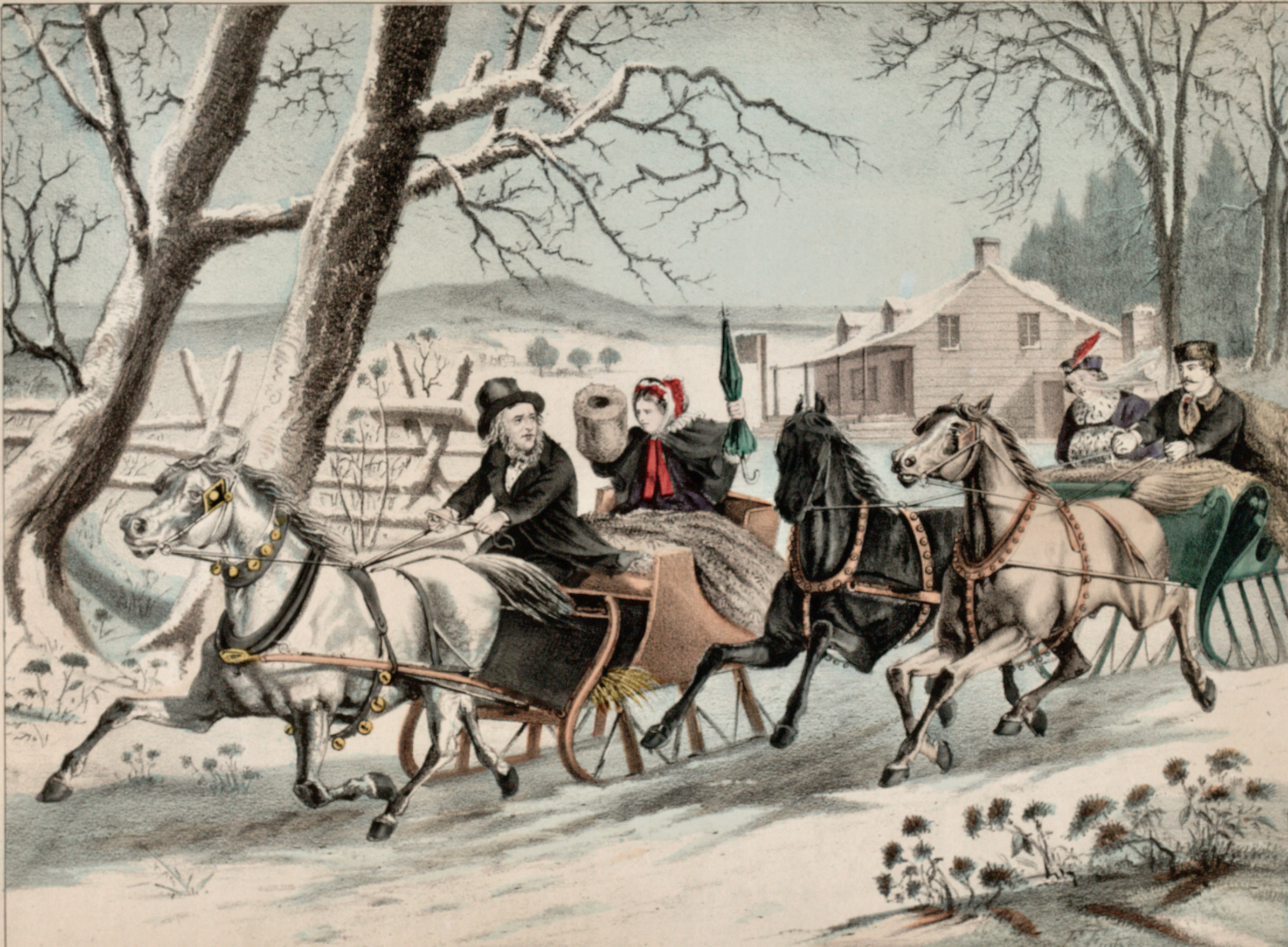
Kimmel and Forster, publishers, “Winter Pleasure in the Country,” circa 1865. National Museum of American History, Peters Prints Collection, Smithsonian Institution.1 Note the modest straps of jingle bells on the one-horse sleigh and the much more ostentatious—and louder—straps of bells on the two-horse sleigh.
Last winter, our earlier CHH posts Snow!, Shoveling out -and other winter chores and Stuff Happens – on a sleigh ride, got me wondering again about winter travel in old Washington/Ozaukee county during the Clarks’ era of the mid-1830s through the 1860s or so. Assuming most of the more successful farmers—such as the Clarks, Bonniwells and Turcks—owned a one- or two-horse sleigh, how easy was it to navigate that sleigh on the early county roads? Could you sleigh ride all the way to Milwaukee? And if you could, how long might that take?
Veterans Day is today. For a perspective on the day—and our early Mequon veterans—here’s a post originally published at Clark House Historian on November 11, 2016, and revised, expanded and republished several times since.
Armistice Day — Veterans Day
One hundred and seven years ago today, at the eleventh hour, of the eleventh day, of the eleventh month—Paris time—the Armistice of Compiègne took effect, officially ending the fighting on the Western Front and marking the end of World War I, the optimistically named “War to End All Wars.”
In the United States, the commemoration of the war dead and the Allied victory began in 1919 as Armistice Day, by proclamation of President Woodrow Wilson. Congress created Armistice Day as a legal holiday in 1938. Starting in 1945, a World War II veteran named Raymond Weeks proposed that the commemorations of November 11 be expanded to celebrate all veterans, living and dead. In 1954 Congress and President Eisenhower made that idea official, and this is what we commemorate today. There are many veterans with a connection to the Jonathan Clark house. We honor a few of them in this post.
114th Regimental Reunion, May 30, 1897, Norwich, N. Y., Library of Congress [cropped and adjusted]. Many Clark neighbors served during the Civil War, and many remained active in the Grand Army of the Republic, the national organization for Union Army veterans, including these men from rural New York, gathered together in 1897.
UPDATE: This was supposed to go out on Monday. I hit “publish” before the piece was ready. Here’s the updated 2025 version for your reading enjoyment. Sorry for any confusion (and, for you CHH subscribers, the premature email in your inbox).
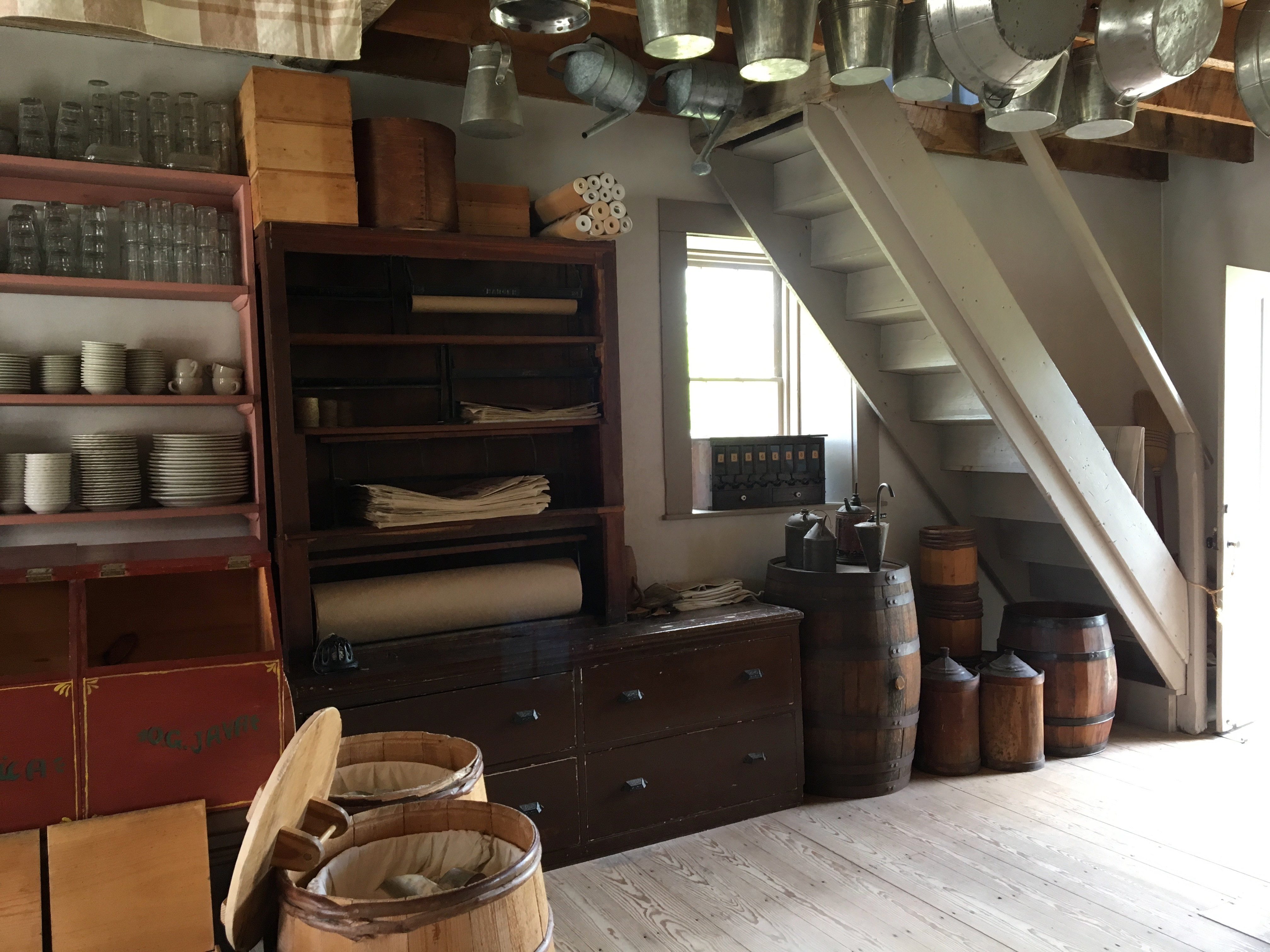
Monday, September 1st, is Labor Day, the holiday celebrating the working men and women of our nation, and I thought I’d commemorate the day with a lightly-revised re-post of this CHH piece from 2023. This Labor Day, as in 2023, I have to work a shift at our local mercantile establishment. You know, a store kind of like this one, only much bigger, stocked with just about anything you need for modern living:
Like many Americans, I don’t have the day “off” on Monday, and won’t be marching in a parade, but I’d still like to honor the holiday and salute the American worker, past and present. With that in mind, let’s revisit some of the nineteenth-century occupations we’ve talked about previously at Clark House Historian, highlighting a few of the many skills, trades, and occupations common during the Clark House era.
Since it is a holiday, I’m not going to add long commentaries to each photo. Enjoy the photo galleries, and be sure to click each gallery—and photo—to open and peruse larger versions of each image. And click the highlighted links to visit the original CHH posts, filled with lots more information about the different skills, tools, and jobs, and the full image credits.
Our annual Memorial Day post, first published in 2020, more relevant with each passing year.
Graves of Unknown Union Soldiers, Memphis National Cemetery, photo by Clayton B. Fraser, (Library of Congress), public domain. Memphis National Cemetery is the final resting place of Mequon’s Watson Peter Woodworth, and almost 14,000 of his Union Army comrades.
Today is the day our nation officially observes Memorial Day. For many Americans, Memorial Day represents “the first day of summer,” and is traditionally celebrated with trips to the lake, picnics, parades, and sales on cars, appliances, and other consumer goods.
But for many of us, Memorial Day remains rooted in its origins as Decoration Day. The first national observance was in 1868, when retired general John A. Logan, commander and chief of the Grand Army of the Republic—the Union veterans’ organization—issued his General Order Number 11, designating May 30 as a memorial day “for the purpose of strewing with flowers or otherwise decorating the graves of comrades who died in defense of their country during the late rebellion, and whose bodies now lie in almost every city, village, and hamlet churchyard in the land.”
On this Memorial Day, let’s take a moment to remember what this day truly represents.
This is the second part of a multi-part look at local (Mequon and Washington/Ozaukee County) history sources. If you missed Part 2, I recommend you click this link and read that first.
In today’s post, I’d like to guide you to and through another one of the local histories that I’ve bumped into over the last decade or so. As in Part 1, I’ll include a link to a PDF copy of the source, make comments on the range and quality of the information in the book, and sum it up with an overall grade for accuracy, style, and usefulness.
“All sources lie.” — Lawrence of Arabia (supposedly)
That provocative quote begins the forward of Elizabeth Shown Mills’s monumental Evidence Explained (third edition, revised, 2017), the “Bible” of genealogical research, source evaluation, and modern citation practices. It makes an arresting opening for her almost 900-page book, devoted to historical and genealogical sources and how to cite them.1 But what does the author mean by beginning her book with Lawrence’s (supposed) quote? Here is part of her explanation:
If you are interested in the history of the Jonathan Clark House, there are a number of published local histories that you might consult. Many of them are available online, as free, searchable, PDF downloads from Internet Archive, GoogleBooks, the Library of Congress, and other digital repositories. This is pretty cool but, as you might expect, not all sources are equal. Some are more reliable than others. Some contain detailed information about early settlement, settlers, government and politicians, pioneer businesses and other local affairs, often drawing upon old primary sources, some of which have since disappeared. Other histories are more content to paraphrase (and sometimes mangle) earlier volumes. How do you know which to trust?
A guide for the perplexed
In today’s post, I’d like to guide you to and through several of the published histories that I’ve spent a lot of time with. I’ll provide links to PDF copies where available, make a few comments on the range and quality of the information in each book, and give each book an overall grade for accuracy, style, and usefulness.
Kimmel and Forster, publishers, “Winter Pleasure in the Country,” circa 1865. National Museum of American History, Peters Prints Collection, Smithsonian Institution.1
Talk of sleighs and sleighing in our recent CHH posts on Snow! and Shoveling out -and other winter chores, plus our January, 2022, essay on Stuff Happens – on a sleigh ride, got me wondering again about winter travel in old Washington/Ozaukee county during the Clarks’ era. Assuming most of the more successful farmers—such as the Clarks, Bonniwells and Turcks—owned a one- or two-horse sleigh, how easy was it to navigate that sleigh on the early county roads? Could you ride all the way to Milwaukee? And if you could, how long might that take?




 Clark House Historian