Advertisement, “Choppers Wanted,” Milwaukee Sentinel, August 27, 1839, page 3.
After years of searching for original reports and drawings or photographs of early Wisconsin road construction, I find myself entangled among piles of information and images on just that topic. Now, the challenge is to organize the best of this material into a few CHH blog posts and wrap up—for now—our most recent excursion along Wisconsin’s earliest roads.1
Like contractor George E. Graves in Sauk Harbor [Port Washington] in 1834 (above), I could probably use the assistance of some (digital) “axe-men” to clear my way forward. Perhaps some hearty fellows such as these…
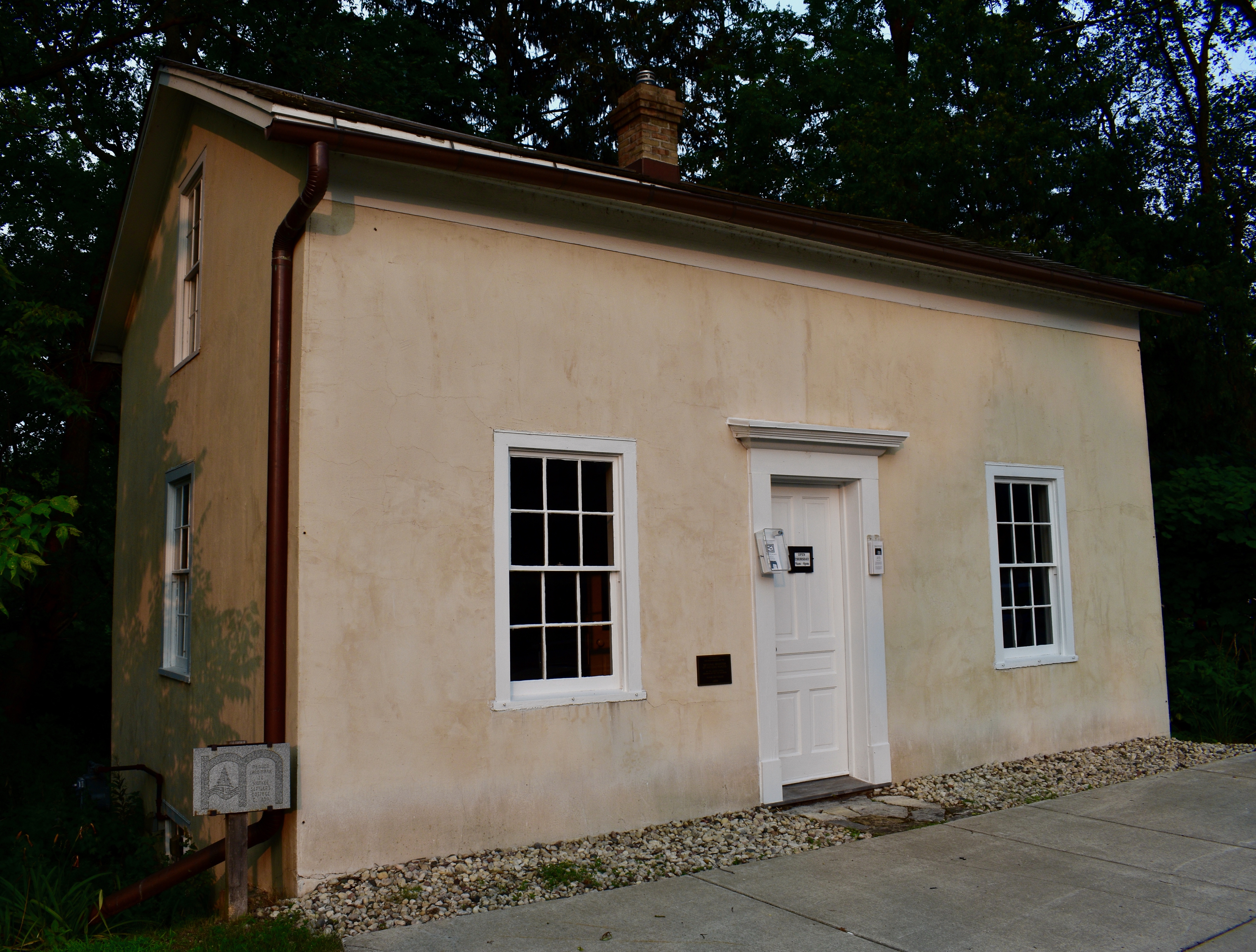
I’m working on a subject suggested by my friends Sam Cutler and Bob Blazich from the Mequon-Thiensville Historical Society. Among other projects over the last few decades, they and their colleagues at the MTHS have restored what is believed to be Ozaukee county’s oldest building on its original foundation, the historic Isham Day house, and developed its interior into the Mequon River Postal Museum. Now my friends at the MTHS want to know more about the life of Mequon River Post Office’s original postmaster, one of Mequon’s very first pioneer settlers, John Weston.
Isham Day house, exterior, west front. Photo credit: Anna Perkins, 2021
So for the last several weeks I’ve been doing a great deal of behind-the-scenes reading and re-reading of primary and secondary sources, as well as a lot of searching for additional relevant documents, including early Milwaukee and Washington/Ozaukee county deeds and other land records. In the process, I’m learning a lot about John Weston, Isham Day, Henry Thien, and some of our other first white settlers. But I’m not quite ready to write a John Weston profile, and I still need to clear up some mysteries about Isham Day’s land and house, too.
First Postmaster(s)
New post office…at Mequan River…John Weston appointed postmaster, Milwaukee Advertiser, Oct. 10, 1840, page 2
Let’s get our bearings by making an accurate list of the county’s first postmasters and their terms of office. Our source is from the National Archives in Washington, DC, the Record of Appointment of Postmasters, 1832-Sept. 30, 1971; Records of the Post Office Department; Record Group Number: 28; Series: M841; Roll Number: 144. County: Polk – Wood, Vol. 12B, circa 1832-1844, pages 794-795, currently available via Ancestry.com as U.S., Appointments of U. S. Postmasters, 1832-1971 [database on-line], 2010, image 428 of 583 (accessed 18 Jan 2024). Here’s the microfilmed image of the two-page ledger recording Washington county’s first post offices and postmasters, slightly retouched to make for easier reading:
Click the image for a higher-resolution view, and then read on for more details about old Washington/Ozaukee county’s first two post offices and their original postmasters.
I’m behind in my writing. Sorry about that. My Clark House history research continues “behind the scenes,” but I’ve been busy with typical fall chores around the house and garden, and that’s kept me from writing, proofreading, and annotating fresh blog posts.
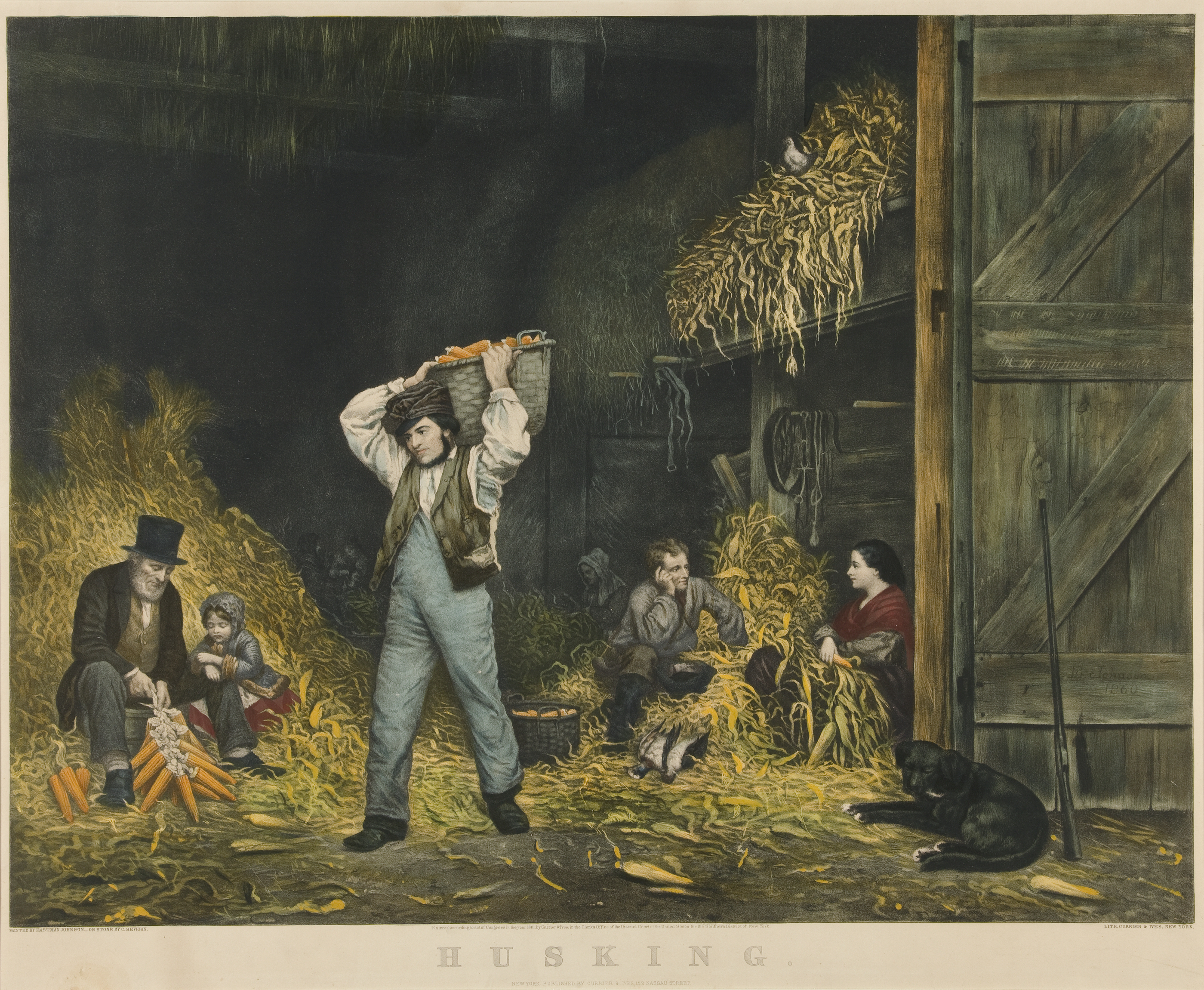
Anyway, Thanksgiving is almost here, so look for my annual holiday post (with historic recipes!) later this week. And in the meantime, let’s reflect on how thankful we should be that we don’t have to process a barn full of harvested corn by hand anymore…
…against a swirling torrent of potentially Clark-related Lower Canada land grant documents. Progress is slower than expected. I’ll be back soon (I hope!) with some interesting results. Wish me luck.
And on a completely different subject, I wish a hearty Shana tova! to all my readers celebrating the start of Rosh Hashanah tonight.
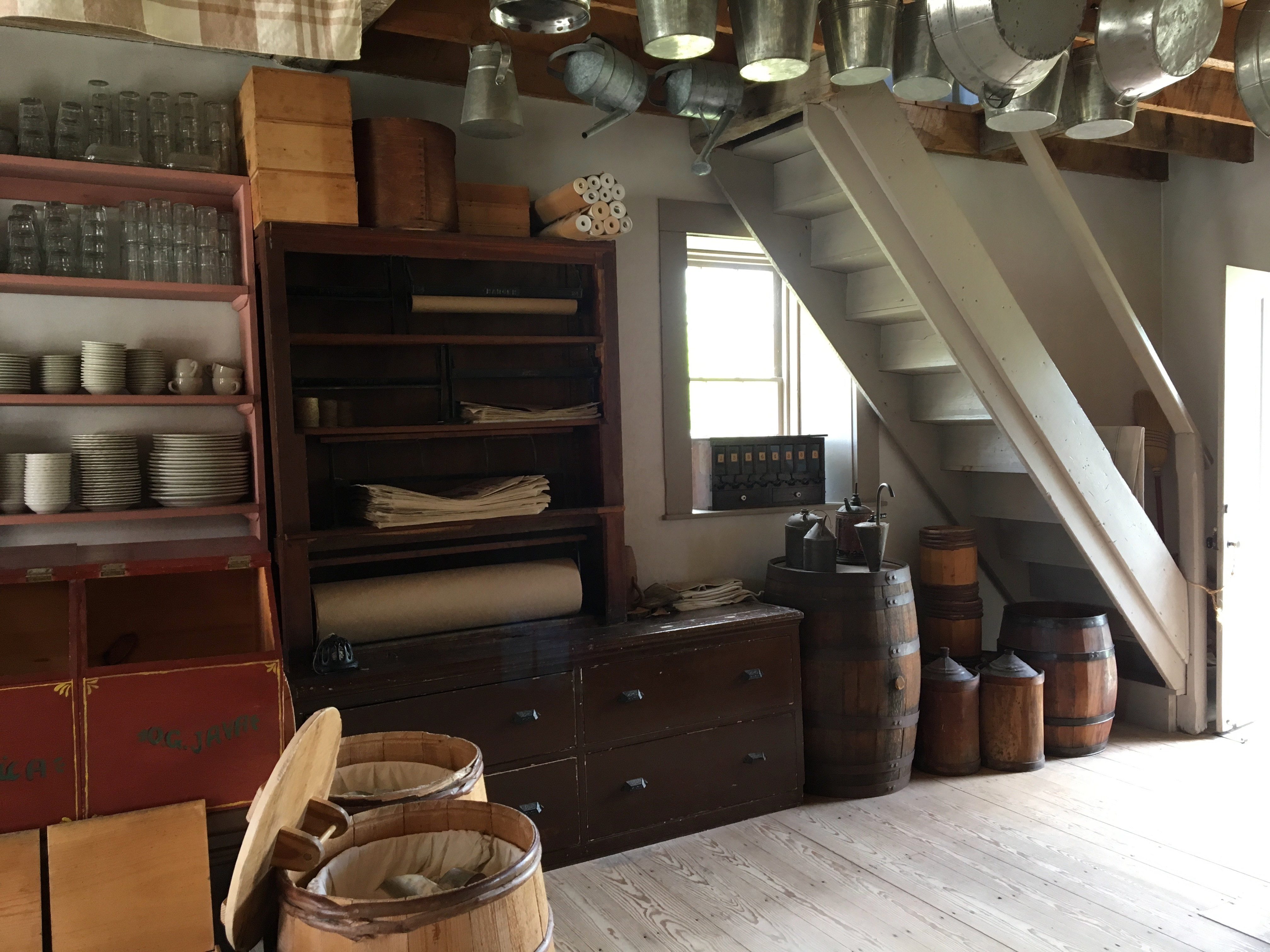
Even thought it’s Labor Day, the holiday celebrating the working men and women of our nation, I’ll be at work, back at our local mercantile establishment. You know, a store kind of like this one, stocked with just about anything you need for modern living:
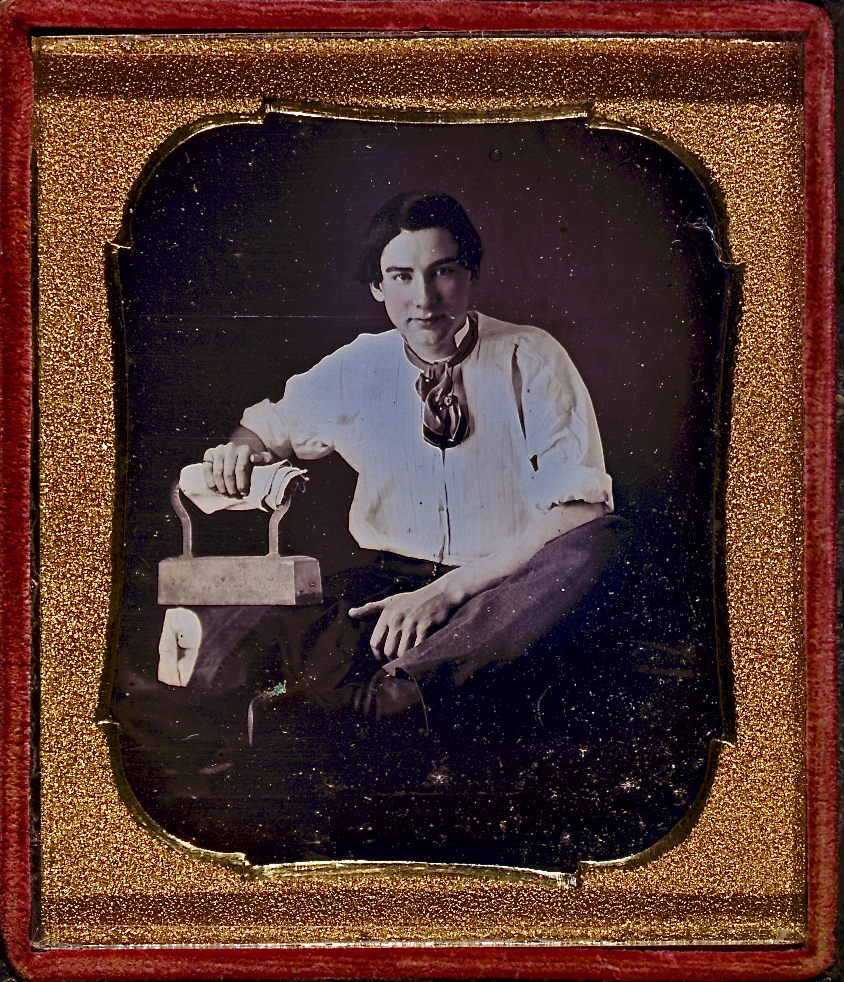
I don’t have the day off, and won’t be marching in a parade, but I’d still like to honor the holiday and salute the American worker, past and present. With that in mind, let’s revisit some of the nineteenth-century occupations we’ve talked about previously at Clark House Historian, highlighting a few of the many skills, trades, and occupations common during the Clark House era.
Since it is a holiday, I’m not going to add much commentary today. Enjoy the photos, and click the links to visit the original CHH posts with lots more information about the different skills and jobs, and for full image credits.
I was hoping to have a Monday: Map Day! post up for you yesterday as the opening item in a series of posts focused on new—or reevaluated—evidence from our continuing search for Jonathan M. Clark’s still-mysterious roots in northern Vermont and/or southern Québec. As you can tell, that didn’t happen. Instead, I spent some time ironing out a few wrinkles on the blog…
This is an expanded—and lavishly illustrated—version of a piece that first appeared in the Summer | August 2023 edition of the Jonathan Clark House Newsletter. I hope you enjoy the extra information, images, and the vintage writing tips. UPDATED: August 27, 2023, to clarify provenance of Robert Beveridge’s writing desk.
One of the ways we collect, preserve and share the history of the Jonathan Clark House and the early settlers of Mequon and Thiensville is by acquiring and interpreting furniture, tools, clothing, and various accessories that would have been familiar to the Clarks and their neighbors. One particularly fine item in our collection is this box, a treasured heirloom generously donated to the Clark House collection by JCH Friend Frederick Bock.
Photo courtesy of Tom Gifford (2023)
When closed it measures about 16 x 6 x 10 inches. It is made of wood, stained a rich golden brown. On the top is a brass plaque inscribed Rt.[Robert] Beveridge / 1854. And there’s a lock on the front. Why is that?
Almost three weeks remain until Labor Day marks the unofficial end of summer, and already many Wisconsin families are preparing for the new school year. “Back to School” promotions and special merchandise can be found in many local, chain, and online retailers. The history of “Back to School” as a marketing theme in the U.S. is obscure, but from what I’ve observed, it seems very much a post-World War II phenomenon.
With our current the focus on three-ring binders, zippered pencil cases, and boxes of 64 Crayolas (with the built-in sharpener!), have you ever wondered what kind of school or office supplies might have been necessary or useful for Jonathan and Mary Clark, their children, and their neighbors? Just for fun, here are just two of the many informative advertisements from the columns of the local papers, in this case the [Milwaukee] Daily Free Democrat, November 2, 1850, page 4:
Your local book & stationery shop
Milwaukee book & stationery retailer Rood & Whittemore had a fine selection of supplies for the scholar, letter writer, or professional man or woman of 1850:
Something for everyone, including the “country traders” and teachers that often served as buyers and distributors of school textbooks for their rural areas. For their efforts, the traders and teachers received “liberal terms,” presumably some sort of discount (for cash accounts, of course), from Rood & Whittemore.
And as you might expect, even from its earliest days Milwaukee was not a one-store town. In the words of the immortal Ron Popiel…
It’s already the third week of May, 2023, and summertime will soon be here. At our southeastern Wisconsin home the first spring flowersare done, and the next round of blossoms have been blooming for a week or two. The peas are in the ground and already about 8 inches high, the rhubarb is big enough to cut and make one or two pies, and we harvested the first half-dozen radishes today. We still have to put in the tomato and pepper seedlings and start the big patch of green beans. So with gardening on my mind, I thought you might enjoy a slightly-belated repost of this annual favorite, which first appeared here in April, 2021. Cheers!
Planning the garden
It’s early April, and the growing season is not far off. For a farmer like Jonathan M. Clark, it’s a little early yet for plowing and sowing, but not too early to make plans and sharpen the tools. For a farmer’s wife, like Mary (Turck) Clark, it’s not too soon to think about the farm garden, its crops and layout.
I don’t know if Mary and Jonathan were regular readers of the popular and affordable farmers’ almanacs of their era; I wouldn’t be surprised if they were. There were many to chose from. Perhaps they had a copy of something like:
The Cultivator […], New Series, Vol. VII, Albany, 1850, title page. Click to open larger image in new window.
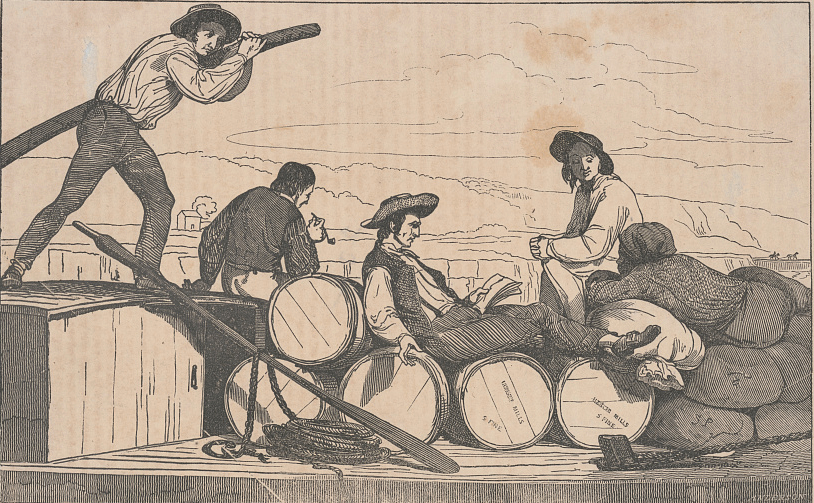
In the 1800s there were no corrugated cardboard boxes or padded shipping envelopes. If you needed to store or ship any liquid—and most dry goods—the barrel (and its larger and smaller cousins) was almost always your container of choice.
Anderson, Alexander, engraver. Five Men on a Flatboat With Barrels and Sacks; One Man Operates the Keel from Above the Boathouse, the Others Are Resting on the Freight, circa 1830-1860, Library of Congress.
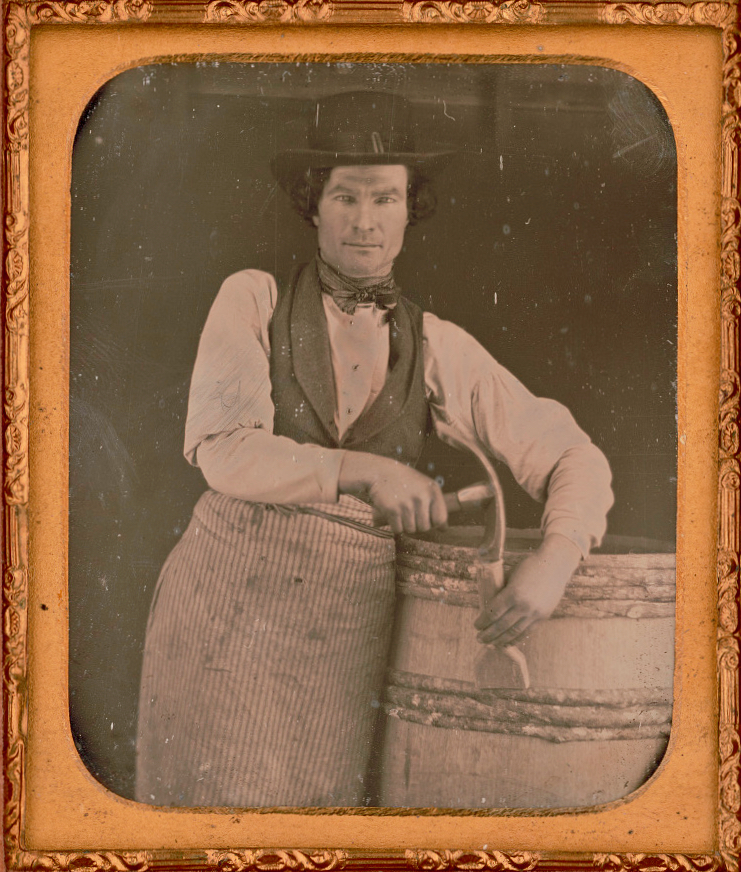
And when you needed a barrel, hogshead, keg, cask or firkin, or just an oaken bucket for your well, you would get it from a cooper.
Unknown photographer. Occupational Portrait of a Cooper, Three-Quarter Length, With Barrel and Tools, circa 1840-1860, Library of Congress.







 Clark House Historian