School supplies…and more, 1850

Labor Day has come and gone, and for many this marks the unofficial “end of summer.” With that in mind, I thought you might enjoy a lightly revised and enhanced re-post of this CHH piece from 2023.

Many students start classes today. Others began school a week or two ago. Many Wisconsin families have spent the past few weeks (or months) preparing for the new school year, shopping for “Back to School” deals on clothing and school supplies at local, chain, and online retailers.

Harrison’s Columbian inks, black, scarlet, red, blue. [United States, publisher not transcribed], c. 1846. Library of Congress

Shopping for school supplies at the start of the school year is nothing new. But the origin of the now ubiquitous use of “Back to School!” as a marketing phrase is obscure. From what I’ve observed, it seems very much a post-World War II phenomenon. Yet with our current focus on three-ring binders, zippered pencil cases, and boxes of 64 Crayolas (with the built-in sharpener!), have you ever wondered what kind of school or office supplies might have been necessary or useful for Jonathan and Mary Clark, their children, and their neighbors? For a fun comparison, let’s take a look at just two of the many relevant advertisements from the columns of the Clarks’ local papers, in this case the [Milwaukee] Daily Free Democrat, November 2, 1850, page 4…

Continue reading

Labor Day – a photo essay

UPDATE: This was supposed to go out on Monday. I hit “publish” before the piece was ready. Here’s the updated 2025 version for your reading enjoyment. Sorry for any confusion (and, for you CHH subscribers, the premature email in your inbox).

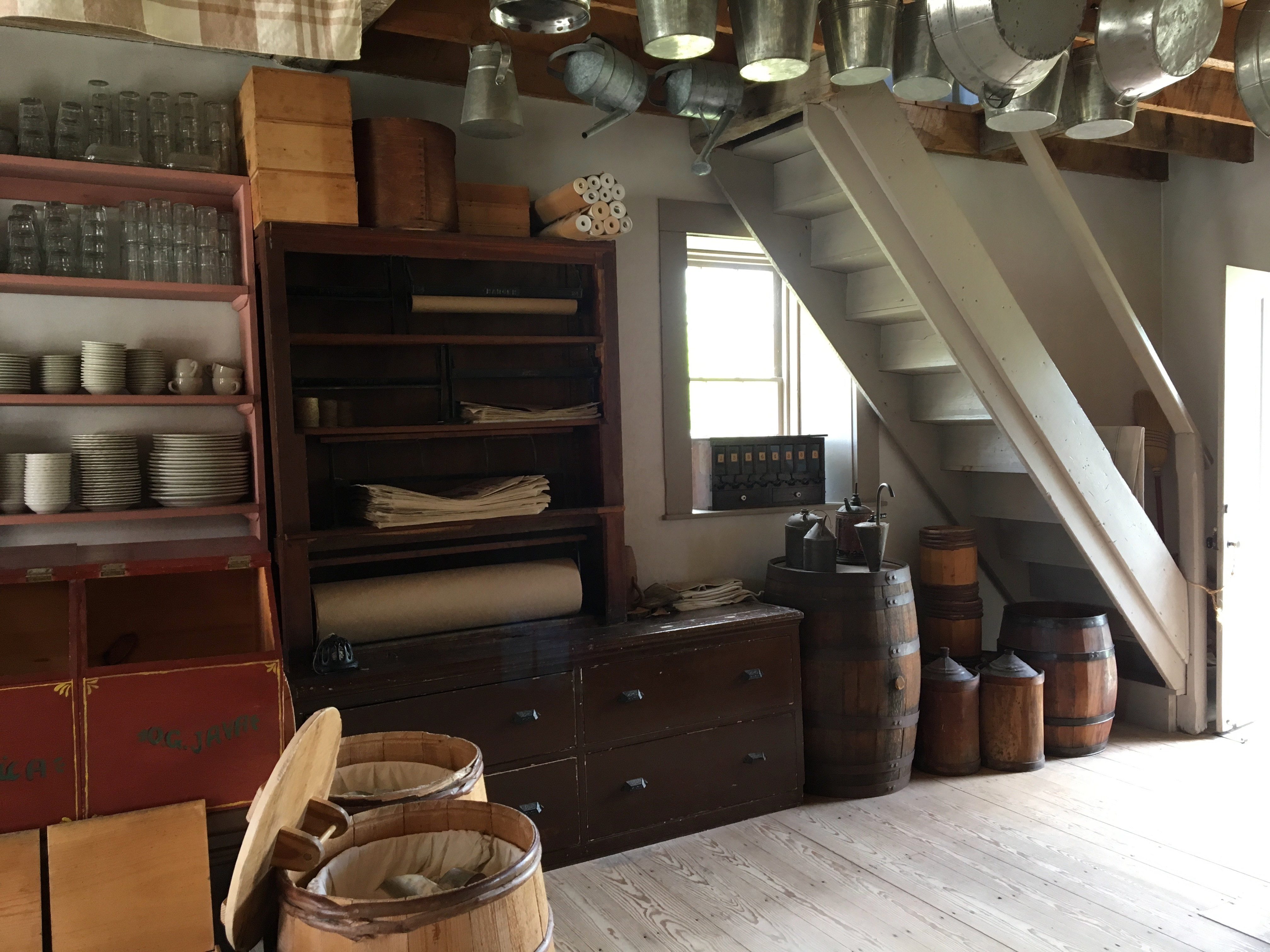
Monday, September 1st, is Labor Day, the holiday celebrating the working men and women of our nation, and I thought I’d commemorate the day with a lightly-revised re-post of this CHH piece from 2023. This Labor Day, as in 2023, I have to work a shift at our local mercantile establishment. You know, a store kind of like this one, only much bigger, stocked with just about anything you need for modern living:

Like many Americans, I don’t have the day “off” on Monday, and won’t be marching in a parade, but I’d still like to honor the holiday and salute the American worker, past and present. With that in mind, let’s revisit some of the nineteenth-century occupations we’ve talked about previously at Clark House Historian, highlighting a few of the many skills, trades, and occupations common during the Clark House era.

Since it is a holiday, I’m not going to add long commentaries to each photo. Enjoy the photo galleries, and be sure to click each gallery—and photo—to open and peruse larger versions of each image. And click the highlighted links to visit the original CHH posts, filled with lots more information about the different skills, tools, and jobs, and the full image credits.

Continue reading

RBOH: some Beckmann & Cedarburg updates

Revised 17 February 2025 to include some additional material about my Beckmann-related talk at the Cedarburg History Museum in Spring, 2023.

Cedarburg News, October 14, 1885, page 1

I’ve been spending time with historic local newspapers online, searching for those tasty tidbits of local news that never quite make it into the history books, but are often found in the 19th-century local press. Today I was browsing through 1880s to early-1900s issues of the Cedarburg News, Fred. W. Horn, publisher, and found some interesting random bits o’ history that are connected to the Clark House and to some work I’ve done for the Cedarburg History Museum.

Fred. Beckmann and kin

You may remenber a post I wrote back in July, 2020, about newly-married German immigrant Fred. Beckmann, who farmed and lived on the Jonathan Clark property from 1868 until 1873, at which time he and his growing family moved to Cedarburg, where he then owned and ran the Wisconsin House hotel for the better part of the next four decades. I followed that up with an April, 2023 presentation at the Cedarburg History Museum, where I spoke about the life and the extended circle of family, business associates and friends of Fred. Beckmann. His story connects the hardscrabble early days of our area’s Yankee, Irish and German pioneers (Jonathan and Mary Clark’s generation) with the following generation of established and settled German-American farmers, business owners and civic leaders, such as himself. And Fred also connected and illuminated the story of the Jonathan Clark House with those of nearby Hamilton—and its Concordia Mill—and the development of downtown Cedarburg in the 19th-century.

That 2023 presentation was followed by a March, 2024, illustrated talk I gave at the Cedarburg History Museum as part of their big 2024 Civil War exhibition and lecture series. My subject was “From the ‘Burg to the Battlefield…and Back: Cedarburg’s Beckmann Family and the Civil War.” In my talk, I tried to take a more personal and local look at the war by examining the military service of few of Fred. Beckmann’s Cedarburg relatives, including his brother Charles Beckmann, future brother-in-law, Charles Gottschalk, and future father-in-law Henry Hachfeld/Hackfeldt.

Well, I wasn’t really looking for more info on Fred. Beckmann today, but I stumbled across some interesting things, and thought I’d share them with you here…

Continue reading

Organizing…

It’s been several weeks of seemingly endless organizing at my house. A useful and productive time, perhaps, spent sorting, reading, and filing paperwork, updating the household accounts, and getting ready to host our family’s Thanksgiving celebration. But not much time or energy for writing Clark House Historian posts. So in lieu of a new post, I thought you might enjoy an expanded reprise of this piece, first published here in March, 2022.

The need to sort, repair and organize is not limited to our era. I suspect the Clarks, Turcks, Bonniwells—and their neighbors—spent a good bit of time trying to catch up with their 19th-century chores, like this fellow, at work in his barn…

Guy, Seymour Joseph (1824–1910), Utilizing a Spare Moment, oil on canvas, c. 1860-1870. Yale University Art Gallery, public domain (CC0 1.0). Click to open larger image in new window.

Today’s image is an original oil painting from about 1860-1870, by the American artist Seymour Joseph Guy (1824-1910). It comes to us courtesy of the Yale University Art Gallery. The Yale curators had this to say about the work:

Continue reading

Labor Day – a photo essay

Today is Labor Day, the holiday celebrating the working men and women of our nation, and I thought I’d commemorate the day with a lightly-revised re-post of this piece from 2023.

This Labor Day, I’ll be at home, working on my upcoming lectures for the state DAR and the Cedarburg History Museum. Last year, I had to work at our local mercantile establishment. You know, a store kind of like this one, only much bigger, stocked with just about anything you need for modern living:

I don’t really have the day “off” today—too much writing to do—and won’t be marching in a parade, but I’d still like to honor the holiday and salute the American worker, past and present. With that in mind, let’s revisit some of the nineteenth-century occupations we’ve talked about previously at Clark House Historian, highlighting a few of the many skills, trades, and occupations common during the Clark House era.

Since it is a holiday, I’m not going to add long commentaries to each photo. Enjoy the photo galleries, and click each gallery to open larger versions of each image. And click the highlighted links to visit the original CHH posts, filled with lots more information about the different skills, tools, and jobs, and the full image credits.

Continue reading

“Point-and-shoot” camera – Civil War style

Technology keeps evolving. Today, if you want to record an image of something interesting, all you have to do is reach in your pocket, whip out your phone, and click. In a instant, you can have a high-resolution, full-color photograph and share it with the world via the internet. Making photographs has never been faster or easier. This was not always the case.

In the earliest days of photography, from about 1839-1860, the predominant technology was the Daguerreotype. It was a brilliant development, but required a good supply of natural light as well as special techniques, cameras, chemicals, and long, motionless poses by the photographer’s subjects. With all those requirements, most photographers made their Daguerreotypes indoors, in improvised or designed-for-purpose studios.

But by the time of the American Civil War, 1861-1865, there were other photographic techniques, including albumen silver prints and tintype photographs that were less expensive and permitted the use of shorter exposure times and lighter and “more portable” equipment, such as this:

Continue reading

Searching for JMC’s roots: Daily life in the Stanstead area, 1784-1817

A recent CHH comment from reader Meredith Johanson brought an interesting local history newspaper article to my attention. It’s from page 8 of the Sherbrooke [Québec] Daily Record of May 13, 1911, now available as a digital image at BAnQ.

The article was compiled by H. I Bullock, of Beebe Junction, Stanstead county, Québec. The compiler was a descendant of one of the earliest white settler families in the Eastern Townships of Lower Canada, the Ruiter family and, as of 1911, s/he possessed a number of historic Ruiter family documents.

The contents of several of these documents are presented in detail in the article, and include discussions of Ruiter family settlement in the Stanstead area, how farms and homes were created in the heavily-timbered forests of the “New Townships,” various local trades and supplies and their respective wages and costs, and early military affairs, with local militia rosters from 1809 and 1817.

The article is focused on Ruiter family documents, but many other early settlers are mentioned by name, including one William Clark, and several men with the surname Merrill. As far as we know—at the moment—none of these men are directly related to our Jonathan Morrell/Merrill Clark. But the information in this 1911 article does give a hint of what life was like for the first Stanstead-area settlers—such as Jonathan M. Clark’s still-unknown parents—in the early 1800s.

Bartlett, W. H, artist, A First Settlement, drawing, brown wash on wove paper, c. 1840, National Gallery of Canada, public domain.

I have made no cuts to the article, and since the original is long, I have not included extra commentary. I have added more white space between paragraphs for ease of reading, made a few clarifications and citations in the Notes that follow, and added an illustration not found in the original. Here’s the complete transcription. I hope you find it interesting:

Continue reading

The farm garden

It’s already the second week of May, 2024, and summertime will soon be here. At our southeastern Wisconsin home the first spring flowers are done, and the next round of blossoms have been blooming for a week or two. The peas will soon be in the ground, and we already harvested enough rhubarb to make two and a half small jars of jam. The tomato and pepper seedlings and the squashes will go in soon, and I need to put up a trellis or two so we can start the big patch of green beans. So even though it’s “early” by the standards of previous years, we’ve got gardening on the mind here at the Historian’s house, and I thought you might enjoy a slightly-belated repost of this annual favorite, which first appeared here in April, 2021. Cheers!

Planning the garden

It’s early April, and the growing season is not far off. For a farmer like Jonathan M. Clark, it’s a little early yet for plowing and sowing, but not too early to make plans and sharpen the tools. For a farmer’s wife, like Mary (Turck) Clark, it’s not too soon to think about the farm garden, its crops and layout.

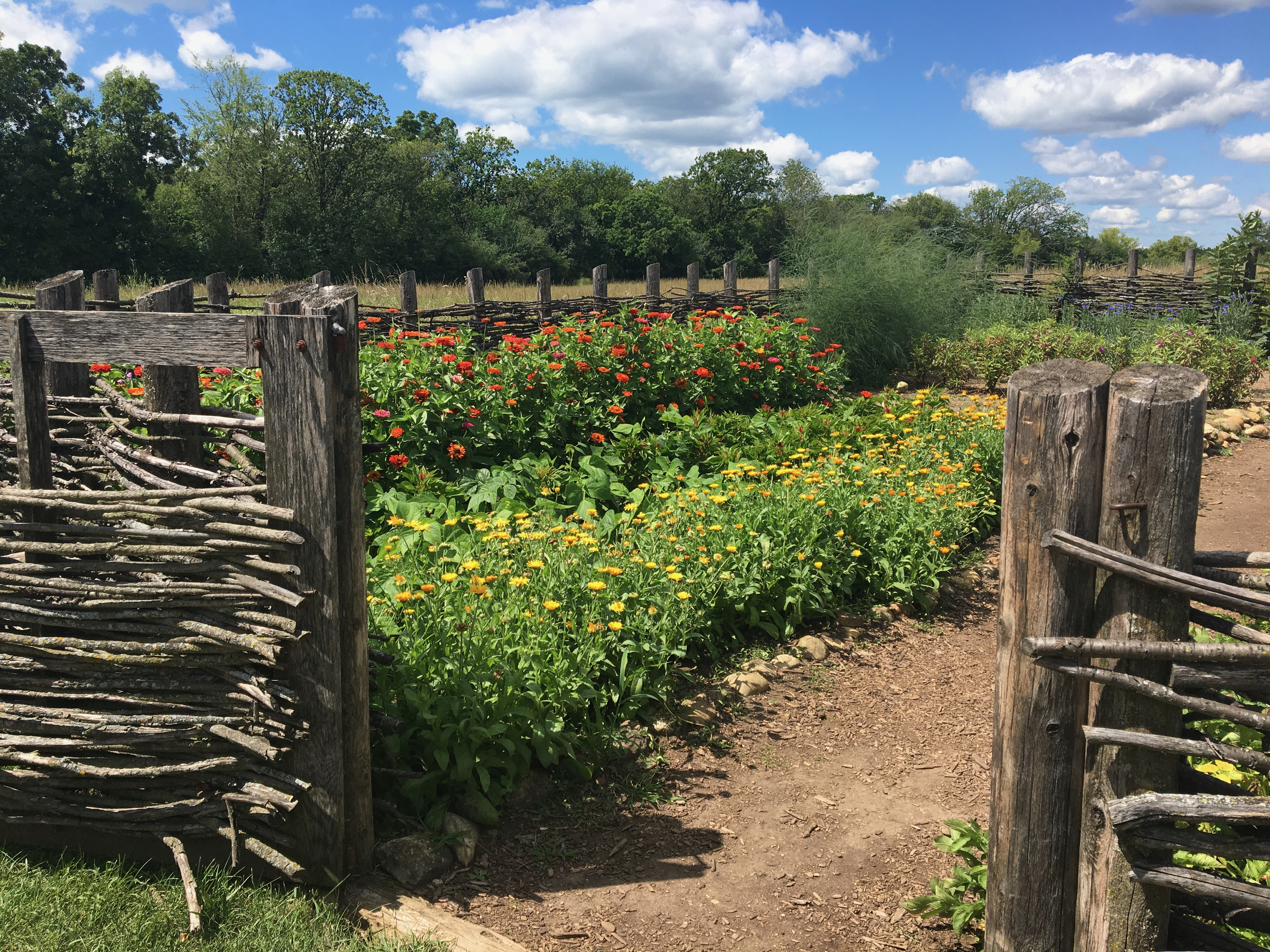
Garden at the Turck-Schottler House, 1870s Hessian Immigrant Farm, Old World Wisconsin. Photo credit Reed Perkins, 2022.1

I don’t know if Mary and Jonathan were regular readers of the popular and affordable farmers’ almanacs of their era; I wouldn’t be surprised if they were. There were many to chose from. Perhaps they had a copy of something like:

Continue reading

Lost in the underbrush…

Advertisement, “Choppers Wanted,” Milwaukee Sentinel, August 27, 1839, page 3.

After years of searching for original reports and drawings or photographs of early Wisconsin road construction, I find myself entangled among piles of information and images on just that topic. Now, the challenge is to organize the best of this material into a few CHH blog posts and wrap up—for now—our most recent excursion along Wisconsin’s earliest roads.1

Like contractor George E. Graves in Sauk Harbor [Port Washington] in 1834 (above), I could probably use the assistance of some (digital) “axe-men” to clear my way forward. Perhaps some hearty fellows such as these…

Continue reading