Guess what I’ve been doing?
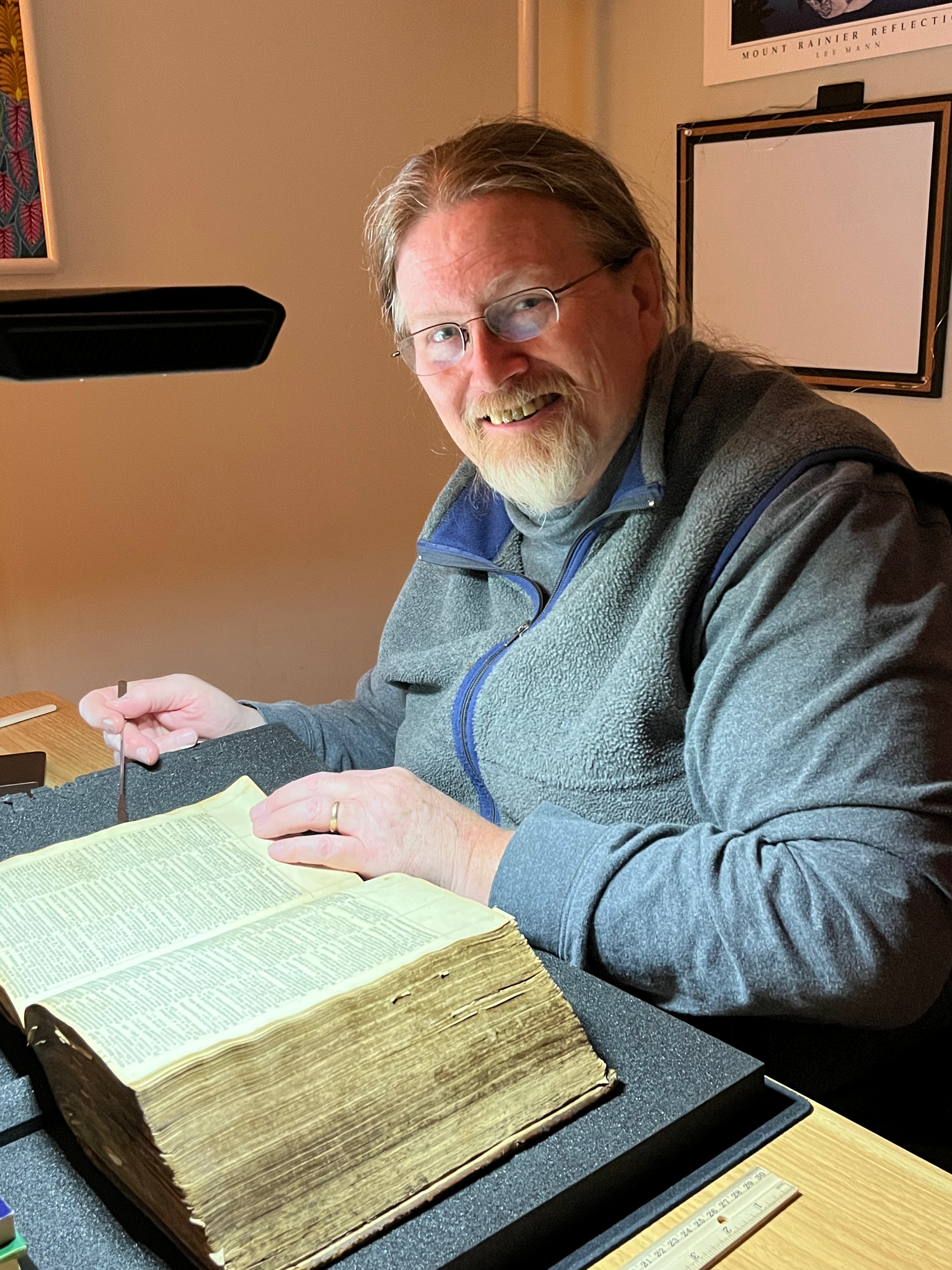
UPDATE: This was supposed to go out on Monday. I hit “publish” before the piece was ready. Here’s the updated 2025 version for your reading enjoyment. Sorry for any confusion (and, for you CHH subscribers, the premature email in your inbox).
Monday, September 1st, is Labor Day, the holiday celebrating the working men and women of our nation, and I thought I’d commemorate the day with a lightly-revised re-post of this CHH piece from 2023. This Labor Day, as in 2023, I have to work a shift at our local mercantile establishment. You know, a store kind of like this one, only much bigger, stocked with just about anything you need for modern living:


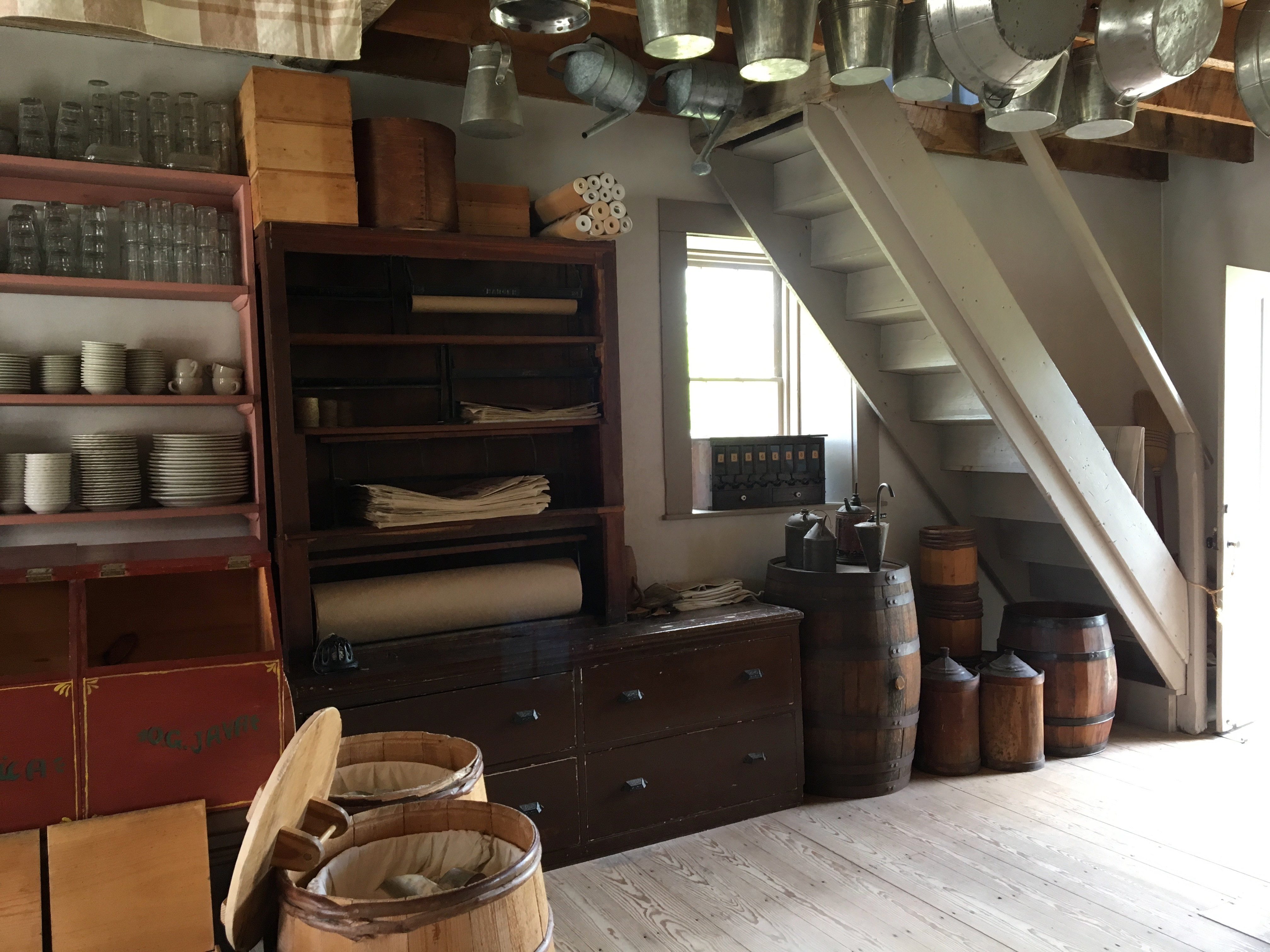
Like many Americans, I don’t have the day “off” on Monday, and won’t be marching in a parade, but I’d still like to honor the holiday and salute the American worker, past and present. With that in mind, let’s revisit some of the nineteenth-century occupations we’ve talked about previously at Clark House Historian, highlighting a few of the many skills, trades, and occupations common during the Clark House era.
Since it is a holiday, I’m not going to add long commentaries to each photo. Enjoy the photo galleries, and be sure to click each gallery—and photo—to open and peruse larger versions of each image. And click the highlighted links to visit the original CHH posts, filled with lots more information about the different skills, tools, and jobs, and the full image credits.
Continue readingLest We Forget
Our annual Memorial Day post, first published in 2020, more relevant with each passing year.

Graves of Unknown Union Soldiers, Memphis National Cemetery, photo by Clayton B. Fraser, (Library of Congress), public domain. Memphis National Cemetery is the final resting place of Mequon’s Watson Peter Woodworth, and almost 14,000 of his Union Army comrades.
Today is the day our nation officially observes Memorial Day. For many Americans, Memorial Day represents “the first day of summer,” and is traditionally celebrated with trips to the lake, picnics, parades, and sales on cars, appliances, and other consumer goods.
But for many of us, Memorial Day remains rooted in its origins as Decoration Day. The first national observance was in 1868, when retired general John A. Logan, commander and chief of the Grand Army of the Republic—the Union veterans’ organization—issued his General Order Number 11, designating May 30 as a memorial day “for the purpose of strewing with flowers or otherwise decorating the graves of comrades who died in defense of their country during the late rebellion, and whose bodies now lie in almost every city, village, and hamlet churchyard in the land.”
On this Memorial Day, let’s take a moment to remember what this day truly represents.
Continue reading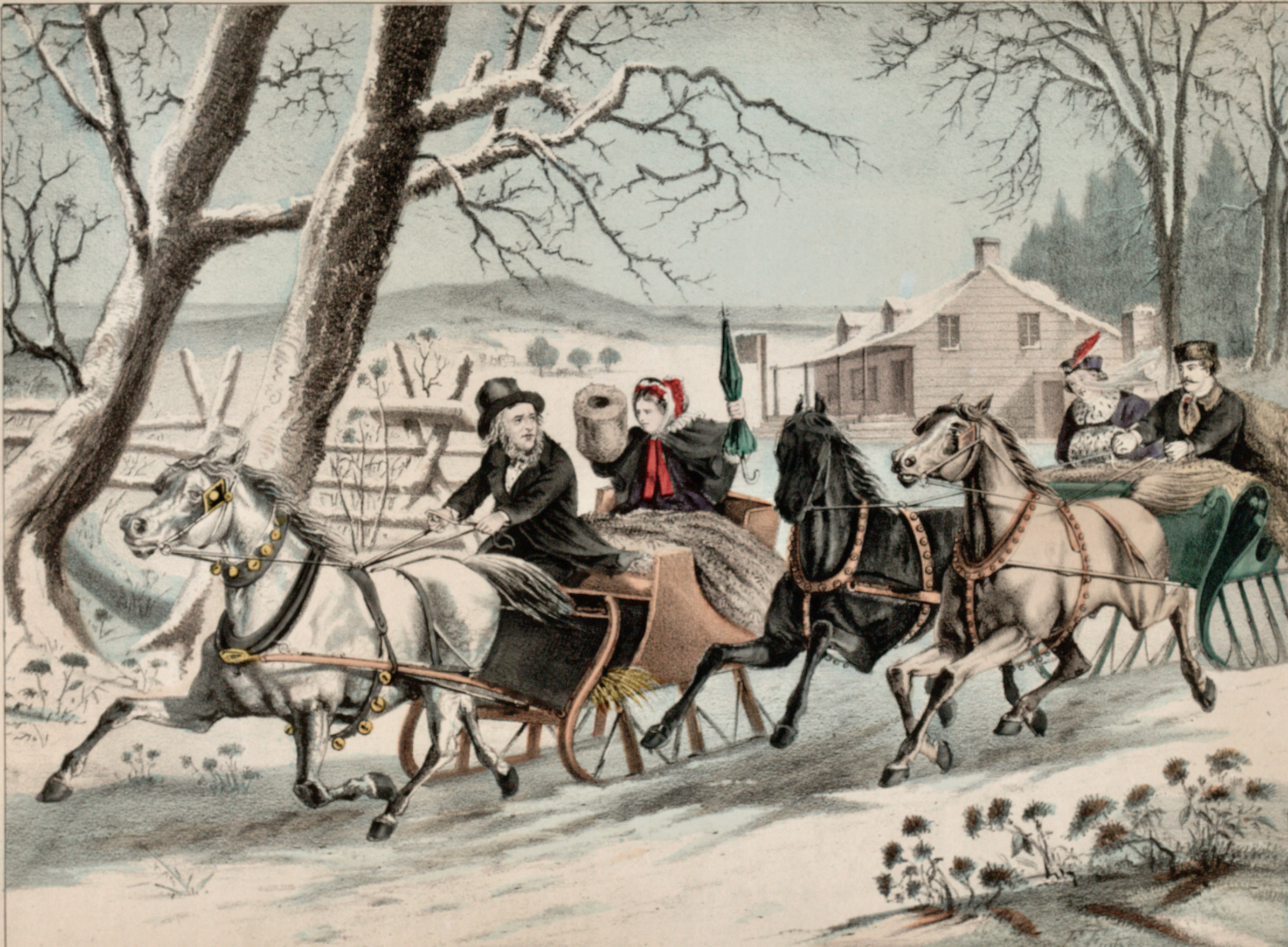
Kimmel and Forster, publishers, “Winter Pleasure in the Country,” circa 1865. National Museum of American History, Peters Prints Collection, Smithsonian Institution.1
Talk of sleighs and sleighing in our recent CHH posts on Snow! and Shoveling out -and other winter chores, plus our January, 2022, essay on Stuff Happens – on a sleigh ride, got me wondering again about winter travel in old Washington/Ozaukee county during the Clarks’ era. Assuming most of the more successful farmers—such as the Clarks, Bonniwells and Turcks—owned a one- or two-horse sleigh, how easy was it to navigate that sleigh on the early county roads? Could you ride all the way to Milwaukee? And if you could, how long might that take?
Continue readingWe’ve had some snow in my corner of southeastern Wisconsin, several modest snowfalls over the past few days. I’ve had to shovel the walks and driveway at our house a few times this week, and there’s more snow—and shoveling—in the forecast. With that in mind, I thought you might enjoy the snow-related images and stories from a revised edition of this post, which originally appeared here in February, 2023.

Homer, Winslow, A Winter-Morning,—Shovelling Out, 1871. Wood engraving. Brooklyn Museum, Gift of Harvey Isbitts.
Winter chores
I empathize with the lads in this 1871 engraving by Winslow Homer. Unlike these fellows, with their (homemade?) wooden shovels, I have a lightweight, sturdy, ergonomic, plastic and metal snow shovel to work with. And although we do get snow in 21st-century Wisconsin, I haven’t had to deal with shoulder-high accumulations like the ones in Homer’s picture since I lived in western Massachusetts in the early 2010s. It looks like our 1871 snow shovelers are dealing with the kind of snowfall that Clark family neighbor Rev. James W. Woodworth described in these January, 1871, diary entries:
Continue readingHey there! We finally got some snow in southeastern Wisconsin, which prompts me to republish this essay, which originally appeared in early 2021, and has been updated and re-posted several times since. Have fun outside—or enjoy a warm beverage inside—and admire the snowy winter landscape while you can. Cheers!
Snow, and often lots of it, was a feature of Jonathan and Mary Clark’s life in Wisconsin. And if you wanted to go to town or church or visit your neighbors during the snowy Wisconsin winter—or just enjoy a pleasant winter ride in the country—you’d need a sleigh.
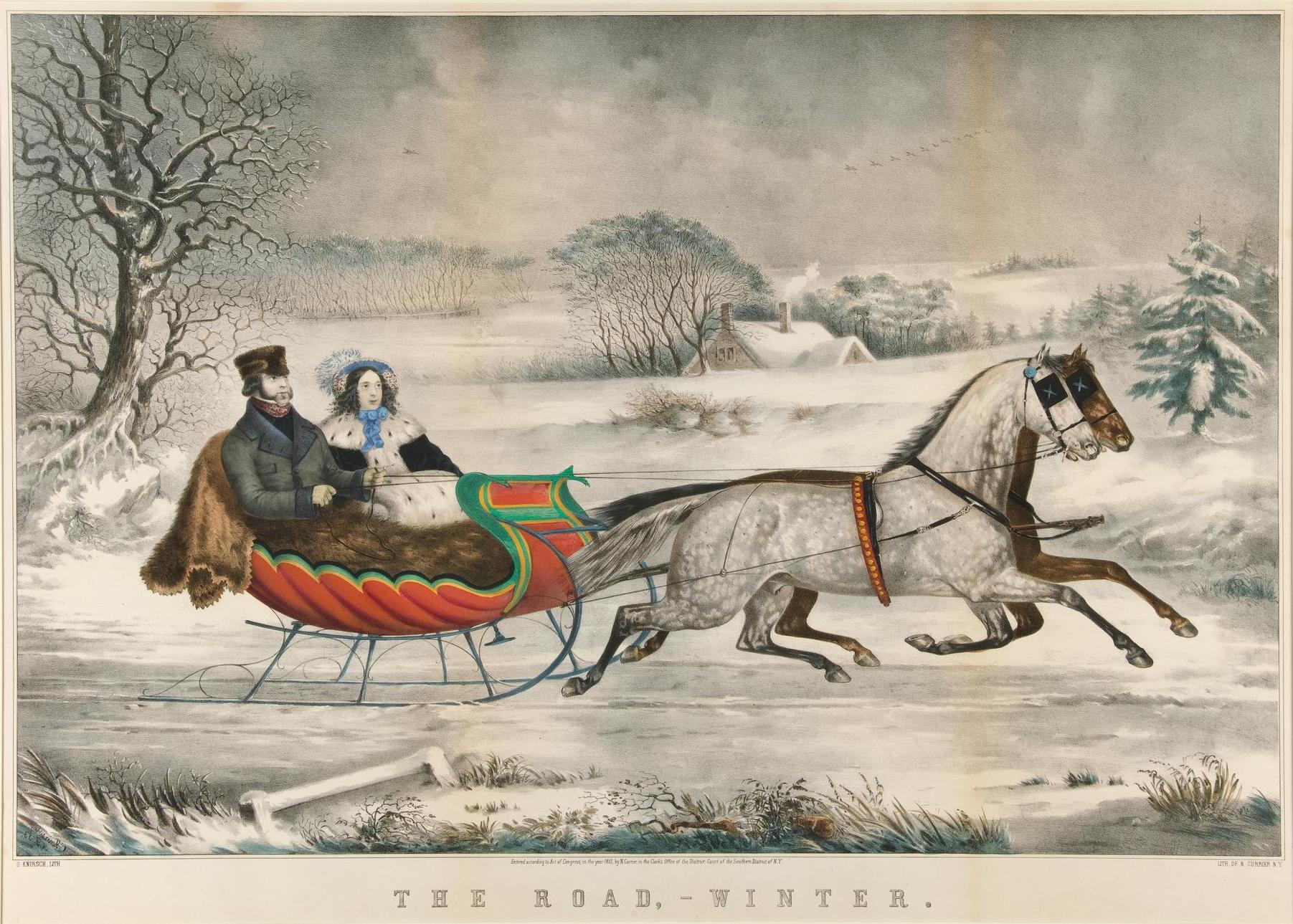
Currier, Nathaniel (1813-1888), The road, winter / O. Knirsch, lith., 1853. New York: Published by Currier & Ives. Yale University Art Museum, Whitney Collections of Sporting Art, given in memory of Harry Payne Whitney (B.A. 1894) and Payne Whitney (B.A. 1898) by Francis P. Garvan (B.A. 1897) June 2, 1932. Public domain. Click to open larger image in new window.1
We don’t know if the Clarks owned a sleigh while they lived in Mequon. I suspect they did, though their sleigh—and their clothing—may not have been quite as posh as those in this Currier & Ives lithograph from 1853.
Continue reading
Today’s post is an updated, corrected and expanded version a post I wrote in July, 2020, outlining what we knew (at the time), about the life of Fred Beckmann, Sr., the man that occupied and farmed the Jonathan Clark farm between 1868 and 1872. Then, in early 2023, I was asked to talk about the Clark House and its Cedarburg connections at the Cedarburg History Museum. I chose to center my talk on Fred Beckmann and his extended German-American immigrant family, as I believe they exemplify a number of important themes in the transformation of Ozaukee county from the initial Anglo-American dominated first wave of local settlement in the 1830s and early ’40s, into the subsequent decades of primarily German-American settlement and development.
Anyway, I had a lot of fun, and learned a lot, in preparing that 2023 talk. And one of the things I learned is that there was some doubt about the year and date of Fred Beckmann’s death. So I recently investigated the issues and have updated images, text, and information for you about the life—and death—of Fred Beckmann, and I managed to solve at least one mystery in the process…
Continue readingRevised 17 February 2025 to include some additional material about my Beckmann-related talk at the Cedarburg History Museum in Spring, 2023.

Cedarburg News, October 14, 1885, page 1
I’ve been spending time with historic local newspapers online, searching for those tasty tidbits of local news that never quite make it into the history books, but are often found in the 19th-century local press. Today I was browsing through 1880s to early-1900s issues of the Cedarburg News, Fred. W. Horn, publisher, and found some interesting random bits o’ history that are connected to the Clark House and to some work I’ve done for the Cedarburg History Museum.
Fred. Beckmann and kin
You may remenber a post I wrote back in July, 2020, about newly-married German immigrant Fred. Beckmann, who farmed and lived on the Jonathan Clark property from 1868 until 1873, at which time he and his growing family moved to Cedarburg, where he then owned and ran the Wisconsin House hotel for the better part of the next four decades. I followed that up with an April, 2023 presentation at the Cedarburg History Museum, where I spoke about the life and the extended circle of family, business associates and friends of Fred. Beckmann. His story connects the hardscrabble early days of our area’s Yankee, Irish and German pioneers (Jonathan and Mary Clark’s generation) with the following generation of established and settled German-American farmers, business owners and civic leaders, such as himself. And Fred also connected and illuminated the story of the Jonathan Clark House with those of nearby Hamilton—and its Concordia Mill—and the development of downtown Cedarburg in the 19th-century.
That 2023 presentation was followed by a March, 2024, illustrated talk I gave at the Cedarburg History Museum as part of their big 2024 Civil War exhibition and lecture series. My subject was “From the ‘Burg to the Battlefield…and Back: Cedarburg’s Beckmann Family and the Civil War.” In my talk, I tried to take a more personal and local look at the war by examining the military service of few of Fred. Beckmann’s Cedarburg relatives, including his brother Charles Beckmann, future brother-in-law, Charles Gottschalk, and future father-in-law Henry Hachfeld/Hackfeldt.
Well, I wasn’t really looking for more info on Fred. Beckmann today, but I stumbled across some interesting things, and thought I’d share them with you here…
Continue reading
Image credit: see note 1
Remember my “Dear Santa” wish list post from last month? Well, Santa came, in the form of a cheery email with exciting historical source news from Clark House supporter, eagle-eyed historian, and all-around great friend Ellen Hickman.2
Ellen’s email, I’m happy to report, has opened new pathways to locate all kinds of otherwise hard-to-search primary and secondary historical records and documents from the Clarks’ era. Since receiving it, I’ve been chasing after documents down one formerly-obscure research “rabbit hole” after another, with some gratifying results…
Continue readingTonight is Christmas Eve, and I thought you might enjoy an expanded reprise of our 1867 Santa Claus story, originally posted in two parts, December 25 and 30, 2017. In 2021 I combined the two original posts and incorporated some new illustrations and a few revisions of the text. Here it is again, for your holiday enjoyment. Ho! Ho! Ho!
Christmas in early America
For many years now, Christmas has been celebrated by Americans as an important religious and (increasingly secular) community holiday. Christians gather to worship and commemorate the birth of Jesus, and they and other Americans enjoy a break from work to gather with family and friends to feast and exchange gifts. But it was not always this way.
In many of the American colonies, Christmas was not observed as a religious or secular holiday. The seventeenth-century Puritan leaders of the Massachusetts Bay Colony considered Christmas to be non-biblical and pagan influenced. In Boston and other parts of New England any observance of Christmas was prohibited and, for a few years, actually illegal:
Penalty for Keeping Christmas, 1659

Records of the Governor and Company of the Massachusetts Bay in New England. Printed by order of the Legislature, edited by Nathaniel B. Shurtleff, M.D., Vol. IV, Part I, 1650-1660, online at mass.gov (accessed 21 Dec. 2021). Click to open larger image in new window.
Transcription:
For preventing disorders arising in several places within this jurisdiction, by reason of some still observing such festivals as were superstitiously kept in other countries, to the great dishonor of God and offence of others, it is therefore ordered by this Court and the authority thereof, that whosoever shall be found observing any such day as Christmas or the like, either by forbearing of labor, feasting, or any other way, upon such accounts as aforesaid, every such person so offending shall pay for every such offence five shillings, as a fine to the country.
Christmas was not generally accepted as a holiday in many parts of the United States until after the federal government made December 25 a national holiday in 1870.
On the other hand…
The Massachusetts Puritans may not have approved of “observing any such day as Christmas or the like, either by forbearing of labor, feasting, or any other way,” but Christmas was “kept in other countries” and increasing numbers of immigrants from those countries to the United States—particularly from Victorian England, Catholic Europe, and the German Lands—celebrated the day in their new American homes with many of their accustomed religious observances and national traditions.

 Clark House Historian