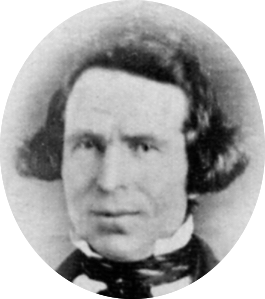
Monday: Map Day! – Another Clark Family

This week we take a break from our usual focus on the extended Jonathan M. and Mary (Turck) Clark family and begin a week of posts about two remarkable, original Mequon settlers and Clark House neighbors: Sarah Allise Strickland (1823-1891) and her husband, Cyrus Clark (1815-1905).

Sarah A. Strickland was born and raised in Nova Scotia, the eldest child of Daniel and Matilda Strickland. Her family was one of the original white settler families in the area; they were enumerated in Milwaukee County on Wisconsin’s first territorial census in 1836.1

Cyrus Clark was born in western Massachusetts and was in Mequon by about 1839. He married Sarah Strickland in Grafton, Washington (later Ozaukee) County, on March 1, 1841. They lived almost forty years in Wisconsin. First in Mequon and Cedarburg, Washington/Ozaukee) County, and then divided their time between their farm in Moscow, Iowa County, and homes of one or more adult children in Oshkosh, Winnebago County. So how—and why—did they end up in South Dakota at the end of their days?

It’s an interesting story, and one that illustrates a characteristic type of pioneer experience: the continued drive to push westward, on to new frontiers and new challenges. It may seem cliché to us, but it was a real, lived experience for many of Cyrus and Sarah’s generation. This week’s posts will look at a number of key moments in their long lives, especially the decades they spent in Wisconsin. And we have some unique and new sources to share, too.

Beginning at the end…

Click to open larger image in new window.

Gravestones of Cyrus Clark and Sarah A. (Strickland) Clark, Graceland Cemetery, Madison, South Dakota.
Photo by Steve Van Slyke, used by permission.

We begin the story of Cyrus and Sarah Clark at the end, in Lake County, South Dakota, their final resting place. And not one, but two maps today, all of which take us far from Mequon and the Jonathan M. Clark house.

Continue reading
Monday: Map Day! – A Look at Wisconsin, 1851

Recent Monday: Map Day! (here, here) posts have focused on Mary Clark’s family—and her father Peter Turck and brother James B. Turck— as Mary and her children made the transition from rural life in Mequon to a home in the city of Milwaukee in the early 1860s. Today we backtrack a bit and look at some developments in the state of Wisconsin in the early 1850s.

The 1850s was a crucial time for many early Washington/Ozaukee county settler families. A few of the younger settlers were drawn West by the 1849 Gold Rush. A handful stayed in California, most returned home. Some—such as Mary Clark and her brother James B. Turck—decided that the city would be a better place to live and to raise and educate their children. Others, including more than a few of the early “Yankees” that had arrived from New England and New York state in the late 1830s and early 1840s, got the itch to sell out, take a profit and move on. Many of these went “West.”

Going West

In the 1850s, “Going West” meant different things to different people. For some, it meant the opportunity to buy large parcels of fine prairie farmland in nearby counties such as Fond du Lac, Waukesha and Walworth. For others, going west meant adventures in the lead mines and Mississippi River ports of southwest Wisconsin. And some would not stop at the Mississippi, eventually moving on to newly opened lands in Minnesota, the Dakotas and beyond, With that in mind, take a look at today’s map:

Continue reading

Fred Beckmann, Sr.

UPDATED February 9 & 11, 2025, to correct the year and date of Fred. Beckmann’s death and investigate the apparent errors on his gravestone (see updated images, text, and especially Note 4, below).

Farming the Clark place, 1868-1873

In our previous post we saw that sometime around 1861/62, Mary Clark and her children decided to move to Milwaukee. By the time the Milwaukee City Directory for 1862 was published, Mary—and, we presume, her children—were living together with Mary’s father Peter Turck, at 474 Jefferson in the city.

We also know that Mary and her daughters did not sell the Mequon farm—to Catherine Doyle—until April, 1872. So, for over a decade, someone besides the Clark family was living and working on the Clark property. Most likely, Mary made some kind of tenant-farmer arrangement where someone grew crops on the Clark land and paid rent to Mary from the proceeds. This could have been a very useful source of income for Widow Clark and her seven children during the 1860s. Unfortunately, we don’t have much documentation of who the tenants may have been and what sort of arrangement Mary may have made with them.

The Doyle Family

In the same post, I also erred in assuming that the John and Catherine Doyle family probably farmed the Clark land throughout the 1860s. Clark House museum director Nina Look recently called my attention to information about the Doyles and their neighbors in various maps and census schedules created around 1870 that shows that the Doyles were living and farming elsewhere in Mequon through most of the 1860-1870 decade. In future posts I will look at those maps and census schedules and try and make more sense of where the Doyles lived and what land they may have farmed prior to purchasing the Clark farm in April, 1872.

Nina also reminded me that I forgot one important person that we know did farm the Clark farm: Fred Beckmann

Continue reading

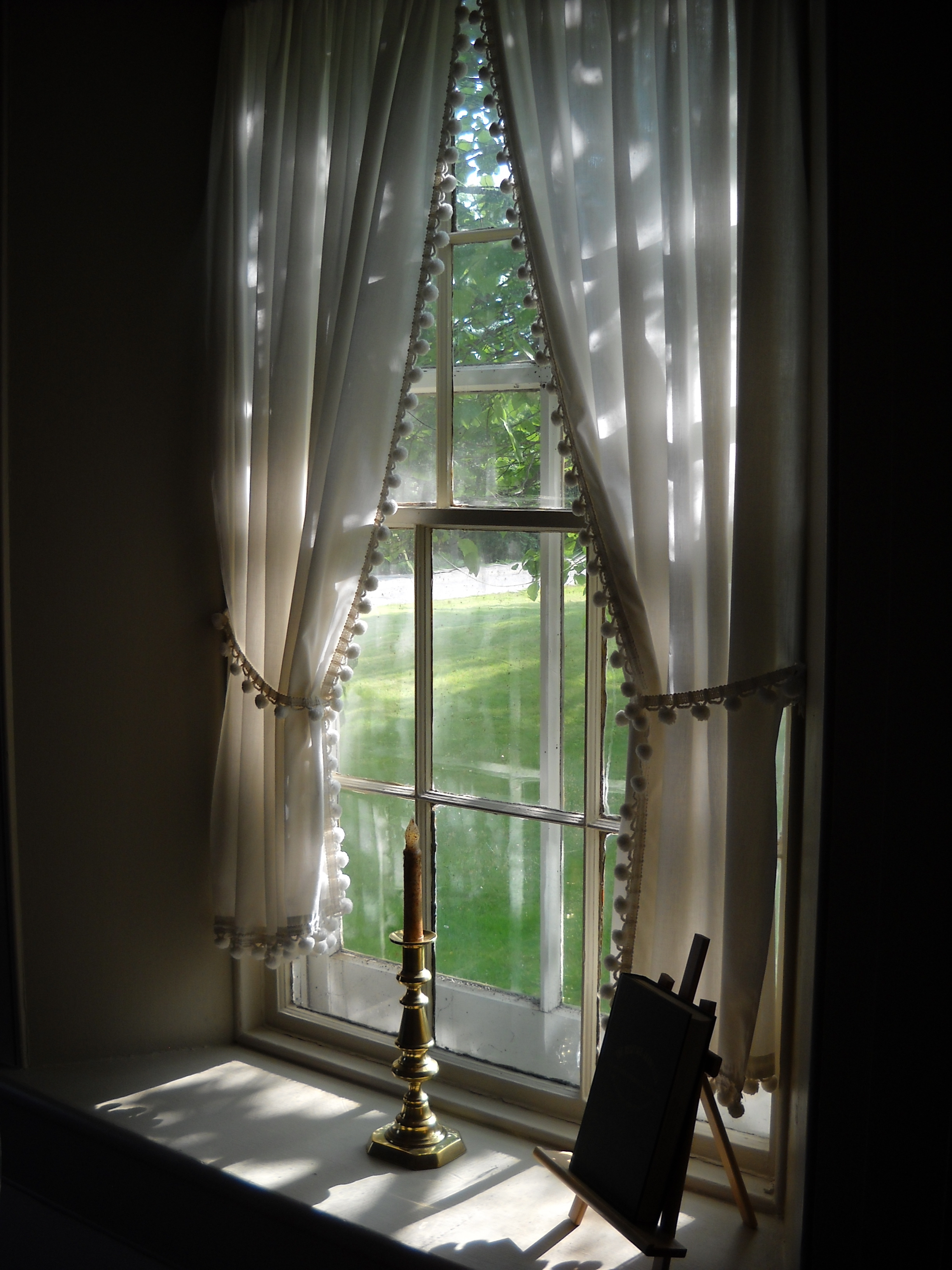
View from the window…

There’s a lot going on behind the scenes at Clark House Historian these days. I’ve got a half-dozen blog posts in various stages of completion, plus ongoing research and information-checking projects with Nina Look, Liz Hickman, and others. And, I’ve just heard from a third-great-granddaughter of two of the original Mequon settler families! How cool is that? More on those folks in an upcoming post—or two!

So let’s take a break, and enjoy a relaxing summer view from the Clark House. In this instance, a lovely July, 2015, view from the Clark’s front parlour, looking to the southwest toward present-day Bonniwell Road. According to the 1872 “Shoolmap” of Mequon, neighbors John Kurz and J. H. Townsend lived just across the street. A bit farther west down the road were—still—the farms of old friends and original Mequon settlers William Bonniwell and Jesse Hubbard.

Photo by Anna Perkins, used by permission. Click to open larger image in new window.

Monday: Map Day! – “Shoolmap” of Mequon, c. 1872

Today’s Monday: Map Day! introduces a rare and very interesting map, from a wonderful digital collection of maps. It’s the c. 1872 “SHOOLMAP of the TOWN of MEQUON,” from the University of Wisconsin–Milwaukee’s American Geographical Society Digital Map Collection, and it is packed with information and unique details:

Shoolmap of the Town of Mequon / School Map of the Town of Mequon, 1872?, University of Wisconsin-Milwaukee, American Geographical Society Digital Map Collection. Manuscript map. Mequon-Thiensville Historical Society, donor. Copyright notice here, presented in this post as a public domain item and/or under fair use provisions of U.S. copyright law.

To view a beautiful, large version of today’s map, click here, or on the map image (above). That will open a new window and take you to the University of Wisconsin–Milwaukee’s American Geographical Society Digital Map Collection, and the home page of this map. It will look something like this:

Continue reading

The Clark Family in 1860

UPDATED, December 27, 2020, to correct a typo in the list of family ages. Mary Clark was enumerated as age 39 (not 44 as previously mis-typed). —R.P.

The death of Jonathan M. Clark in September, 1857, must have been a tremendous blow to his family. Suddenly, Mary Turck Clark was a 37-year-old widow, with a nursing infant and seven other children, all under the age of 17. She had a family to raise, a 160-acre farm to manage, and important decisions to make.

What to do? Remarry for economic security? Sell the farm and move to Milwaukee for a better education for the children? Her father, Peter Turck, was already living in the city with his second wife, Christina, and their 8 year old daughter; could she and the children move in with them? Or would Mary find a new home of her own in the city?

Still here

Mary decided to stay, and make a go of it on her own. When the federal decennial census was enumerated in the summer of 1860, Mary and the children were still on the farm in Mequon:

Continue reading

1857: Disaster

As the year 1857 began, things seemed to be going well for the Clark family. Jonathan M. and Mary Turck Clark had been married for seventeen years. On May 25, 1857, they welcomed the birth of their eighth child, daughter Jennie Marietta Clark. She joined six older sisters—Caroline, Elizabeth, Persie, Theresa, Laura and Josie—and one brother, Henry.

The family had been living in their handsome, two-story home of stone and wood—now the Jonathan Clark House Museum—for nine years. They owned 160 acres of fine farmland, and appeared to be one of the more successful and comfortable farm families in the area.

But not all was well in the neighborhood. In November, 1856, typhus struck Rev. James W. Woodworth’s father, Peter. By late December, Rev. Woodworth’s daughters Rosetta and Julietta were both ill with the disease. In early February, Rev. Woodworth’s wife, Cerena Loomer Woodworth was taken ill with typhus, followed by daughter Sophia a few days later.

Continue reading

Census Records for the In-Between Years: 1838

UPDATED, July 24, 2021 with another spelling and additional info on early settler S. McEvony-McEvery-McEvany.

The Second Wisconsin Territorial Census

The second Wisconsin territorial census, taken in 1838, is the only Wisconsin territorial census we have not yet discussed here at Clark House Historian. If you need to catch up, at the end of this post is a list of our previous discussions of Jonathan Clark, Mary Turck, and their family on the federal, territorial and state censuses enumerated between 1836 to 1855.

By early 1838, several new counties—Dodge, Jefferson and Washington—had been created from the original, larger, Milwaukee and Brown counties, although the new counties were still “attached” to Milwaukee county for judicial purposes.1 This means that the 1838 territorial census of the newly-created Jefferson, Dodge and Washington counties was the responsibility of the Milwaukee county enumerator, Sheriff Own (sic) Aldrich.

The filmed images for the second Wisconsin territorial census, enumerated in 1838, are available online as FHL film no.1,293,919 , aka DGS film 7,897,817 (Item 2, following the 1836 census. The 1838 census begins at image 118 of 532). Here’s the first page of the Milwaukee county census (including the attached counties of Jefferson, Dodge and Washington):

Continue reading

Census Records for the In-Between Years: 1855 — Part 2

Who’s On That 1855 Census Page?

This is a follow-up to our previous post about the Jonathan M. Clark family and the 1855 Wisconsin state census. You might want to read that post first, and also take a look at our recent discussion of English/Latin and German Kurrent hand writing styles as used in places like Wisconsin in the 1800s.

In the comments to that 1855 state census post, blog reader and Clark House friend Liz Hickman asked:

Am curious about the others listed on the page; starts with James Woodworth [Rev.?]. Do you see any other names of interest? Can you figure out the name below Jonathan’s?

Liz Hickman, reply to Census Records for the In-Between Years: 1855

Thanks again, Liz, let me see if I can help. First of all, let’s take a look at that first page of the Mequon return for the 1855 state census:

Continue reading