In an earlier post, “Intensely Cold Weather,” we examined the negative effects of several episodes of bitterly cold winter weather during the Clark family’s era and shortly afterwards. Today we look at some of the positive aspects of frigid winters in our part of the Old Northwest.
It’s no secret. Wisconsinites like to do stuff outdoors in the winter cold. Ice fishing. Skating. Cheering for the Packers.
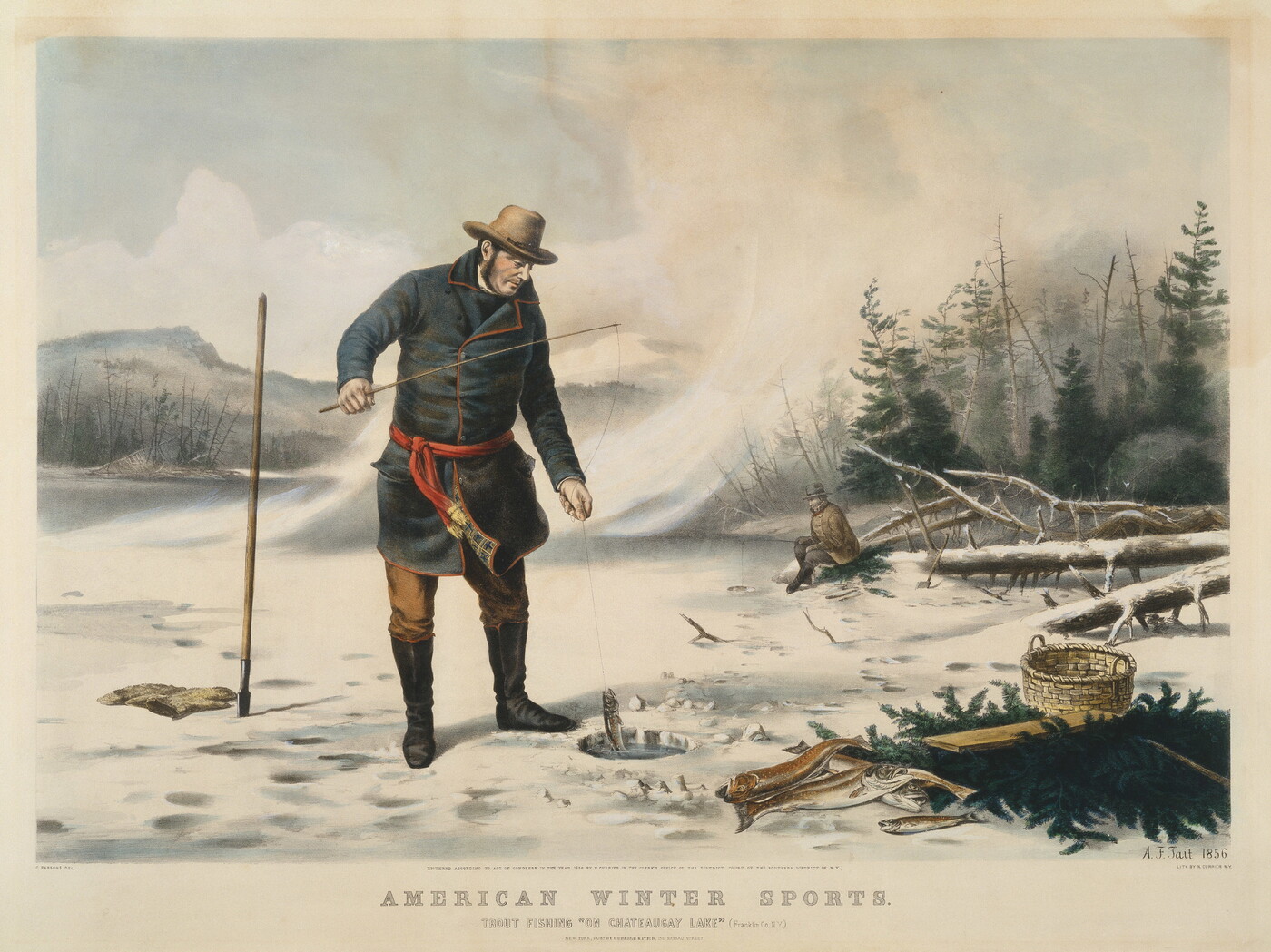
But the Green Bay Packers professional football team wasn’t organized until 1919, a full eighty years after Jonathan M. Clark bought his first parcel of Mequon land in 1839. So what did our intrepid Wisconsin pioneers do back in the mid-1800s when those deep snows fell and cold north winds began to blow? Well, if you believe the newspapers of the era, there was no finer way to occupy a clear, frosty day—or moonlit evening—than to bundle up, go outside, and enjoy a…
We’ve had some snow in my corner of southeastern Wisconsin, several modest snowfalls over the past few days. I’ve had to shovel the walks and driveway at our house a few times this week, and there’s more snow—and shoveling—in the forecast. With that in mind, I thought you might enjoy the snow-related images and stories from a revised edition of this post, which originally appeared here in February, 2023.
Homer, Winslow, A Winter-Morning,—Shovelling Out, 1871. Wood engraving. Brooklyn Museum, Gift of Harvey Isbitts.
Winter chores
I empathize with the lads in this 1871 engraving by Winslow Homer. Unlike these fellows, with their (homemade?) wooden shovels, I have a lightweight, sturdy, ergonomic, plastic and metal snow shovel to work with. And although we do get snow in 21st-century Wisconsin, I haven’t had to deal with shoulder-high accumulations like the ones in Homer’s picture since I lived in western Massachusetts in the early 2010s. It looks like our 1871 snow shovelers are dealing with the kind of snowfall that Clark family neighbor Rev. James W. Woodworth described in these January, 1871, diary entries:
It’s already the second week of May, 2024, and summertime will soon be here. At our southeastern Wisconsin home the first spring flowers are done, and the next round of blossoms have been blooming for a week or two. The peas will soon be in the ground, and we already harvested enough rhubarb to make two and a half small jars of jam. The tomato and pepper seedlings and the squashes will go in soon, and I need to put up a trellis or two so we can start the big patch of green beans. So even though it’s “early” by the standards of previous years, we’ve got gardening on the mind here at the Historian’s house, and I thought you might enjoy a slightly-belated repost of this annual favorite, which first appeared here in April, 2021. Cheers!
Planning the garden
It’s early April, and the growing season is not far off. For a farmer like Jonathan M. Clark, it’s a little early yet for plowing and sowing, but not too early to make plans and sharpen the tools. For a farmer’s wife, like Mary (Turck) Clark, it’s not too soon to think about the farm garden, its crops and layout.
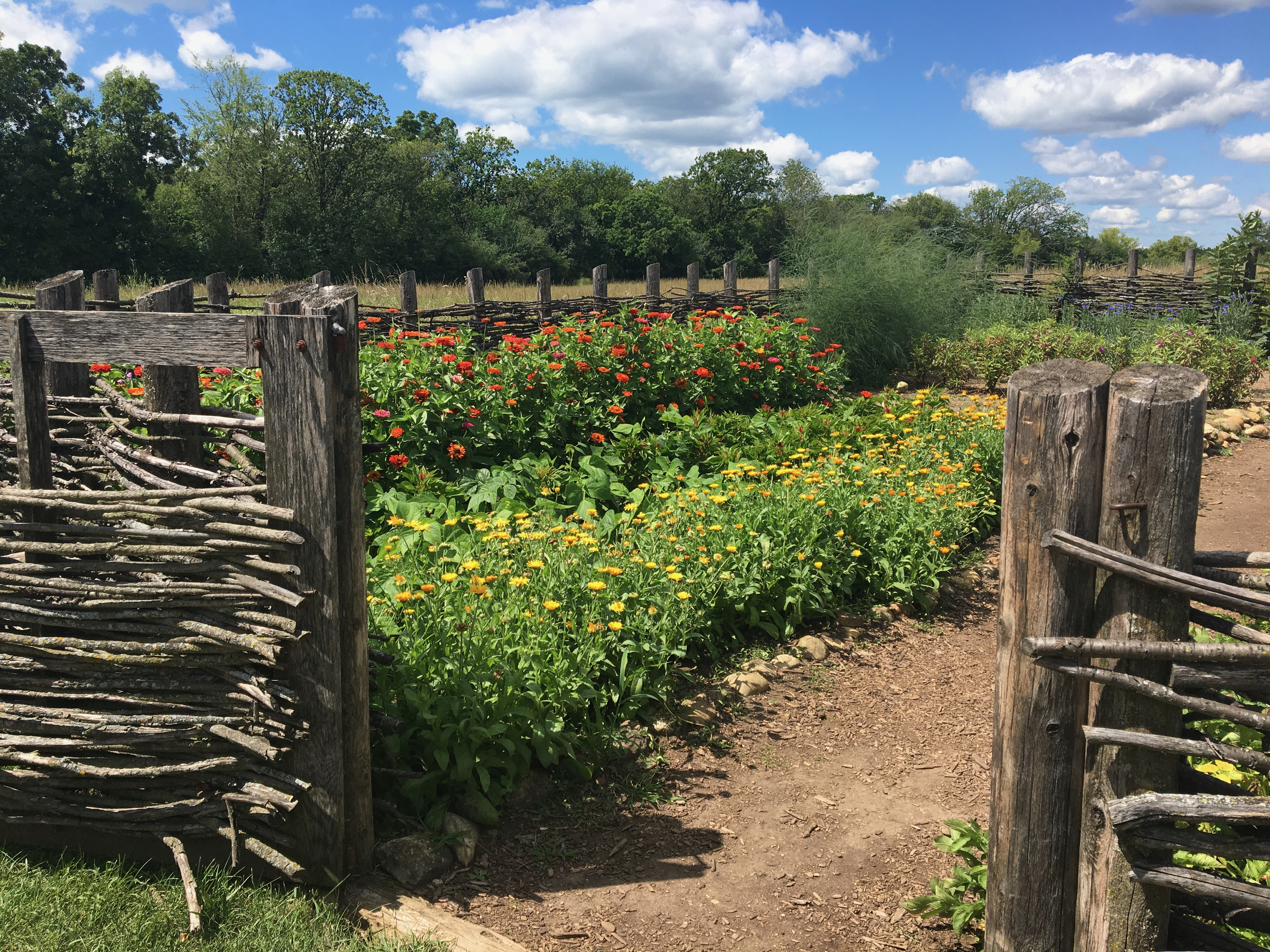
Garden at the Turck-Schottler House, 1870s Hessian Immigrant Farm, Old World Wisconsin. Photo credit Reed Perkins, 2022.1
I don’t know if Mary and Jonathan were regular readers of the popular and affordable farmers’ almanacs of their era; I wouldn’t be surprised if they were. There were many to chose from. Perhaps they had a copy of something like:
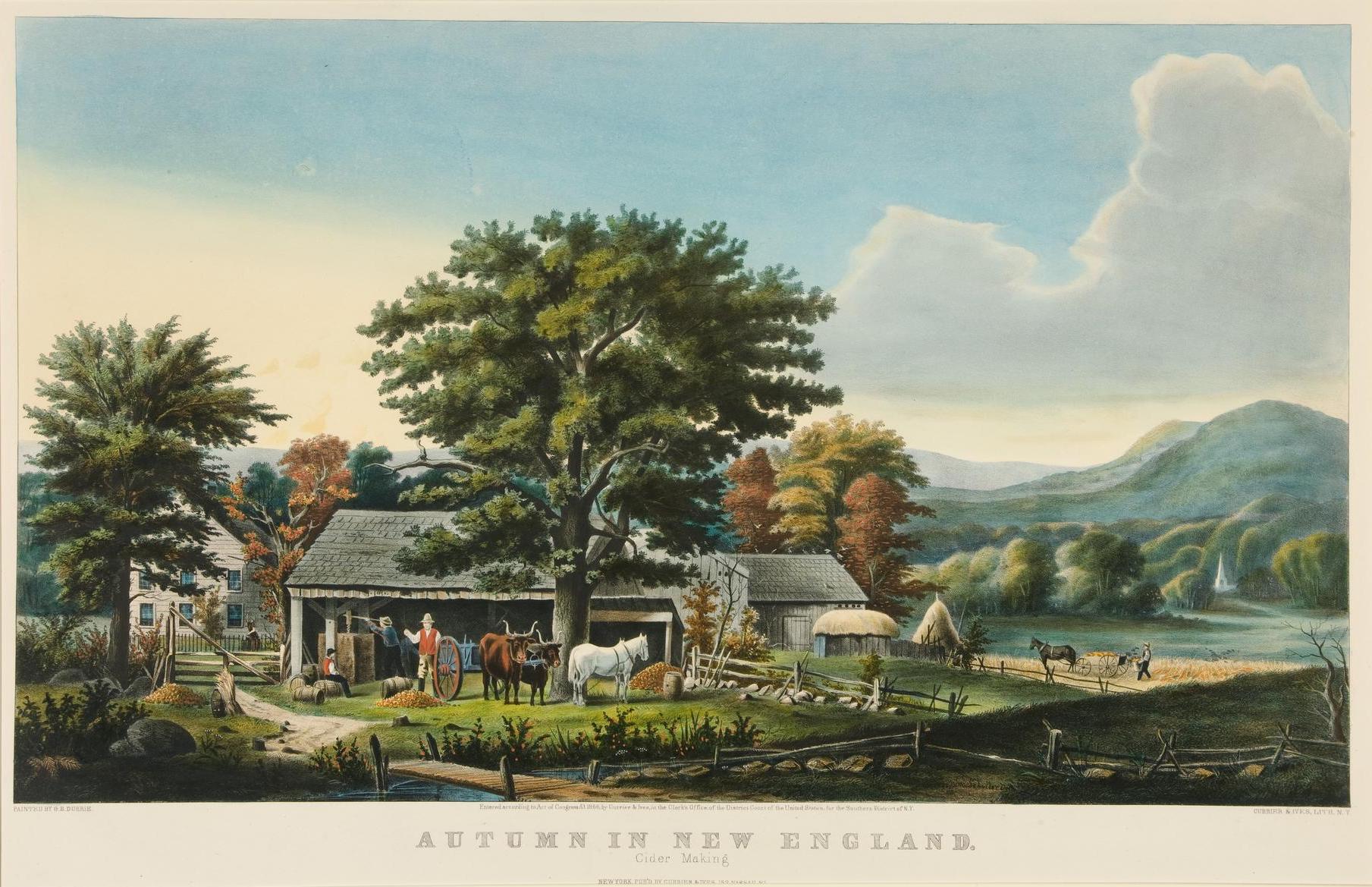
I’ve been distracted by my day job lately, and work on the Search for JMC’s Roots is progressing slowly. So while I keep chipping away at finding and organizing data from 1790s Lower Canada sources, here’s another evocative lithograph from Currier & Ives, depicting a scene that Jonathan Clark might have experienced in his youth.
We have a vegetable garden in the backyard of our southeastern Wisconsin house. It’s not large, but we still manage to grow a nice quantity of green peas, heirloom tomatoes, green beans, peppers, basil, and squash, enough to top off several dozen vacuum-sealed mason jars and fill a chest freezer each year.
Nature being what it is, we are not the only critters in the neighborhood that enjoy the bounty of our labors. Last May I mentioned our ever-expanding population of Rabbits! and the efforts needed to keep them from our young and ripening produce. This week we face a new foe…
Audubon, John James, artist, and John T. Bowen, printer, Lepus Sylvaticus, Bachman, circa 1845-1848, Smithsonian Institution, Peters Prints Collection, Creative Commons CC0 license.1
There they are: Mr. & Mrs. Cottontail and one of their many offspring. The Eastern Cottontail and its relatives were a common sight in Jonathan and Mary Clark’s world, just as they are today.
We seem to have a bumper crop of rabbits in our suburban Wisconsin yard this year and, no doubt about it, the bunnies are cute and entertaining. But for the gardener, rabbits mean trouble. If you are trying to raise vegetables and fruits to feed your pioneer family, these amusing little fur balls are the enemy. They can consume huge amounts of seedlings and sprouts in just a day or two. What’s a gardener to do?
Last year—after they ate through the plastic fence around our vegetable garden and then devoured our entire crop of green been sprouts—I went to the local big box store and got a roll of metal wire rabbit fencing and some steel posts to hold it up. That worked great for us, but it made me wonder: what did Jonathan and Mary Clark use to keep the ravenous rabbits at bay? Well, I don’t have any documentation from the Clarks’ farm, but during my researches, I have noticed some popular 19th-century methods of rabbit control.
It’s already the third week of May, 2023, and summertime will soon be here. At our southeastern Wisconsin home the first spring flowersare done, and the next round of blossoms have been blooming for a week or two. The peas are in the ground and already about 8 inches high, the rhubarb is big enough to cut and make one or two pies, and we harvested the first half-dozen radishes today. We still have to put in the tomato and pepper seedlings and start the big patch of green beans. So with gardening on my mind, I thought you might enjoy a slightly-belated repost of this annual favorite, which first appeared here in April, 2021. Cheers!
Planning the garden
It’s early April, and the growing season is not far off. For a farmer like Jonathan M. Clark, it’s a little early yet for plowing and sowing, but not too early to make plans and sharpen the tools. For a farmer’s wife, like Mary (Turck) Clark, it’s not too soon to think about the farm garden, its crops and layout.
I don’t know if Mary and Jonathan were regular readers of the popular and affordable farmers’ almanacs of their era; I wouldn’t be surprised if they were. There were many to chose from. Perhaps they had a copy of something like:
The Cultivator […], New Series, Vol. VII, Albany, 1850, title page. Click to open larger image in new window.
It’s been a while since we explored the documentary record of Mequon’s Alfred T. Bonniwell and his family and friends. Previously, we learned that the Bonniwells’ gold rush saga involved not one, but two, expeditions. The second trek westward was overland, chronicled in George Bonniwell’s gold rush diary. That trip, and the diary, began with the party’s departure from Milwaukee on April 12, 1850, continued through their arrival at the California diggings in mid-August, and closed—still searching for gold—with a final entry dated Tuesday, September 24, 1850. For more details, take another look at Gold! – The Bonniwells go west…but when? and who?
The first journey involved a smaller group, which included Alfred T. and Henry V. Bonniwell. As we discussed in A (new) Bonniwell Gold Rush timeline, that trek appears to have begun in April, 1849, with an overland wagon trip from Milwaukee to points unknown, with the party eventually arriving in New Orleans. On September 6, 1849, this first party continued West, mostly via ship: New Orleans to Chagres (Panama), by canoe and overland trail across the isthmus to Panama City, and then by steamship to San Francisco. They appear to have made it to California no later than November 4, 1849. They likely docked at San Francisco and then headed up to Sacramento, the main point of entry to the gold fields, which looked something like this:
Parsons, Charles and George Victor Cooper. Sacramento city, Ca. from the foot of J. Street, showing I., J., & K. Sts. with the Sierra Nevada in the distance / C. Parsons ; drawn Dec. 20th , 1849, by G.V. Cooper ; lith. of Wm. Endicott & Co., N. York, before March 2, 1850. Library of Congress. Click to open larger and very detailed, image in new window.
Forty-niners!
Alfred and Henry Bonniwell, together with Mequon-area neighbors P. M. Johnson, Thomas Day and Richard Taylor and perhaps one or two others, made it to the gold fields in 1849, as part of the first wave of fortune seekers. They are, therefore, bona fide “Forty-niners.” George, Charles and both William T. Bonniwells (senior and junior), and the rest of their overland party would not arrive until August, 1850. It would appear that Alfred and the rest of the Wisconsin 49ers had a lucky head start on the others. Or did they?
I’m still busy annotating maps for upcoming Bonniwell-related blog posts. So instead of my planned Gold Rush themed Monday: Map Day! essay, I hope you enjoy this Clark-era image of a common visitor to much of North and South America—including Wisconsin—the Great Horned Owl.
Havell, Robert, jr., engraver, after John James Audubon, Great Horned Owl, 1829, plate 62 from The Birds of America (1828-1838), hand-colored engraving and aquatint on Whatman wove paper. National Gallery of Art, Gift of Mrs. Walter B. James. Public domain. Click to open larger image in new window.





 Clark House Historian