Henry Clark – Civil War draftee

What we do — and don’t — know about the Clarks’ only son (part 3)

This is the third in a series of posts examining what we do — and don’t — know about Henry Clark, his life, and his possible military service. If you missed them, you may want to look at:
• Part 1: Meet the Children: Henry M. Clark
• Part 2: Henry Clark and the Civil War draft
• and a related tidbit: Avoiding the draft, 1862 style

Henry Clark and the 1863 draft
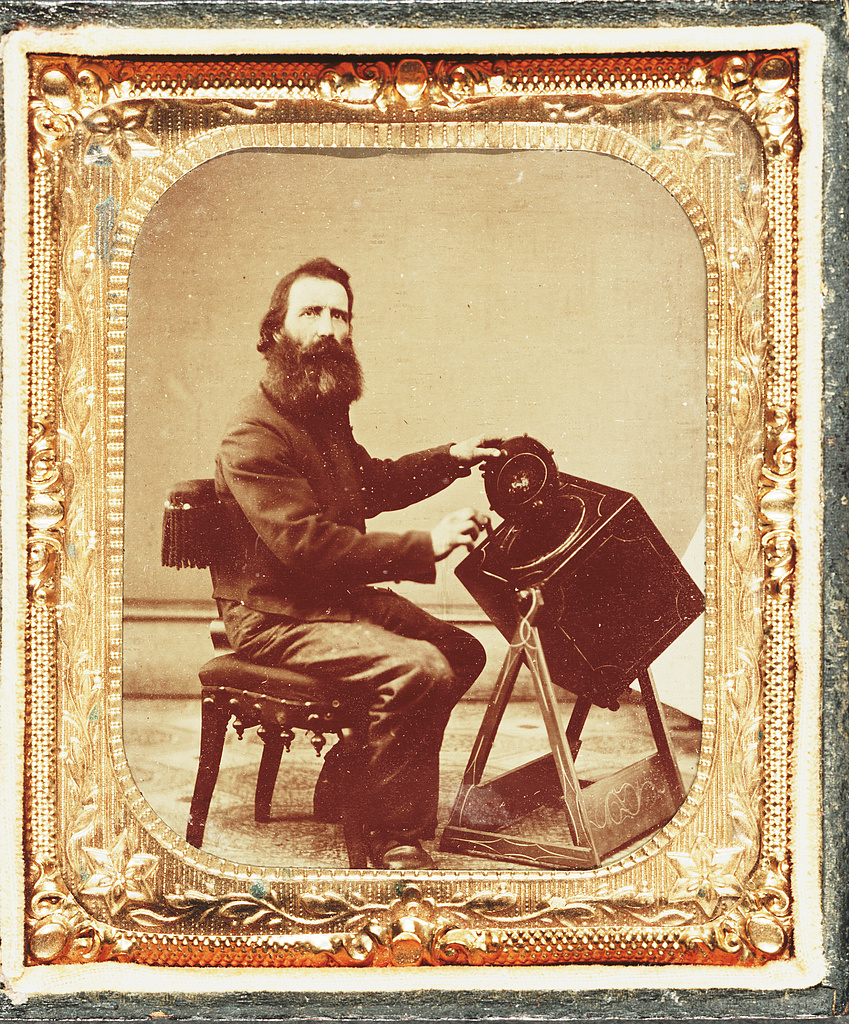
[Civil War induction officer with lottery box.] United States, ca. 1863. Photograph. Library of Congress. Click to open larger image in new window. The draft officials in Milwaukee used a similar box or wheel to draw names in the 1863 draft. (The Wisconsin Historical Society has a wheel-shaped draft drum, circa 1863-1865, in its collections. It’s possible that the WHS lottery wheel may be the exact wheel used during Henry Clark’s November, 1863, draft event. Click here for a photo and accompanying information.)

Our previous post included an image of Henry Clark’s June, 1863, registration for the upcoming military draft. The Milwaukee draft of November, 1863, lasted for several days. The names of draftees from each Milwaukee city ward or county town were written on paper slips and placed in a round wooden “wheel.” The container was spun about to mix the names, and then the draft official would reach in, pull out one slip of paper, read the name aloud, and the clerk (and the press) would record the names as drawn. Once each ward, town, or village reached its quota of draftees, the box would be emptied and a new set of names from another location would be placed in the drum, and the process repeated.

Continue reading

Henry Clark and the Civil War draft

What we do — and don’t — know about the Clarks’ only son (part 2)

This is the second in a series of posts examining what we do — and don’t — know about Henry Clark, his life, and his possible military service. If you missed it, you might want to start with part 1: Meet the Children: Henry M. Clark

Reading, Mass. Selectmen. The union must be preserved! The citizens of Reading are hereby invited to meet at Lyceum Hall to-morrow, Thursday, at 6 o’clock. P.M., to make such arrangements as may seem necessary to raise our proportion of volunteers … Selectmen of Reading. Boston, 1862. Library of Congress Meetings such as this were held all over the North—including Wisconsin—before and after the passage of the Militia Act of 1862. Click to open larger image in a new window.

Continue reading

Peter Turck and Irish Relief

Today is St. Patrick’s Day, originally the religious observance of the feast day of the principal patron saint of Eire.1 In honor of the day, let’s take a look at a few aspects of Irish life in early southeast Wisconsin and the involvement of Mary (Turck) Clark’s father Peter Turck in a civic effort to relieve Irish suffering during the Great Famine.

Irish immigrants in early Wisconsin

The first white visitors to Wisconsin were seventeenth-century French-Canadian explorers, priests and fur trappers, at home along Wisconsin’s lakes and rivers. They were followed by a smattering of British and French settlers in the mid- and later-eighteenth century. Cornish lead miners arrived in the southwest corner of the territory around the turn of the nineteenth-century. And in the mid-1830s, when the federal government officially “opened” the southeast corner of Wisconsin for settlement, there was a large influx of New Englanders and New Yorkers.

There were also a substantial number immigrants from across the sea among the Wisconsin pioneers of the 1830s and ’40s, including settlers from Upper and Lower Canada, Nova Scotia, Great Britain, the Netherlands, the German-speaking lands, and Ireland. By the time of the 1850 federal decennial census, Irish men, women, and children comprised the second-largest group of foreign-born immigrants in the state, surpassed in number only by immigrants from the German-speaking lands.

Continue reading

RBOH – Walter Bonniwell’s first marriage

UPDATED: February 25, 2021. See notes, below, for details.

Introducing RBOH – Random Bits of History!

I have so much information to organize and share with fellow Clark House researchers and blog readers, and it doesn’t always fit into a one of our longer, regular blog posts. So today we begin an occasional series where I publish random bits and pieces of Mequon related history. With RBOH, I plan to write shorter posts that present new information or unknown documents, and try to solve mysteries or confirm existing, but undocumented, facts. Let me know if you have any questions, comments, suggestions or requests.

Walter Bonniwell’s first marriage documented!

Regular readers know that I often refer to George B. Bonniwell’s excellent history of Mequon’s early and influential pioneer family—and Clark House neighbors, friends, and in-laws—the Bonniwells. Like any work of history or genealogy, George’s book, The Bonniwells: 1000 Years, printed in 1999, has a few omissions and blank spots. But research has not stopped since his book was printed, and today we present three documents that give information about one of those missing bits of history, the marriage of Walter Bonniwell (1824-1884) and his first wife, Eleanor “Ellen” Bailey (c. 1827 to ????). In the process we’ll run into another key early settler—and man of many trades—Jonathan M. Clark’s father-in-law, Peter Turck.

Marriage License – January 18, 1845

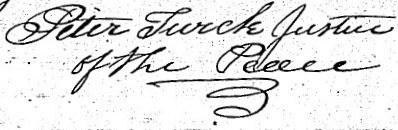
The couple’s handwritten marriage license is image number 1211 in the Milwaukee Public Library’s collection of Milwaukee County Marriage Certificates. It reads:

Territory of Wisconsin }
Washington County }
License is hereby given to

Walter Bonniwell and Ellen
Bailey to Unite in Marriage according
to Law
Given under my hand this 18th day of January. A.D. 1845
{SL} Peter Turck Justice of the Peace

Source
Continue reading

Erie Canal – the Bonniwell Family 1832-39

Inspired by our earlier looks at the influence of the Erie Canal on the early lives of both Jonathan M. Clark and the Peter and Rachael (Gay) Turck family (here and here), I thought I’d share more stories of Mequon settlers that used the canal to make their way westward to the wilds of the Wisconsin Territory in the 1830s and ’40s. Today’s focus is on the Bonniwell family.

England to Montréal to New York

Originally from Chatham, Kent Co., England, the William T. B. and Eleanor (Hills) Bonniwell family came to Lower Canada by ship, sailing across the Atlantic Ocean and up the St. Lawrence River to Montréal. Shortly after arrival in 1832, family patriarch William T. B Bonniwell died there of cholera.

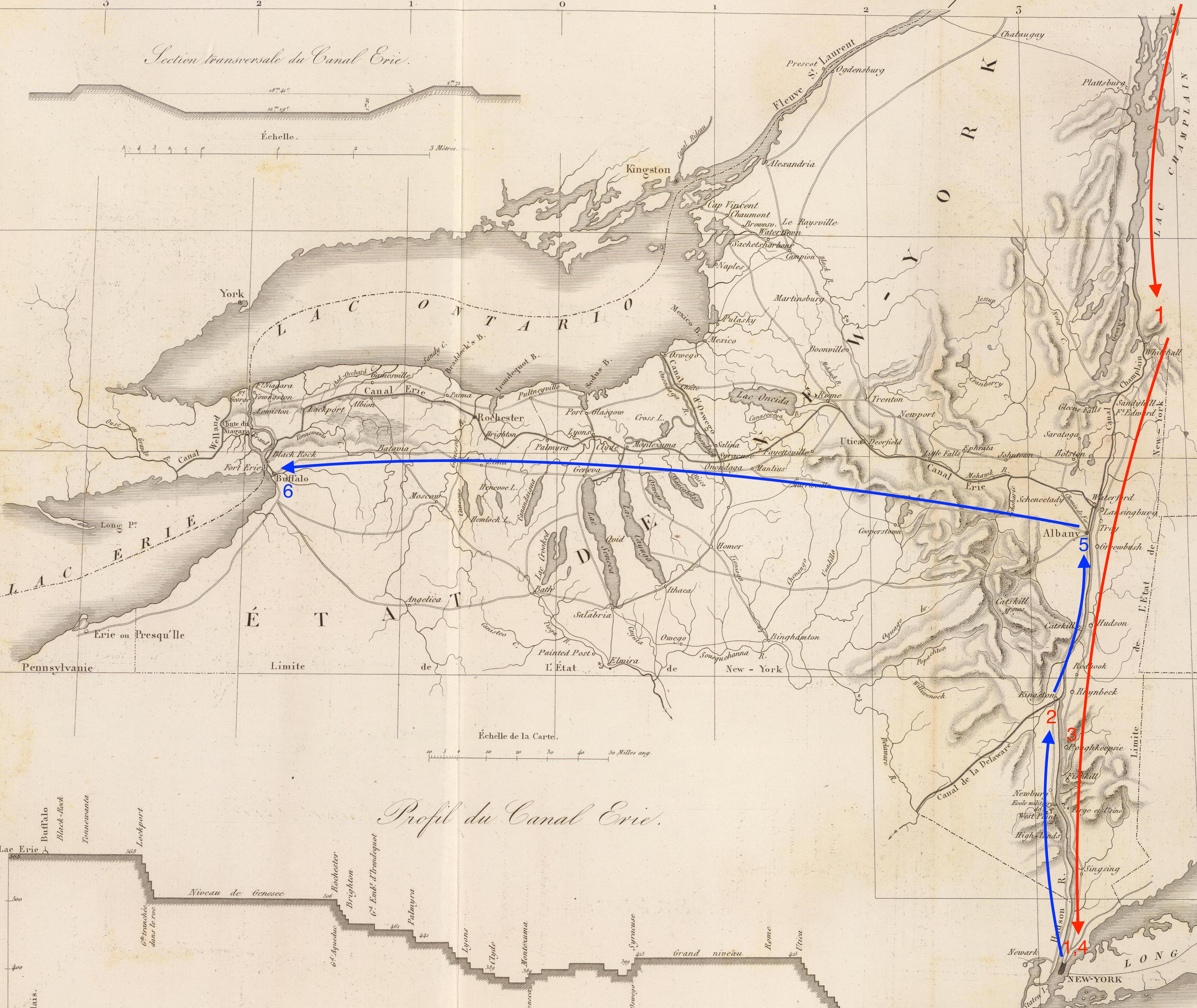
Following her husband’s untimely death, Eleanor (Hills) Bonniwell, decided to leave Montréal and take her children south to New York City, via the Richelieu River, Lake Champlain and the new Champlain Canal connecting Whitehall, New York, to the Hudson River. Two of her sons, George and William Bonniwell, had already located and found work in New York City.

After living for a bit in New York City, Eleanor moved upriver to the town of Esopus, Ulster County, on the west bank of the Hudson River. Sometime around 1835 Eleanor Bonniwell married a second time. Her new husband was a widower, Captain Christopher Hyde, of the town of Hyde Park, just across the river in Dutchess County.

Continue reading

Turck, Turk…Durk?

Spelling variations in old records

Durk, Peter [Turck], baptismal record, 1798, detail. “Peter” starts the left column, father “Jacob A. Durk” is at the top of the center column (source). Click to open larger image in new window.

In a previous post, reader Laura Rexroth asked: Why did they spell Peter Turck’s name incorrectly [i.e., Durk] when he was baptized? That’s a great question, and super relevant to successful historical and genealogical research. So let’s talk about the Turck family surname and, by extension, the whole issue of spelling in earlier times and documents.

There are two main issues to keep in mind:
• variations in spelling that existed at the time the source material was created, and
• subsequent misreadings, including incorrect transcription or indexing of sources

Continue reading

Martin Luther King Jr. Day

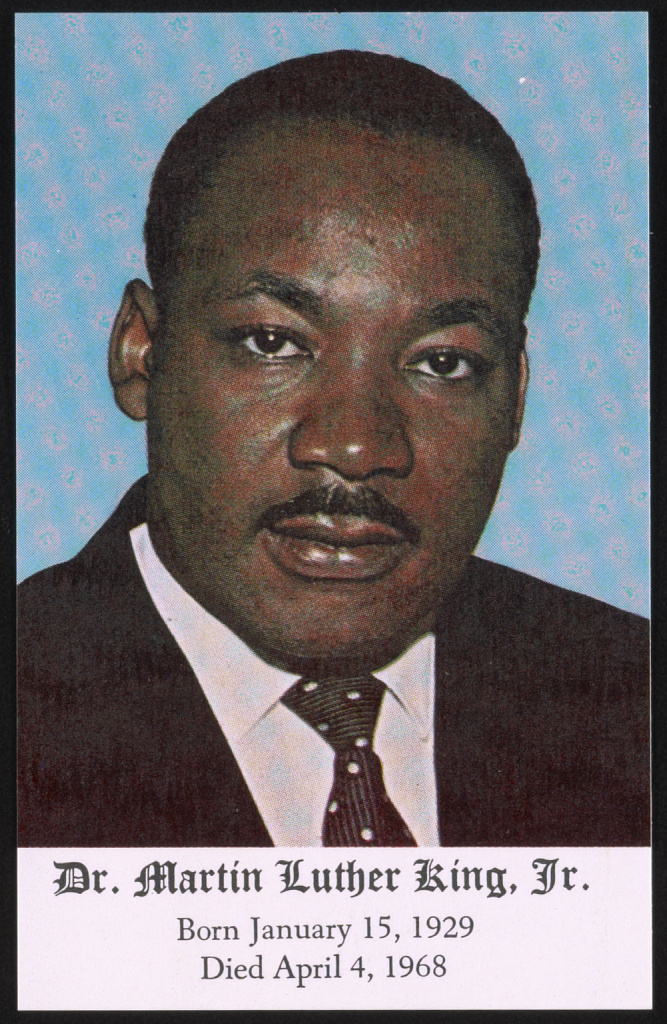
Today is the day set aside to commemorate the life and work of Dr. Martin Luther King, Jr. (1929-1968), one of the first and foremost proponents of Gandhi-style non-violent protest in the West, and one of the most inspirational and influential civil-rights, labor-rights and anti-war advocates in American history.

Unknown photographer. “Dr. Martin Luther King, Jr. Born January 15, 1929, died April 4, 1968.” From the Rosa Parks Collection, Library of Congress, https://www.loc.gov/item/2015651821/. Used here under Free Use provisions of U.S copyright law.

Among many honors, Dr. King was awarded the Nobel Peace Prize in 1964. The Norwegian Nobel Committee has a good biography here and additional information including a series of school lessons with lesson plans, videos, photos and other materials here. These are excellent resources for all of us. While Dr. King is—justly—remembered for his “Letter from a Birmingham Jail” and his 1963 “I have a dream” speech, it’s important that we remember the full depth and breadth of his life and work, and not just a few often-repeated quotes and sound bites.

Continue reading

When was Mary Turck born?

Just when you think you know the answer…

A few days ago, Clark House museum director Nina Look asked me a simple question: when, exactly, was Mary Turck Clark born? So I looked in my database and I came up with…two answers: Mary Turck Clark was born on either May 4th, 1820 or May 3, 1821. So I reviewed my dates and sources, and today’s post is about what I (re-)discovered, and what I still have to investigate.

Haven’t we been over this before?

Why, yes, we have. Here are links to earlier posts on essential sources of Mary Turck Clark birth date and birth year information, starting with my second Clark House Historian post, this now-outdated post about Mary from 2016. Other, more recent, posts have gone into detail examining Mary, her family, and their likely birth dates as found on the U.S. federal decennial censuses:

I’ve not yet blogged about Mary’s 1870 or 1880 federal censuses—both enumerated in Milwaukee—but I’ve seen them and used them in my research. More on these in a moment.

Continue reading