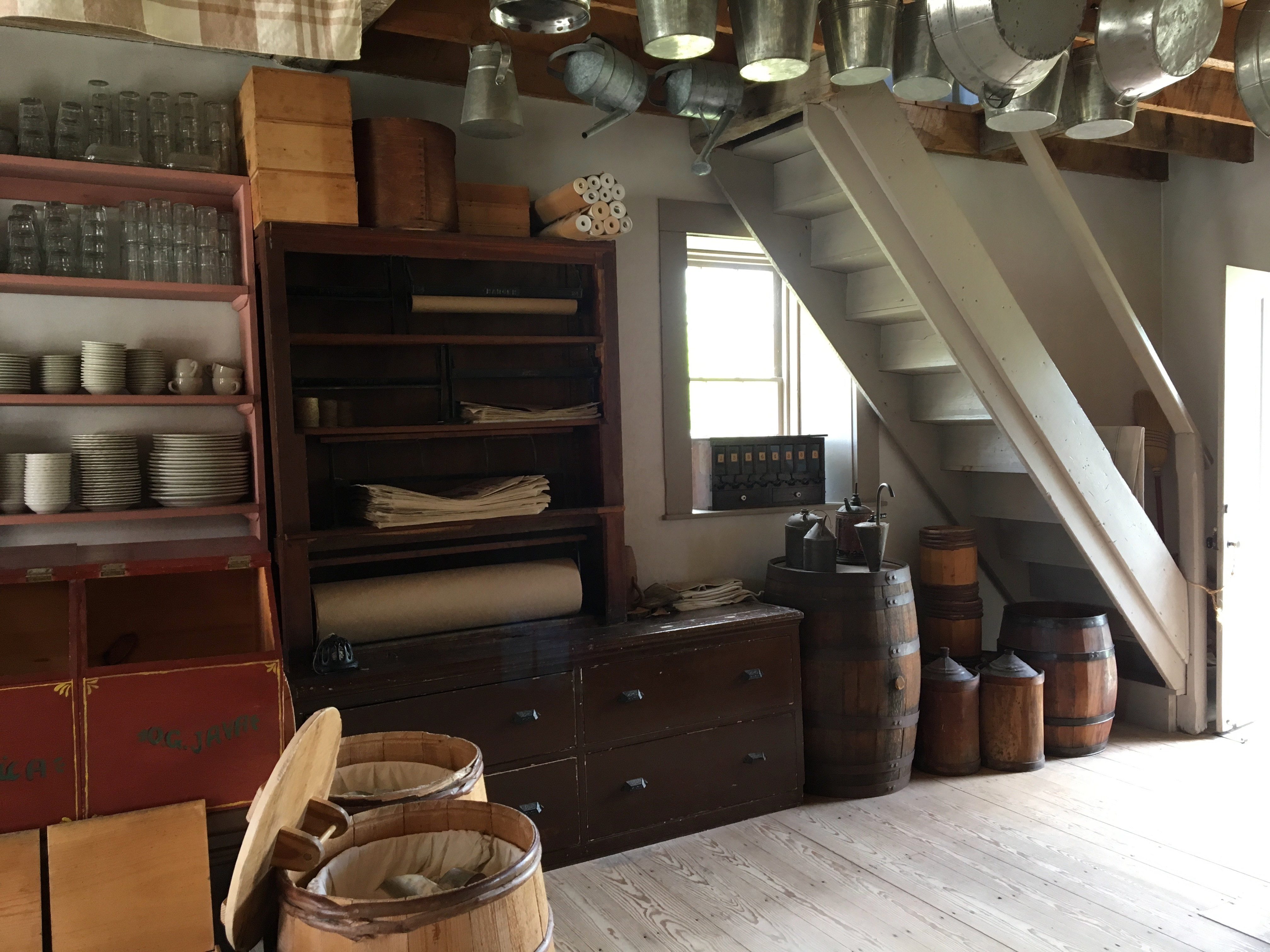
Even thought it’s Labor Day, the holiday celebrating the working men and women of our nation, I’ll be at work, back at our local mercantile establishment. You know, a store kind of like this one, stocked with just about anything you need for modern living:
I don’t have the day off, and won’t be marching in a parade, but I’d still like to honor the holiday and salute the American worker, past and present. With that in mind, let’s revisit some of the nineteenth-century occupations we’ve talked about previously at Clark House Historian, highlighting a few of the many skills, trades, and occupations common during the Clark House era.
Since it is a holiday, I’m not going to add much commentary today. Enjoy the photos, and click the links to visit the original CHH posts with lots more information about the different skills and jobs, and for full image credits.
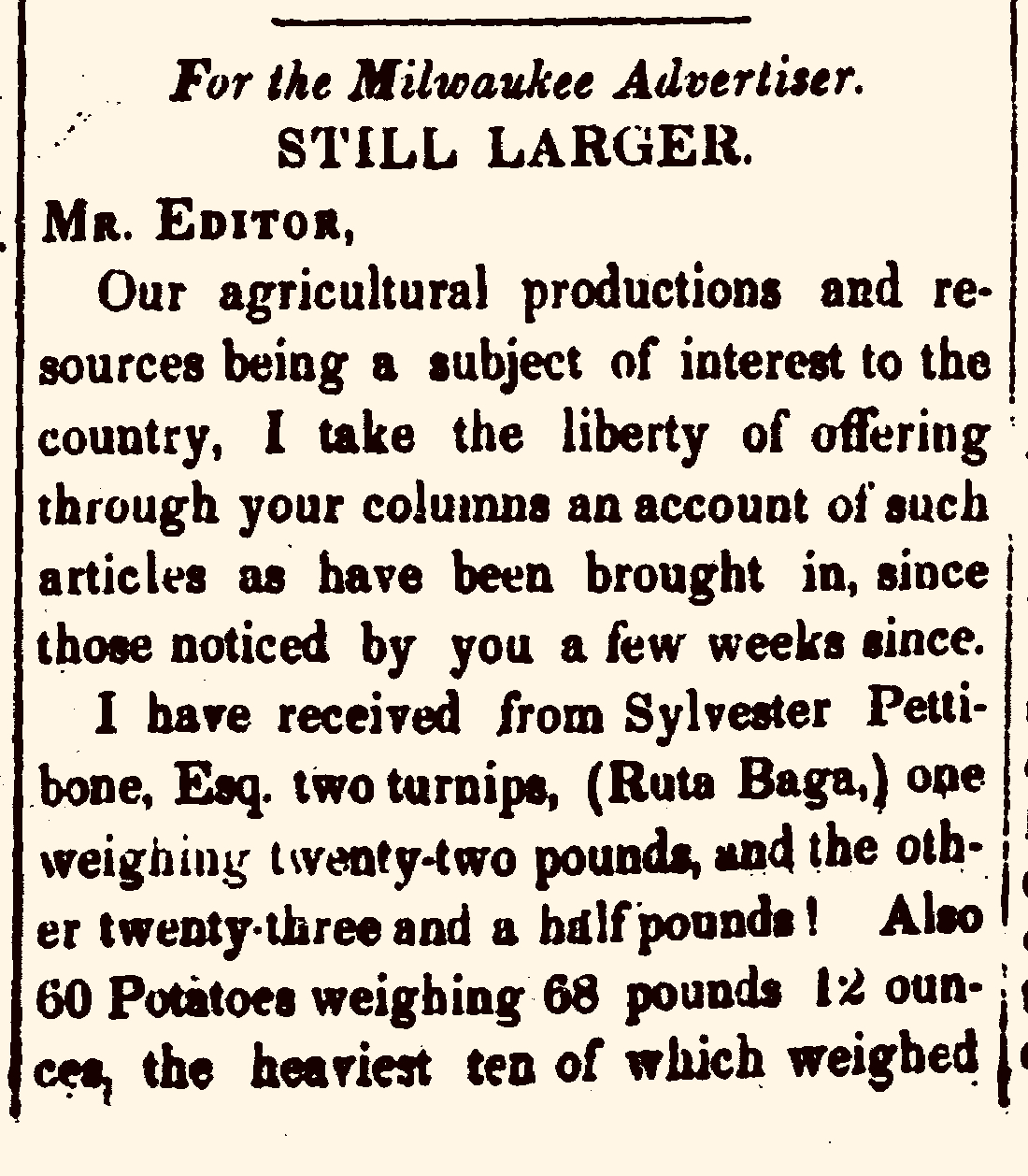
While researching the life of one of Mequon’s first white settlers, Isham Day, I ran across the following breathless bit of regional puffery and promotion, penned by Milwaukee co-founder Byron Kilbourn. It’s from page 2 of the November 17, 1836, edition of the Milwaukee Advertiser:
Lawyer Pettibone has, indeed, grown some astounding turnips (“Ruta Baga”), ‘taters, and carrots in the fertile soil of Milwaukee. Likewise Mr. Douglass with his enormous radishes and “common English” turnips. Have others done anything comparable? Indeed they have, and Mr. Kilbourn has the details…
Isham Day was one of the very first white pioneers to settle in the future Town of Mequon, Wisconsin Territory. I first wrote about Isham Day, and his historic house—later Mequon’s first post office, and also known as the Yankee Settlers’ Cottage—in an earlier post, River Walk. You might want to read that before continuing with today’s essay.
Isham Day was not only one of the first settlers in this area, he was active member of the small but growing community in what would become Washington and, later, Ozaukee counties. There is a lot to say about his role in the early decades of pioneer life in the Clarks’ neighborhood, some of which is already known through early local histories and various federal and local primary sources. (And he appears in six different posts here at Clark House Historian.)
One thing that is less well known is what happened to Isham Day after those early days in Milwaukee and Mequon. I wanted to know and, after an extended search, I found out. In many ways, it’s a story of the stereotypical moving-ever-westward American pioneer experience. But it’s also a story of a man trying to live a peaceful life in the midst of violence and rebellion. In our recent post, Memorial Day, 2023, we remembered some of our local men that fought and died to preserve the Union and end the scourge of slavery in “the land of the free.” Today we examine one of the many civilian casualties of that conflict: Isham Day.
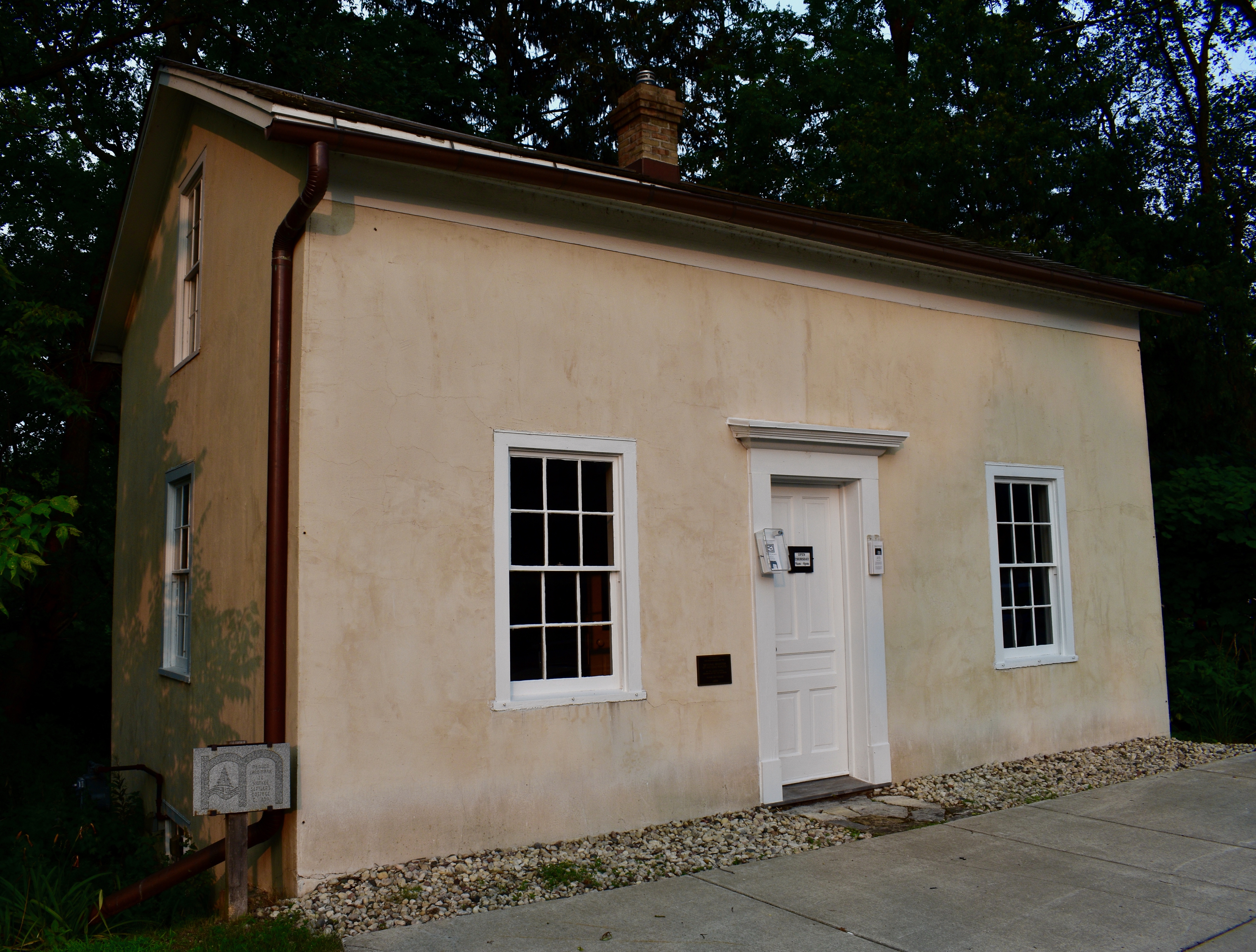
Isham Day house (“Yankee Settler’s Cottage”), built 1839, Mequon, Wisconsin. The oldest house in Ozaukee county still on its original foundation. Photo credit: Anna Perkins, 2021.
Please note: sensitive or younger readers may find some of the language and events documented below to be disturbing.
Our annual Memorial Day post, first published in 2020. Updated for 2023 with new information about Evander B. Bonniwell’s service.
Graves of Unknown Union Soldiers, Memphis National Cemetery, photo by Clayton B. Fraser, (Library of Congress), public domain. Memphis National Cemetery is the final resting place of Mequon’s Watson Peter Woodworth, and almost 14,000 of his Union Army comrades.
Today is the day our nation officially observes Memorial Day. For many Americans, Memorial Day represents “the first day of summer,” and is traditionally celebrated with trips to the lake, picnics, parades, and sales on cars, appliances, and other consumer goods.
But for many of us, Memorial Day remains rooted in its origins as Decoration Day. The first national observance was in 1868, when retired general John A. Logan, commander and chief of the Grand Army of the Republic—the Union veterans’ organization—issued his General Order Number 11, designating May 30 as a memorial day “for the purpose of strewing with flowers or otherwise decorating the graves of comrades who died in defense of their country during the late rebellion, and whose bodies now lie in almost every city, village, and hamlet churchyard in the land.”
On this Memorial Day, let’s take a moment to remember what this day truly represents.
It’s already the third week of May, 2023, and summertime will soon be here. At our southeastern Wisconsin home the first spring flowersare done, and the next round of blossoms have been blooming for a week or two. The peas are in the ground and already about 8 inches high, the rhubarb is big enough to cut and make one or two pies, and we harvested the first half-dozen radishes today. We still have to put in the tomato and pepper seedlings and start the big patch of green beans. So with gardening on my mind, I thought you might enjoy a slightly-belated repost of this annual favorite, which first appeared here in April, 2021. Cheers!
Planning the garden
It’s early April, and the growing season is not far off. For a farmer like Jonathan M. Clark, it’s a little early yet for plowing and sowing, but not too early to make plans and sharpen the tools. For a farmer’s wife, like Mary (Turck) Clark, it’s not too soon to think about the farm garden, its crops and layout.
I don’t know if Mary and Jonathan were regular readers of the popular and affordable farmers’ almanacs of their era; I wouldn’t be surprised if they were. There were many to chose from. Perhaps they had a copy of something like:
The Cultivator […], New Series, Vol. VII, Albany, 1850, title page. Click to open larger image in new window.
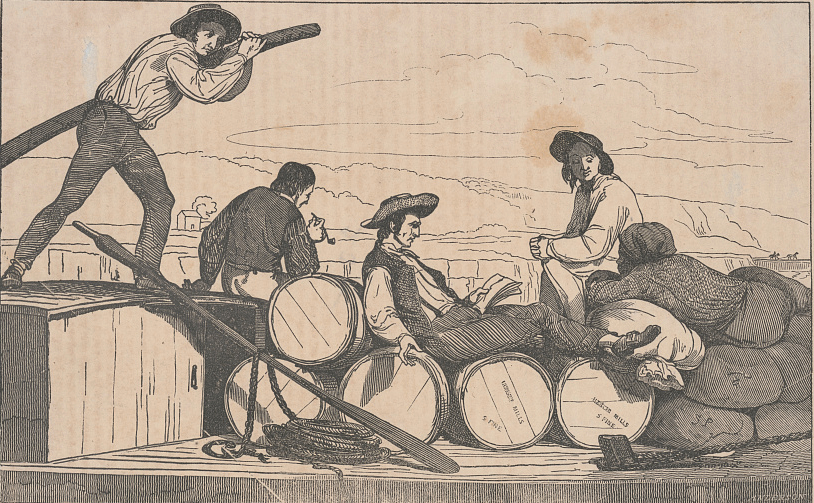
In the 1800s there were no corrugated cardboard boxes or padded shipping envelopes. If you needed to store or ship any liquid—and most dry goods—the barrel (and its larger and smaller cousins) was almost always your container of choice.
Anderson, Alexander, engraver. Five Men on a Flatboat With Barrels and Sacks; One Man Operates the Keel from Above the Boathouse, the Others Are Resting on the Freight, circa 1830-1860, Library of Congress.
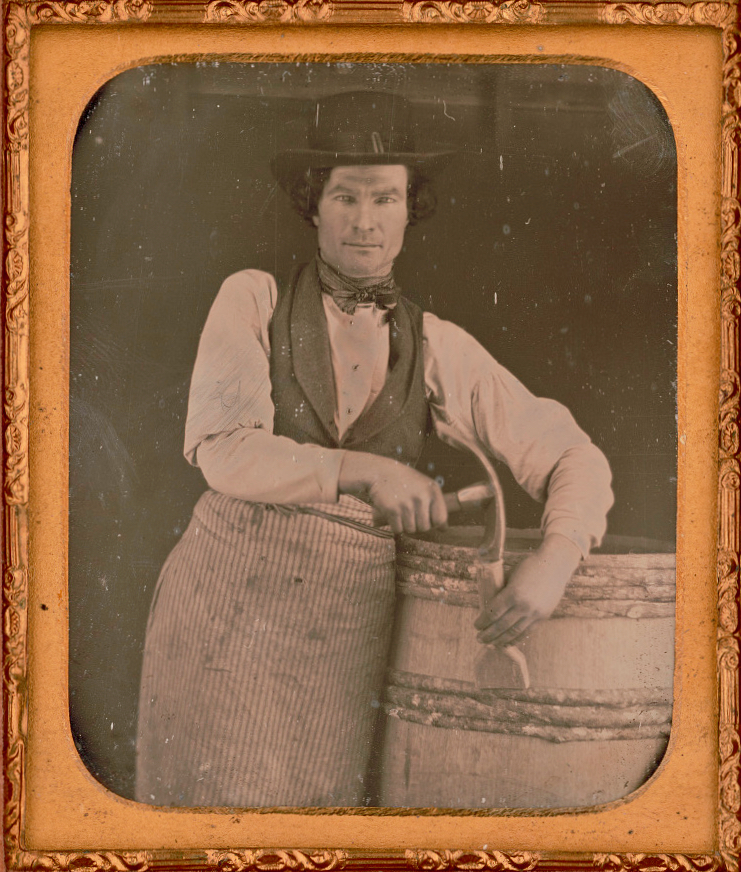
And when you needed a barrel, hogshead, keg, cask or firkin, or just an oaken bucket for your well, you would get it from a cooper.
Unknown photographer. Occupational Portrait of a Cooper, Three-Quarter Length, With Barrel and Tools, circa 1840-1860, Library of Congress.
Recently, we took a closer look at the 1850 census for old Washington county1 and noticed that six men from the neighboring Bonniwell families—men that we know from other records were actually half a continent away, prospecting for gold in California—were officially enumerated as members of their Wisconsin families in census schedules for Mequon and Grafton. In addition, we now know that those six Bonniwell men were not the only members of their expedition to be enumerated with the families they left behind in old Washington county.
Persons “whose usual place of abode…”
In the months since my original attempt to identify and list all the members of the Bonniwell 1849 and 1850 expeditions in Gold! – The Bonniwells go west…but when? and who?, I have been able to identify—with varying degrees of confidence—several other members of their California expeditions. I have more details to share about the lives of these men later, when time permits. For today, I’d like to briefly introduce each of them and make note of their presence on the 1850 census schedules for old Washington Co., Wisconsin, even though all were still seeking fortunes in California at the time they were enumerated.
Phineas Miller “P.M.” Johnson (1808-1876)
P. M. Johnson was, with William T. Bonniwell, one of the co-organizers of the Bonniwell 1849 and 1850 expeditions to the California gold region. We know that he was still in California in 1849-1850, but he was enumerated on lines 37-42, page 229a of the 1850 census for Grafton, Washington Co., Wisconsin with his wife, Orra Ann (Collins) Johnson and his four eldest children: Ransom W., Samuel C., William H., and George.2
The P.M Johnson family’s 1850 enumeration concludes on the reverse of this schedule, lines 1-4, page 229b, with the information for their youngest four offspring, Anna, Edwin, Julia, and four-month-old Harriet.
Today we have a surprise addition to our survey of Alfred T. Bonniwell documents. It’s a recent discovery, a very cool 1849 petition to Congress asking for a new postal road from Grafton to Waukesha, via Mequon. It’s signed by many of old Washington county’s most civic-minded men, including Grafton postmaster P.M. Johnson, Jonathan M. Clark, Peter Turck, and almost all of the Bonniwell men. It’s of interest to us, in part as an example of the citizen petition process in the early days of Wisconsin statehood, and more specifically as a record of “who was here?” in Washington county in a non-census year.
A growing county needs a new mail route
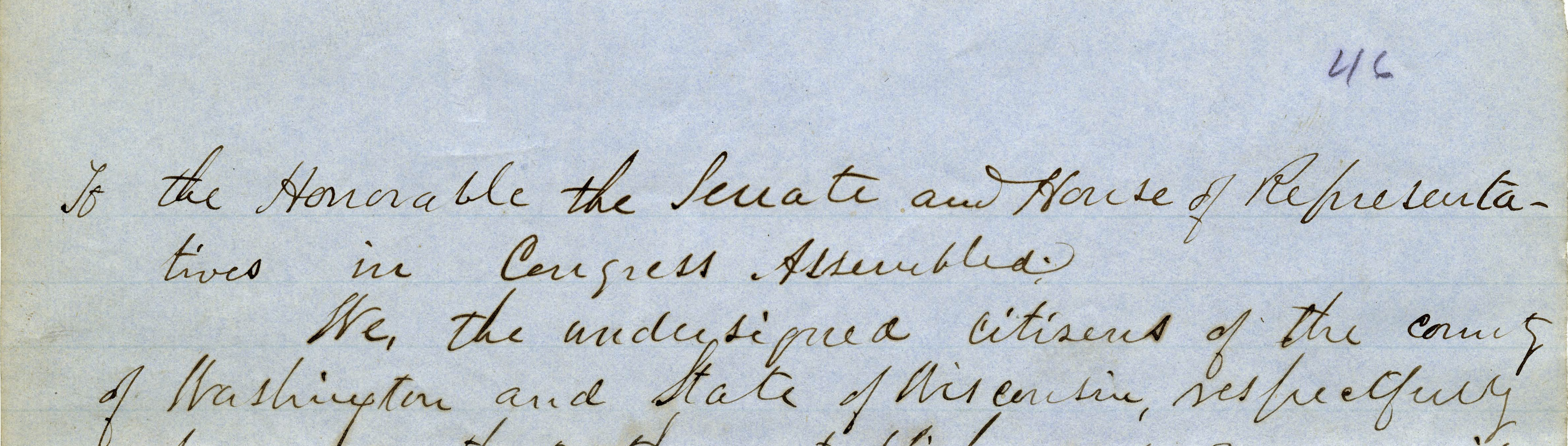
Petition of Phineas M. Johnson and others to U.S. Congress. [1849-02-06]. /documents/D275080, page 1, detail, salutation, The Papers of Abraham Lincoln Digital Library. Public domain.1, 5
Citizen petitions have been a part of American governance since early days. Check out our 2021 RBOH: Wisconsin Citizen Petitions for more information on a newly digitized collection of early Wisconsin territorial and state petitions, including a searchable database of petition images. Citizens could also petition the federal government for assistance; our petition is addressed To the Honorable the Senate and House of Representatives in Congress Assembled, and looks like this:
It’s St. Patrick’s Day, and to celebrate, here’s an update of my CHH post from March 17, 2021. Slàinte!
Today is St. Patrick’s Day, originally the religious observance of the feast day of the principal patron saint of Eire.1 In honor of the day, let’s take a look at a few aspects of Irish life in early southeast Wisconsin and the involvement of Mary (Turck) Clark’s father Peter Turck in a civic effort to relieve Irish suffering during the Great Famine.
Irish immigrants in early Wisconsin
The first white visitors to Wisconsin were seventeenth-century French-Canadian explorers, priests and fur trappers, at home along Wisconsin’s lakes and rivers. They were followed by a smattering of British and French settlers in the mid- and later-eighteenth century. Cornish lead miners arrived in the southwest corner of the territory around the turn of the nineteenth-century. And in the mid-1830s, when the federal government officially “opened” the southeast corner of Wisconsin for settlement, there was a large influx of New Englanders and New Yorkers.
There were also a substantial number immigrants from across the sea among the Wisconsin pioneers of the 1830s and ’40s, including settlers from Upper and Lower Canada, Nova Scotia, Great Britain, the Netherlands, the German-speaking lands, and Ireland. By the time of the 1850 federal decennial census, Irish men, women, and children comprised the second-largest group of foreign-born immigrants in the state, surpassed in number only by immigrants from the German-speaking lands.
In our last post, we discovered that none of our Bonniwell gold rush expedition members could be found on the surviving population schedules for the 1850 federal census in California.1 Does that mean they were not to be found anywhere on the national 1850 enumeration? Well, no. It turns out that while the Bonniwell men and their companions were physically present in California, they managed to be enumerated in…Wisconsin?
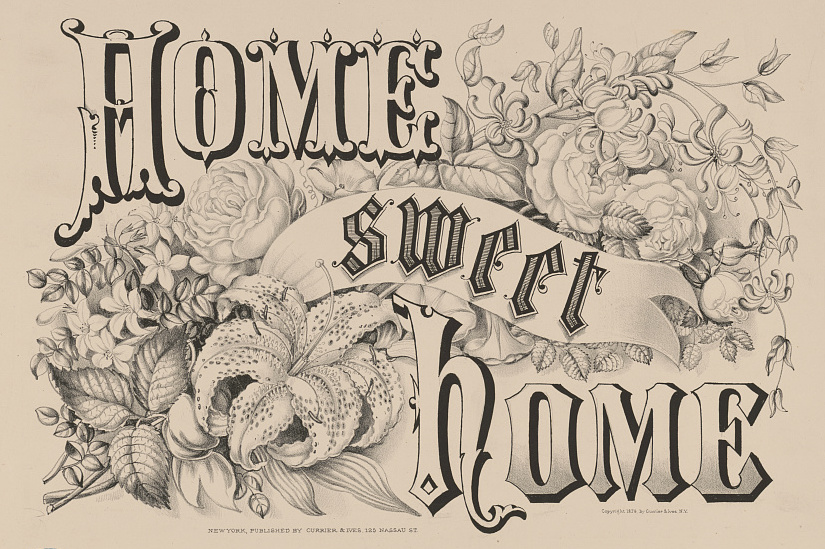
Currier & Ives. Home Sweet Home, c. 1874. New York: Published by Currier & Ives. Library of Congress.
There’s no place like home
You might think that once every ten years, when the census enumerator came to call, he or she would simply speak to a responsible adult at each address and write down the information for all of the “inhabitants” of each household. And that is pretty much how it was done.2
Naturally, there could be complications. What if some members of the household were away, perhaps working the fields, or at the mill? Maybe someone had to go to town, or farther away, on business. What about a child that is out of town at school or college? Or… what if the head of household had gone prospecting in the wilds of California’s gold district?








 Clark House Historian