Random bits of Gold Rush history

UPDATED, May 28, 2023 with additional information about Panama (City) and Postal Museum hours.

I’m still organizing a final roundup of what we know about the Bonniwell gold rush expeditions and when everyone returned to Wisconsin. Until that’s ready, here are three random bits of history that might interest you. All are closely tied to the homecoming experiences of the Clark House neighbors that went prospecting in California between 1849 and the mid-1850s. And if you missed our series of Farewell to California! The Bonniwell party returns, you can catch up with these links to Part 1, Part 2, Part 3 and Part 4.

Piracy

In a follow-up question to part 4 of this series, reader Laura Rexroth asked: “Reading about the robberies on land, traveling from San Francisco to New York, I’m wondering if there was any piracy at sea with all these ships carrying so much gold dust?”

That’s a good question. As I mentioned in my original reply, the U.S. Mail Steamers that served the Pacific and Atlantic sides of the California mail route were considered the latest and greatest in ocean transportation and I suspect they could probably out run most other ships of the day. That said, I did find this interesting news item, “Arming of the Chagres steamers” on page 2 of the September 10, 1851, Milwaukee Weekly Wisconsin:

Continue reading

Time flies!

[Editor], daguerreotype with added color highlights c.1855 (slightly cropped, and color adjusted), Smithsonian American Art Museum, Gift of Charles Isaacs, (link), Creative Commons CC0 license. Click to open larger image in new window.

Hey! It’s almost been a month since my last post. Sorry about that. I haven’t gone this long between posts in several years, I think, and now I’ve got (the digital equivalent of) a towering pile of half-written posts to finish and topics to discuss. That said, I have been busy…

Continue reading

The Bonniwells & Co. and the 1850 (and ’52) census – part 3

Our previous post1 left us with two important, unanswered questions: Could the Bonniwells and their companions have been recorded on the 1850 federal population census in California? And if they could be counted, were they? After all, travel through the gold camps in the high mountains could be pretty difficult in the best of times:

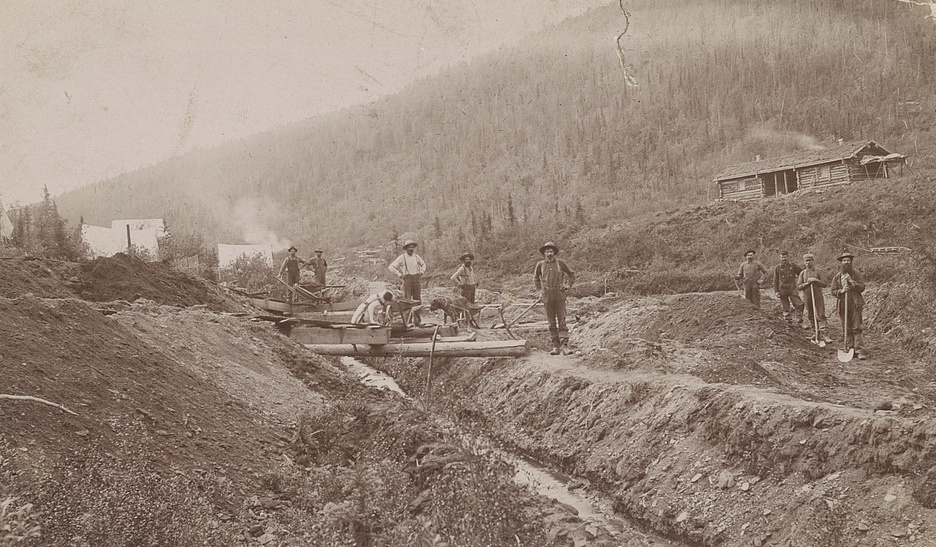
Gold miners, El Dorado, California, ca. 1848, before 1853. Library of Congress.

Add the rain and snow of a typical fall and winter in California’s gold region and the enumerator’s task must have been very difficult. But the answer is yes, it was possible that our Mequon prospectors could have been counted in the 1850 census in California. The enumeration of the gold mining counties began well after the official enumeration date of June 1st, 1850, and the process continued in some gold region counties until the last weeks of December, many months after the arrival of the overland contingent of the Bonniwell expedition.

Continue reading

Still digging…

I’m still digging in the archives, trying to wrap up our ongoing exploration of the Bonniwell family adventures in the California gold fields, bring (almost) everyone back to Mequon, and finish our (unexpectedly long and thorough) look at the life of Jonathan and Mary Clark’s brother-in-law, Alfred T. Bonniwell.

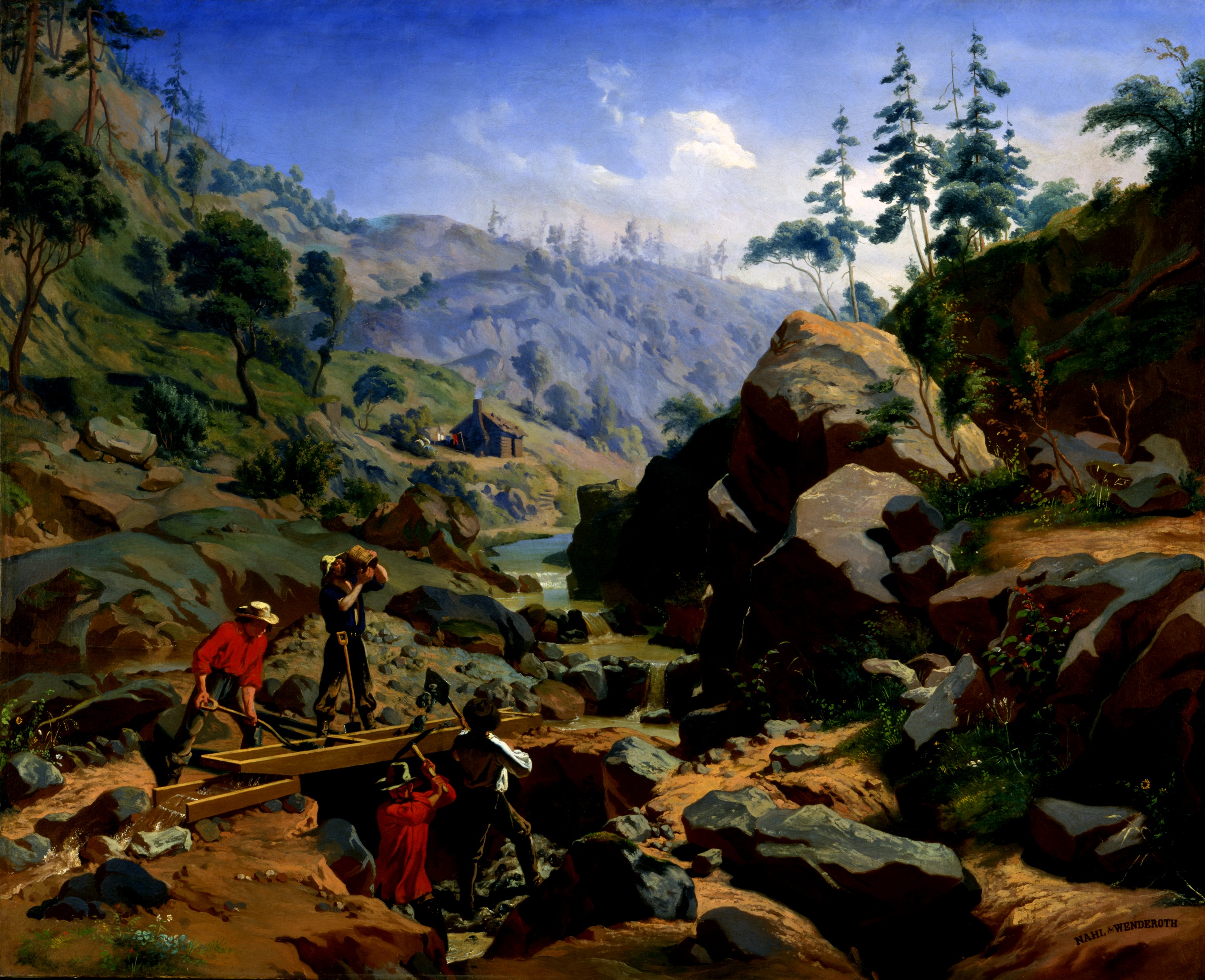
I’m currently mining a rich vein of 1850 and ’52 census documents for California and Wisconsin, as well as contemporary ships’ passenger manifests and published newspaper announcements of maritime comings and goings. Once again, I have a large pile of raw material to sift through and write about, and it’s taking more time than expected. I hope to have things organized for you next week. In the meanwhile, I thought you might enjoy this painting, made in California at the same time as the Bonniwell expedition, Miners in the Sierra:

As always, be sure to click the image to open a larger, higher-resolution image in a new window.

Continue reading

Meanwhile, in California…

It’s been a while since we explored the documentary record of Mequon’s Alfred T. Bonniwell and his family and friends. Previously, we learned that the Bonniwells’ gold rush saga involved not one, but two, expeditions. The second trek westward was overland, chronicled in George Bonniwell’s gold rush diary. That trip, and the diary, began with the party’s departure from Milwaukee on April 12, 1850, continued through their arrival at the California diggings in mid-August, and closed—still searching for gold—with a final entry dated Tuesday, September 24, 1850. For more details, take another look at Gold! – The Bonniwells go west…but when? and who?

The first journey involved a smaller group, which included Alfred T. and Henry V. Bonniwell. As we discussed in A (new) Bonniwell Gold Rush timeline, that trek appears to have begun in April, 1849, with an overland wagon trip from Milwaukee to points unknown, with the party eventually arriving in New Orleans. On September 6, 1849, this first party continued West, mostly via ship: New Orleans to Chagres (Panama), by canoe and overland trail across the isthmus to Panama City, and then by steamship to San Francisco. They appear to have made it to California no later than November 4, 1849. They likely docked at San Francisco and then headed up to Sacramento, the main point of entry to the gold fields, which looked something like this:

Parsons, Charles and George Victor Cooper. Sacramento city, Ca. from the foot of J. Street, showing I., J., & K. Sts. with the Sierra Nevada in the distance / C. Parsons ; drawn Dec. 20th , 1849, by G.V. Cooper ; lith. of Wm. Endicott & Co., N. York, before March 2, 1850. Library of Congress. Click to open larger and very detailed, image in new window.

Forty-niners!

Alfred and Henry Bonniwell, together with Mequon-area neighbors P. M. Johnson, Thomas Day and Richard Taylor and perhaps one or two others, made it to the gold fields in 1849, as part of the first wave of fortune seekers. They are, therefore, bona fide “Forty-niners.” George, Charles and both William T. Bonniwells (senior and junior), and the rest of their overland party would not arrive until August, 1850. It would appear that Alfred and the rest of the Wisconsin 49ers had a lucky head start on the others. Or did they?

Continue reading

A familiar sight: St. Peter’s Church, 1839

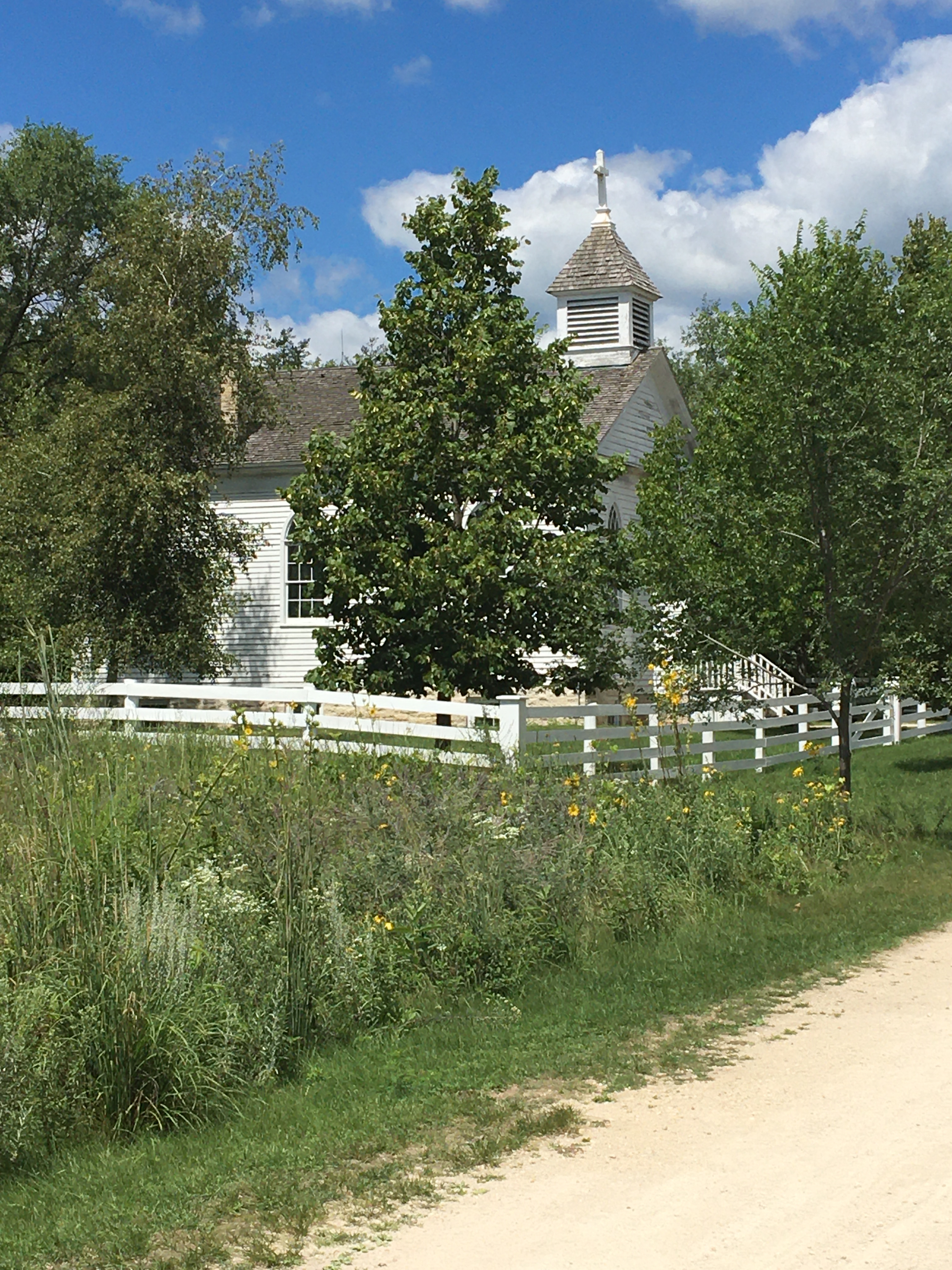
I had a fine day last month walking through our state’s wonderful outdoor living history museum, Old World Wisconsin, where I enjoyed this familiar view:

Photo credit: Reed Perkins, 2022.

There among the trees stood Milwaukee’s old St. Peter’s Roman Catholic Church, a building that was certainly well-known—at least on the exterior—to our Clark and Turck families.

The church was built in 1839, two years after young Mary Turck arrived in Wisconsin Territory with her parents, Peter and Rachael (Gay) Turck and her six siblings, and the same year that Jonathan M. Clark and the Bonniwell family first appeared in the Milwaukee-Mequon area.

Continue reading

Back to School, 1831: JMC in Stanstead?

In an earlier post I wrote: I’m still on the hunt for the elusive parents and kin of Jonathan M. Clark. Based on what we know so far, we are looking in the area of Derby, Orleans County, Vermont and its northern neighbor Stanstead Township, Lower Canada, circa 1800-1830 or so.

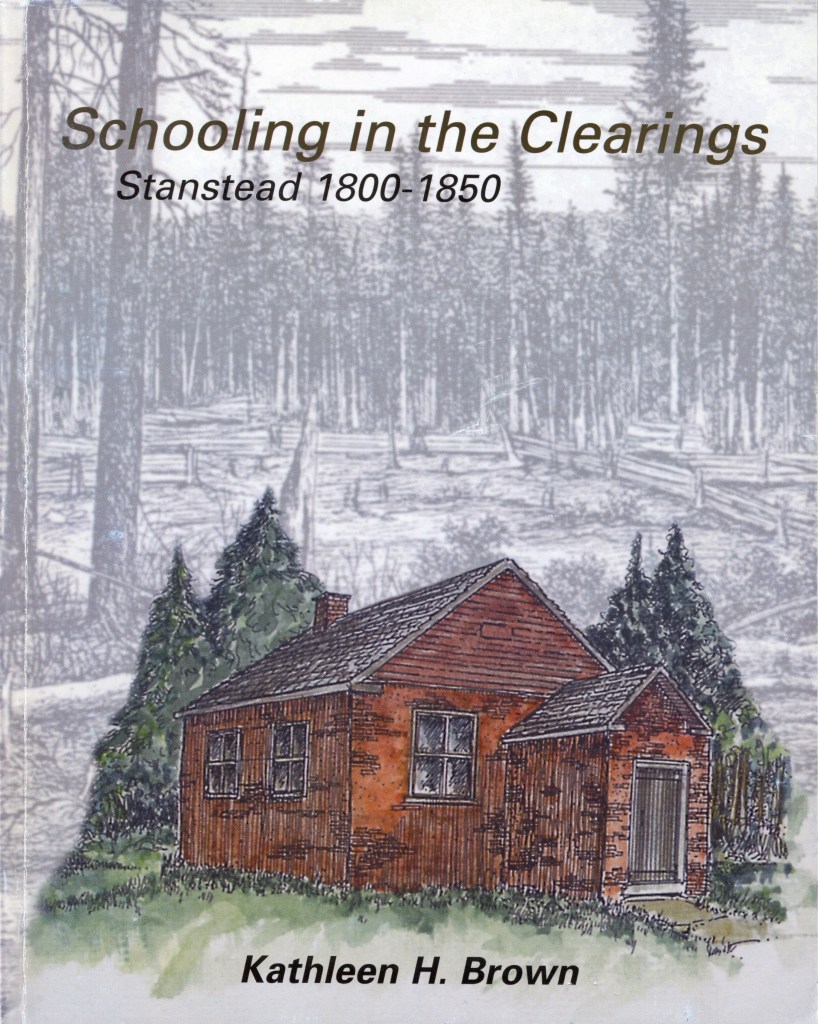
Well, the hunt continues, and today I thought I’d share with you another Back to School tidbit, a “hot tip” that I’ve been meaning to write about for a while. The tip—and its source—comes from Clark-Turck family descendant and Clark House Museum supporter Liz Hickman1, who kindly gave me a copy of this fascinating book:

Kathleen H. Brown’s comprehensively researched and encyclopedic Schooling in the Clearings: Stanstead 1800-1850 is devoted to the early history of public and private education in Quebec’s Eastern Townships and, in particular, Stanstead Township. That might seem like a highly specialized corner of North American history on which to focus, and I suppose it is. But Ms. Brown’s heroic labors in the archives are now a readable and invaluable resource for those of us trying to learn more about the early settlers in the Eastern Townships and their children including, possibly, the earliest record of Jonathan M. Clark known to date.2

Continue reading

Monday: Map Day! – To the gold fields, 1849 & ’50

I love a great map, and today’s example is particularly fine in several respects: as a detailed view of our hemisphere at a particularly dynamic moment in U.S. history, as an excellent example of mid-19th-century cartography, and—as we’ll see in our next post—as a clear illustration of how members of Mequon’s Bonniwell family made their way to and from the California gold fields in the heady days of the early Gold Rush of 1849 and 1850.1

Gold! where it is and how to get there, 1849

Atwood, John M., Map of the United States, the British provinces, Mexico &c.: showing the routes of the U.S. mail steam packets to California, and a plan of the Gold Region. New York: J. H. Colton, 1849. From the collection of Millard Fillmore. Library of Congress.

I’ve published some great old maps on Clark House Historian, and this is one of my favorites. In our next post, I’ll annotate a copy of this map to illustrate the Bonniwell’s Gold Rush travels in 1849 and the early 1850s. But today I’d like to show the map as it was in 1849, with all its “extra features.” I recommend you begin by clicking the map image, above, which opens a much higher-resolution copy of the map in a new window (FYI, this may take a few seconds; it’s a big, detailed image).

Continue reading

A (new) Bonniwell Gold Rush timeline

Continuing our look at old and new evidence about the Bonniwell family’s trip west to the gold fields of California. If you’re keeping track, this is also part 9 of our series documenting the life of Clark family neighbor (and in-law) Alfred T. Bonniwell and his family.

We closed our previous post, Gold! – The Bonniwells go west…but when? and who?, with a surprising news item from page 2 of the Saturday, April 7, 1849, edition of the Milwaukee Sentinel and Gazette:

FOR CALIFORNIA.—Henry V. Bonniwell, Geo B. Bonniwell, Alfred Bonniwell, Joseph Loomis, and Richard Taylor from Mequon, Washington county, are to leave to-day for California. They proceed to Fort Independence, to fit out.

This April 7, 1849, announcement raises a number of questions, and complicates—if not contradicts—our understanding of the Bonniwell family’s better-known overland trek to California in 1850. I think I have figured out what happened, and the easiest way to explain full story of the Bonniwells and their trip West to the gold fields is by making a timeline of our new evidence. And before we do that, we need to remind ourselves that…

There was more than one way to get to California

When “gold fever” first hit the nation in 1848-1849, traveling to California via wagon trail from one of the major departure points—such as Ft. Independence, Missouri, at the head of the Oregon Trail—was the least expensive but most treacherous option for would-be gold seekers. On the one hand, the overland route was the shortest, about 3,000 miles from the eastern states, but it was fraught with dangers that included bad “roads,” lack of food and water, a whole spectrum of diseases and illnesses, as well as potential attacks by Native Americans or wild animals. Whatever their reason, it appears that sometime during the first stage of their journey, between April and September, 1849, our lads decided to skip the overland route and try something safer and faster, if more expensive:

The Panama Shortcut

“For California, Via Chagres,” advertisement for USMS Steamship Co., New Orleans Daily Crescent, Wednesday, 12 Sept 1849, p 3 (tinted, sharpened). As always, click each image to open larger copy in new windows.1

Continue reading

Alfred Bonniwell documents – part 7: landowner, 1845

When the extended Bonniwell family arrived in Wisconsin Territory in May, 1839, youngest son Alfred T. Bonniwell was not quite two months past his 13th birthday, and his brother Walter was only two years older. Because of their youth, neither Alfred nor Walter were able join their mother and brothers as they purchased government land and established what became known as Mequon’s Bonniwell Settlement.1

That changed for Alfred on June 7, 1845, when his mother, Eleanor (Hills Bonniwell) Hyde, gave him the eastern 80 acres of her original federal land patent.

Hyde, Eleanor (grantor) to A. T. Bonniwell (grantee), deed for 80 acres, June 7, 1845. See note 2 for source and details. Click to open larger image in new window.

Alfred would buy and sell several other properties in the 1850s and ’60s, but he held on to this parcel until his death, fifty years later. Let’s see what he got…

Continue reading