News…

Hello again! Sorry for the long blog silence. I hope all is well with you. I’ve been busy offline, in part answering some interesting questions from CHH readers.

I’ve also been doing a lot of reading, as I try to get a clearer understanding of several ongoing Clark House Historian research topics. It’s going well, but I haven’t got much written up yet. More coming soon. Watch this space.

Under repair

By the way, if you’ve been to the official Jonathan Clark House website in the past few days, you may have seen this 404 error message, in place of our usual colorful and informative pages:

I contacted Clark House director Nina Look, and she assures me that they are aware of the problem, working on a solution, and expect the Jonathan Clark House museum website to be back up shortly. (It’s even possible that the problems may be fixed by the time this blog post goes live on Friday morning.)

Meanwhile…

Continue reading

Monday: Map Day! – One more (updated) look at Ouisconsin Territory, 1836

Today’s Monday: Map Day! revisits and makes a correction to an interesting map that we first discussed here on October 29, 2017, and then re-visited on July 11, 2020. And for unknown reasons, that original 2017 post—according to my monthly WordPress statistics report—was the most-viewed post on this site for the month of January, 2024, with 341 views (!).

Burr, David H. Map of the Northern Parts of Ohio, Indiana and Illinois and Michigan and that part of the Ouisconsin Territory lying East of the Mississippi River, 1836, detail of title & author. Library of Congress.

The 2020 re-post was originally conceived as a kind of addendum to our June-July, 2020, multi-part discussion of the earliest Wisconsin territorial, state, and federal censuses. It also served to locate Jonathan M. Clark in Wisconsin Territory during his U.S. Army service from September, 1833, to September 19, 1836.

Today’s post includes one particular correction that I’ve been meaning to make for a while. When I added my original annotations to a detail of this map (in red), in 2017, I made an error. I mislabeled Sgt. Jonathan M. Clark’s location at the time he mustered out of service, a temporary army camp along the under-construction military road from Fort Howard (Green Bay) to Fort Winnebag0 (Portage). JMC’s muster-out location was always referred to in the records of the Fifth Regiment of Infantry as “Camp Hamilton.” For some reason, when I made my annotated detail map, I incorrectly labeled this place “Ft. Hamilton.” A minor error, but worth correcting , especially now that this map is receiving fresh attention.1

It’s 1836. Where’s…Wisconsin?

In September, 1836, Sgt. Jonathan M. Clark was discharged from the U.S. Army at “Camp Hamilton,” Wisconsin Territory, after serving his three-year term of service with Co. K, Fifth Regiment of Infantry.2  One year later, in the autumn of 1837, Jonathan’s future wife Mary Turck would make the long trip from Palmyra, New York, to Milwaukee and finally Mequon, Washington County, Wisconsin, with her parents Peter and Rachael Turck and six younger siblings. By the end of 1840 Jonathan and Mary would be married and starting their family in Mequon.

That seems simple enough, until you take a moment to wonder how much Jonathan—or especially Mary and her family—knew about this new Wisconsin Territory.  Jonathan had been in the territory since October, 1833, mostly on post at Ft. Howard. In the last year or so of his service he was busy cutting trees and building bridges for the military road along the Fox River waterway from Ft. Howard (Green Bay) towards Ft. Winnebago (near modern Portage). As a road-building soldier, Jonathan might have done some surveying and seen—or helped draw—a variety of maps of the military road and its vicinity. But for a better overview of this new territory, Jonathan or Mary might have sought out a map such as this:

Continue reading

Clark House Annual Meeting, 2024

UPDATED (1:30 p.m.): What would the New Year be without a typo? The meeting is, indeed, on Wednesday, January 17th (not the other date that CHH subscribers received in their original email version of this post). So I’m pulling the erroneous post and sending this revised version to all CHH subscribers. My apologies for crowding your inbox.

Let’s see if the weather behaves this time!

Last week’s annual meeting of the Friends of the Jonathan Clark House had to be postponed due to foul weather. The meeting has been rescheduled to this Wednesday, January 17, 2024 at 6:00 PM (note later start time), at Spectrum Investment Advisors Cafe, 6329 West Mequon Road, Mequon, WI. 53092

Want to attend? Please RSVP to JCH Executive Director Patrick Steele at jchmuseum@gmail.com

See you Wednesday!

CHH blog roundup, 2023

As the volunteer historian for the Jonathan Clark House Museum, it’s my privilege to investigate, document, and share with you the stories of the Clarks, their relatives, neighbors, friends, and try to bring to life the world in which they lived. Much of my work involves finding, studying and analyzing relevant documents and visual images, and much of that work happens “behind the scenes,” so to speak.

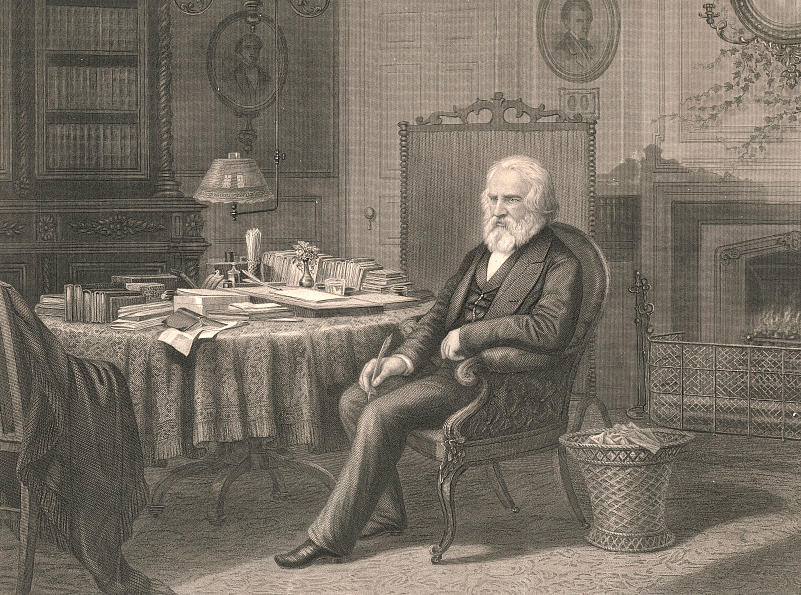
The Clark House Historian at work (note discarded drafts and as-yet unfinished projects).1

Each week (well, “each week” is the goal…) I share some of my findings with you on this blog. Now that the old year is gone, I thought it might be worthwhile to see what we accomplished at Clark House Historian in 2023. Let’s begin by taking a quick look at the numbers…

Continue reading

Happy New Year, 1848

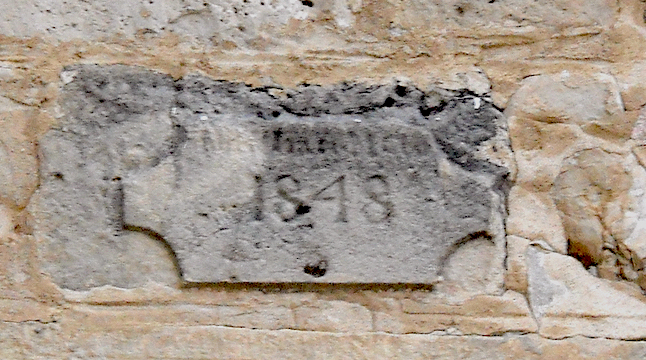
1848 was a big year for Jonathan and Mary (Turck) Clark. Their family now included four children: Caroline (b. 1840), Henry (b. 1843), Libbie (b. 1845) and infant daughter Persie (b. 1847). And 1848 was the date that Jonathan M. Clark inscribed—just below his own name—on the Clark House “cornerstone” that still decorates the lintel above the Clark House front (south) door.

Photo credit: Reed Perkins, 2015

1848 was a landmark year in many respects. Gold was discovered in California, the War with Mexico ended with the Treaty of Guadelupe Hidalgo and, most importantly for our Mequon pioneers, the Wisconsin Territory adopted a state constitution and was admitted by act of Congress as the 30th state in the Union.

Of course, on January 1, 1848, those events—and many others—still lay in the future, in the New Year. We’ve blogged about some of those events here at Clark House Historian, and we’ll have more to say about other 1848 events in the future. But did you ever wonder how our Mequon settlers observed the change from one year to the next during the 1840s and 1850s?

Continue reading

The original “laptop”

This is an expanded—and lavishly illustrated—version of a piece that first appeared in the Summer | August 2023 edition of the Jonathan Clark House Newsletter. I hope you enjoy the extra information, images, and the vintage writing tips.
UPDATED: August 27, 2023, to clarify provenance of Robert Beveridge’s writing desk.

One of the ways we collect, preserve and share the history of the Jonathan Clark House and the early settlers of Mequon and Thiensville is by acquiring and interpreting furniture, tools, clothing, and various accessories that would have been familiar to the Clarks and their neighbors. One particularly fine item in our collection is this box, a treasured heirloom generously donated to the Clark House collection by JCH Friend Frederick Bock.

Photo courtesy of Tom Gifford (2023)

When closed it measures about 16 x 6 x 10 inches. It is made of wood, stained a rich golden brown. On the top is a brass plaque inscribed Rt.[Robert] Beveridge / 1854. And there’s a lock on the front. Why is that?

Continue reading

Blog News! – August, 2023

A late-summer look at Clark House Historian news and upcoming posts…

First, a few stats…

I missed publishing my annual review of CHH stats on the blog’s seventh (!) anniversary last March. But here are a few numbers for those of you keeping score at home, beginning with this year’s (incomplete) numbers, as of August 20, 2023:

• Number of visitors, 2023: 2,262
• Number of views, 2023: 4,660
• Number of posts, 2023: 38
• Number of words, 2023: 50.5K

For comparison, here are the numbers for all of last year:
• Number of visitors, 2022: 2,424
• Number of views, 2022: 5,523
• Number of posts, 2022: 62
• Number of words, 2022: 68.2K

The blog’s all-time outreach on behalf of the Jonathan Clark House Museum (as of Aug.20, 2023), includes:
• Number of visitors, all time: 8,985
• Number of views, all time: 26,819
• Number of posts, all time: 361
• Number of words, all time: circa 382K
• Subscribers: 49

Full disclosure: In addition to sharing Clark House history with you all, I use the blog as a searchable archive of the facts, analyses, and images that I find or create during my work as Clark House Historian. I often search for and refer to previous blog posts as I prepare new posts and other work. So take the “visitor” and “views” stats with a grain of salt, and assume that at least a certain number of visits to the various blog posts are mine.

A bit of a ‘”Bonniwell break”…

I was at the Friends of the Clark House annual meeting back in January, 2022, and I overheard Clark House director Nina J. Look mention a little research project focused on the youngest—and least documented—member of the Mequon’s pioneer Bonniwell family: Clark House neighbor and brother-in-law, Alfred T. Bonniwell. I volunteered to help with a “short series” of related blog posts. After all, when I began this project, I had fewer than a dozen records documenting Alfred’s life. How long could a quick survey of those take? A month or so, at most?

Continue reading

Clark House News – August, 2023

JCHM Newsletter is here!

Here’s the Summer | August, 2023 edition of the Jonathan Clark House Museum newsletter. It’s filled with Clark House news, notices of upcoming events, and recaps and photos of a variety of summer happenings. Click the image below to view and/or download your own PDF copy of the complete newsletter.

Thanks to all involved in producing a summer full of Jonathan Clark House activities, especially museum director Nina J. Look and our wonderful crew of docents, volunteers and board members. And a tip of the hat to Nina (and our savvy graphic designer, Shayla Krantz) for this latest edition of the newsletter.

But wait—there’s more!

Continue reading

At my desk, writing…

Sorry for the lack of blog posts lately. My week began with several days devoted to an unexpected and very stressful issue that has now been resolved (or, at least, much improved) and I am researching and writing once again.

I’ll have more history for you here presently, and I have a brief but interesting piece coming up shortly in the next Jonathan Clark House newsletter. What’s that about? Let’s just say that something in today’s portrait of a rather posh Philadelphia silversmith is more relevant to the Clarks’ era—and the Jonathan Clark House Museum collection—than you might think.

Thanks for reading and see you soon!

Continue reading

1836: Astounding Produce News!

While researching the life of one of Mequon’s first white settlers, Isham Day, I ran across the following breathless bit of regional puffery and promotion, penned by Milwaukee co-founder Byron Kilbourn. It’s from page 2 of the November 17, 1836, edition of the Milwaukee Advertiser:

Lawyer Pettibone has, indeed, grown some astounding turnips (“Ruta Baga”), ‘taters, and carrots in the fertile soil of Milwaukee. Likewise Mr. Douglass with his enormous radishes and “common English” turnips. Have others done anything comparable? Indeed they have, and Mr. Kilbourn has the details…

Continue reading