Santa Claus visits Milwaukee, 1867

Tonight is Christmas Eve, and I thought you might enjoy an expanded reprise of our 1867 Santa Claus story, originally posted December 25 and 30, 2017. This year I have combined the two original posts and incorporated some new illustrations and a few revisions of the text. Here it is again, for your holiday enjoyment. Ho! Ho! Ho!

Christmas in early America

For many years now, Christmas has been celebrated by Americans as an important religious and (increasingly secular) community holiday. Christians gather to worship and commemorate the birth of Jesus, and they and other Americans enjoy a break from work to gather with family and friends to feast and exchange gifts. But it was not always this way.

In many of the American colonies, Christmas was not observed as a religious or secular holiday. The seventeenth-century Puritan leaders of the Massachusetts Bay Colony considered Christmas to be non-biblical and pagan influenced. In Boston and other parts of New England any observance of Christmas was prohibited and, for a few years, actually illegal:

Penalty for Keeping Christmas, 1659

Records of the Governor and Company of the Massachusetts Bay in New England. Printed by order of the Legislature, edited by Nathaniel B. Shurtleff, M.D., Vol. IV, Part I, 1650-1660, online at mass.gov (accessed 21 Dec. 2021). Click to open larger image in new window.

Transcription:
For preventing disorders arising in several places within this jurisdiction, by reason of some still observing such festivals as were superstitiously kept in other countries, to the great dishonor of God and offence of others, it is therefore ordered by this Court and the authority thereof, that whosoever shall be found observing any such day as Christmas or the like, either by forbearing of labor, feasting, or any other way, upon such accounts as aforesaid, every such person so offending shall pay for every such offence five shillings, as a fine to the country.

Christmas was not generally accepted as a holiday in many parts of the United States until after the federal government made December 25 a national holiday in 1870.

On the other hand…

The Massachusetts Puritans may not have approved of “observing any such day as Christmas or the like, either by forbearing of labor, feasting, or any other way,” but Christmas was “kept in other countries” and increasing numbers of immigrants from those countries to the United States—particularly from Victorian England, Catholic Europe, and the German Lands—celebrated the day in their new American homes with many of their accustomed religious observances and national traditions.

Continue reading
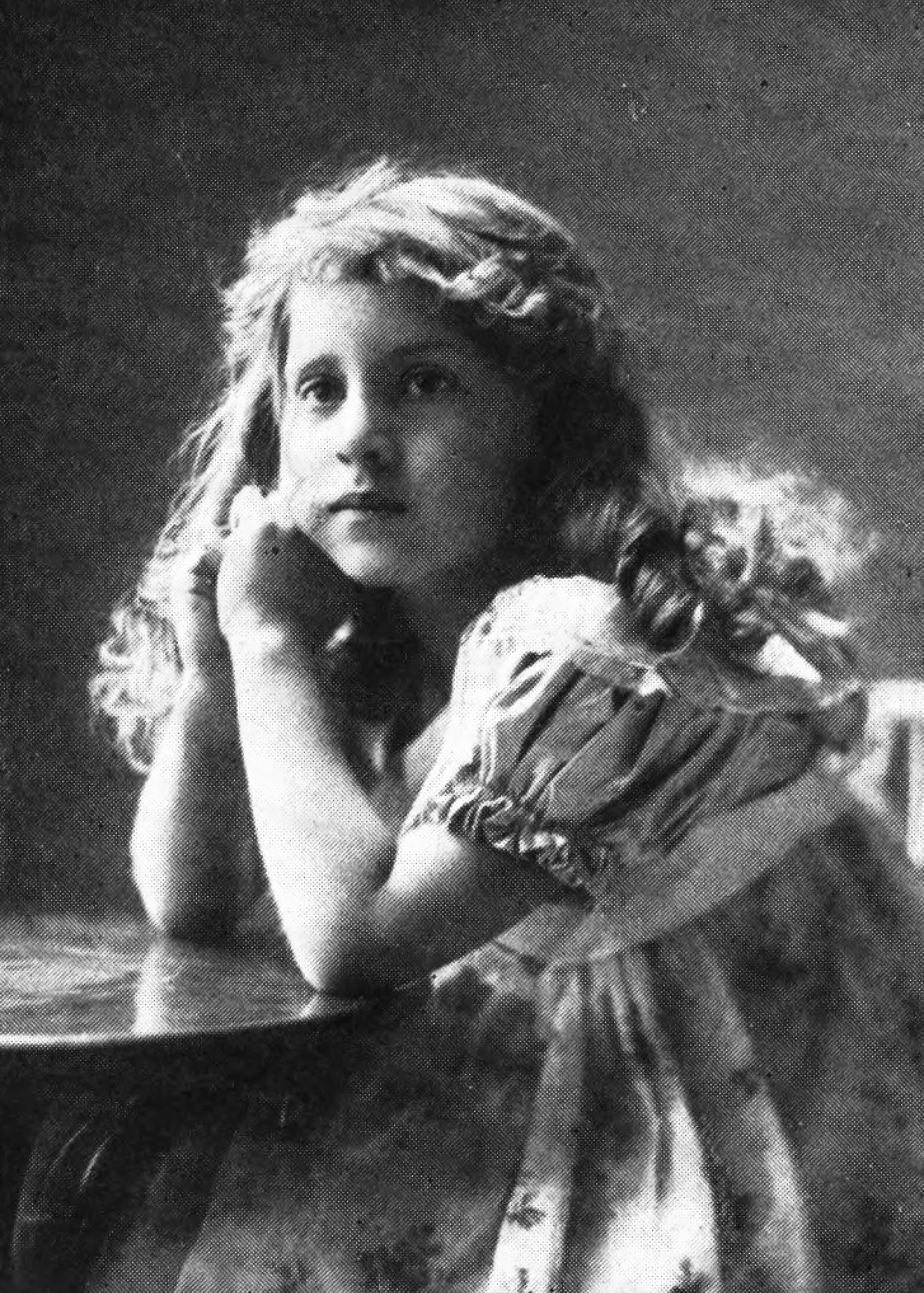
Christmas-Tide: a Turck family tale

A True Story! from an unexpected source

Christmas is coming, and to get in the holiday mood, how about a seasonal Turck family anecdote, “a true story,” as related in the pages of Correct English magazine, written, edited and published by Peter Turck’s granddaughter—and Mary (Turck) Clark’s niece—Josephine Turck Baker, and later collected with other similar tales and published as a book, Correct English in the Home, Chicago, 1909.

In the foreword to her book, the author explains:

When I was a little girl, like most children, I was very fond of listening to stories; but unlike most children, I did not care for fairy tales, my first question invariably being, ” IS IT A TRUE STORY?” I don’t want a “once upon a time” story.

This is a true story. The children, their names, the incidents narrated, are all true. Beatrice, Roschen, and the “Boitie,” are my children […]


For those who like really true stories of really true people with really true names, this little book is written. That it may instruct and entertain all readers, both little and big, young and grown up, is the earnest wish of


Yours for Correct English,
Josephine Turck Baker

Our Protagonists

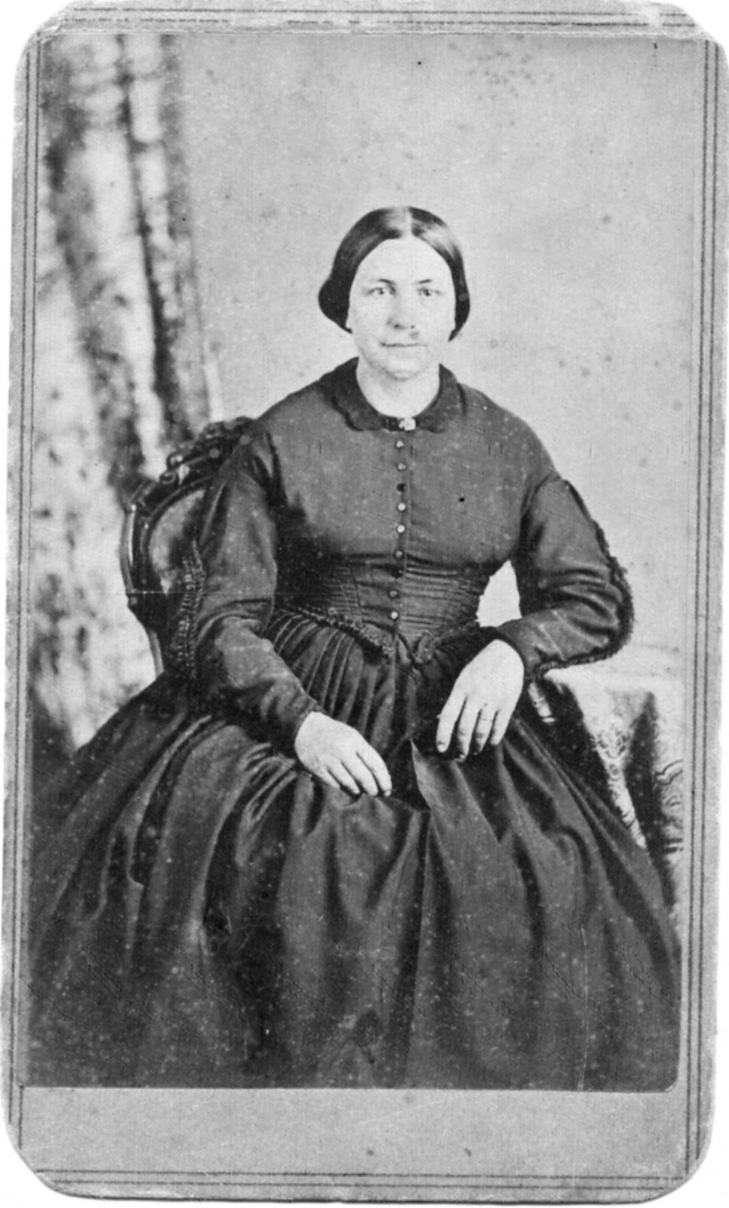
Photo credits and dates: see notes below. Click gallery for larger images

Continue reading

Home to Thanksgiving

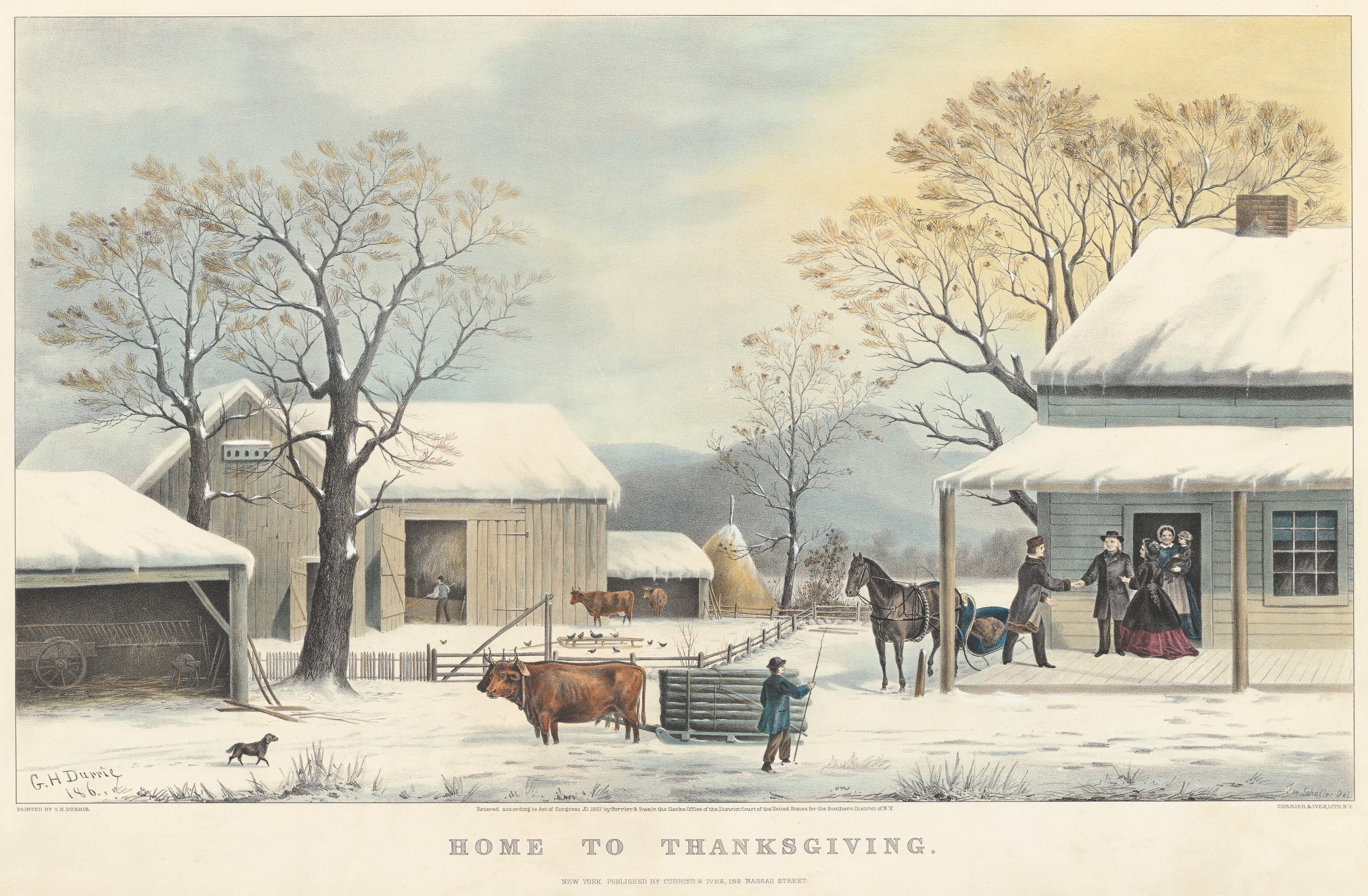
I’m still preoccupied with non-Clark House matters, and new posts continue to be delayed. But in the spirit of our upcoming national holiday, I thought I’d help your preparations by sharing a few vintage recipes and a nice Currier & Ives lithograph from the period.1

Thanksgiving, 1867

Durrie, George H. and John Schutler, Home to Thanksgiving, ca. 1867, New York, Currier & Ives. National Gallery of Art, Collection of Mr. and Mrs. Paul Mellon. Public Domain. Click to to open larger image in a new window.

By 1867, when this sentimental lithograph was first published, the Clark family had been living in Milwaukee for about six years. Family patriarch Jonathan M. Clark had died a decade earlier, and his only son, Henry M. Clark, had been dead for about a year and a half. Family matriarch Mary (Turck) Clark was living in a Milwaukee house with her unmarried daughters, Libbie, Persie, Theresa, Laura and Josie.

The Clark’s eldest child, Caroline, had married William W. Woodward in 1861. In 1867 the Woodwards were still living and farming in Granville, Milwaukee County, about nine miles south of the old Clark farm in Mequon.

So in 1867, Mary (Turck) Clark and her daughters would not have celebrated Thanksgiving at the old family farm in Mequon. But a picture like this Currier & Ives lithograph might have stirred fond memories of family and friends gathering for earlier Thanksgiving celebrations at the old Clark place.

And, you might wonder, what did the Clarks and their neighbors eat for Thanksgiving in Wisconsin in the mid-1800s? Glad you asked…

Continue reading

Veterans Day, 2021

Veterans Day is today. I’m preparing a new post on one of our Clark House veterans, Mary (Turck) Clark’s youngest sibling, Benjamin Turck (1839-1926), but it’s not quite ready yet. For a wider perspective on the day—and our early Mequon veterans—here’s a post originally published at Clark House Historian on November 11, 2016, and revised, expanded and republished on November 11, 2020. I’ve also incorporated a list of Mequon’s Civil War soldiers, originally published here on May 24, 2020.

Armistice Day

One hundred and three years ago, on the eleventh day, of the eleventh month, at the eleventh hour—Paris time—the Armistice of Compiègne took effect, officially ending the fighting on the Western Front and marking the end of World War I, the optimistically named “War to End All Wars.”

In the United States, the commemoration of the war dead and the Allied victory began in 1919 as Armistice Day, by proclamation of President Woodrow Wilson. Congress created Armistice Day as a legal holiday in 1938. Starting in 1945, a World War II veteran named Raymond Weeks proposed that the commemorations of November 11 be expanded to celebrate all veterans, living and dead. In 1954 Congress and President Eisenhower made that idea official, and this is what we commemorate today. There are many veterans with a connection to the Jonathan Clark house. We honor a few of them in this post.

Jonathan Clark, Henry Clark, and the U.S. Army

Jonathan M. Clark (1812-1857) enlisted as a Private in Company K, Fifth Regiment of the U. S. Army, and served at Ft. Howard, Michigan (later Wisconsin) Territory, from 1833 until mustering out, as Sargent Jonathan M. Clark, in 1836. In the 1830s, Fort Howard was on the nation’s northwestern frontier. JMC’s Co. K spent much of the summers of 1835 and 1836 cutting the military road across Wisconsin, from Ft. Howard toward Ft. Winnebago, near modern Portage, Wisconsin.

Fort Howard, Wisconsin Territory, circa 1855, from Marryat, Frederick, and State Historical Society Of Wisconsin. “An English officer’s description of Wisconsin in 1837.” Madison: Democrat Printing Company, State Printers, 1898. Library of Congress. Click to open larger image in new window.

Continue reading

Labor Day

Observed the first Monday in September, Labor Day is an annual celebration of the social and economic achievements of American workers. The holiday is rooted in the late nineteenth century, when labor activists pushed for a federal holiday to recognize the many contributions workers have made to America’s strength, prosperity, and well-being.

U.S. Dept. of Labor

Labor Day is often celebrated with parades and festive “end of summer” get-togethers in parks or at the beach. This year, with the continuing rise in Covid-19 cases, I think I’ll avoid the large gatherings. But a peaceful picnic with the family might be just the thing:

Tracey, John M. [Untitled—Picnic Scene], circa 1870. Smithsonian American Art Museum, Gift of Mary Glancy Bragg, CC0. Click to open larger image in new window.

Continue reading

Summer

It was an eventful weekend. Congress—acting with a speed and unanimity1 unusual these days—declared a new federal holiday to celebrate June 19th as Juneteenth National Independence Day, formerly known and variously celebrated as Juneteenth, Emancipation Day, or Black Independence Day. It has roots in the issues and events of the Civil War years that I’m currently blogging about, and I’ll have more to share about the history of our newest federal holiday in a future post.

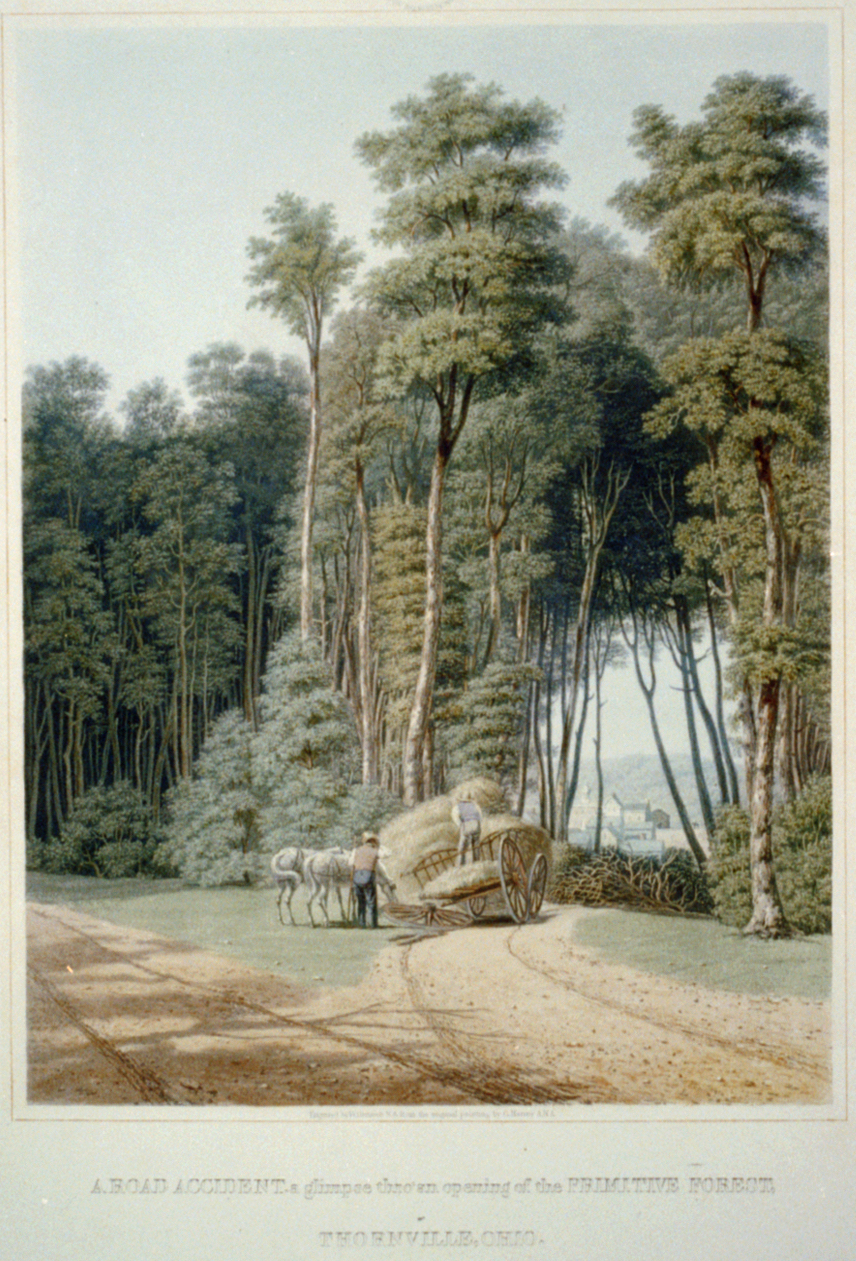
Sunday June 20 heralded the arrival of summer, and the observance of Fathers’ Day. In honor of both, I took the day off from writing and spent some time with my family. Wishing you all the best for summer, 2021, here’s an evocative seasonal print from Jonathan and Mary Clark’s era…

Continue reading

Memorial Day, 2021

This is a revised and updated version of a post that originally appeared here on May 25, 2020. Please be sure to read the Notes & Updates, below, for new information.

Lest We Forget

Graves of Unknown Union Soldiers, Memphis National Cemetery, photo by Clayton B. Fraser, (Library of Congress), public domain. Memphis National Cemetery is the final resting place of Mequon’s Watson Peter Woodworth, and almost 14,000 of his Union Army comrades.

As we begin to recover1 from the worst pandemic in a century, a quick glance at the news will show that many Americans are celebrating this “Memorial Day Weekend” in our now usual way, as “the first day of summer.” Beaches and parks are open, stores entice customers with deals and sales, and people are crowding shoulder to shoulder in swimming pools and along ocean boardwalks.

But for many of us, Memorial Day remains rooted in its origins as Decoration Day. The first national observance was in 1868, when retired general John A. Logan, commander and chief of the Grand Army of the Republic—the Union veterans’ organization—issued his General Order Number 11, designating May 30 as a memorial day “for the purpose of strewing with flowers or otherwise decorating the graves of comrades who died in defense of their country during the late rebellion, and whose bodies now lie in almost every city, village, and hamlet churchyard in the land.”

This Memorial Day, let’s remember those Clark House family, friends, and Mequon neighbors who served in the Civil War, and what they fought—and died—for. The History of Washington and Ozaukee Counties (1881) lists these 65 volunteers from Mequon:

Continue reading

Happy 200th Birthday, Mary!

Today, May 3, 2021, marks the 200th birthday anniversary of Mary Turck, the eldest child of Peter Turck and Rachael (Gay) Turck, and future spouse of Jonathan M. Clark. Mary and Jonathan were married in old Washington county on March 15, 1840, and began to farm their Mequon land the same year. They went on to build their handsome stone house—now the Jonathan Clark House Museum—in 1848.

Continue reading

Peter Turck and Irish Relief

Today is St. Patrick’s Day, originally the religious observance of the feast day of the principal patron saint of Eire.1 In honor of the day, let’s take a look at a few aspects of Irish life in early southeast Wisconsin and the involvement of Mary (Turck) Clark’s father Peter Turck in a civic effort to relieve Irish suffering during the Great Famine.

Irish immigrants in early Wisconsin

The first white visitors to Wisconsin were seventeenth-century French-Canadian explorers, priests and fur trappers, at home along Wisconsin’s lakes and rivers. They were followed by a smattering of British and French settlers in the mid- and later-eighteenth century. Cornish lead miners arrived in the southwest corner of the territory around the turn of the nineteenth-century. And in the mid-1830s, when the federal government officially “opened” the southeast corner of Wisconsin for settlement, there was a large influx of New Englanders and New Yorkers.

There were also a substantial number immigrants from across the sea among the Wisconsin pioneers of the 1830s and ’40s, including settlers from Upper and Lower Canada, Nova Scotia, Great Britain, the Netherlands, the German-speaking lands, and Ireland. By the time of the 1850 federal decennial census, Irish men, women, and children comprised the second-largest group of foreign-born immigrants in the state, surpassed in number only by immigrants from the German-speaking lands.

Continue reading

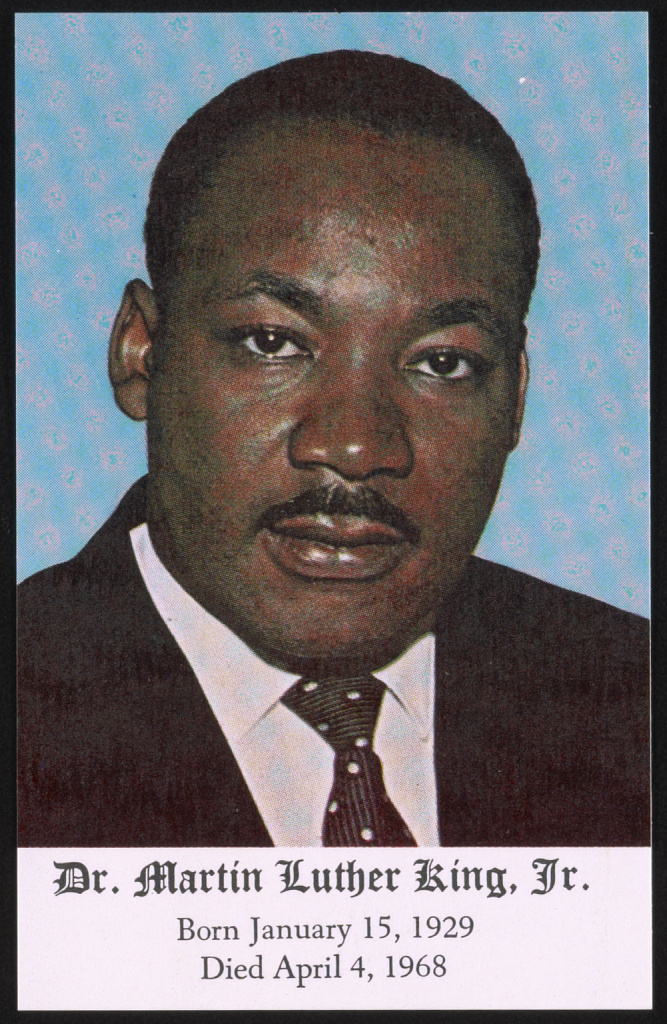
Martin Luther King Jr. Day

Today is the day set aside to commemorate the life and work of Dr. Martin Luther King, Jr. (1929-1968), one of the first and foremost proponents of Gandhi-style non-violent protest in the West, and one of the most inspirational and influential civil-rights, labor-rights and anti-war advocates in American history.

Unknown photographer. “Dr. Martin Luther King, Jr. Born January 15, 1929, died April 4, 1968.” From the Rosa Parks Collection, Library of Congress, https://www.loc.gov/item/2015651821/. Used here under Free Use provisions of U.S copyright law.

Among many honors, Dr. King was awarded the Nobel Peace Prize in 1964. The Norwegian Nobel Committee has a good biography here and additional information including a series of school lessons with lesson plans, videos, photos and other materials here. These are excellent resources for all of us. While Dr. King is—justly—remembered for his “Letter from a Birmingham Jail” and his 1963 “I have a dream” speech, it’s important that we remember the full depth and breadth of his life and work, and not just a few often-repeated quotes and sound bites.

Continue reading