When was Mary Turck born?

Just when you think you know the answer…

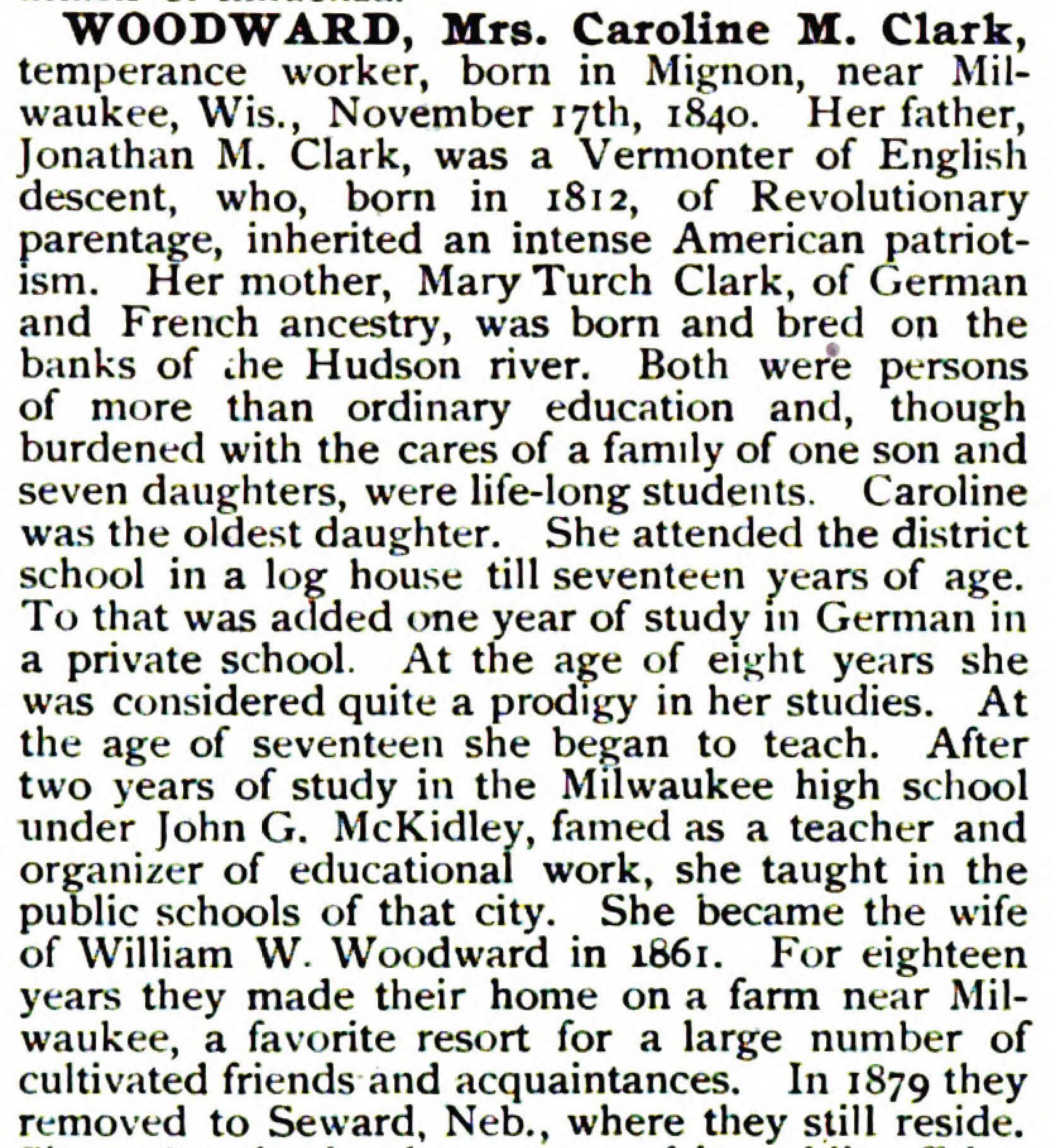
A few days ago, Clark House museum director Nina Look asked me a simple question: when, exactly, was Mary Turck Clark born? So I looked in my database and I came up with…two answers: Mary Turck Clark was born on either May 4th, 1820 or May 3, 1821. So I reviewed my dates and sources, and today’s post is about what I (re-)discovered, and what I still have to investigate.

Haven’t we been over this before?

Why, yes, we have. Here are links to earlier posts on essential sources of Mary Turck Clark birth date and birth year information, starting with my second Clark House Historian post, this now-outdated post about Mary from 2016. Other, more recent, posts have gone into detail examining Mary, her family, and their likely birth dates as found on the U.S. federal decennial censuses:

I’ve not yet blogged about Mary’s 1870 or 1880 federal censuses—both enumerated in Milwaukee—but I’ve seen them and used them in my research. More on these in a moment.

Continue reading

Monday: Map Day! – Diagram of Stanstead Township, c. 1800-1809

I’m still on the hunt for the elusive parents and kin of Jonathan M. Clark. Based on what we know so far, we are looking in the area of Derby, Orleans County, Vermont and its northern neighbor Stanstead Township, Lower Canada, circa 1800-1830 or so.

There are so many documents to read and sort through in order to get a grasp on the various Clark families that pioneered this area. Our Canadian friends had a land grant system that was quite different from our U.S. system, and this has taken time to get used to. Happily, most of the original paper files have been digitized and made available for free (thanks, Library and Archives Canada!), but the organization of the files remains confusing (why do there seem to be so many duplicate images in many of the files?), and the LAC’s user interface makes browsing slow and cumbersome. That said, we are making progress.

Here’s today’s map:

Continue reading

Happy 208th Birthday, Jonathan!

November 28, 2020, is the 208th anniversary of the birth of Jonathan M. Clark. To celebrate, I’m reposting a revised, expanded and annotated version of one of my first Clark House Historian posts. Since this was first published, on April 20, 2016, we have learned much more about the lives of Jonathan Clark, Mary Turck Clark, their family and their neighbors. Please check out the footnotes and click on the links for some of this newer, more accurate, information.

Happy Birthday, Jonathan! (and thanks to Nina Look for the timely reminder).

JMC: Man of Mystery

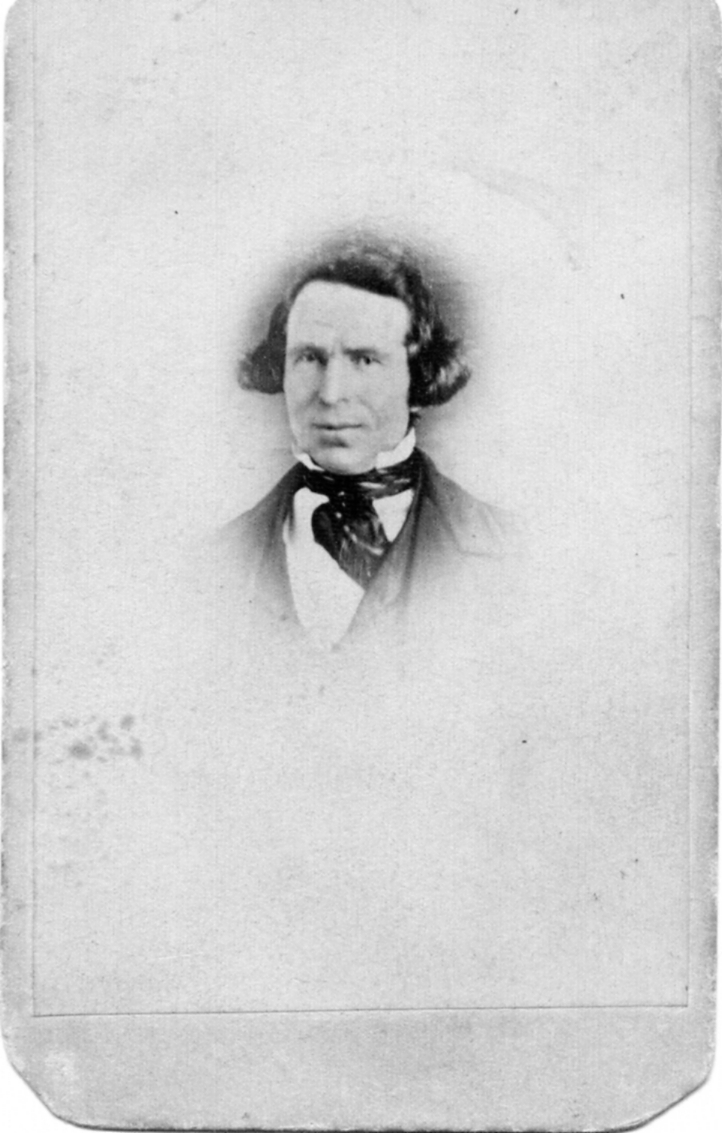
CLARK, Jonathan M portrait

Jonathan M. Clark. Photograph courtesy Liz Hickman.

There he is. Jonathan M. Clark, builder and first owner of the handsome stone home that is now the  Jonathan Clark House Museum in Mequon, Wisconsin. He was probably born in Vermont—or Lower Canada—probably on November 28, 1812, and he died on September 20, 1857. Before coming to Mequon, he served in the United States Army at Fort Howard from 1833 to 1836. He married Mary Turck, eldest child of Mequon pioneer Peter Turck, on March 15, 1840. They had a large family. We even have a photograph of JMC as an adult (above). In some ways, we know quite a bit about Jonathan M. Clark.

Continue reading

Leaders and Associates – the unique land grant system of early Lower Canada

Last time, we continued our search for possible kin of Jonathan M. Clark in Lower Canada by looking at a map found in the Lower Canada land petition archives. Please take a moment to peruse that post and look at the manuscript map of Stanstead Township, Lower Canada from the very early 1800s.

That map was contained in the land petition file of one of Stanstead’s earliest and largest landowners, Isaac Ogden. The Lower Canada Land Petition archives are a tremendous resource for studying the early settlement of the province, but the files are often very large. And, for those of us accustomed to the system of federal land patents used in the United States, the Lower Canada land petition and land grant system is sufficiently different that it may be hard to understand and navigate.

Today’s post will focus on one element of that system in particular, the unique, and often corrupt land petition practice known as the system of township leaders and associates. It has a complicated history, so rather than paraphrasing, let me quote at length from the official provincial report that I discussed in an earlier post, the List of lands granted by the crown in the province of Quebec, from 1763 to 31st December 1890, printed by order of the Quebec Legislature by C.-F. Langlois, Printer to Her Most Excellent Majesty the Queen, Quebec, 1891, beginning on page 7:

Continue reading

A view of Stanstead, Lower Canada, 1827

I’m working on some longer posts, so I thought you might enjoy this image of a hand-colored lithograph from 1827. It’s a view the village of Kilborn’s Mills, Stanstead, Lower Canada, as seen from the south side of the international border, near Derby Line, Vermont. It’s very likely that the 15- or 16-year-old Jonathan M. Clark would have known this scenery, village, bridge, and border crossing:

Continue reading

Monday: Map Day! – Lower Canada, 1802, part 2

Still getting our bearings at the turn of the 19th-century

As we discussed in a few weeks ago, if we’re going to find Jonathan M. Clark’s kin in the early-1800s, we need to know where to look. Lower Canada—one of JMC’s two “official” birth places—has a very long and complicated history. For a decent summary, you can skim this article, and then be sure to look at part 1 of this post. In part 1, I wrote that “we only need to understand a few basic places and dates, all centered around the modern Canadian Province of Quebec, or as it was known from 1791 to 1841, Lower Canada.”

Well, I was wrong. Because “a few basic places and dates” seriously underestimates the complex and changing nature of place names and legal boundaries in Lower Canada during that period. So today I’m going to take another look at the 1802 Lower Canada map and point out some additional places and terms that will be useful in locating Clark-related documents created in the English-speaking part of the province at the turn of the nineteenth century. So, remember this map? …

Continue reading

Monday: Map Day! – Lower Canada, 1802

Getting our bearings at the turn of the 19th-century

If we’re going to find Jonathan M. Clark’s kin in the early-1800s, we need to know where to look. Lower Canada—one of JMC’s two “official” birth places—has a very long and complicated history. For a decent overview, start here.

One point to keep in mind is that “Canada” as a unified, completely self-governing nation is a fairly recent creation. At the beginning, Canada, like all of the Americas, was heavily populated by a large number of Indiginous Peoples, representing many cultures, language groups, and political alliances and rivalries. For the first several centuries of European contact, Canada consisted of a number of colonies and provinces governed at different times by various European nations and one very large area controlled by a for-profit fur trading company (still famous for retailing woolen goods).

That’s a lot of history to catch up on. But to get started, we only need to understand a few basic places and dates, all centered around the modern Canadian Province of Quebec, or as it was known from 1791 to 1841, Lower Canada:

Continue reading

Now, where were we? – the search for JMC’s roots

As I mentioned in our previous post, Monday: Map Day!, we still have some essential mysteries to solve in the JMC timeline, the most important of which are: who were JMC’s parents and where was he born and raised? As it’s been a while since we last looked at this, I thought it might be useful to repost our original O!…Canada? History Mystery! No. 3, in which I collected and organized images, transcriptions, and links to the various documents that indicate Jonathan M. Clark’s (two!) “official” birth locations: either Derby, Orleans Co., Vermont or Stanstead Co., Lower Canada [now Province of Quebec].

Smith, Jones… Clark

One of the nicer assignments a genealogist or historian can receive is to trace the history and family of someone with a unique or distinctive surname. It is so much easier to trace families with surnames like Turck, Strickland, Rix or Clow, even if there are common variant or erroneous spellings like Turk, Stickland, Ricks and Clough/Claw/Klauw. But our man Jonathan, he who built the fine stone home in Mequon in 1848, carries one of the most ubiquitous surnames in New England and English-speaking Canada: Clark.

Over the past seven years or so, researchers including Nina Look, Liz Hickman, I—and others—have been trying to find the Jonathan M. Clark “needle” in the massive New England and Lower Canada “haystack” of Clark families. I think it’s time to finally collate our results, organize and set aside the “wrong” Clark families from the search, and see if we can discover Jonathan M. Clark’s roots.

This “sorting of the Clarks” may take quite a few posts.1 We will look at many sources, many family trees, and assorted maps and books to try and find Jonathan’s family. Along the way we’ll have diversions to other topics from time to time, I’m sure. But now, let’s get things started by taking another look2 at what we currently know about Jonathan M. Clark’s birth and family:

Continue reading

Census Records for the In-Between Years: 1855

A Growing Family in a Growing State

The late-1840s and early-1850s were boom years for Wisconsin settlement. The final territorial census was enumerated in 1847, and statehood arrived in 1848. The seventh decennial federal census was taken in 1850. (If you’re late to the party, we covered the Clark family and the 1850 census here, here, here, here and here.) And in 1853, the seven easternmost townships of old Washington county were established as Ozaukee county.

Such rapid growth called for frequent changes in political boundaries and representation. To make that happen, a number of state censuses were produced during the years between decennial federal censuses. The first of these was officially enumerated on June 1, 1855. The “Jon. M. Clark” family appears on line 20, page 1 of the Enumeration of the Inhabitants of the Town of Mequon, in Ozaukee County, State of Wisconsin […] taken by me, Wm. Zimmermann, Town Clerk.

Continue reading

History Mystery! No. 4 – Who was Arthur Clark?

And what can he tell us about Jonathan’s Vermont (or Lower Canada) roots?

We’ve spent a lot of time looking at the Clark family on the 1850 federal census, and using that document to tease out as much information as possible about Jonathan, Mary, their children and their life in Mequon, circa 1850. If you missed the earlier posts, you can catch up here, here, here, and here. Yet after all that, we are still left with one intriguing question from that census: Who was Arthur Clark?

To date, the only source that connects any “Arthur Clark” to the Jonathan Clark family is line 23 of this page of the 1850 census. What do we find there?

Arthur Clark on 1850 U.S. Federal Census, Mequon Dist. 15, Washington Co., Wisconsin (detail of header and line 23) Click to open larger image in a new window.
Continue reading