Our previous two posts (here and here) examined the 1888 recollections of a Mequon man that migrated from Germany to Mequon-Thiensville in 1848-1849, just after completing his schooling. His recollections were published in the form of two “letters” addressed to the Cedarburg News in May, 1888. Both letters were signed with just the initial “L.” Today I’d like to see what we know about our author — “L.” — and whether we can identify him.
But—before we start solving mysteries, there are errors to correct…
Updated dates!
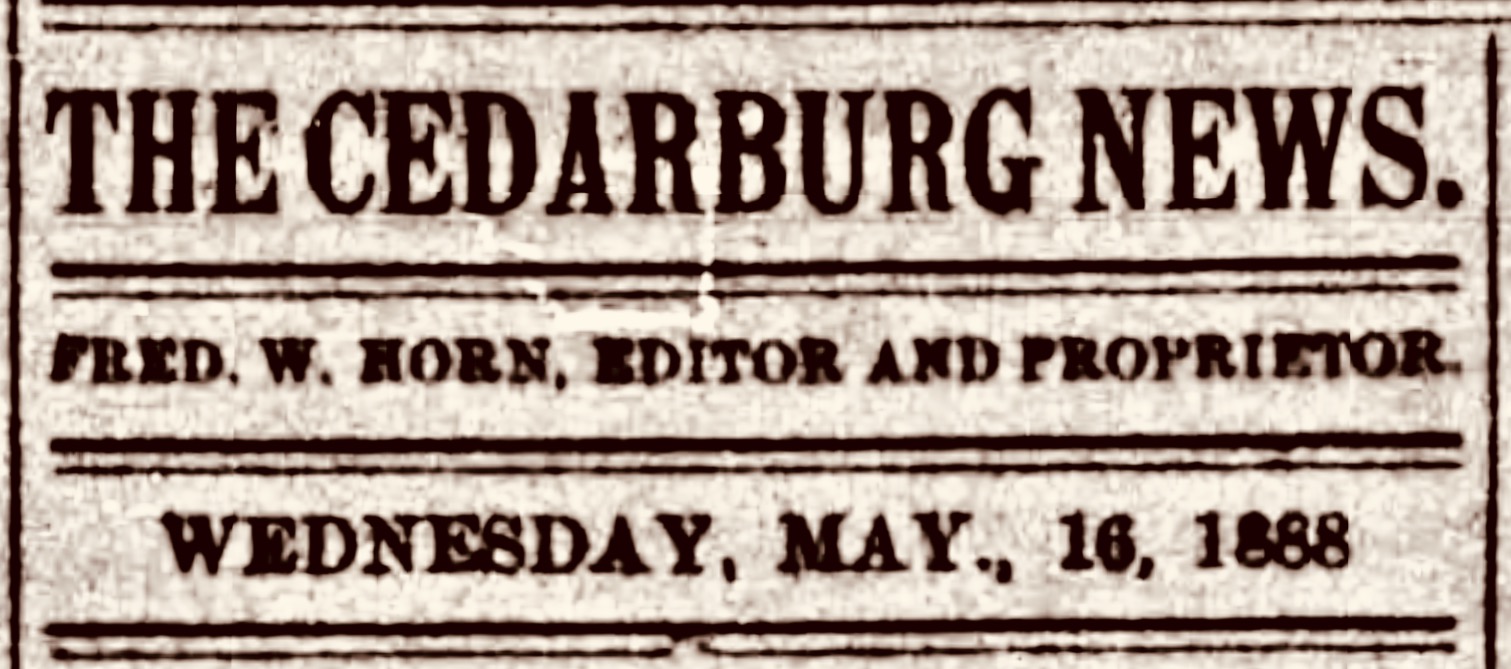
I goofed! I fell into a record-keeping, citation-making trap. As I started this new post, I decided to take yet another look at my sources. And much to my chagrin, I noted that the date at the head of each of our “Mequon Correspondence” letters does not agree with the date that each letter was actually printed in the Cedarburg News. That’s not so strange; I would expect that a letter would be written, dated, and sent to the paper’s editor before the newspaper’s date of publication. But in our case, the letters are dated almost a full week after the newspaper date of publication. What’s that all about?
Anyway, here’s the correct info:
• the first letter of two, titled “Mequon Corrspondeence” [sic], was published on page 2 of the Cedarburg News on May 16, 1888, but the “letter” was dated, in its headline, “May 21, 1888.”
• the second letter, titled “Mequon Correspondence. [Continued.]” appeared the following week, May 23, 1888, also on page 2, but the “letter” was dated, in its headline, “May 28, 1888.”
For the record, earlier today (28 Feb. 2026) I added this corrected date information to thosse two previous CHH posts. And now that we’ve settled that, let’s see what we can do to solve today’s History Mystery!
Continue reading



 Clark House Historian