Our previous post1 left us with two important, unanswered questions: Could the Bonniwells and their companions have been recorded on the 1850 federal population census in California? And if they could be counted, were they? After all, travel through the gold camps in the high mountains could be pretty difficult in the best of times:
Add the rain and snow of a typical fall and winter in California’s gold region and the enumerator’s task must have been very difficult. But the answer is yes, it was possible that our Mequon prospectors could have been counted in the 1850 census in California. The enumeration of the gold mining counties began well after the official enumeration date of June 1st, 1850, and the process continued in some gold region counties until the last weeks of December, many months after the arrival of the overland contingent of the Bonniwell expedition.
So the members of the overland Bonniwell overland expedition were not enumerated on the decennial census while on the trail [in Nebraska] in the summer of 1850. According to George Bonniwell’s diary, the party did not arrive in the gold country until August 8th, eight months after the disastrous California floods of January, 1850. […] Would the census still be in progress in the hills and valleys of the mining district? Would any members of either Bonniwell party have a chance to be enumerated in California? Recording the census in the frenzy and wilderness of gold rush California must have been a daunting task. Could the government’s enumerators get up into the scattered high-country mining camps? Did they enumerate all the miners and merchants and other California settlers? Would the paper census forms survive the wilderness, weather—and wild times—of 1850 California?1
Today we’ll see if we can answer those questions.
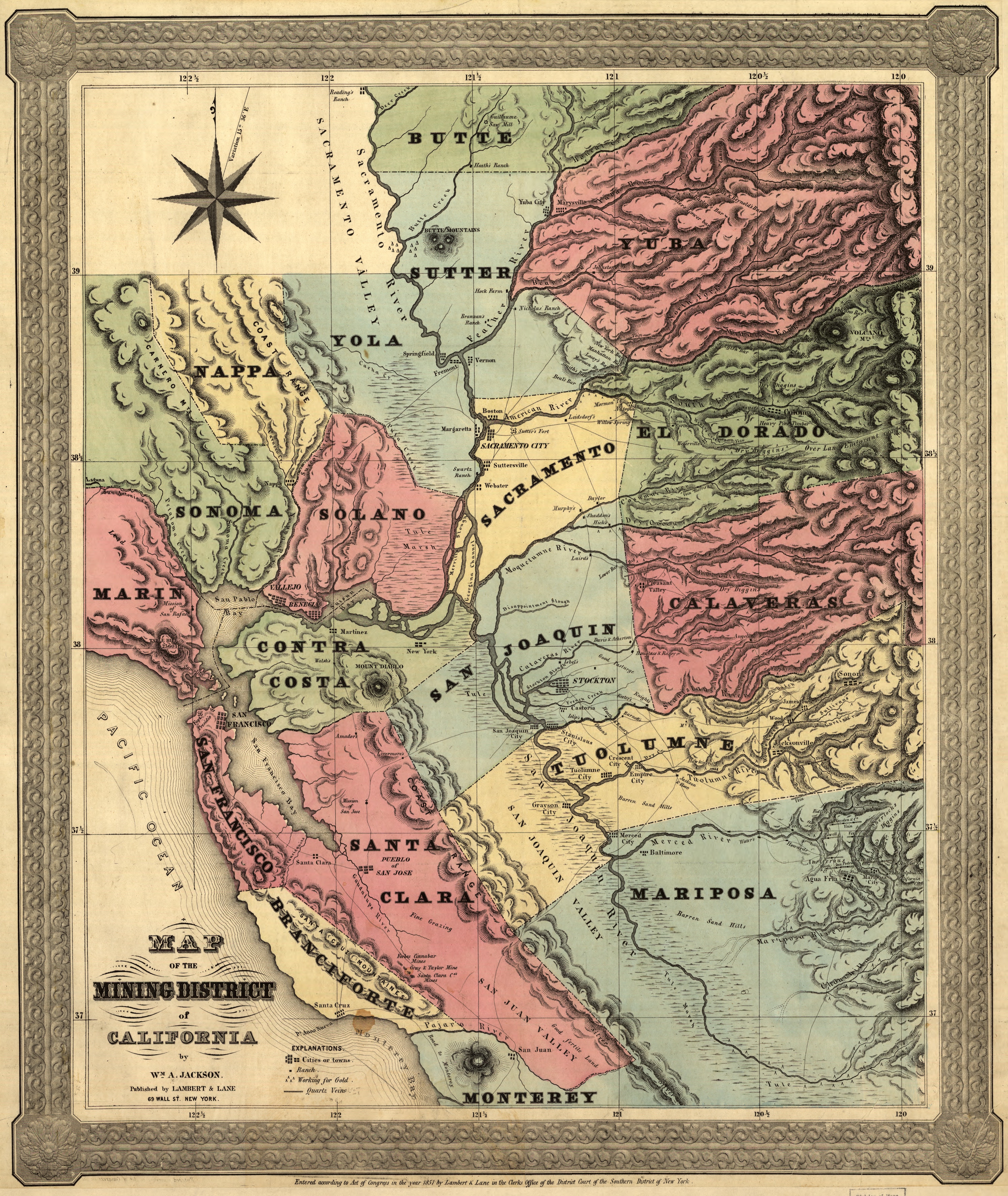
Gold rush counties, c. 1850
Since the federal decennial census is always enumerated by counties, let’s get our bearings by looking at this contemporary map of the California gold region, showing the various county boundaries at that time:
The seventh decennial federal population census was officially enumerated for all persons living in the United States on June 1, 1850. For the first time, all (free) persons were to be listed in the census schedules by their full names.1 But as we discussed previously2, while the actual enumeration of the 1850 census should have begun in every enumeration district on June 1, 1850, it didn’t always do so. And it often took weeks—or even months—to complete the enumeration of most districts. Yet according to Census Bureau rules, whenever the government enumerator did show up at your abode, the census forms were supposed to record the location and personal information for each free person in every household as of June 1, 1850.
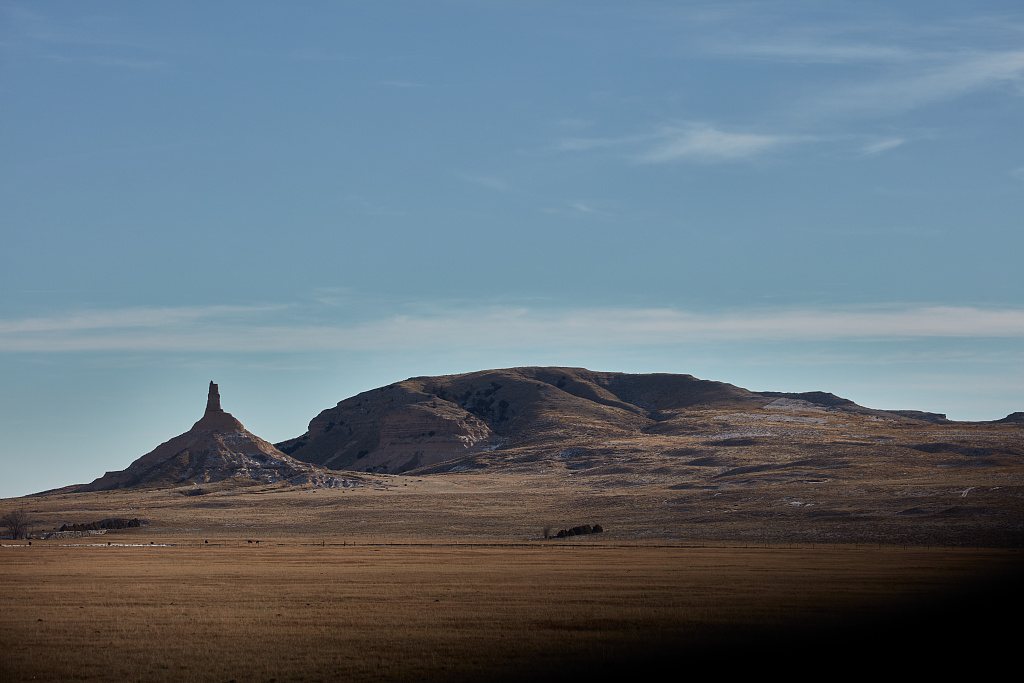
So where were the members of the two Bonniwell Gold rush expeditions on June 1, 1850, and where were they enumerated? Or were they enumerated at all? Well, we know that on June 1, 1850, the second expedition, taking the overland route, was camped here:
Highsmith, Carol M, photographer. The iconic Chimney Rock, now a U.S. national monument, stands out in the distance in Morrill County, Nebraska. United States Nebraska Morrill County, 2022-01-02. Library of Congress (public domain).
It’s been a while since we explored the documentary record of Mequon’s Alfred T. Bonniwell and his family and friends. Previously, we learned that the Bonniwells’ gold rush saga involved not one, but two, expeditions. The second trek westward was overland, chronicled in George Bonniwell’s gold rush diary. That trip, and the diary, began with the party’s departure from Milwaukee on April 12, 1850, continued through their arrival at the California diggings in mid-August, and closed—still searching for gold—with a final entry dated Tuesday, September 24, 1850. For more details, take another look at Gold! – The Bonniwells go west…but when? and who?
The first journey involved a smaller group, which included Alfred T. and Henry V. Bonniwell. As we discussed in A (new) Bonniwell Gold Rush timeline, that trek appears to have begun in April, 1849, with an overland wagon trip from Milwaukee to points unknown, with the party eventually arriving in New Orleans. On September 6, 1849, this first party continued West, mostly via ship: New Orleans to Chagres (Panama), by canoe and overland trail across the isthmus to Panama City, and then by steamship to San Francisco. They appear to have made it to California no later than November 4, 1849. They likely docked at San Francisco and then headed up to Sacramento, the main point of entry to the gold fields, which looked something like this:
Parsons, Charles and George Victor Cooper. Sacramento city, Ca. from the foot of J. Street, showing I., J., & K. Sts. with the Sierra Nevada in the distance / C. Parsons ; drawn Dec. 20th , 1849, by G.V. Cooper ; lith. of Wm. Endicott & Co., N. York, before March 2, 1850. Library of Congress. Click to open larger and very detailed, image in new window.
Forty-niners!
Alfred and Henry Bonniwell, together with Mequon-area neighbors P. M. Johnson, Thomas Day and Richard Taylor and perhaps one or two others, made it to the gold fields in 1849, as part of the first wave of fortune seekers. They are, therefore, bona fide “Forty-niners.” George, Charles and both William T. Bonniwells (senior and junior), and the rest of their overland party would not arrive until August, 1850. It would appear that Alfred and the rest of the Wisconsin 49ers had a lucky head start on the others. Or did they?
I love a great map, and today’s example is particularly fine in several respects: as a detailed view of our hemisphere at a particularly dynamic moment in U.S. history, as an excellent example of mid-19th-century cartography, and—as we’ll see in our next post—as a clear illustration of how members of Mequon’s Bonniwell family made their way to and from the California gold fields in the heady days of the early Gold Rush of 1849 and 1850.1
Gold! where it is and how to get there, 1849
Atwood, John M., Map of the United States, the British provinces, Mexico &c.: showing the routes of the U.S. mail steam packets to California, and a plan of the Gold Region. New York: J. H. Colton, 1849. From the collection of Millard Fillmore. Library of Congress.
I’ve published some great old maps on Clark House Historian, and this is one of my favorites. In our next post, I’ll annotate a copy of this map to illustrate the Bonniwell’s Gold Rush travels in 1849 and the early 1850s. But today I’d like to show the map as it was in 1849, with all its “extra features.” I recommend you begin by clicking the map image, above, which opens a much higher-resolution copy of the map in a new window (FYI, this may take a few seconds; it’s a big, detailed image).
Our last two posts focused on the evidence we have that documents the Bonniwell family’s two-part trip west to the gold fields of California: by the Panama shortcut in 1849 and by the overland route in 1850. Today I’d like to focus on the members of Bonniwell company after the end of their westward voyage(s), and give you a sense of their experiences as newly-arrived prospectors in the California gold diggings through period drawings, lithographs, photographs, and a substantial excerpt from the Bonniwell Gold Rush diary.1
Currier & Ives. Gold mining in California. California, ca. 1871. New York: Published by Currier & Ives. Library of Congress. As always, click the images to open larger versions in new window.
This colorful Currier & Ives lithograph presents a somewhat idyllic view of “Gold Mining in California” as imagined in 1871 by a New York artist who, most likely, had never been west of the Alleghenies. On the one hand, the lithograph does give us an hint of the splendors of the Sierra Nevada, and some idea of the typical activities of California miners. But as we’ll see, life in gold country when the Bonniwell party arrived—in the early, frenzied days of 1849 and 1850—was much less bucolic.
“Working the bar”
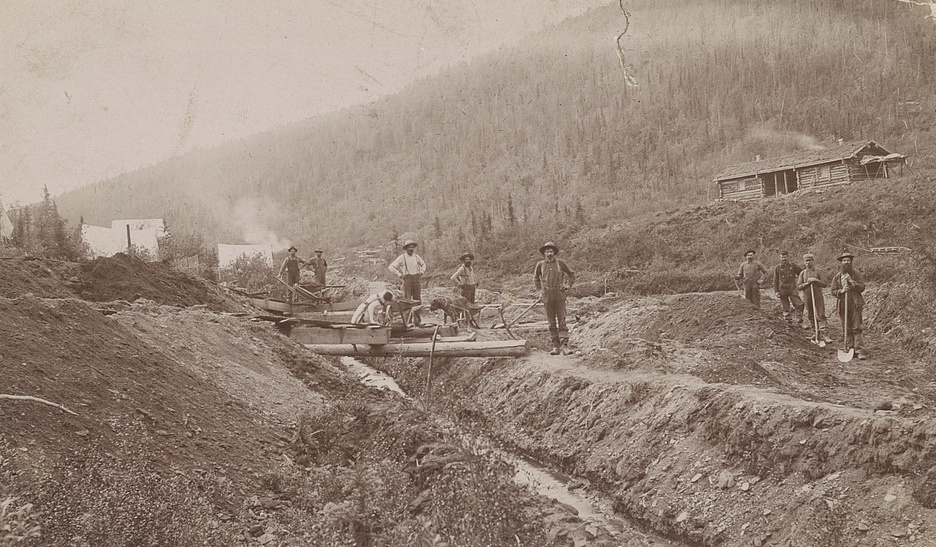
Much of early California gold prospecting involved looking for smaller and larger bits of gold found within the loose alluvial soils and sediments of the rivers and dry riverbeds of the Sierra Nevada. In particular, the miners spent a lot of time “working the bar.” And no, my fellow Wisconsinites, this does not mean they were strenuously pub-crawling in El Dorado county, circa 1849-1850.
Continuing our look at old and new evidence about the Bonniwell family’s trip west to the gold fields of California. If you’re keeping track, this is also part 9 of our series documenting the life of Clark family neighbor (and in-law) Alfred T. Bonniwell and his family.
We closed our previous post, Gold! – The Bonniwells go west…but when? and who?, with a surprising news item from page 2 of the Saturday, April 7, 1849, edition of the Milwaukee Sentinel and Gazette:
FOR CALIFORNIA.—Henry V. Bonniwell, Geo B. Bonniwell, Alfred Bonniwell, Joseph Loomis, and Richard Taylor from Mequon, Washington county, are to leave to-day for California. They proceed to Fort Independence, to fit out.
This April 7, 1849, announcement raises a number of questions, and complicates—if not contradicts—our understanding of the Bonniwell family’s better-known overland trek to California in 1850. I think I have figured out what happened, and the easiest way to explain full story of the Bonniwells and their trip West to the gold fields is by making a timeline of our new evidence. And before we do that, we need to remind ourselves that…
There was more than one way to get to California
When “gold fever” first hit the nation in 1848-1849, traveling to California via wagon trail from one of the major departure points—such as Ft. Independence, Missouri, at the head of the Oregon Trail—was the least expensive but most treacherous option for would-be gold seekers. On the one hand, the overland route was the shortest, about 3,000 miles from the eastern states, but it was fraught with dangers that included bad “roads,” lack of food and water, a whole spectrum of diseases and illnesses, as well as potential attacks by Native Americans or wild animals. Whatever their reason, it appears that sometime during the first stage of their journey, between April and September, 1849, our lads decided to skip the overland route and try something safer and faster, if more expensive:
The Panama Shortcut
“For California, Via Chagres,” advertisement for USMS Steamship Co., New Orleans Daily Crescent, Wednesday, 12 Sept 1849, p 3 (tinted, sharpened). As always, click each image to open larger copy in new windows.1
UPDATED, May 27, 2022 with a few minor edits for clarity.
Today, in part 8 of our series documenting the life of Clark family neighbor (and in-law) Alfred T. Bonniwell and his large extended family, we begin a fresh look at some documentary evidence that complicates and enriches our understanding of how the national “Gold Fever” that began in 1848 shaped the years around 1848-1851 in the lives of Bonniwells and some of their Mequon neighbors.
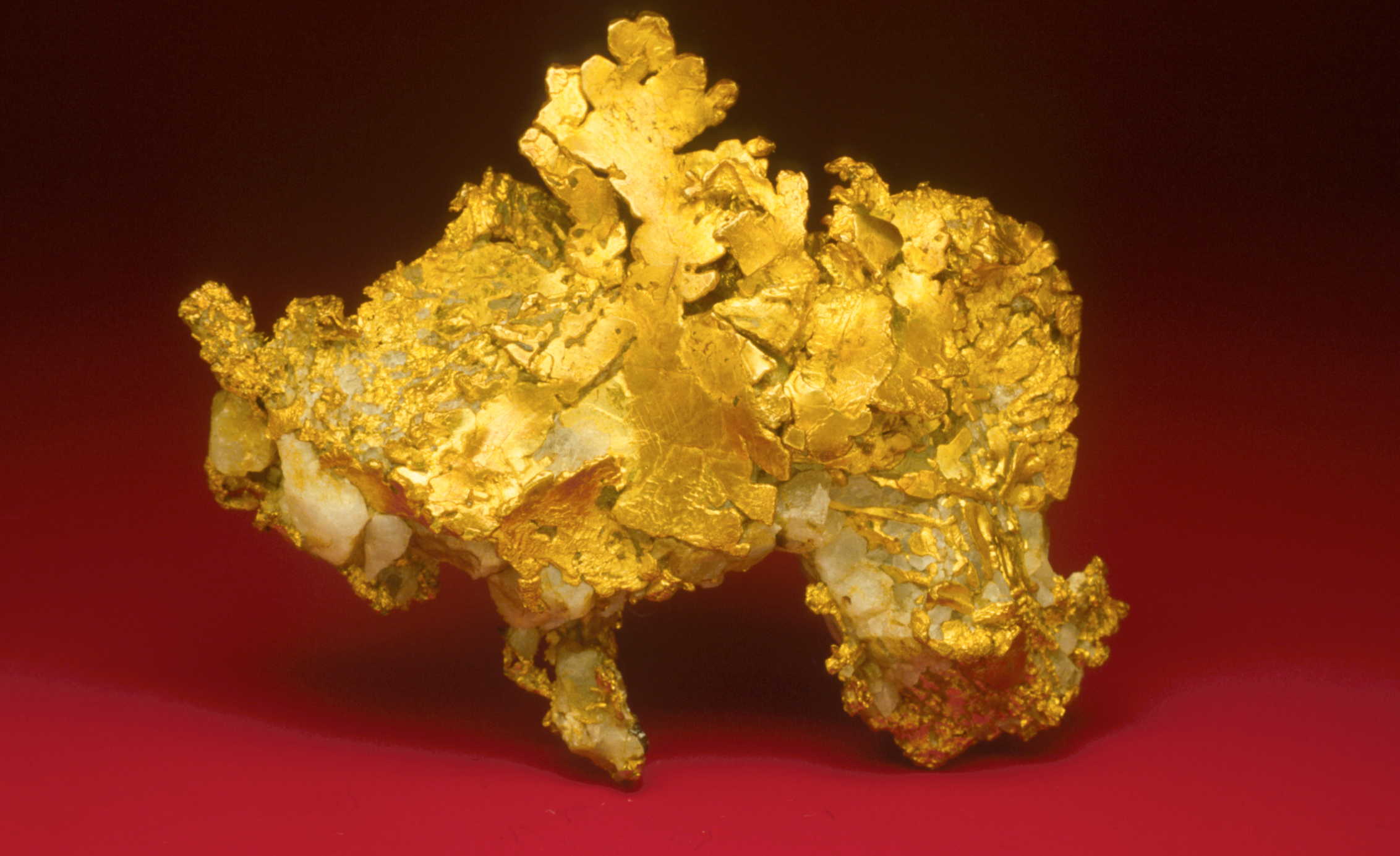
Gold, Placerville [formerly Hangtown], El Dorado County, California, Smithsonian Institution, NMNH-79-9911 (public domain, CC0). Click to open larger image in new window.
Our current knowledge of the Bonniwell family’s California adventures is nicely summarized by George B. Bonniwell at the start of chapter 12 of his book, The Bonniwells: 1000 Years.1
In January, 1848, gold was discovered at Sutter’s Mill in California. By 1849, the gold rush was on. The Bonniwells couldn’t resist another adventure. William Bonniwell, as Captain, led a wagon train of six wagons and 16 men, including Charles, James, Henry, George, Alfred and young William who was only 14 at the time. They started from Milwaukee on April 12, 1850, headed down into Illinois, through Iowa, joined the Oregon Trail in Nebraska, proceeded through Wyoming, into Idaho, down into Nevada and finally to Sacramento, California and the gold region. After four months enduring sickness, hostile Indians, more sickness, mountains, desert, more sickness, lack of water, starvation, etc., they finally made it to their destination in California on August 11, 1850.
Then, after “remaining anywhere from two to four years, they returned to the ‘Bonniwell Settlement.’ It is believed that they returned by the Isthmus of Panama (although some thought that they returned home around Cape Horn.”2
The whole story reads like a tale from a movie script or Western novel, but it’s not. It is, indeed, a true story. But what do we really know about the Bonniwells’ epic trek, and how do we know it? Well, we’ve got some outstanding contemporary sources; some are well-known and some are newly-discovered. Let’s start with what we know.
Today’s post in our Bonniwell document series1 focuses on one important item, Alfred T. Bonniwell’s Petition for Naturalization as a United States citizen, completed in Milwaukee, at the U.S. District Court for the District of Wisconsin, November 6, 1849.
Bonniwell, Alfred, Petition for Naturalization 6 Nov 1849; for full citation see note 2, below. Click to open larger image in new window.
This petition was the final step in a relatively simple citizenship process whose basic outlines had not changed much since the early days of the republic. Alfred T. Bonniwell’s 1849 citizenship petition follows a form typical of such documents, but has a few extra bits of information that are particular to his immigration story. Let’s take a closer look.




 Clark House Historian