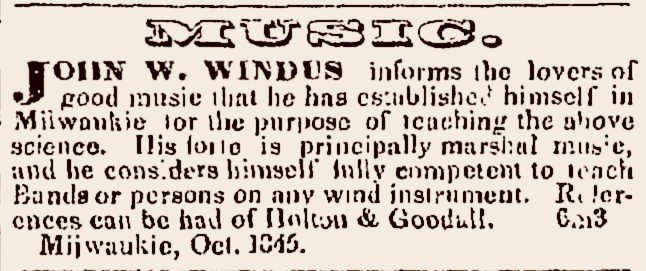
…as I prepare my March 9th Civil War presentation for the Cedarburg History Museum, try to sort out the full story of Mequon-Thiensville’s earliest settlers and landowners (including first postmaster John Weston), and look through a bushel of fresh sources in our ongoing search for Jonathan Clark’s kin who hail, we think, from somewhere up around where Derby, Vermont meets Stanstead, Québec.
The Clark House Historian and his crack research team, searching for answers in the written record…1
As you can see, I’ve got work to do in order to dig out from under—and make sense of—the big pile of historical documents that I’ve accumulated over the past several weeks.
So no new CHH post today, but I’ll be back soon with more Clark House history.
I’m still taking some time to relax and catch up on my reading. Meanwhile, I hope you enjoy the repost of this Revised! and Enhanced! holiday piece that first appeared in December, 2021.
It’s the week after Christmas. Perhaps you have family or friends visiting from out of town. If you have children, they’re home from school. How to keep them entertained? If you lived near New York City in 1864, you were in luck. Barnum’s American Museum was ready with spectacular and unique holiday exhibits for the whole family, all for the low, low, price of 25 cents for adults, 15 cents for children under age ten!
Ho! Ho! Ho! — a little nonsense for the end of the year
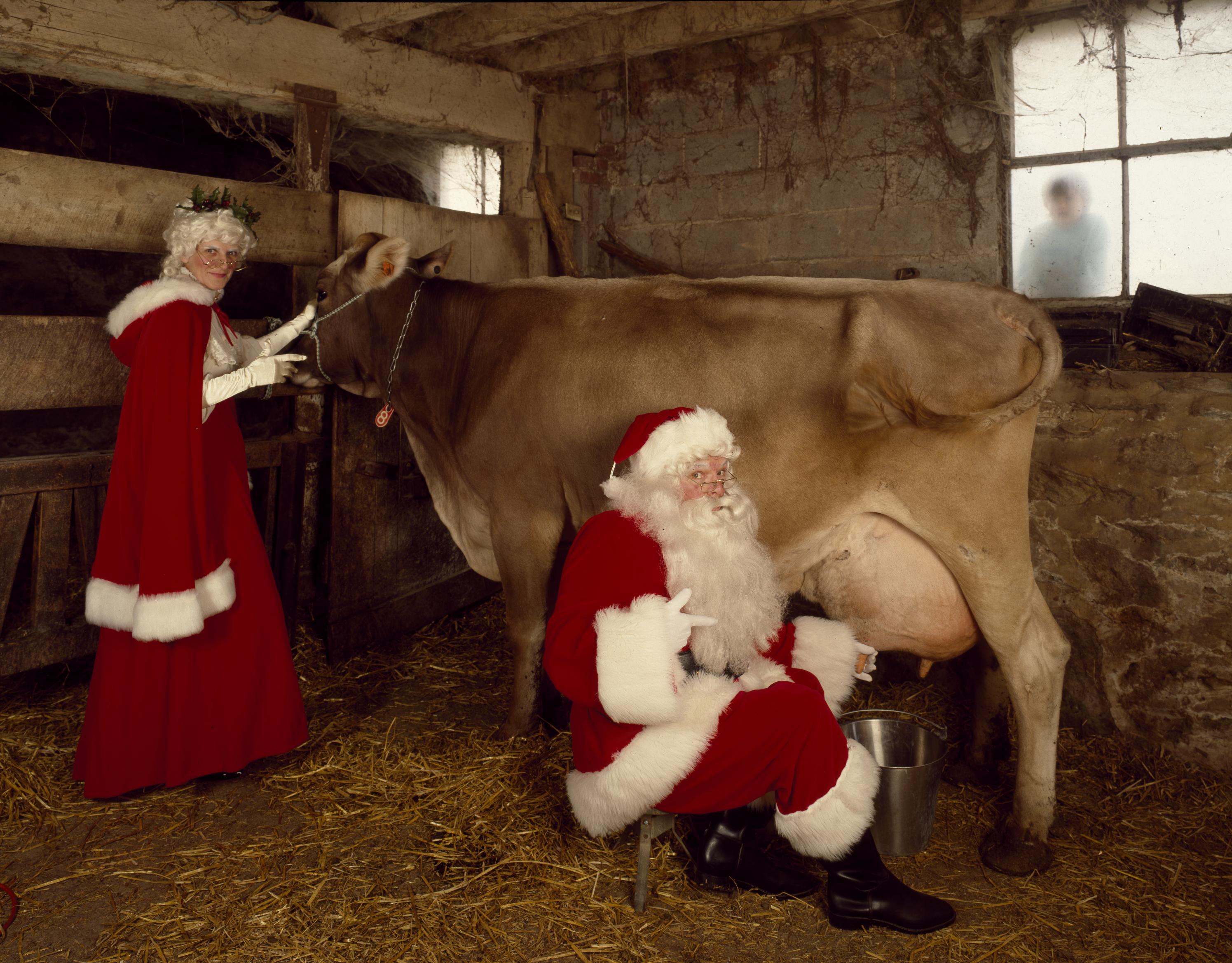
I found a photo. It needs a better caption. Something funny, and perhaps seasonal, too?
Highsmith, Carol M, photographer, “Santa and Mrs. Claus milk a cow. Why, we’re not exactly sure.” c. 1980-2010. Library of Congress
Send your entry (or entries, as many as you like!) to me via the blog’s “Leave a Reply | Write a Comment…” space. I’ll publish all the comments (let’s keep it clean and non-partisan) and I’ll pick a winner.1 Go to it, history lovers!
Needless to say, this photograph is—to the best of my knowledge—not related in any way to the Jonathan Clark House Museum, its board, staff, or volunteers. Except that it has a cow. And a barn. As did the Clark family back in the 1840s-1850s.
How y’all doing? I can’t believe it’s been almost a month since my last post. Sorry about that! It’s that time of year, and I’ve been busier at my day job. But I’ve also been occupied with more pleasant, seasonal, activities…
No new research today. I’m celebrating a big event with family, and taking a few days off from emails and major blog posts while I do.
“They just don’t name ’em like they used to…”
I’m loath to leave loyal blog readers without some Clark House History to while away the time until our next big CHH post, so I made another word search puzzle.
Your assignment today is to find the vintage Stanstead-area settler first names, all of which are documented from Clark-era sources in and around Stanstead, Lower Canada, circa 1790-1840, and many of which will feature in future posts as we search for JMC’s roots.
I’m currently (happily) distracted as I get ready for a special family event, and blogging may be sparse for the next several days. But I’m still chipping away on our search for Jonathan M. Clark’s roots, looking for possibly-related Clark names in the early Land Petitions of Lower Canada, 1764-1841. Which is kind of like doing a Word Search puzzle, only with faded documents and sometimes-illegible 18th-century handwriting.
Beginner Level
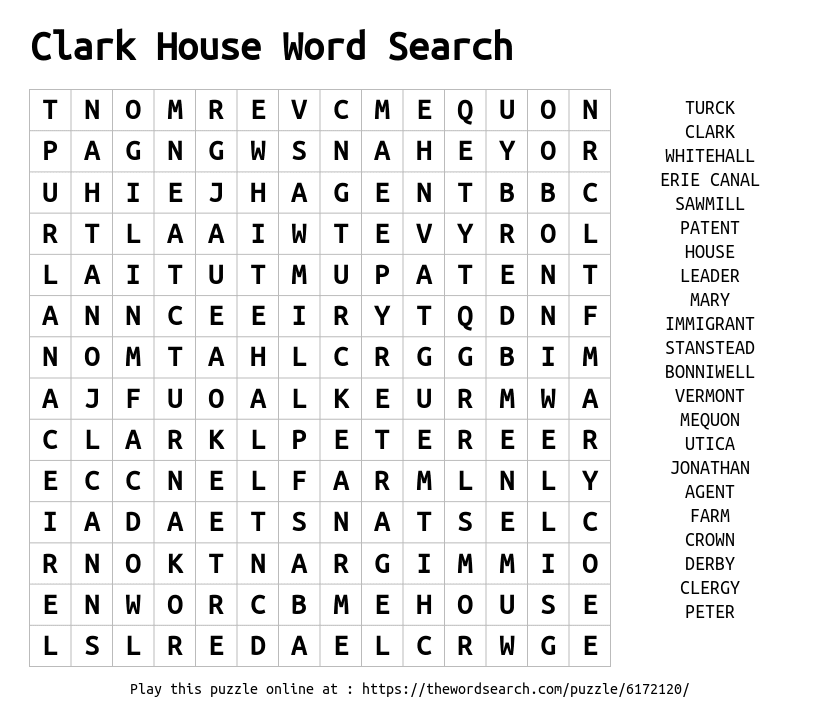
Would you like to join in the search and Help the Historian? Here’s a “Searching for JMC’s Roots”-themed word search puzzle I made, just to get you warmed up:
Look for the Clark House related words in all directions: horizontally, vertically or diagonally, both forwards and backwards. You can solve the online puzzle as many times as you like, and each time you play again, the layout of the puzzle changes. (If you play online, ignore the big orange rectangular button at the bottom of the screen that says “Next→”. It’s just a link to a page of unrelated ads.)
Each time you play you can also change the level of difficulty. Once you’ve developed your word-finding skills with our online puzzle, it’s time to Level Up!
Expert Edition
Here’s one of my current “puzzles,” the original 1792 Leaders & Associates’ petition to the Crown for a grant of land that would eventually become the Township of Stanstead, Lower Canada. Continue reading (below) to view the front side of the petition page. How many “Clark” signatures can you find? And can you transcribe all their first names accurately?
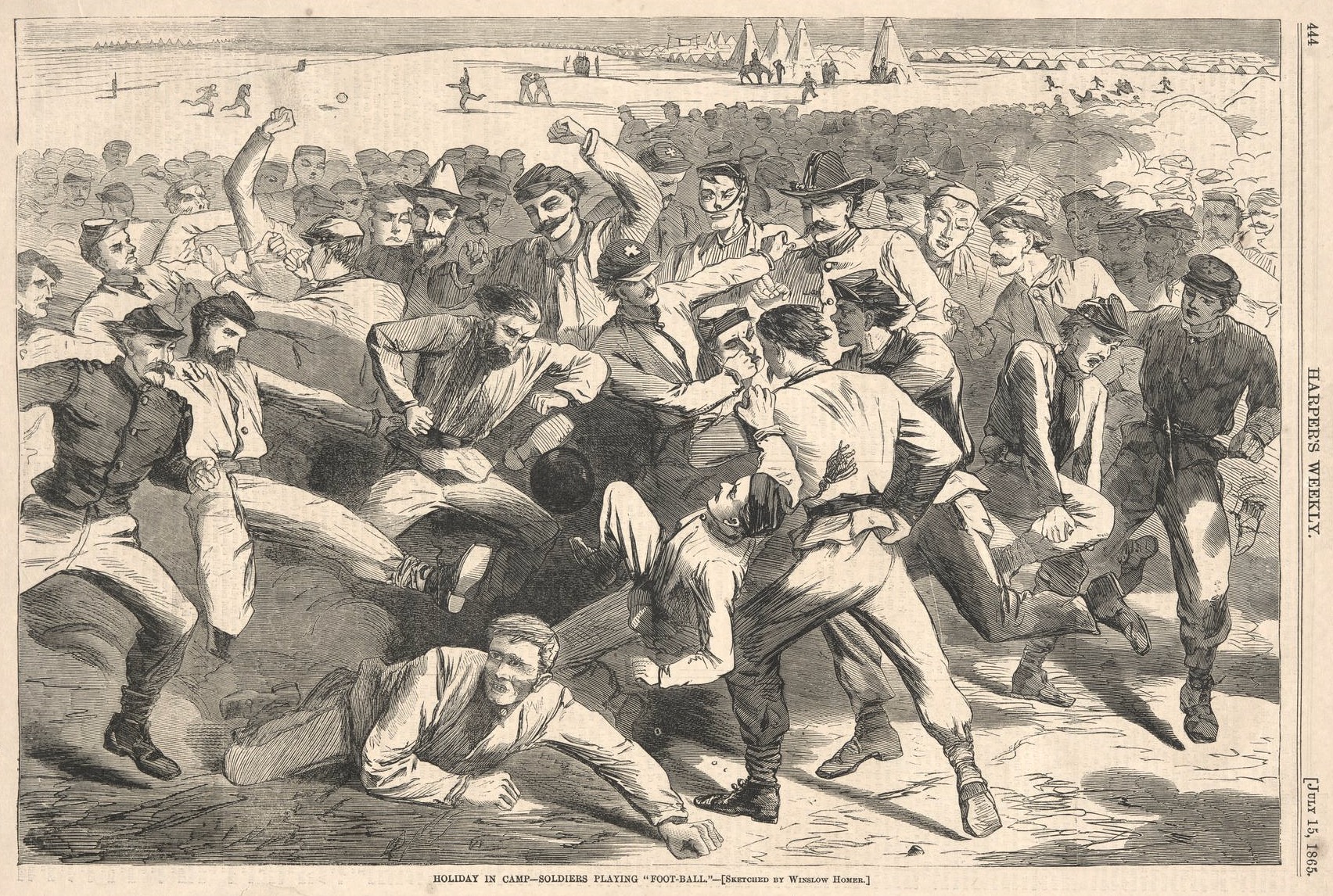
I hear there’s some sort of big sporting event today. Something called…”football.”
Homer, Winslow, Holiday in Camp – Soldiers Playing “Foot-Ball,” from Harper’s Weekly, July 15, 1865, Yale University Art Gallery, Gift of Allen Evarts Foster, B.A. 1906.
I’m still taking some time to relax and catch up on my reading. Meanwhile, I hope you enjoy this Revised! and Enhanced! holiday post that first appeared last December. UPDATED: 28 Dec.2022 to correct a minor error about the “Bower of Beauty” illustrations.
It’s the week after Christmas. Perhaps you have family or friends visiting from out of town. If you have children, they’re home from school. How to keep them entertained? If you lived near New York City in 1864, you were in luck. Barnum’s American Museum was ready with spectacular and unique holiday exhibits for the whole family, all for the low, low, price of 25 cents for adults, 15 cents for children under age ten!
The Holidays are upon us, and I’m taking time to celebrate and enjoy some time with family, That means I won’t have much new for you for the next week or so. (Don’t worry, we will wrap up the Alfred T. Bonniwell story in the very near future. I promise!) But in case you need a little Clark House history for fireside reading this week, I’m going to re-post several seasonal CHH favorites from past years. And since much of the Midwest is currently under a blizzard warning, I thought we should begin with this essay, which originally appeared in early 2021, was revised last February, and has been updated with an additional Currier & Ives lithograph for today’s post.
Snow, and often lots of it, was a feature of Jonathan and Mary Clark’s life in Wisconsin. And if you wanted to go to town or church or visit your neighbors during the snowy Wisconsin winter—or just enjoy a pleasant winter ride in the country—you’d need a sleigh.
Currier, Nathaniel (1813-1888), The road, winter / O. Knirsch, lith., 1853. New York: Published by Currier & Ives. Yale University Art Museum, Whitney Collections of Sporting Art, given in memory of Harry Payne Whitney (B.A. 1894) and Payne Whitney (B.A. 1898) by Francis P. Garvan (B.A. 1897) June 2, 1932. Public domain. Click to open larger image in new window.1
We don’t know if the Clarks owned a sleigh while they lived in Mequon. I suspect they did, though their sleigh—and their clothing—may not have been quite as posh as those in this Currier & Ives lithograph from 1853.
It’s been a hectic few days here at Clark House Historian. Some of our essential technology was getting to the end of its useful life, so we’ve spent the last few days upgrading and updating some critical—but now outdated—hardware and software.
The Bonus division where the many clerks figure the amount of the bonus each veteran is entitled to / [Between 1909 and 1932] Photograph. Library of Congress.
Which reminds me, that not too long ago the word computer was a job description, and not a device.