Mysteries (and errors)…

Our previous two posts (here and here) examined the 1888 recollections of a Mequon man that migrated from Germany to Mequon-Thiensville in 1848-1849, just after completing his schooling. His recollections were published in the form of two “letters” addressed to the Cedarburg News in May, 1888. Both letters were signed with just the initial “L.” Today I’d like to see what we know about our author — “L.” — and whether we can identify him.

But—before we start solving mysteries, there are errors to correct…

Updated dates!
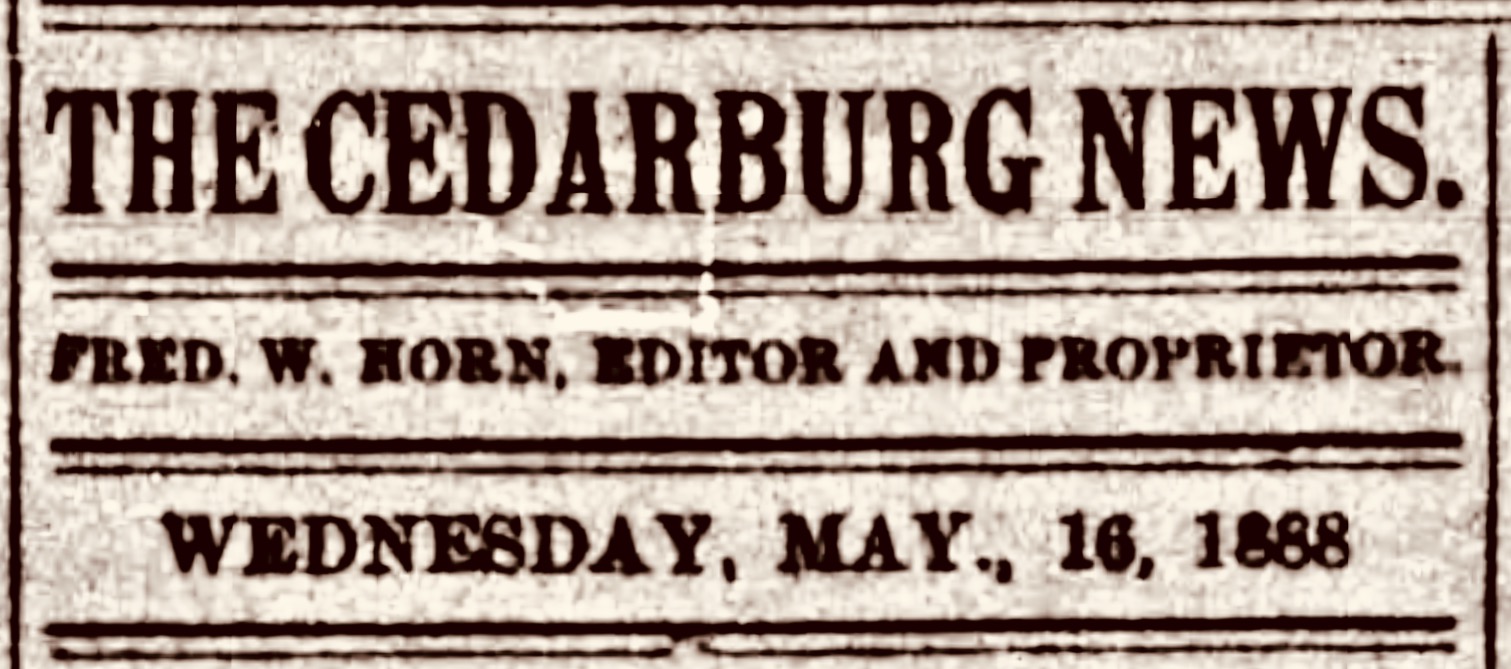
I goofed! I fell into a record-keeping, citation-making trap. As I started this new post, I decided to take yet another look at my sources. And much to my chagrin, I noted that the date at the head of each of our “Mequon Correspondence” letters does not agree with the date that each letter was actually printed in the Cedarburg News. That’s not so strange; I would expect that a letter would be written, dated, and sent to the paper’s editor before the newspaper’s date of publication. But in our case, the letters are dated almost a full week after the newspaper date of publication. What’s that all about?

Anyway, here’s the correct info:
• the first letter of two, titled “Mequon Corrspondeence” [sic], was published on page 2 of the Cedarburg News on May 16, 1888, but the “letter” was dated, in its headline, “May 21, 1888.”
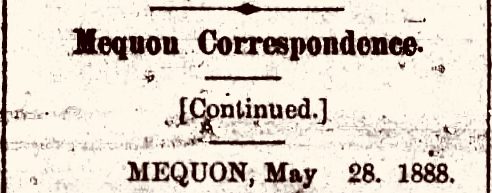
• the second letter, titled “Mequon Correspondence. [Continued.]” appeared the following week, May 23, 1888, also on page 2, but the “letter” was dated, in its headline, “May 28, 1888.”

For the record, earlier today (28 Feb. 2026) I added this corrected date information to thosse two previous CHH posts. And now that we’ve settled that, let’s see what we can do to solve today’s History Mystery!

Continue reading
How’d they get here? – Germany to Mequon, c. 1848 (part 2)

UPDATED, Feb. 28, 2026, to correct erroneous dates of publication of the two Cedarburg News “letters.

Migration memories, 1848, continued

In our previous post we presented the first part of a personal memoir of travel from Germany to New York City and, eventually, Mequon-Thiensville, circa 1848. Those recollections were published as the first of two “letters” to the Cedarburg News in May, 1888. Both letters were pseudonymous, signed only with the initial “L.”

The first letter of the pair, titled “Mequon Corrspondeence” [sic], was published on page 2 of the Cedarburg News on May 16, 1888, but note that the letter itself was dated, in its headline, “May 21, 1888.” If you missed it, I recommend you begin with that earlier post and then come back here for the conclusion. Today we complete the author’s reminiscences with excerpts from his second letter, titled “Mequon Correspondence. [Continued.]” appeared the following week, May 23, 1888, also on page 2, but the letter was dated, in its headline, “May 28, 1888.”

An 1840s “prank” in NYC

The May 28th, 1888, letter begins with two anecdotes from our immigrant’s first day in New York City. The first incident involves a schoolboy “prank” in which a bottomless peach basked is used to trap the arms of an unsuspecting “fat old bachelor, the universal fool of our ship [illegible] to the greatest merriment of the bystanders.”

Continue reading

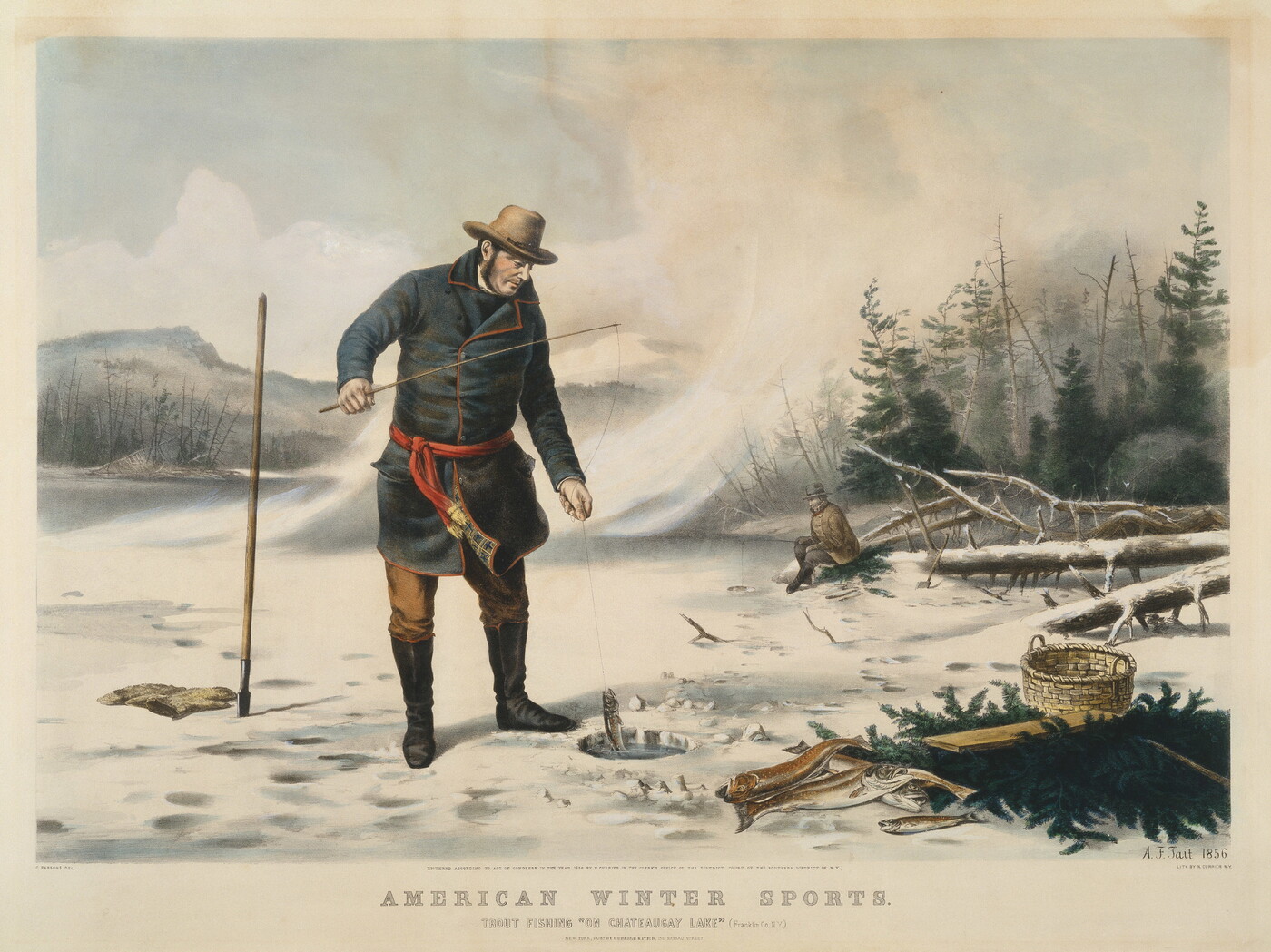
Bitter cold? Sounds like fun!

In an earlier post, “Intensely Cold Weather,” we examined the negative effects of several episodes of bitterly cold winter weather during the Clark family’s era and shortly afterwards. Today we look at some of the positive aspects of frigid winters in our part of the Old Northwest.

It’s no secret. Wisconsinites like to do stuff outdoors in the winter cold. Ice fishing. Skating. Cheering for the Packers.

But the Green Bay Packers professional football team wasn’t organized until 1919, a full eighty years after Jonathan M. Clark bought his first parcel of Mequon land in 1839. So what did our intrepid Wisconsin pioneers do back in the mid-1800s when those deep snows fell and cold north winds began to blow? Well, if you believe the newspapers of the era, there was no finer way to occupy a clear, frosty day—or moonlit evening—than to bundle up, go outside, and enjoy a…

Continue reading

Happy New Year!

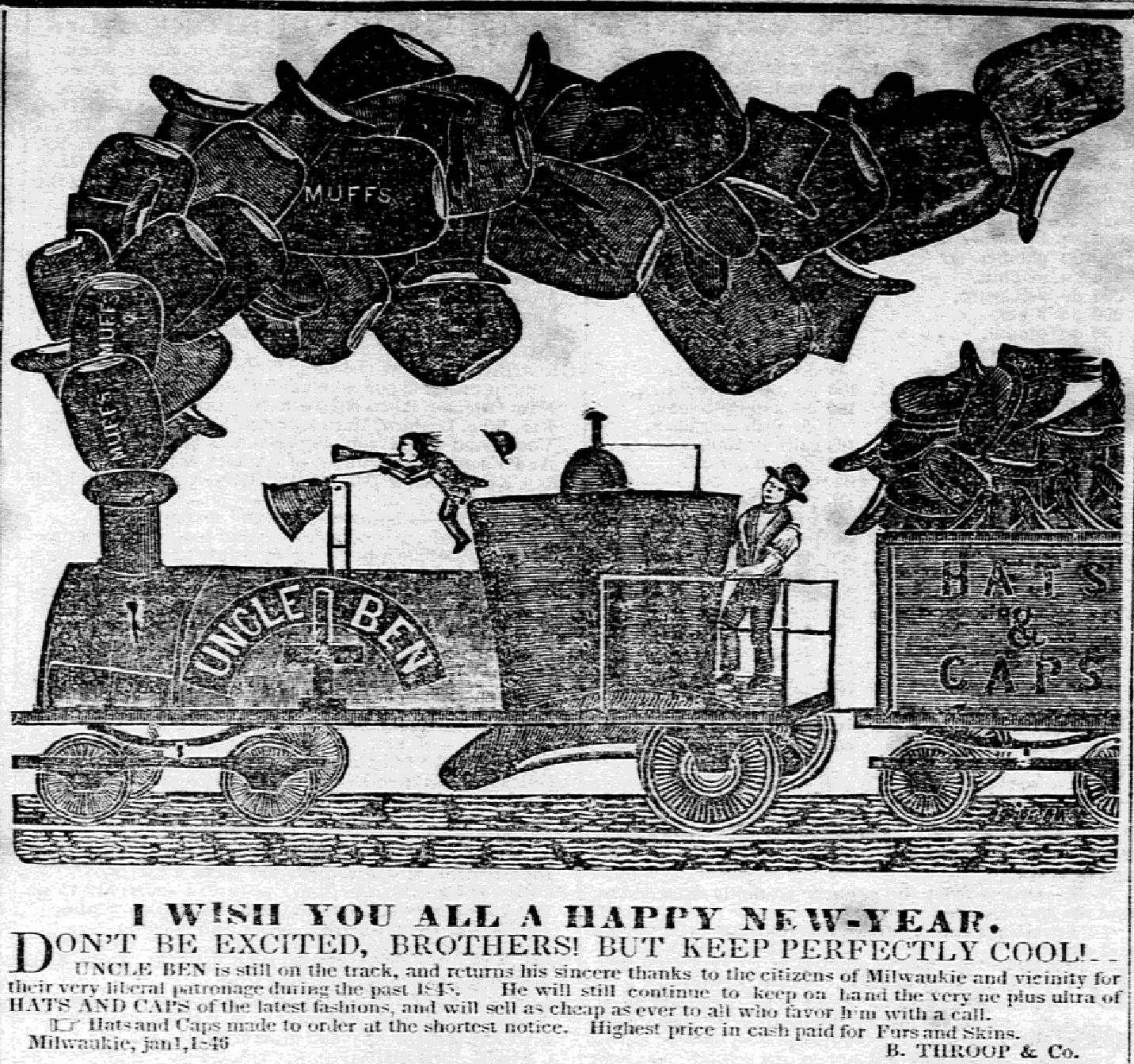
180 years ago, on New Year’s Day, 1846, this amusing woodcut appeared on page 3 of the Milwaukee Daily Sentinel, advertising the shop of pioneering Milwaukee merchant—and local character—Bazille “Uncle Ben” Throop:

That same morning, Jonathan and Mary Clark awoke to their fifth New Year’s Day together as a married couple. Living with them were their first three (of an eventual eight) children: Caroline (5 years old), Henry (almost 3) and Elizabeth “Libbie” (9 months). They were probably still living in their original log cabin home; it would be at least two more years until Jonathan M. Clark carved his name and “1848” in the keystone above the front door lintel of the two-story stone house that is now the Jonathan Clark House Museum.

Did the Clarks see “Uncle Ben’s” ad on January 1st? It’s not impossible, but I’d be at least mildly surprised if our young farm couple spent their earnings on a subscription to a Milwaukee daily newspaper. On the other hand, given their love of lifelong learning, it would not be out of character if they did. But we really don’t know.

Continue reading

“Dashing through the snow…”

As I write this, southeastern Wisconsin is in the midst of our first substantial snowfall of Winter, 2025-2026. In Jonathan and Mary Clark’s lifetime, the day after a storm like this meant it was time to hitch up the sleigh and have some fun “dashing through the snow.” Here’s a lightly-revised and expanded repeat of a post that celebrates Clark-era “sleighing time” and “jingle bells.” (And be sure to click the highlighted links for more vintage wintertime images and info.)

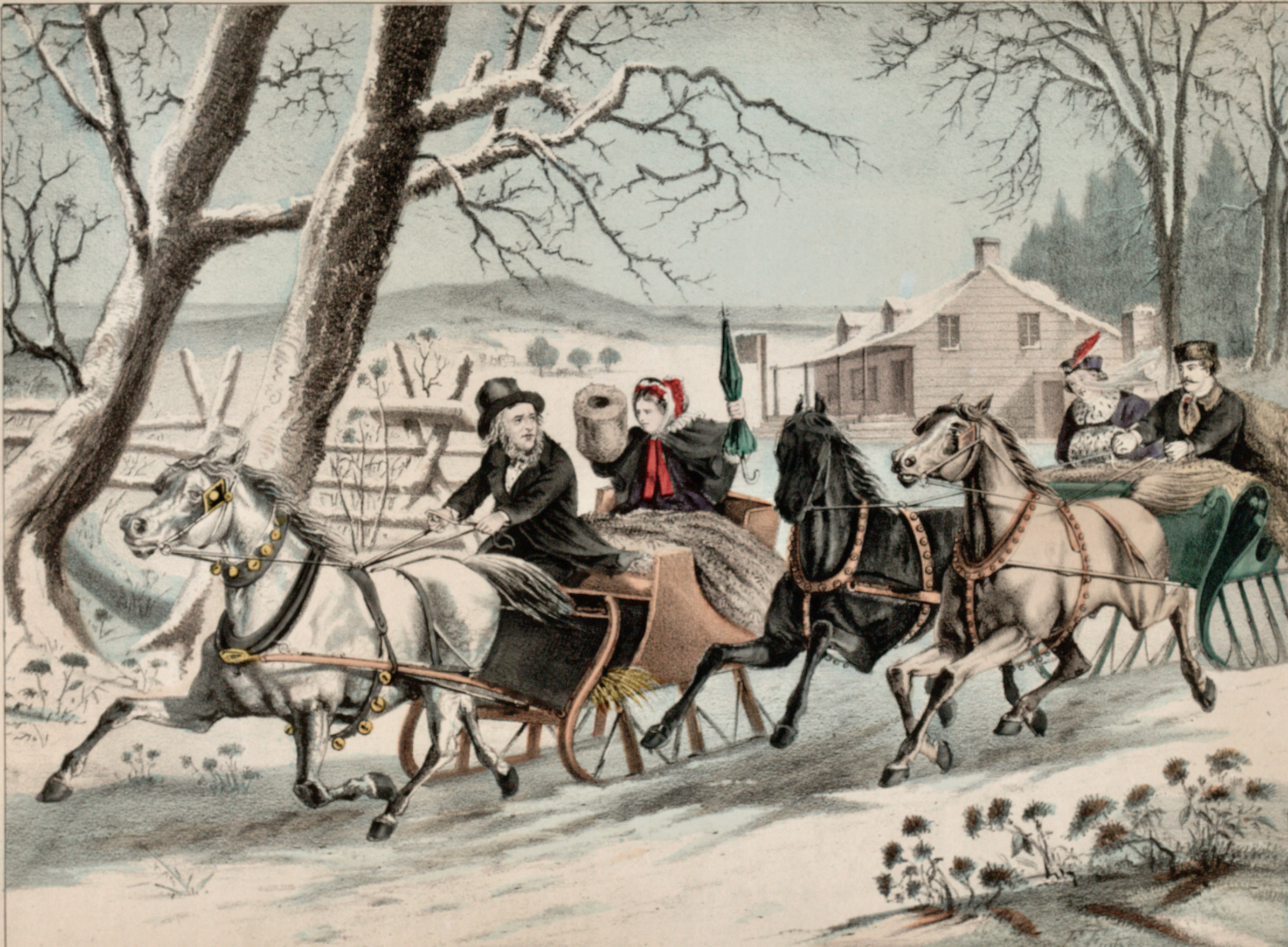
Kimmel and Forster, publishers, “Winter Pleasure in the Country,” circa 1865. National Museum of American History, Peters Prints Collection, Smithsonian Institution.1 Note the modest straps of jingle bells on the one-horse sleigh and the much more ostentatious—and louder—straps of bells on the two-horse sleigh.

Last winter, our earlier CHH posts Snow!, Shoveling out -and other winter chores and Stuff Happens – on a sleigh ride, got me wondering again about winter travel in old Washington/Ozaukee county during the Clarks’ era of the mid-1830s through the 1860s or so. Assuming most of the more successful farmers—such as the Clarks, Bonniwells and Turcks—owned a one- or two-horse sleigh, how easy was it to navigate that sleigh on the early county roads? Could you sleigh ride all the way to Milwaukee? And if you could, how long might that take?

Continue reading

Reminder – Saturday, May 3: JCH Special Movie Event!

Join us! this Saturday, May 3rd, 12:00-2:00 p.m., for a special screening of  FernGully, the Last Rainforest at the historic Rivoli Theater, W62N567 Washington Avenue in downtown Cedarburg . All proceeds to benefit the Jonathan Clark House Museum.

This unique event features a pre-screening illustrated talk by Oscar-nominated director Bill Kroyer,  featuring behind-the-scenes artwork and film clips. Doors open at 11:30 a.m. Come early and enjoy a specially-created, big-screen Clark House trivia quiz before the main event begins at Noon!

Continue reading

JCH Special Event! Saturday, May 3.

The Jonathan Clark House is excited to announce a special screening of  FernGully, the Last Rainforest. on Saturday, May 3rd, 12:00-2:00 p.m., at the historic Rivoli Theater, W62N567 Washington Avenue in downtown Cedarburg. 

This unique event features a pre-screening presentation by Oscar-nominated director Bill Kroyer,  featuring behind-the-scenes artwork and film clips. 

Continue reading

“Dashing through the snow…”

Kimmel and Forster, publishers, “Winter Pleasure in the Country,” circa 1865. National Museum of American History, Peters Prints Collection, Smithsonian Institution.1

Talk of sleighs and sleighing in our recent CHH posts on Snow! and Shoveling out -and other winter chores, plus our January, 2022, essay on Stuff Happens – on a sleigh ride, got me wondering again about winter travel in old Washington/Ozaukee county during the Clarks’ era. Assuming most of the more successful farmers—such as the Clarks, Bonniwells and Turcks—owned a one- or two-horse sleigh, how easy was it to navigate that sleigh on the early county roads? Could you ride all the way to Milwaukee? And if you could, how long might that take?

Continue reading

Snow!

Hey there! We finally got some snow in southeastern Wisconsin, which prompts me to republish this essay, which originally appeared in early 2021, and has been updated and re-posted several times since. Have fun outside—or enjoy a warm beverage inside—and admire the snowy winter landscape while you can. Cheers!

Snow, and often lots of it, was a feature of Jonathan and Mary Clark’s life in Wisconsin. And if you wanted to go to town or church or visit your neighbors during the snowy Wisconsin winter—or just enjoy a pleasant winter ride in the country—you’d need a sleigh.

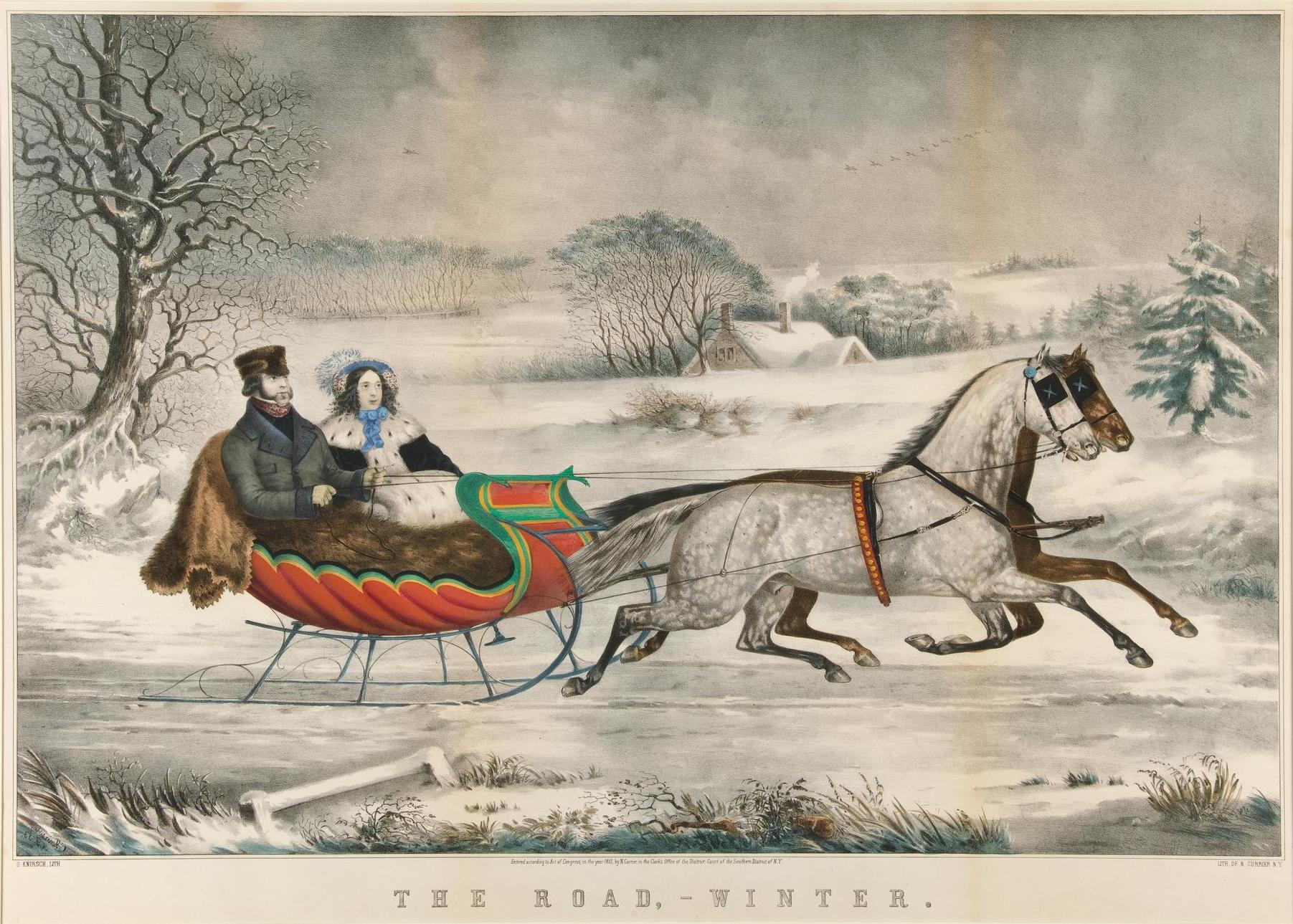
Currier, Nathaniel (1813-1888), The road, winter / O. Knirsch, lith., 1853. New York: Published by Currier & Ives. Yale University Art Museum, Whitney Collections of Sporting Art, given in memory of Harry Payne Whitney (B.A. 1894) and Payne Whitney (B.A. 1898) by Francis P. Garvan (B.A. 1897) June 2, 1932. Public domain. Click to open larger image in new window.1

We don’t know if the Clarks owned a sleigh while they lived in Mequon. I suspect they did, though their sleigh—and their clothing—may not have been quite as posh as those in this Currier & Ives lithograph from 1853.

Continue reading