Fred Beckmann, Sr. – updates & clarifications

Today’s post is an updated, corrected and expanded version a post I wrote in July, 2020, outlining what we knew (at the time), about the life of Fred Beckmann, Sr., the man that occupied and farmed the Jonathan Clark farm between 1868 and 1872. Then, in early 2023, I was asked to talk about the Clark House and its Cedarburg connections at the Cedarburg History Museum. I chose to center my talk on Fred Beckmann and his extended German-American immigrant family, as I believe they exemplify a number of important themes in the transformation of Ozaukee county from the initial Anglo-American dominated first wave of local settlement in the 1830s and early ’40s, into the subsequent decades of primarily German-American settlement and development.

Anyway, I had a lot of fun, and learned a lot, in preparing that 2023 talk. And one of the things I learned is that there was some doubt about the year and date of Fred Beckmann’s death. So I recently investigated the issues and have updated images, text, and information for you about the life—and death—of Fred Beckmann, and I managed to solve at least one mystery in the process…

Continue reading

Alfred Bonniwell documents – part 7: landowner, 1845

When the extended Bonniwell family arrived in Wisconsin Territory in May, 1839, youngest son Alfred T. Bonniwell was not quite two months past his 13th birthday, and his brother Walter was only two years older. Because of their youth, neither Alfred nor Walter were able join their mother and brothers as they purchased government land and established what became known as Mequon’s Bonniwell Settlement.1

That changed for Alfred on June 7, 1845, when his mother, Eleanor (Hills Bonniwell) Hyde, gave him the eastern 80 acres of her original federal land patent.

Hyde, Eleanor (grantor) to A. T. Bonniwell (grantee), deed for 80 acres, June 7, 1845. See note 2 for source and details. Click to open larger image in new window.

Alfred would buy and sell several other properties in the 1850s and ’60s, but he held on to this parcel until his death, fifty years later. Let’s see what he got…

Continue reading

Harvest Time

No new map today. I spent a good part of my early-October weekend cleaning up the family garden after our final harvests of tomatoes and peppers. The bush beans produced their last good beans a few weeks ago; they got tough and stringy after about mid-September.

It’s just the sort of thing Mary Turck Clark and the Clark children would have done in the 1840s and ’50s at the Jonathan Clark house, though I assume the Clarks grew and “put by” a good deal more in their family garden and root cellar than we do in our suburban backyard and chest freezer.

When I finished work, I put my tools and garden supplies in the garage for the winter. The Clark family didn’t have a garage. They had this sturdy fieldstone barn:

Continue reading

Fred Beckmann, Sr.

UPDATED February 9 & 11, 2025, to correct the year and date of Fred. Beckmann’s death and investigate the apparent errors on his gravestone (see updated images, text, and especially Note 4, below).

Farming the Clark place, 1868-1873

In our previous post we saw that sometime around 1861/62, Mary Clark and her children decided to move to Milwaukee. By the time the Milwaukee City Directory for 1862 was published, Mary—and, we presume, her children—were living together with Mary’s father Peter Turck, at 474 Jefferson in the city.

We also know that Mary and her daughters did not sell the Mequon farm—to Catherine Doyle—until April, 1872. So, for over a decade, someone besides the Clark family was living and working on the Clark property. Most likely, Mary made some kind of tenant-farmer arrangement where someone grew crops on the Clark land and paid rent to Mary from the proceeds. This could have been a very useful source of income for Widow Clark and her seven children during the 1860s. Unfortunately, we don’t have much documentation of who the tenants may have been and what sort of arrangement Mary may have made with them.

The Doyle Family

In the same post, I also erred in assuming that the John and Catherine Doyle family probably farmed the Clark land throughout the 1860s. Clark House museum director Nina Look recently called my attention to information about the Doyles and their neighbors in various maps and census schedules created around 1870 that shows that the Doyles were living and farming elsewhere in Mequon through most of the 1860-1870 decade. In future posts I will look at those maps and census schedules and try and make more sense of where the Doyles lived and what land they may have farmed prior to purchasing the Clark farm in April, 1872.

Nina also reminded me that I forgot one important person that we know did farm the Clark farm: Fred Beckmann

Continue reading

1861/1862: Moving Time

Mary Clark and the children move to Milwaukee

On July 20, 1860, the eighth federal decennial census recorded Mary Clark and her family living together on their Mequon farm. Less than a year later, on May 15, 1861, eldest daughter Caroline Clark married William W. Woodward and, presumably, left the Clark house to start their new life together. By the next federal census—June 1, 1870—Mary Clark, her six youngest daughters, one son-in-law, one grandchild, and one future-son-in-law, would be enumerated together in Mary’s home in Milwaukee.

What happened to the Clarks between July, 1860, and June, 1870? Ozaukee County land records show that Mary and her children did not finally sell the Mequon land, stone house, barn, and other structures until April, 1872. Catherine Doyle, matriarch of Mequon’s Doyle family was the buyer. Two years earlier, the 1870 federal census shows that Catherine Doyle, her husband John, and their family were already farming on the old Jonathan M. Clark farm. It appears that Mary Clark had rented or leased the Clark farm to the Doyles and, presumably, used the income to support her family.

So when did the Clarks move to Milwaukee? Did they buy a house, rent, or move in with Mary’s father, Peter Turck? To find out, we need to consult a mundane but very useful resource, the City Directory.

Continue reading

Monday: Map Day! – “Shoolmap” of Mequon, c. 1872

Today’s Monday: Map Day! introduces a rare and very interesting map, from a wonderful digital collection of maps. It’s the c. 1872 “SHOOLMAP of the TOWN of MEQUON,” from the University of Wisconsin–Milwaukee’s American Geographical Society Digital Map Collection, and it is packed with information and unique details:

Shoolmap of the Town of Mequon / School Map of the Town of Mequon, 1872?, University of Wisconsin-Milwaukee, American Geographical Society Digital Map Collection. Manuscript map. Mequon-Thiensville Historical Society, donor. Copyright notice here, presented in this post as a public domain item and/or under fair use provisions of U.S. copyright law.

To view a beautiful, large version of today’s map, click here, or on the map image (above). That will open a new window and take you to the University of Wisconsin–Milwaukee’s American Geographical Society Digital Map Collection, and the home page of this map. It will look something like this:

Continue reading

Finding Your Mequon Roots (part 3)

This is Part 3 of our short introduction to Finding Your Mequon Roots. If you haven’t already, I recommend starting with Part 1 and Part 2.

Before we take a break from our Mequon neighbors of the 1900s and return to Jonathan Clark and his family in the mid-1800s, let’s take a look at a few more “macro” and “micro” things one can find by taking a closer look at a U.S. census population schedule. Once again, here’s the Becker family of Mequon, as found on lines 32 to 34 of this 1900 U.S. federal census population schedule: Continue reading

Where are we?

CLARK, Jonathan house square crop  July,  2015

Jonathan Clark House, Mequon, Wisconsin, July, 2015. Photograph by Reed Perkins

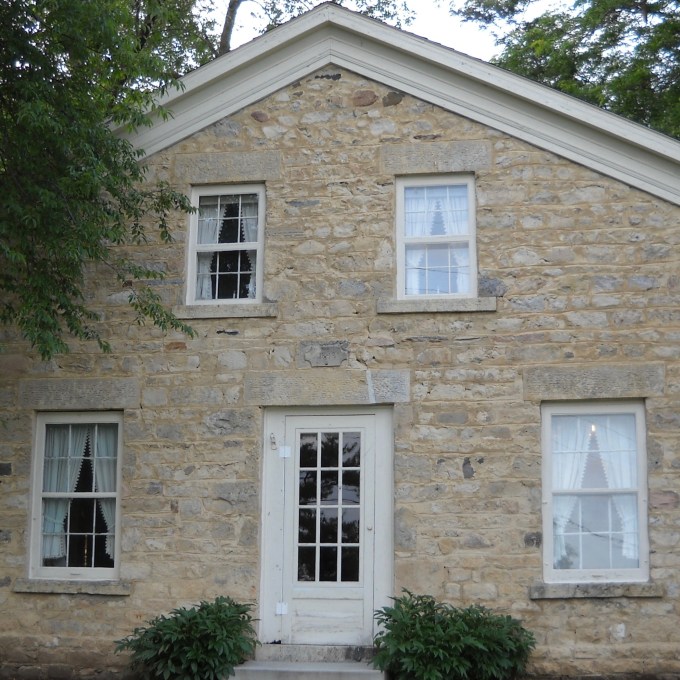
Where are we? Well, if you’re looking at this handsome stone house in real life, you’re standing by the front door of the Jonathan Clark House Museum, looking northward. On a modern map you can find it at 13615 N. Cedarburg Road—on the intersection with Bonniwell Road—Mequon, Wisconsin. If you’d like to visit the museum, click here for more info.

But “Where are we?” is never a simple question when it comes to historic places, because the answer often changes over time. Along with “Where are we?” we need to ask “When are we?” The answer to “Where are we?” is surprisingly varied—and useful for further research—throughout the lives of Jonathan and Mary Clark.

Continue reading