Inman, Henry. Rip Van Winkle Awakening from his Long Sleep, 1823. National Gallery of Art, gift of William and Abigail Gerdts. Public Domain.
A long “nap”
Unlike Rip van Winkle, I haven’t been asleep the whole time since our previous post. But we are well overdue for new blog material. I’ve got a big backlog of documents and images to share with you; all I need to do is get writing. But first…
Be sure to vote today!
It’s election day today, and your vote counts. If you haven’t already done so, get out of the house, over to your polling place, and vote. Voting is your right and responsibility as a citizen, and an indispensable element of our nation since the earliest days of the Republic.
Not surprisingly, voting and public service were an important part of life in the Clark House era. From 1840 onward, Jonathan M. Clark, Peter Turck, William T. Bonniwell and many other relatives and neighbors sought, and won, appointment or election to a wide variety of local, territorial and state offices. Voting—then limited to white males only—was a priority for Mequon’s early settlers, and they never failed to turn out in large numbers for each election. Their passion for civic engagement and electoral politics was, in turn, passed to the next generation.
In an earlier post I wrote: I’m still on the hunt for the elusive parents and kin of Jonathan M. Clark. Based on what we know so far, we are looking in the area of Derby, Orleans County, Vermont and its northern neighbor Stanstead Township, Lower Canada, circa 1800-1830 or so.
Well, the hunt continues, and today I thought I’d share with you another Back to School tidbit, a “hot tip” that I’ve been meaning to write about for a while. The tip—and its source—comes from Clark-Turck family descendant and Clark House Museum supporter Liz Hickman1, who kindly gave me a copy of this fascinating book:
Kathleen H. Brown’s comprehensively researched and encyclopedic Schooling in the Clearings: Stanstead 1800-1850 is devoted to the early history of public and private education in Quebec’s Eastern Townships and, in particular, Stanstead Township. That might seem like a highly specialized corner of North American history on which to focus, and I suppose it is. But Ms. Brown’s heroic labors in the archives are now a readable and invaluable resource for those of us trying to learn more about the early settlers in the Eastern Townships and their children including, possibly, the earliest record of Jonathan M. Clark known to date.2
I hope you liked our recent re-post of Back to School, 1839! And since I’m still working on a number of new but not-yet-ready projects, I thought you might also enjoy a revised and expanded version of a related post that was first published September 2, 2020.
It’s “Back to School” time for many of us, so I thought you might be interested in this transcription of the earliest known school records of old Washington/Ozaukee county prior to 1845, published on page 328 of the History of Washington and Ozaukee Counties, Wisconsin […] Illustrated. Western Historical Co., Chicago, 1881:
Click to open a larger image in a new window, and see which of the early settler families had school age children, that is, children between the ages of 4 and 16, in 1842 and 1843. (Current Washington and Ozaukee county readers: do you have any kin listed in this summary of early school censuses? Let us hear from you via the Leave a Reply box, below.)
UPDATE, Nov. 30, 2022: The discussion of the William Bonniwell signatures and dates, below, is not correct. I have lined-through the incorrect paragraph and added the correct info in two new paragraphs below the original misinformation.
It may not look like much on the outside. It’s old. Not very big. Whole pages are missing, others are damaged. The binding is worn.
Bonniwell Bible, front cover. Photo credit: Kendalyne Gentile, 2022
But this modest book was—for over 300 years—the family Bible for Mequon’s pioneer Bonniwell family, their ancestors and descendants. And last month, the Bible’s most recent owner, Bonniwell descendant Kendalyne Gentile, generously gave the Bible and other Bonniwell family documents to the Jonathan Clark House Museum where they will form an important part of our permanent collection.
Our last two posts focused on the evidence we have that documents the Bonniwell family’s two-part trip west to the gold fields of California: by the Panama shortcut in 1849 and by the overland route in 1850. Today I’d like to focus on the members of Bonniwell company after the end of their westward voyage(s), and give you a sense of their experiences as newly-arrived prospectors in the California gold diggings through period drawings, lithographs, photographs, and a substantial excerpt from the Bonniwell Gold Rush diary.1
Currier & Ives. Gold mining in California. California, ca. 1871. New York: Published by Currier & Ives. Library of Congress. As always, click the images to open larger versions in new window.
This colorful Currier & Ives lithograph presents a somewhat idyllic view of “Gold Mining in California” as imagined in 1871 by a New York artist who, most likely, had never been west of the Alleghenies. On the one hand, the lithograph does give us an hint of the splendors of the Sierra Nevada, and some idea of the typical activities of California miners. But as we’ll see, life in gold country when the Bonniwell party arrived—in the early, frenzied days of 1849 and 1850—was much less bucolic.
“Working the bar”
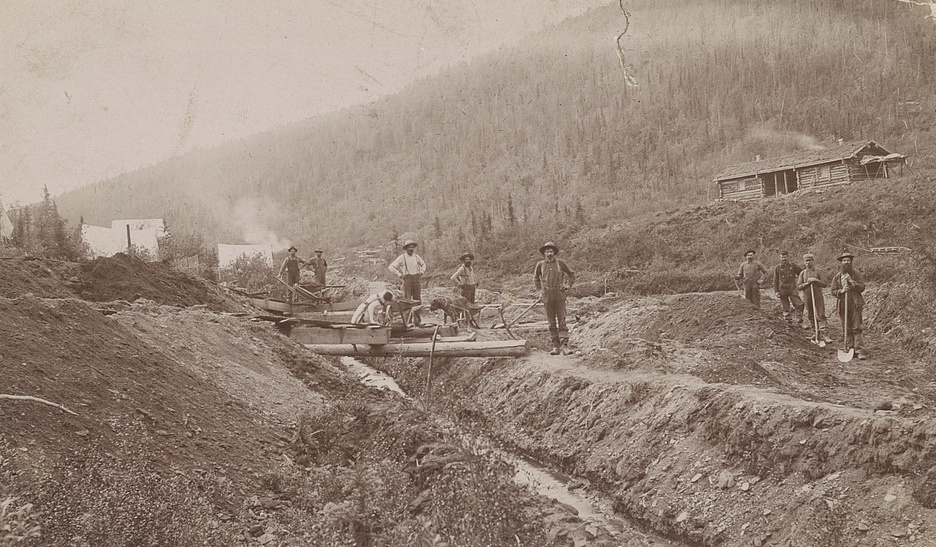
Much of early California gold prospecting involved looking for smaller and larger bits of gold found within the loose alluvial soils and sediments of the rivers and dry riverbeds of the Sierra Nevada. In particular, the miners spent a lot of time “working the bar.” And no, my fellow Wisconsinites, this does not mean they were strenuously pub-crawling in El Dorado county, circa 1849-1850.
Continuing our look at old and new evidence about the Bonniwell family’s trip west to the gold fields of California. If you’re keeping track, this is also part 9 of our series documenting the life of Clark family neighbor (and in-law) Alfred T. Bonniwell and his family.
We closed our previous post, Gold! – The Bonniwells go west…but when? and who?, with a surprising news item from page 2 of the Saturday, April 7, 1849, edition of the Milwaukee Sentinel and Gazette:
FOR CALIFORNIA.—Henry V. Bonniwell, Geo B. Bonniwell, Alfred Bonniwell, Joseph Loomis, and Richard Taylor from Mequon, Washington county, are to leave to-day for California. They proceed to Fort Independence, to fit out.
This April 7, 1849, announcement raises a number of questions, and complicates—if not contradicts—our understanding of the Bonniwell family’s better-known overland trek to California in 1850. I think I have figured out what happened, and the easiest way to explain full story of the Bonniwells and their trip West to the gold fields is by making a timeline of our new evidence. And before we do that, we need to remind ourselves that…
There was more than one way to get to California
When “gold fever” first hit the nation in 1848-1849, traveling to California via wagon trail from one of the major departure points—such as Ft. Independence, Missouri, at the head of the Oregon Trail—was the least expensive but most treacherous option for would-be gold seekers. On the one hand, the overland route was the shortest, about 3,000 miles from the eastern states, but it was fraught with dangers that included bad “roads,” lack of food and water, a whole spectrum of diseases and illnesses, as well as potential attacks by Native Americans or wild animals. Whatever their reason, it appears that sometime during the first stage of their journey, between April and September, 1849, our lads decided to skip the overland route and try something safer and faster, if more expensive:
The Panama Shortcut
“For California, Via Chagres,” advertisement for USMS Steamship Co., New Orleans Daily Crescent, Wednesday, 12 Sept 1849, p 3 (tinted, sharpened). As always, click each image to open larger copy in new windows.1
UPDATED, May 27, 2022 with a few minor edits for clarity.
Today, in part 8 of our series documenting the life of Clark family neighbor (and in-law) Alfred T. Bonniwell and his large extended family, we begin a fresh look at some documentary evidence that complicates and enriches our understanding of how the national “Gold Fever” that began in 1848 shaped the years around 1848-1851 in the lives of Bonniwells and some of their Mequon neighbors.
Gold, Placerville [formerly Hangtown], El Dorado County, California, Smithsonian Institution, NMNH-79-9911 (public domain, CC0). Click to open larger image in new window.
Our current knowledge of the Bonniwell family’s California adventures is nicely summarized by George B. Bonniwell at the start of chapter 12 of his book, The Bonniwells: 1000 Years.1
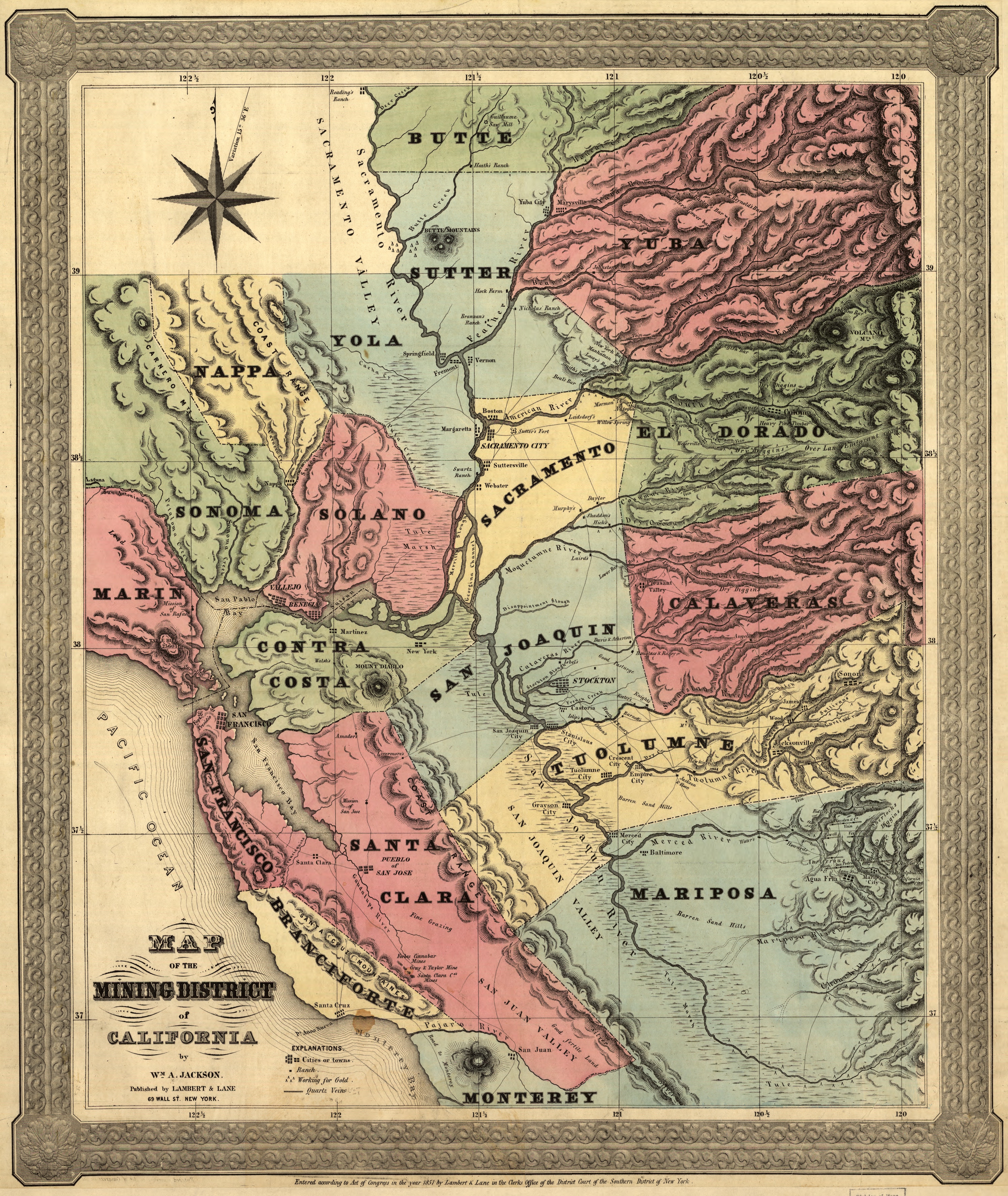
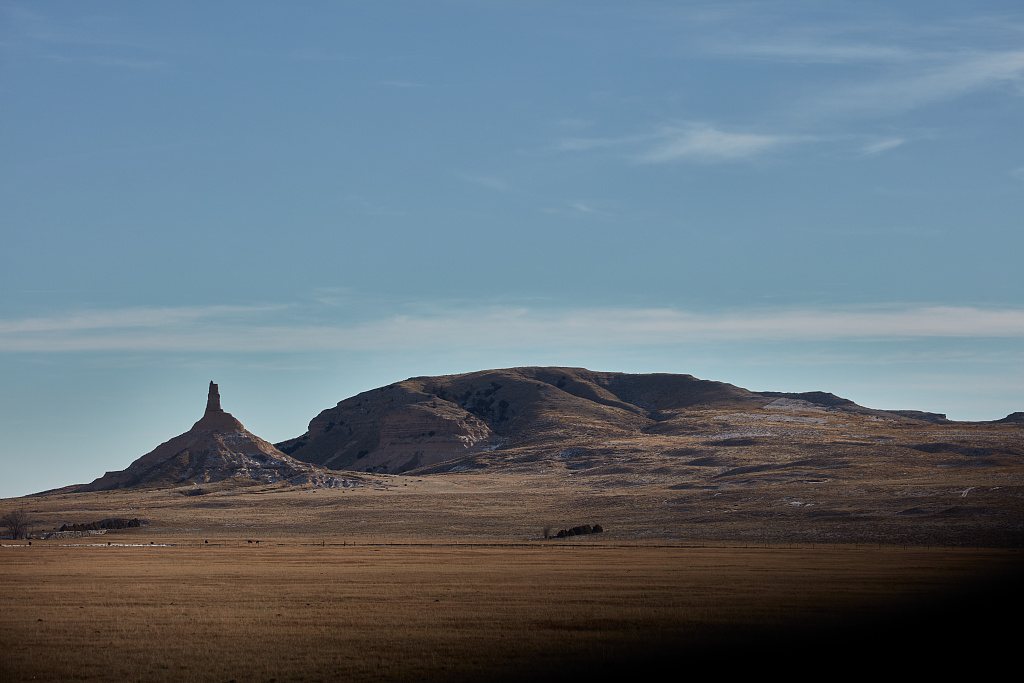
In January, 1848, gold was discovered at Sutter’s Mill in California. By 1849, the gold rush was on. The Bonniwells couldn’t resist another adventure. William Bonniwell, as Captain, led a wagon train of six wagons and 16 men, including Charles, James, Henry, George, Alfred and young William who was only 14 at the time. They started from Milwaukee on April 12, 1850, headed down into Illinois, through Iowa, joined the Oregon Trail in Nebraska, proceeded through Wyoming, into Idaho, down into Nevada and finally to Sacramento, California and the gold region. After four months enduring sickness, hostile Indians, more sickness, mountains, desert, more sickness, lack of water, starvation, etc., they finally made it to their destination in California on August 11, 1850.
Then, after “remaining anywhere from two to four years, they returned to the ‘Bonniwell Settlement.’ It is believed that they returned by the Isthmus of Panama (although some thought that they returned home around Cape Horn.”2
The whole story reads like a tale from a movie script or Western novel, but it’s not. It is, indeed, a true story. But what do we really know about the Bonniwells’ epic trek, and how do we know it? Well, we’ve got some outstanding contemporary sources; some are well-known and some are newly-discovered. Let’s start with what we know.
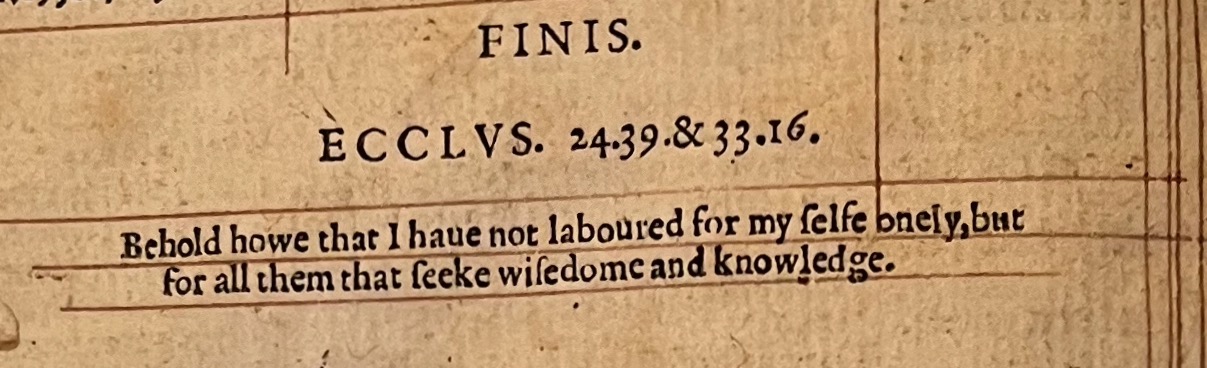
On Monday, I mentioned how I’ve been reading a lot of interesting documents lately, including some very cool and very old Clark House related manuscripts, and I was puzzled by this bit of manuscript marginalia, found in an old religious book, a real History Mystery:
I noted that this handwriting may (or may not) be a variation on the English writing style known as Secretary hand. I was stumped, and asked you readers to Help the Historian! with this mysterious passage. And although I didn’t have any prizes to award—except eternal fame and glory throughout our vast Clark House Historian readership—I hoped someone would step forward and claim their virtual laurel wreath. Well, the week is over, and the winner is…
If I read my calendar correctly, that means you can just drop in this Friday, May 6, or next Saturday, May 14, between 11 and 2, and enjoy a tour of the historic home of Mequon’s pioneer Clark family. Other open days will follow on first Fridays and second Saturdays throughout the summer. If you have a group of 6 or more, please call ahead. More info on Clark House tours can be found at this link. Questions? Give us a call at 262-618-2051 or send us an e-mail at jchmuseum@gmail.com.
History Mystery! update…
Did you see our CHH History Mystery! post on Monday? Have you been working on your transcription of our early English manuscript text? Are you stumped? Do you still want to win eternal fame and glory throughout the Clark House Historian readership? Here’s an update to that initial post, with two more clues to help you solve our handwriting puzzle: