Searching for JMC’s roots in Eastern Township sources: books (part 1)

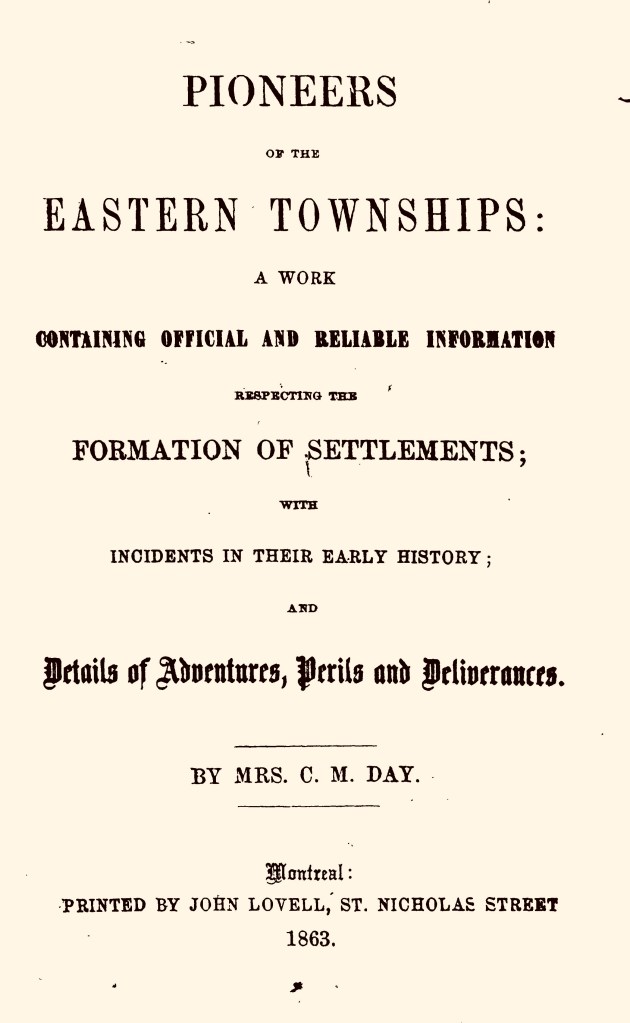
If this were an academic thesis (don’t worry: it’s not, it’s still a blog), one of the first things we’d do at the start of a project like this is create a “literature review” and accompanying annotated bibliography. Now that we’re restarting our search for JMC’s roots in the border area of northern Vermont and the Eastern Townships of southern Québec, circa 1790-1840, I thought it would be smart to do something similar, but less formal. Over the next several posts we’re going to sort and prioritize the various sources that look useful, and find a way to organize those sources—with their proper bibliographical citations—in a way that will serve us over time.

The Clark House Historian, growing old as he searches for Jonathan M. Clark’s roots…1

Today’s post is Part 1 (of many) of our hybrid literature review and annotated bibliography that—we hope—will finally lead us to JMC’s as-yet-unknown parents, ancestors, possible siblings, and kin.2 We begin with some Lower Canada—Eastern Townships books that I have found more (or less) useful.

Continue reading

Labor Day – a photo essay

Even thought it’s Labor Day, the holiday celebrating the working men and women of our nation, I’ll be at work, back at our local mercantile establishment. You know, a store kind of like this one, stocked with just about anything you need for modern living:

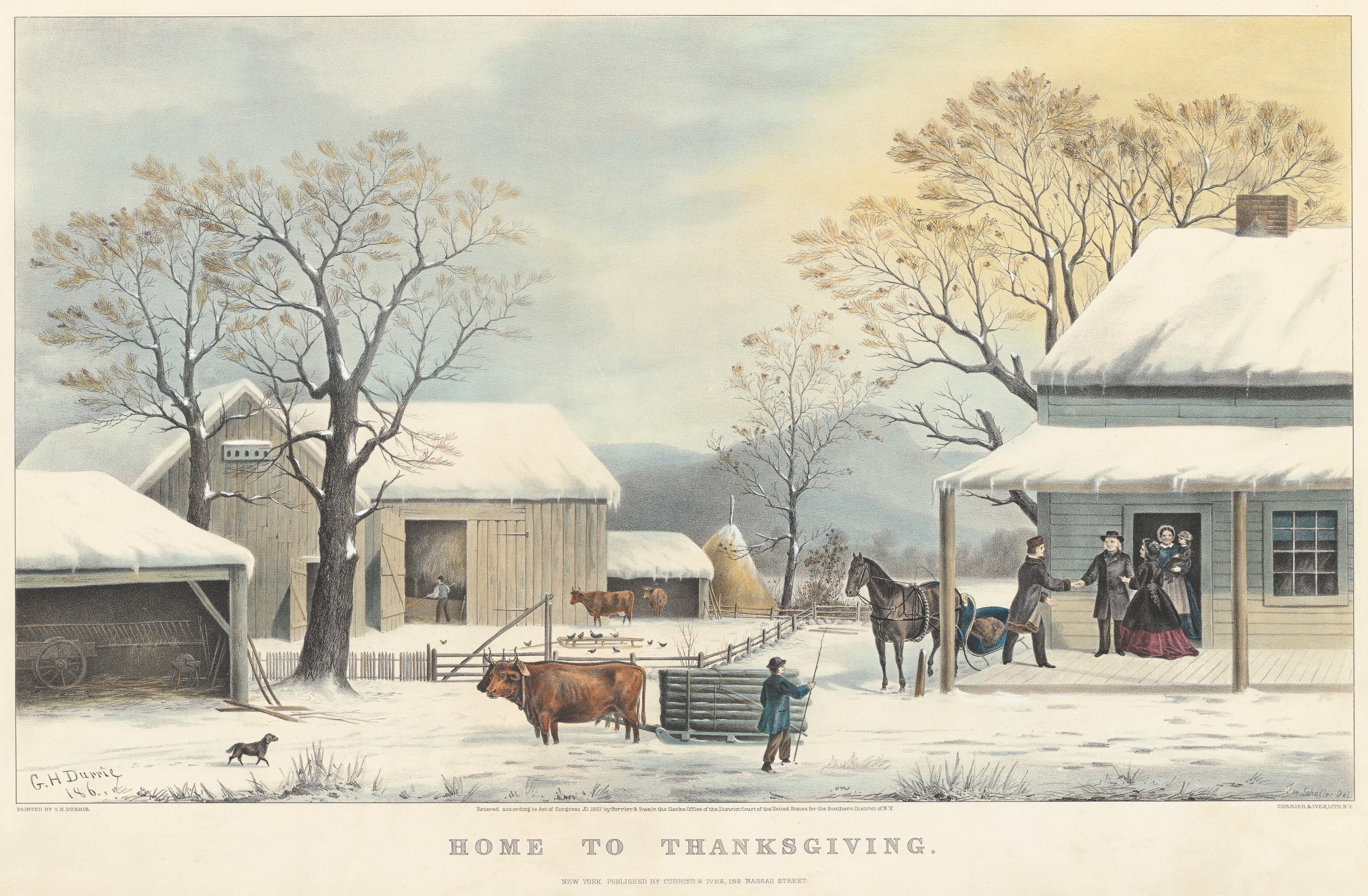
I don’t have the day off, and won’t be marching in a parade, but I’d still like to honor the holiday and salute the American worker, past and present. With that in mind, let’s revisit some of the nineteenth-century occupations we’ve talked about previously at Clark House Historian, highlighting a few of the many skills, trades, and occupations common during the Clark House era.

Since it is a holiday, I’m not going to add much commentary today. Enjoy the photos, and click the links to visit the original CHH posts with lots more information about the different skills and jobs, and for full image credits.

Continue reading

On the northern frontier: (resuming) the search for JMC’s roots

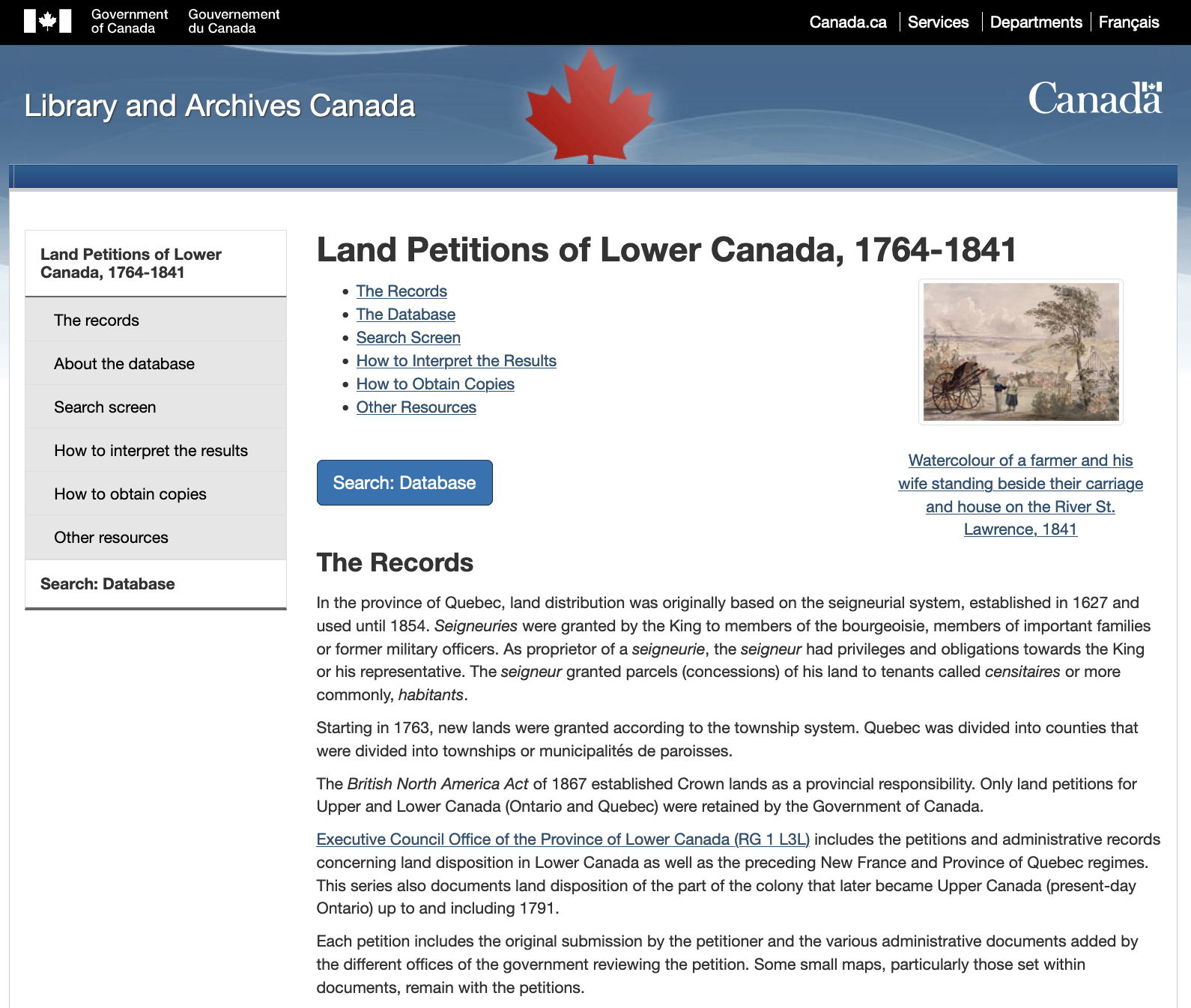
The scene above is A settler’s hut on the frontier, by W. H.Bartlett and R. Sands, published in London in 1841.1 Based on the known locations of some of Bartlett’s other, similar images, published at about the same time, it is almost certain that the scene depicted was drawn from life in Lower Canada (modern day Québec), and possibly in or near Stanstead, or one of the neighboring Eastern Townships of Lower Canada.

The landscape, dwelling, and people in this scene would have been very familiar to young Jonathan M. Clark. They are the physical and human landscape of his first three decades of life—from about 1812 to 1831—in the vast and sparsely settled north woods of Stanstead, Lower Canada, and nearby Derby, northern Vermont.

I have been searching Vermont and Lower Canada for Jonathan M. Clark’s parents, possible siblings, or other kin for over seven years, and have not yet been able to identify any. As it’s been a while since the blog focused on JMC’s roots, I thought it was time to organize our previous research, publish new sources and findings, and see if we can get closer to locating the family of the builder and first occupant of Mequon’s 1848 Jonathan Clark House.

Continue reading

Ironing out a few wrinkles…

I was hoping to have a Monday: Map Day! post up for you yesterday as the opening item in a series of posts focused on new—or reevaluated—evidence from our continuing search for Jonathan M. Clark’s still-mysterious roots in northern Vermont and/or southern Québec. As you can tell, that didn’t happen. Instead, I spent some time ironing out a few wrinkles on the blog…

Continue reading

Bonniwell background: clues from the Great Fire reports

Today I’d like to share two rare and unusual official documents, and note how there are early 19th-century Bonniwell family genealogical clues hidden in each.

The Bonniwells and related families in Kent, 1667-1832

The image below is of St. Mary’s Church, Chatham, much as it looked at the time of Alfred T. Bonniwell’s christening there in 1826. It’s likely that the Bonniwells regularly attended services here during their years in Chatham. St. Mary’s has had a long and eventful history as a parish church, and has been reconstructed several times.1

Engraving based on original art by W. Dadson, in Robert Langton’s The Childhood and Youth of Charles Dickens, Manchester, 1883, page 72. GoogleBooks, accessed 1 Aug. 2023.

A surprising number of our early Mequon immigrants had ancestors in southeast England’s venerable Kent county. Early Mequon settlers (and their spouses) from the Ashby, Bonniwell, Dunning, Eastree, Hills, Long, Moss, Munn, Smith and Whitehead families all had roots in Kent, many of them in or around the town of Chatham. For an introductory overview of this, see Monday: Map Day! – the Bonniwells in Kent, featuring a very cool map of the county from 1665, with added annotations that indicate many of the of the family’s various Kent residences, christenings, marriages, and burials over the subsequent decades.2

Family history before the census of 1841

The first modern, “all name,” census of England was enumerated in 1840 and published in 1841 and, as with every succeeding decennial census, the 1841 Census of England and Wales is full of useful information for historians and genealogists. But the Bonniwells left England for North America in 1832, almost a decade before the 1841 census was enumerated. How do we reconstruct and understand family relationships and local history, especially on the female branches of the family tree, before 1841? Today we’ll look at two obscure bureaucratic reports that may offer some useful clues.

Continue reading

Monday: Map Day! – the Bonniwells in Kent

OK, this “Monday: Map Day!” is a few days late (and has been updated since posting, see notes 7 & 8). But I needed a bit more time to edit this beautiful and historic map of the County of Kent for you. Kent was home to Mequon’s pioneering Bonniwell family and their kin for almost 150 years, and taking a close look at its geography may prove helpful for understanding the family and its history, including some of the earlier inscriptions in the Bonniwell family Bible.

Cantivm Vernacule Kent, 1665

Let’s begin with a view of the complete, original map. It was made in 1665, just before James Bonniwell (1636-1709) moved his family from Sutton-Courtney, Berkshire, in south-central England, to Kent, in the southeast.1 As always, I encourage you to click the images to view higher-resolution versions of each map in a new window. Take some time to zoom in and out and scroll around. There’s a lot to see, so I’m going to keep the commentary to a minimum.2

This 1665 map, titled Cantivm Vernacule Kent [Cantium, in the vernacular, Kent], is part of a much larger work, Joan Blaeu’s magnificent Atlas Maior Sive Cosmographia Blaviana, published in Amsterdam between 1662-1672. This is another amazing map made available online by the David Rumsey Map Collection, whose staff provided this commentary:

Continue reading

Bonniwell Background: a novel nautical note

I’m still tidying up a longer post on the Great Chatham Fires of 1800 and 1820 and the genealogical clues that may be found in the post-fire documents published in 1801 and 1821. Meanwhile, I learned a new word and thought you might be interested, namely:

A Hoy

The report on the 1800 fire stated that a number of Chatham merchants lost a substantial amount of goods on a hoy. You’re probably familiar with the nautical greeting “Ahoy!”—the sailor’s equivalent of “Hello” or “Hey there!” But this hoy is a noun. What was a hoy? It turns out to be…

Continue reading

Bad Handwriting: not just a problem from the past

I hope you enjoyed Monday’s post Help the Historian — what’s Nellie’s last name? and that you’re now working on your best guess for Nellie’s almost-illegible surname.

A historical handwriting puzzle like this is fun when the stakes are low and you don’t have any pressure to get the job done quickly. But did you know that there are several hundred federal employees in Salt Lake City who decipher thousands and thousands of bad or damaged printed and handwritten addresses every day? Let’s let YouTube’s excellent experience-it-yourself man, Tom Scott, show us how it’s done:

How the U.S. Postal Service reads terrible handwriting

It’s an amazing system, when you think of it. To begin with, the speed and accuracy of optical character recognition (OCR) technology has improved dramatically over the years. But when the writing is really bad, or smudged? Then the mail is viewed by the men and women of the USPS Remote Encoding Center in Salt Lake City process, and they read and key in 1.2 billion (that’s billion with a B) images of mail every year. My hat’s off to the USPS employees that can do this fast-paced detective work so efficiently, day after day. Meanwhile, how about you and your deciphering skills?

Continue reading

Help the Historian — what’s Nellie’s last name?

Today was supposed to be a lavishly illustrated “Monday: Map Day!” post, to accompany our recent posts on the Bonniwell family’s roots in Chatham, Kent, England. But, of course, I ran into some interesting—although pretty much off-topic and confusing—Bonniwell documents. These records added a previously unknown1 second marriage to the story of early Mequon pioneer, Jonathan Clark House neighbor, and Washington/Ozaukee county mover-and-shaker William T. Bonniwell.

It’s a complicated story. A second marriage for him, a second marriage for her, and there is a seven-year-old child named Nellie (of somewhat obscure parentage) living with them. So, of course, I dropped what I was doing and dug in to try and solve these new mysteries. I’m now close to understanding what happened with W. T. Bonniwell’s short-lived second marriage, but I have a problem.

Cn u rd ths?

Can you read this?

As always, click the images to open higher-resolution versions of each.

I read a lot of handwritten documents, mostly from about 1600 to the present day. I’m pretty good at deciphering most English and German writing styles from those years, but every now and then I’m stumped.

This is an 1870 document in the hand of young Nellie’s trustee, one Jedd P. C. Cottrill (sp?), acknowledging the receipt of her share of the estate of her deceased foster father, Nelson Webster. Nellie’s name is inside the red rectangle: Nellie J. [hmm?]. What do you think Nellie’s surname is supposed to be? Is the first letter an F or a T or something else? And after that? Is it ?urck, ?urch, ?inck, ?inch? I’m leaning toward Finch or, maybe, Finck. But I’m not sure. Perhaps if we compared other examples of Nellie’s surname from the same probate file…

Continue reading

Bonniwell background: more Chatham links & docs

I’m still thinning out my backlog of Bonniwell-related documents that currently crowd my computer desktop. Today’s post includes some multimedia links, too. I hope you enjoy them.

A long, narrow, disagreeable, ill-built town…

Unlike the glowing prose of the description of Chatham we discussed earlier in Bonniwell background: Chatham, Kent 1832, not everyone was impressed by the Bonniwell’s home town, at least not in the late-1700s. For example, Edward Hasted (1732-1812), in his monumental History and Topographical Survey of the County of Kent (second edition, vol. 4, Canterbury, 1798, pp. 191-226) had this to say:

THE TOWN OF CHATHAM, the greatest part of which has been built since the reign of queen Elizabeth, adjoins to that of Rochester, which, with Stroud [sic, Strood], makes one long street of more than two miles in length, of which Chatham is one, being commonly called the Three Towns, through which the high road leads from London to Dover, as above mentioned.

It is situated close to the bank of the Medway for about half a mile, after which the river leaving the town flows north-north east. It is like most sea ports, a long, narrow, disagreeable, ill-built town, the houses in general occupied by those trades adapted to the commerce of the shipping and seafaring persons, the Victualling-office, and the two breweries, and one or two more houses, being the only tolerable built houses in it.

The 12 volumes of the second edition of Hasted’s complete magnum opus have been digitized and made available at British History Online. The quoted bits above are a brief excerpt from Hasted’s almost 9,000 words devoted to the parish history of Chatham. Click the link for online access, or download a PDF copy here.

I discovered Hasted’s sour appraisal of 1798 Chatham while watching an interesting YouTube video devoted to the history of two major disasters that befell the town—and our Bonniwell and Hills families—in the early 1800s:

Continue reading