Help the Historian: Mysterious (Bible?) Fragment – a clue!

Among the real pleasures of writing a blog like this are the comments I receive from CHH readers. Recently, I heard from reader James Cornelius of nearby Grafton, Wisconsin,1 who had some thoughts about our January 24, 2025, post “Help the Historian: Mysterious (Bible?) Fragment.” 2

As the original post explained, I had been examining a number of loose Bonniwell papers, scraps, and other ephemera that were donated to the Clark House along with the Bonniwell family Bible itself, and I was particularly interested in one little fragment of printed text that had me baffled.

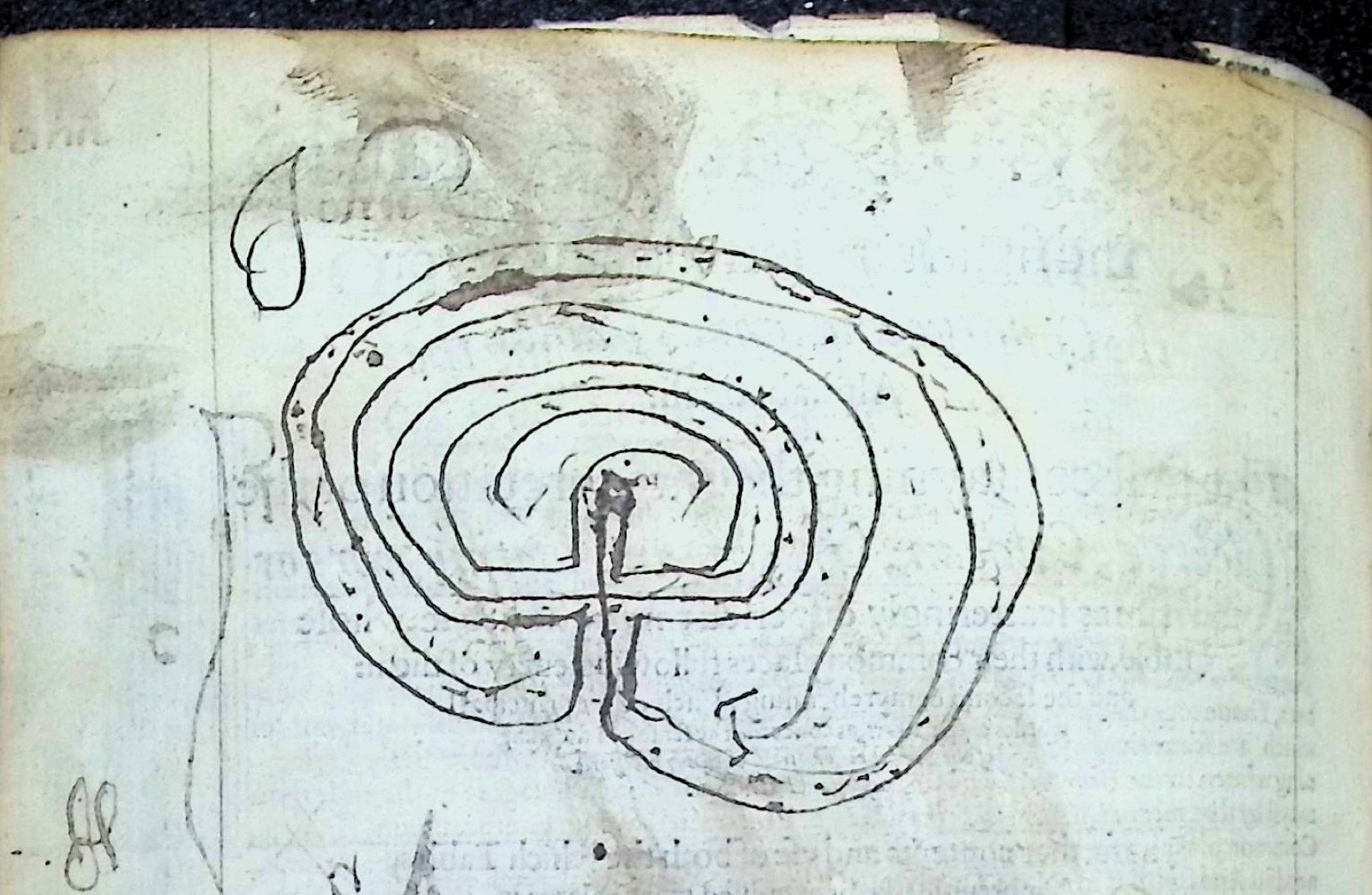
The mysterious fragment, sides A & B, photo credit: Reed Perkins, 2022.

In my original post, I examined the text and typography of the fragment and estimated that the it was published sometime between the late-sixteenth century (at the very earliest) and—at the very latest—the first decades of the nineteenth century. And the mentions of “Moon” and “motion” and such suggested a source that might be more scientific or philosophical, and not necessarily a sacred text, but I couldn’t think what that might be.

A new possible source: Almanacs!

In his comment, James observed: My hunch is that this triangular scrap /bookmark came from an almanac, likely as common in 1800-1820 U.K. as in U.S. a half-decade later. Many fairly good or detailed ‘scientific’ discussions appeared in the old almanacs or ‘farmer’s friends.’

I think James is on to something. Almanacs seem like a very plausible source. But how common were farmer’s almanacs in the UK, and how likely was it that the Bonniwells had access to these annual “farmer’s friends” in Chatham, Kent, England, in the years before their 1832 immigration to North America?

Continue reading

“Dashing through the snow…”

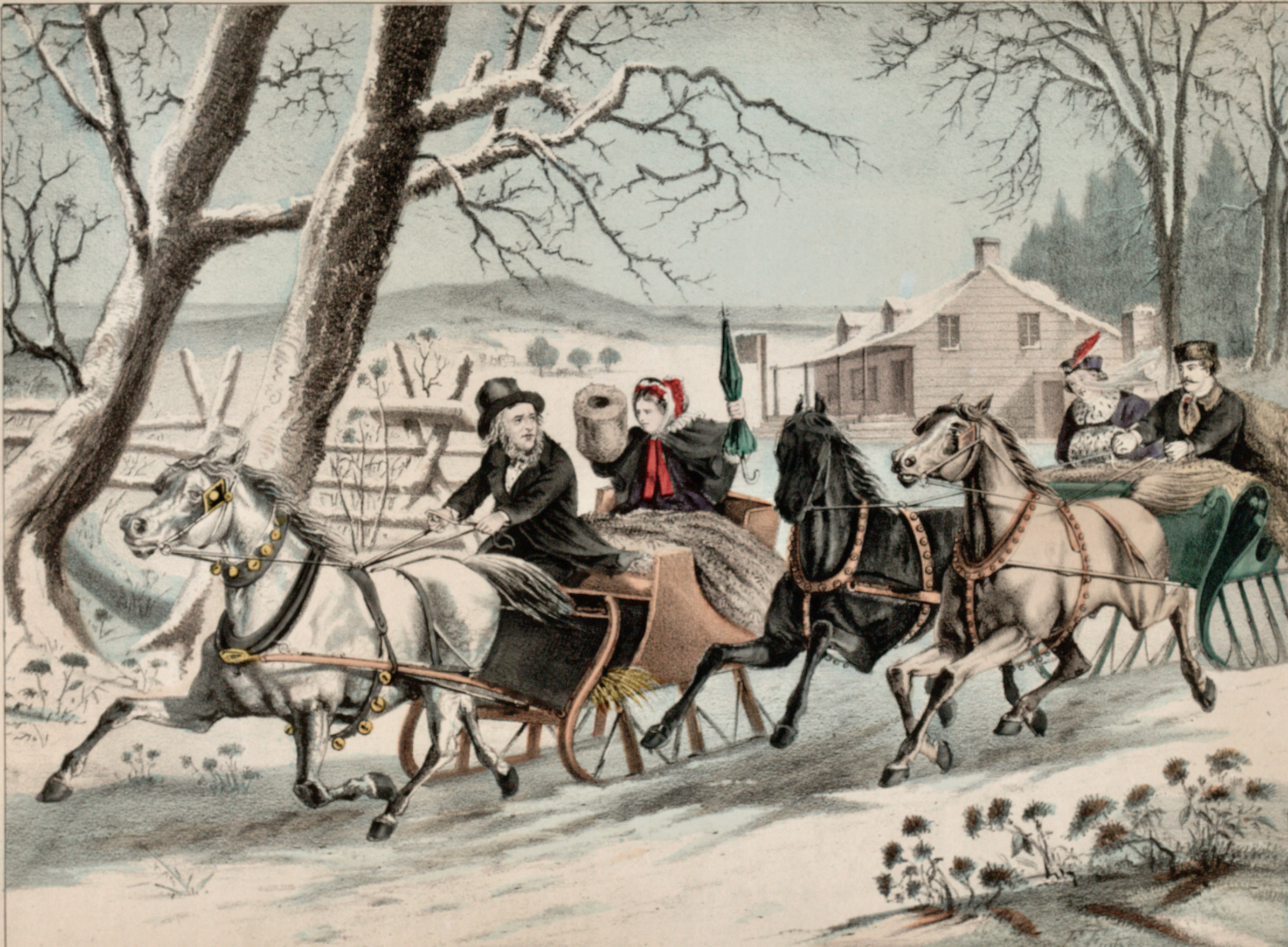
Kimmel and Forster, publishers, “Winter Pleasure in the Country,” circa 1865. National Museum of American History, Peters Prints Collection, Smithsonian Institution.1

Talk of sleighs and sleighing in our recent CHH posts on Snow! and Shoveling out -and other winter chores, plus our January, 2022, essay on Stuff Happens – on a sleigh ride, got me wondering again about winter travel in old Washington/Ozaukee county during the Clarks’ era. Assuming most of the more successful farmers—such as the Clarks, Bonniwells and Turcks—owned a one- or two-horse sleigh, how easy was it to navigate that sleigh on the early county roads? Could you ride all the way to Milwaukee? And if you could, how long might that take?

Continue reading

Fred Beckmann, Sr. – updates & clarifications

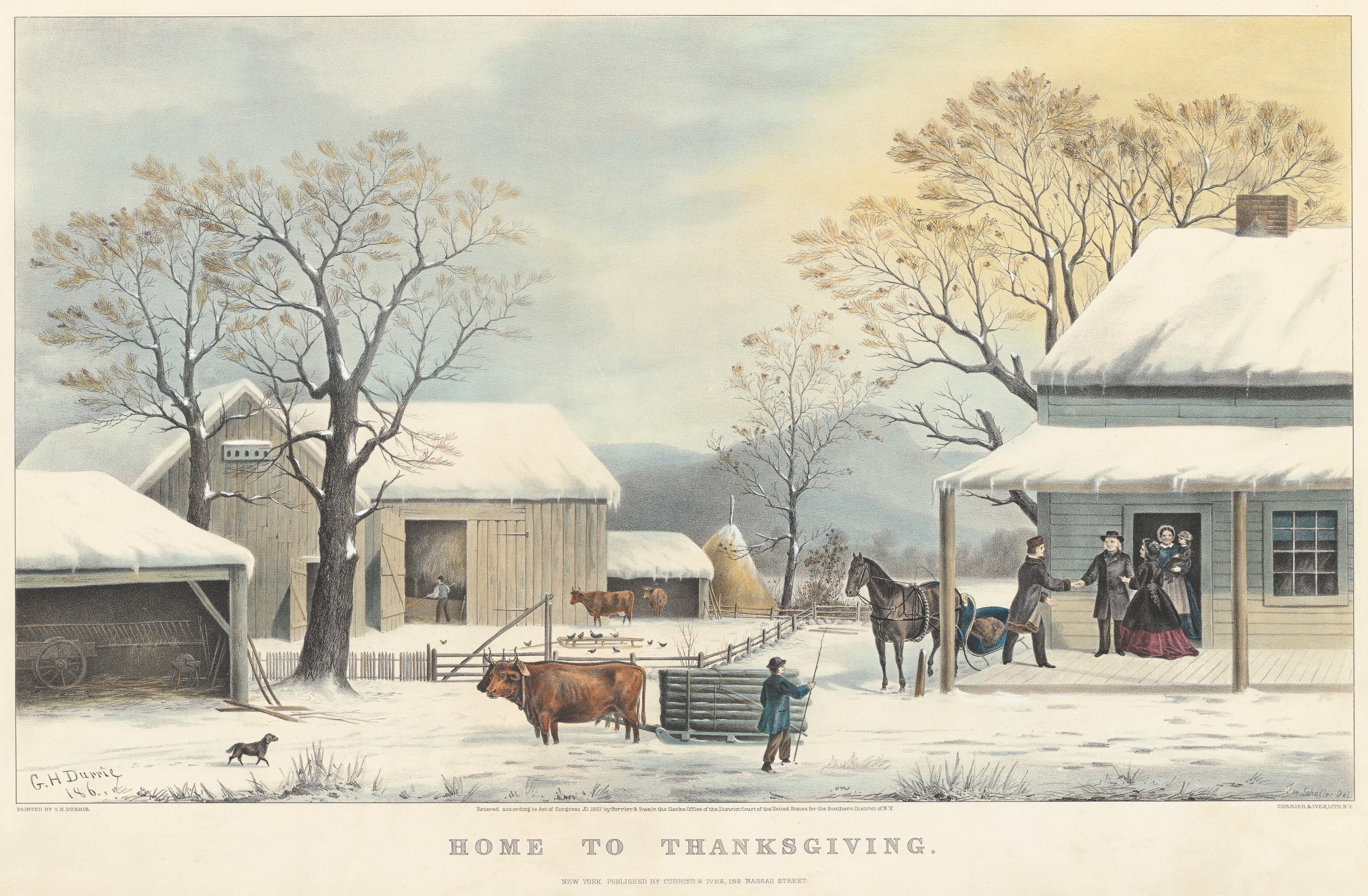
Today’s post is an updated, corrected and expanded version a post I wrote in July, 2020, outlining what we knew (at the time), about the life of Fred Beckmann, Sr., the man that occupied and farmed the Jonathan Clark farm between 1868 and 1872. Then, in early 2023, I was asked to talk about the Clark House and its Cedarburg connections at the Cedarburg History Museum. I chose to center my talk on Fred Beckmann and his extended German-American immigrant family, as I believe they exemplify a number of important themes in the transformation of Ozaukee county from the initial Anglo-American dominated first wave of local settlement in the 1830s and early ’40s, into the subsequent decades of primarily German-American settlement and development.

Anyway, I had a lot of fun, and learned a lot, in preparing that 2023 talk. And one of the things I learned is that there was some doubt about the year and date of Fred Beckmann’s death. So I recently investigated the issues and have updated images, text, and information for you about the life—and death—of Fred Beckmann, and I managed to solve at least one mystery in the process…

Continue reading

JMC: a soldier’s life at Fort Howard, 1834

In the summer of 1834, the U.S. Army’s Brevet Brigadier General Hugh Brady made an inspection tour of many of the posts under his command. One of those posts was Fort Howard, at Green Bay, in the then Michigan Territory. In an earlier post, I briefly mentioned the General’s July 17, 1834, visit to the fort and how “Gen. Brady reviewed all the troops, who made a brilliant display of military evolutions, highly gratifying to those who witnessed them, and evidently meriting the approbation they received from the worthy and excellent commander-in-chief.

Gen. Hugh Brady, c. 1844-1851. Photo credit: see note 1

I have since located the official report of the inspection that Brady sent to his superiors back in Washington, DC. and I want to share it with you today. I think you’ll find that a close reading of the general’s report will give some insights into the daily lives and routines of soldiers—including our Jonathan M. Clark—as they served their country “on the frontier” in the mid-1830s.

Continue reading

Help the Historian: Mysterious (Bible?) Fragment

I’m spending some of my time this winter on projects related to the cataloging, interpretation and display of our historic Bonniwell Family Bible. One of the items on my “to do” list involves the study of a number of Bonniwell papers and other ephemera that were donated along with the Bible itself. Some of the miscellaneous papers are self-explanatory and easily understood. But one little fragment of printed text has me baffled, and I need your help, history lovers!

The fragment, sides A & B

Photos credit: Reed Perkins

Continue reading

RBOH: some Beckmann & Cedarburg updates

Revised 17 February 2025 to include some additional material about my Beckmann-related talk at the Cedarburg History Museum in Spring, 2023.

Cedarburg News, October 14, 1885, page 1

I’ve been spending time with historic local newspapers online, searching for those tasty tidbits of local news that never quite make it into the history books, but are often found in the 19th-century local press. Today I was browsing through 1880s to early-1900s issues of the Cedarburg News, Fred. W. Horn, publisher, and found some interesting random bits o’ history that are connected to the Clark House and to some work I’ve done for the Cedarburg History Museum.

Fred. Beckmann and kin

You may remenber a post I wrote back in July, 2020, about newly-married German immigrant Fred. Beckmann, who farmed and lived on the Jonathan Clark property from 1868 until 1873, at which time he and his growing family moved to Cedarburg, where he then owned and ran the Wisconsin House hotel for the better part of the next four decades. I followed that up with an April, 2023 presentation at the Cedarburg History Museum, where I spoke about the life and the extended circle of family, business associates and friends of Fred. Beckmann. His story connects the hardscrabble early days of our area’s Yankee, Irish and German pioneers (Jonathan and Mary Clark’s generation) with the following generation of established and settled German-American farmers, business owners and civic leaders, such as himself. And Fred also connected and illuminated the story of the Jonathan Clark House with those of nearby Hamilton—and its Concordia Mill—and the development of downtown Cedarburg in the 19th-century.

That 2023 presentation was followed by a March, 2024, illustrated talk I gave at the Cedarburg History Museum as part of their big 2024 Civil War exhibition and lecture series. My subject was “From the ‘Burg to the Battlefield…and Back: Cedarburg’s Beckmann Family and the Civil War.” In my talk, I tried to take a more personal and local look at the war by examining the military service of few of Fred. Beckmann’s Cedarburg relatives, including his brother Charles Beckmann, future brother-in-law, Charles Gottschalk, and future father-in-law Henry Hachfeld/Hackfeldt.

Well, I wasn’t really looking for more info on Fred. Beckmann today, but I stumbled across some interesting things, and thought I’d share them with you here…

Continue reading

Santa came!

Image credit: see note 1

Remember my “Dear Santa” wish list post from last month? Well, Santa came, in the form of a cheery email with exciting historical source news from Clark House supporter, eagle-eyed historian, and all-around great friend Ellen Hickman.2

Ellen’s email, I’m happy to report, has opened new pathways to locate all kinds of otherwise hard-to-search primary and secondary historical records and documents from the Clarks’ era. Since receiving it, I’ve been chasing after documents down one formerly-obscure research “rabbit hole” after another, with some gratifying results…

Continue reading

Santa Claus visits Milwaukee, 1867

Tonight is Christmas Eve, and I thought you might enjoy an expanded reprise of our 1867 Santa Claus story, originally posted in two parts, December 25 and 30, 2017. In 2021 I combined the two original posts and incorporated some new illustrations and a few revisions of the text. Here it is again, for your holiday enjoyment. Ho! Ho! Ho!

Christmas in early America

For many years now, Christmas has been celebrated by Americans as an important religious and (increasingly secular) community holiday. Christians gather to worship and commemorate the birth of Jesus, and they and other Americans enjoy a break from work to gather with family and friends to feast and exchange gifts. But it was not always this way.

In many of the American colonies, Christmas was not observed as a religious or secular holiday. The seventeenth-century Puritan leaders of the Massachusetts Bay Colony considered Christmas to be non-biblical and pagan influenced. In Boston and other parts of New England any observance of Christmas was prohibited and, for a few years, actually illegal:

Penalty for Keeping Christmas, 1659

Records of the Governor and Company of the Massachusetts Bay in New England. Printed by order of the Legislature, edited by Nathaniel B. Shurtleff, M.D., Vol. IV, Part I, 1650-1660, online at mass.gov (accessed 21 Dec. 2021). Click to open larger image in new window.

Transcription:
For preventing disorders arising in several places within this jurisdiction, by reason of some still observing such festivals as were superstitiously kept in other countries, to the great dishonor of God and offence of others, it is therefore ordered by this Court and the authority thereof, that whosoever shall be found observing any such day as Christmas or the like, either by forbearing of labor, feasting, or any other way, upon such accounts as aforesaid, every such person so offending shall pay for every such offence five shillings, as a fine to the country.

Christmas was not generally accepted as a holiday in many parts of the United States until after the federal government made December 25 a national holiday in 1870.

On the other hand…

The Massachusetts Puritans may not have approved of “observing any such day as Christmas or the like, either by forbearing of labor, feasting, or any other way,” but Christmas was “kept in other countries” and increasing numbers of immigrants from those countries to the United States—particularly from Victorian England, Catholic Europe, and the German Lands—celebrated the day in their new American homes with many of their accustomed religious observances and national traditions.

Continue reading