RBOH: Weston & Western, Loomis & Loomer, and how do you pronounce Isham?

Time for a few Random Bits of History: Early Mequon Settlers’ Disambiguation Edition.

John Weston & John Western

Mequon’s first postmaster, John Weston, is mentioned many times in the essential local history book, the History of Washington and Ozaukee Counties, Wisconsin … Illustrated. Western Historical Publishing Co., Chicago, 1881. Using the “Find” function on my PDF copy of the book,1 I found results for “John Weston” on pages 475, 476, 523, 524 and 545.

There is also an entry for “T. Weston” among the names on the “First Poll-List of Washington County” on page 316. I am confident that this is a typographical error and that “T. Weston” is actually John Weston.

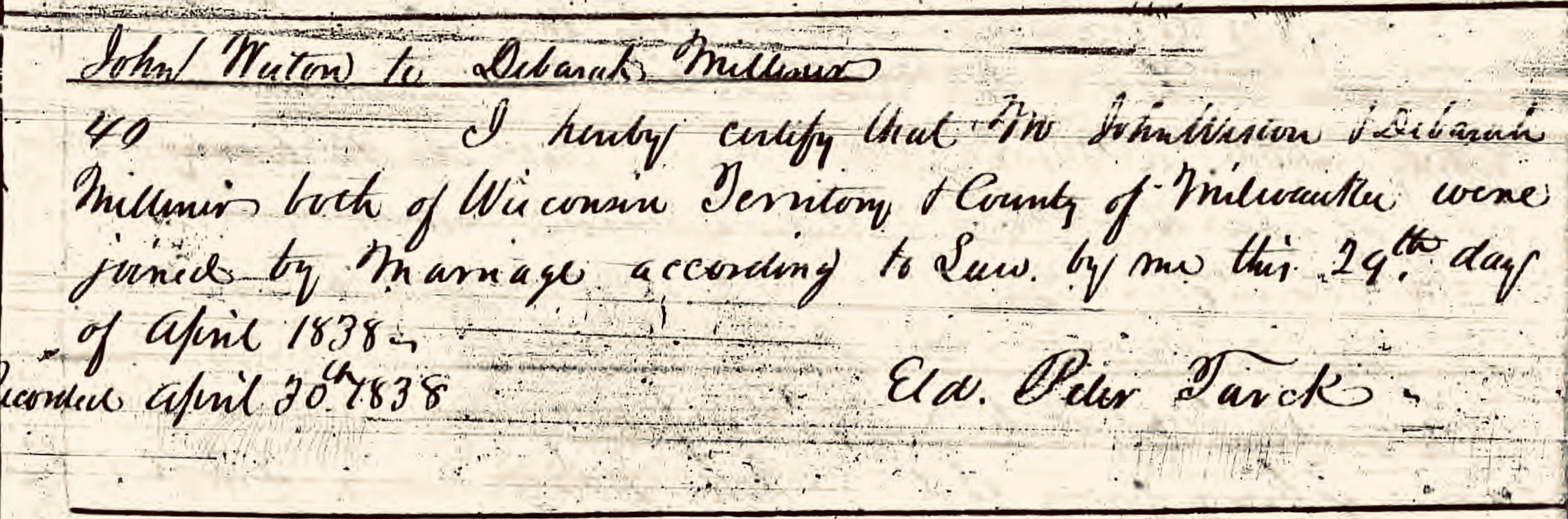
The same source also records, among the early area settlers, one “John Western,” on pages 316, 477 and 478. Is this the same man as John Weston? I have carefully compared a number of sources, including the early minutes of the county road supervisors and deeds in the Washington/Ozaukee county deed books, and I am convinced that during the early years of settlement in the Mequon-Milwaukee area, “John Weston” and “John Western” are the same person, namely John Weston, born in New York about 1800, and married to Deborah Milliner in Milwaukee County in April, 1838. I’ll have examples from the documents that explain my reasoning in a future post.

Fun fact: Mary (Turck) Clark’s father, (Baptist) “Elder” Peter Turck, was the officiant at the Weston-Milliner wedding in 1838. It was the fortieth marriage recorded in the first volume of marriage records for Milwaukee county (and its still-attached for judicial purposes neighbor counties, including old Washington/Ozaukee county).2

With the Weston & Western mystery solved—for the moment—let’s see what other bits of error and confusion we can clear up…

Continue reading

Happy New Year, 1848

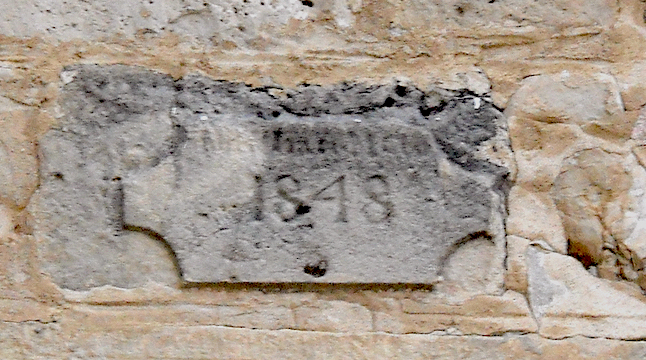
1848 was a big year for Jonathan and Mary (Turck) Clark. Their family now included four children: Caroline (b. 1840), Henry (b. 1843), Libbie (b. 1845) and infant daughter Persie (b. 1847). And 1848 was the date that Jonathan M. Clark inscribed—just below his own name—on the Clark House “cornerstone” that still decorates the lintel above the Clark House front (south) door.

Photo credit: Reed Perkins, 2015

1848 was a landmark year in many respects. Gold was discovered in California, the War with Mexico ended with the Treaty of Guadelupe Hidalgo and, most importantly for our Mequon pioneers, the Wisconsin Territory adopted a state constitution and was admitted by act of Congress as the 30th state in the Union.

Of course, on January 1, 1848, those events—and many others—still lay in the future, in the New Year. We’ve blogged about some of those events here at Clark House Historian, and we’ll have more to say about other 1848 events in the future. But did you ever wonder how our Mequon settlers observed the change from one year to the next during the 1840s and 1850s?

Continue reading

Home to Thanksgiving

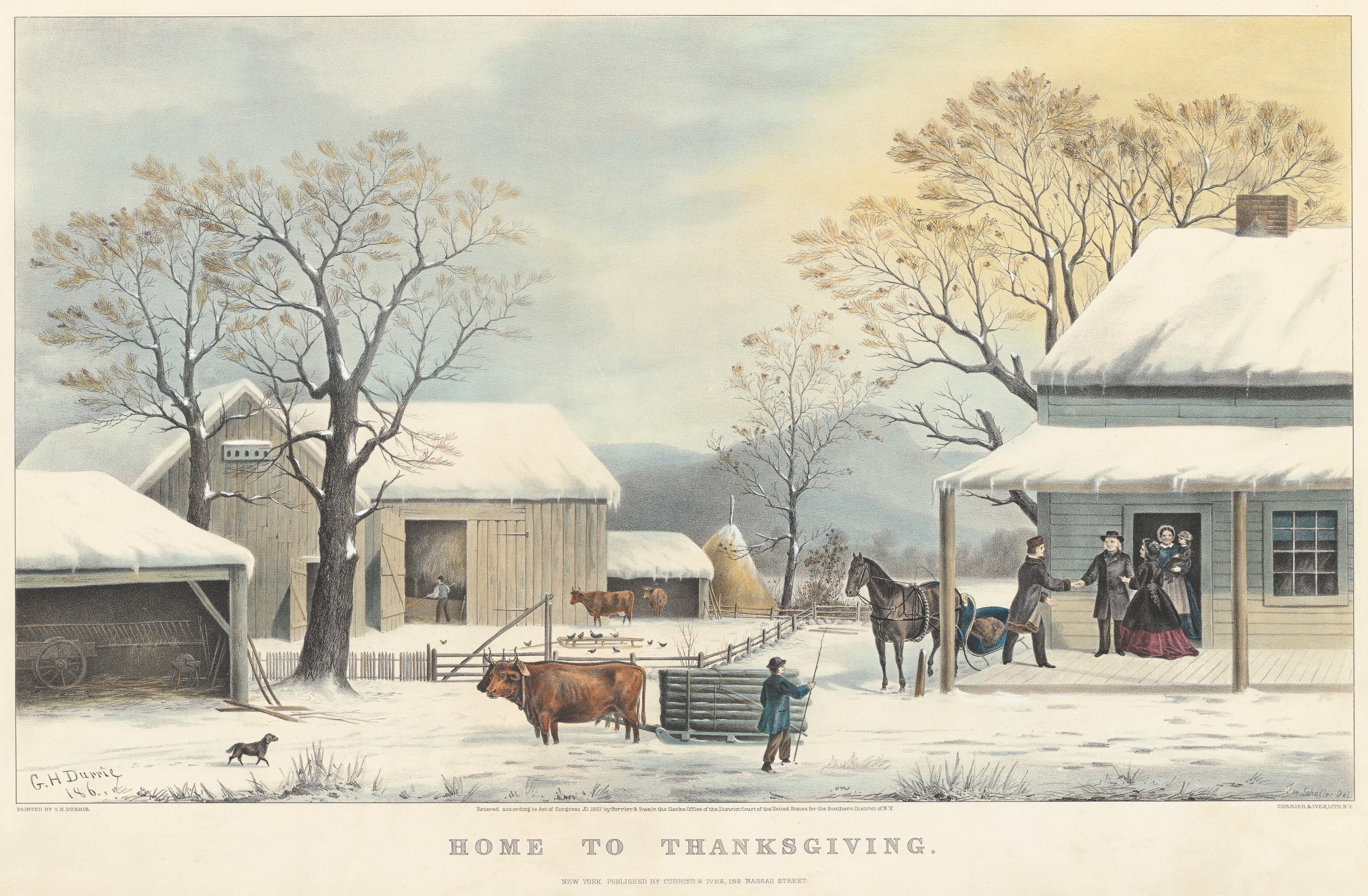
It’s Thanksgiving tomorrow, and I’m taking a few days off to spend time with family. But in the spirit of the holiday, I thought I’d reprint a lightly revised version of our now-annual Thanksgiving post, to share with you a few vintage recipes and a nice Currier & Ives lithograph from the period.1

Thanksgiving, 1867

Durrie, George H. and John Schutler, Home to Thanksgiving, ca. 1867, New York, Currier & Ives. National Gallery of Art, Collection of Mr. and Mrs. Paul Mellon. Public Domain. Click to to open larger image in a new window.

Continue reading

Veterans Day, 2023

Veterans Day is today. For a perspective on the day—and our early Mequon veterans—here’s a post originally published at Clark House Historian on November 11, 2016, and revised, expanded and republished several times since. For Veterans Day, 2023 I have added several new links and one new photograph.

Armistice Day

One hundred and five years ago, on the eleventh day, of the eleventh month, at the eleventh hour—Paris time—the Armistice of Compiègne took effect, officially ending the fighting on the Western Front and marking the end of World War I, the optimistically named “War to End All Wars.”

In the United States, the commemoration of the war dead and the Allied victory began in 1919 as Armistice Day, by proclamation of President Woodrow Wilson. Congress created Armistice Day as a legal holiday in 1938. Starting in 1945, a World War II veteran named Raymond Weeks proposed that the commemorations of November 11 be expanded to celebrate all veterans, living and dead. In 1954 Congress and President Eisenhower made that idea official, and this is what we commemorate today. There are many veterans with a connection to the Jonathan Clark house. We honor a few of them in this post.

Jonathan Clark, Henry Clark, and the U.S. Army

Jonathan M. Clark (1812-1857) enlisted as a Private in Company K, Fifth Regiment of the U. S. Army, and served at Ft. Howard, Michigan (later Wisconsin) Territory, from 1833 until mustering out, as Sargent Jonathan M. Clark, in 1836. In the 1830s, Fort Howard was on the nation’s northwestern frontier. Jonathan’s Co. K spent much of the summers of 1835 and 1836 cutting the military road across Wisconsin, from Ft. Howard toward Ft. Winnebago, near modern Portage, Wisconsin.

Fort Howard, Wisconsin Territory, circa 1855, from Marryat, Frederick, and State Historical Society Of Wisconsin. “An English officer’s description of Wisconsin in 1837.” Madison: Democrat Printing Company, State Printers, 1898. Library of Congress. Click to open larger image in new window.

Continue reading

Labor Day – a photo essay

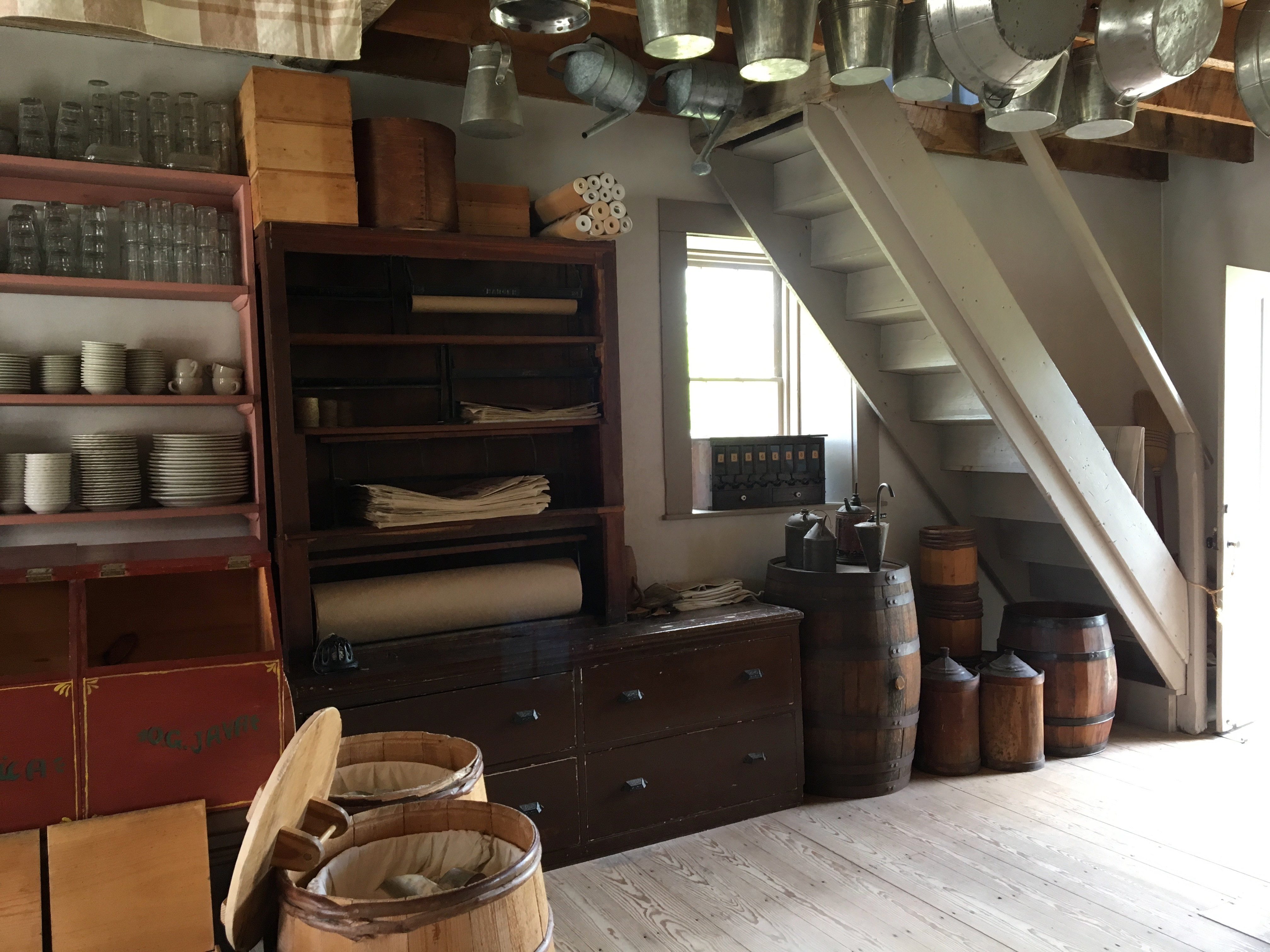
Even thought it’s Labor Day, the holiday celebrating the working men and women of our nation, I’ll be at work, back at our local mercantile establishment. You know, a store kind of like this one, stocked with just about anything you need for modern living:

I don’t have the day off, and won’t be marching in a parade, but I’d still like to honor the holiday and salute the American worker, past and present. With that in mind, let’s revisit some of the nineteenth-century occupations we’ve talked about previously at Clark House Historian, highlighting a few of the many skills, trades, and occupations common during the Clark House era.

Since it is a holiday, I’m not going to add much commentary today. Enjoy the photos, and click the links to visit the original CHH posts with lots more information about the different skills and jobs, and for full image credits.

Continue reading

Memorial Day, 2023

Lest We Forget

Our annual Memorial Day post, first published in 2020. Updated for 2023 with new information about Evander B. Bonniwell’s service.

Graves of Unknown Union Soldiers, Memphis National Cemetery, photo by Clayton B. Fraser, (Library of Congress), public domain. Memphis National Cemetery is the final resting place of Mequon’s Watson Peter Woodworth, and almost 14,000 of his Union Army comrades.

Today is the day our nation officially observes Memorial Day. For many Americans, Memorial Day represents “the first day of summer,” and is traditionally celebrated with trips to the lake, picnics, parades, and sales on cars, appliances, and other consumer goods.

But for many of us, Memorial Day remains rooted in its origins as Decoration Day. The first national observance was in 1868, when retired general John A. Logan, commander and chief of the Grand Army of the Republic—the Union veterans’ organization—issued his General Order Number 11, designating May 30 as a memorial day “for the purpose of strewing with flowers or otherwise decorating the graves of comrades who died in defense of their country during the late rebellion, and whose bodies now lie in almost every city, village, and hamlet churchyard in the land.”

On this Memorial Day, let’s take a moment to remember what this day truly represents.

Continue reading

Rabbits!

Audubon, John James, artist, and John T. Bowen, printer, Lepus Sylvaticus, Bachman, circa 1845-1848, Smithsonian Institution, Peters Prints Collection, Creative Commons CC0 license.1

There they are: Mr. & Mrs. Cottontail and one of their many offspring. The Eastern Cottontail and its relatives were a common sight in Jonathan and Mary Clark’s world, just as they are today.

We seem to have a bumper crop of rabbits in our suburban Wisconsin yard this year and, no doubt about it, the bunnies are cute and entertaining. But for the gardener, rabbits mean trouble. If you are trying to raise vegetables and fruits to feed your pioneer family, these amusing little fur balls are the enemy. They can consume huge amounts of seedlings and sprouts in just a day or two. What’s a gardener to do?

Last year—after they ate through the plastic fence around our vegetable garden and then devoured our entire crop of green been sprouts—I went to the local big box store and got a roll of metal wire rabbit fencing and some steel posts to hold it up. That worked great for us, but it made me wonder: what did Jonathan and Mary Clark use to keep the ravenous rabbits at bay? Well, I don’t have any documentation from the Clarks’ farm, but during my researches, I have noticed some popular 19th-century methods of rabbit control.

Continue reading

The farm garden

It’s already the third week of May, 2023, and summertime will soon be here. At our southeastern Wisconsin home the first spring flowers are done, and the next round of blossoms have been blooming for a week or two. The peas are in the ground and already about 8 inches high, the rhubarb is big enough to cut and make one or two pies, and we harvested the first half-dozen radishes today. We still have to put in the tomato and pepper seedlings and start the big patch of green beans. So with gardening on my mind, I thought you might enjoy a slightly-belated repost of this annual favorite, which first appeared here in April, 2021. Cheers!

Planning the garden

It’s early April, and the growing season is not far off. For a farmer like Jonathan M. Clark, it’s a little early yet for plowing and sowing, but not too early to make plans and sharpen the tools. For a farmer’s wife, like Mary (Turck) Clark, it’s not too soon to think about the farm garden, its crops and layout.

I don’t know if Mary and Jonathan were regular readers of the popular and affordable farmers’ almanacs of their era; I wouldn’t be surprised if they were. There were many to chose from. Perhaps they had a copy of something like:

The Cultivator […], New Series, Vol. VII, Albany, 1850, title page. Click to open larger image in new window.

Continue reading

Home to Thanksgiving

It’s Thanksgiving today, and I’m taking the day off to spend time with family. But in the spirit of the holiday, I thought I’d reprint a lightly revised version of last year’s Thanksgiving post, to share with you a few vintage recipes and a nice Currier & Ives lithograph from the period.1

Thanksgiving, 1867

Durrie, George H. and John Schutler, Home to Thanksgiving, ca. 1867, New York, Currier & Ives. National Gallery of Art, Collection of Mr. and Mrs. Paul Mellon. Public Domain. Click to to open larger image in a new window.

Continue reading