Veterans Day, 2021

Veterans Day is today. I’m preparing a new post on one of our Clark House veterans, Mary (Turck) Clark’s youngest sibling, Benjamin Turck (1839-1926), but it’s not quite ready yet. For a wider perspective on the day—and our early Mequon veterans—here’s a post originally published at Clark House Historian on November 11, 2016, and revised, expanded and republished on November 11, 2020. I’ve also incorporated a list of Mequon’s Civil War soldiers, originally published here on May 24, 2020.

Armistice Day

One hundred and three years ago, on the eleventh day, of the eleventh month, at the eleventh hour—Paris time—the Armistice of Compiègne took effect, officially ending the fighting on the Western Front and marking the end of World War I, the optimistically named “War to End All Wars.”

In the United States, the commemoration of the war dead and the Allied victory began in 1919 as Armistice Day, by proclamation of President Woodrow Wilson. Congress created Armistice Day as a legal holiday in 1938. Starting in 1945, a World War II veteran named Raymond Weeks proposed that the commemorations of November 11 be expanded to celebrate all veterans, living and dead. In 1954 Congress and President Eisenhower made that idea official, and this is what we commemorate today. There are many veterans with a connection to the Jonathan Clark house. We honor a few of them in this post.

Jonathan Clark, Henry Clark, and the U.S. Army

Jonathan M. Clark (1812-1857) enlisted as a Private in Company K, Fifth Regiment of the U. S. Army, and served at Ft. Howard, Michigan (later Wisconsin) Territory, from 1833 until mustering out, as Sargent Jonathan M. Clark, in 1836. In the 1830s, Fort Howard was on the nation’s northwestern frontier. JMC’s Co. K spent much of the summers of 1835 and 1836 cutting the military road across Wisconsin, from Ft. Howard toward Ft. Winnebago, near modern Portage, Wisconsin.

Fort Howard, Wisconsin Territory, circa 1855, from Marryat, Frederick, and State Historical Society Of Wisconsin. “An English officer’s description of Wisconsin in 1837.” Madison: Democrat Printing Company, State Printers, 1898. Library of Congress. Click to open larger image in new window.

Continue reading

Still getting the lay of the land…

I’m still sifting through a huge (mostly digital) pile of Caroline M. Clark and William W. Woodward sources and trying to organize them into a series of coherent and interesting posts for you. Sort of like assembling a bunch of hastily-drawn field surveys and turning them into accurate topographical maps or railroad construction plans:

Unknown photographer, W.W. Wright, Chf. Eng. & … Mil. RRds. United States, circa 1861 and 1866. Library of Congress. Click to open larger image in new window.

At least my desk is indoors.

Continue reading

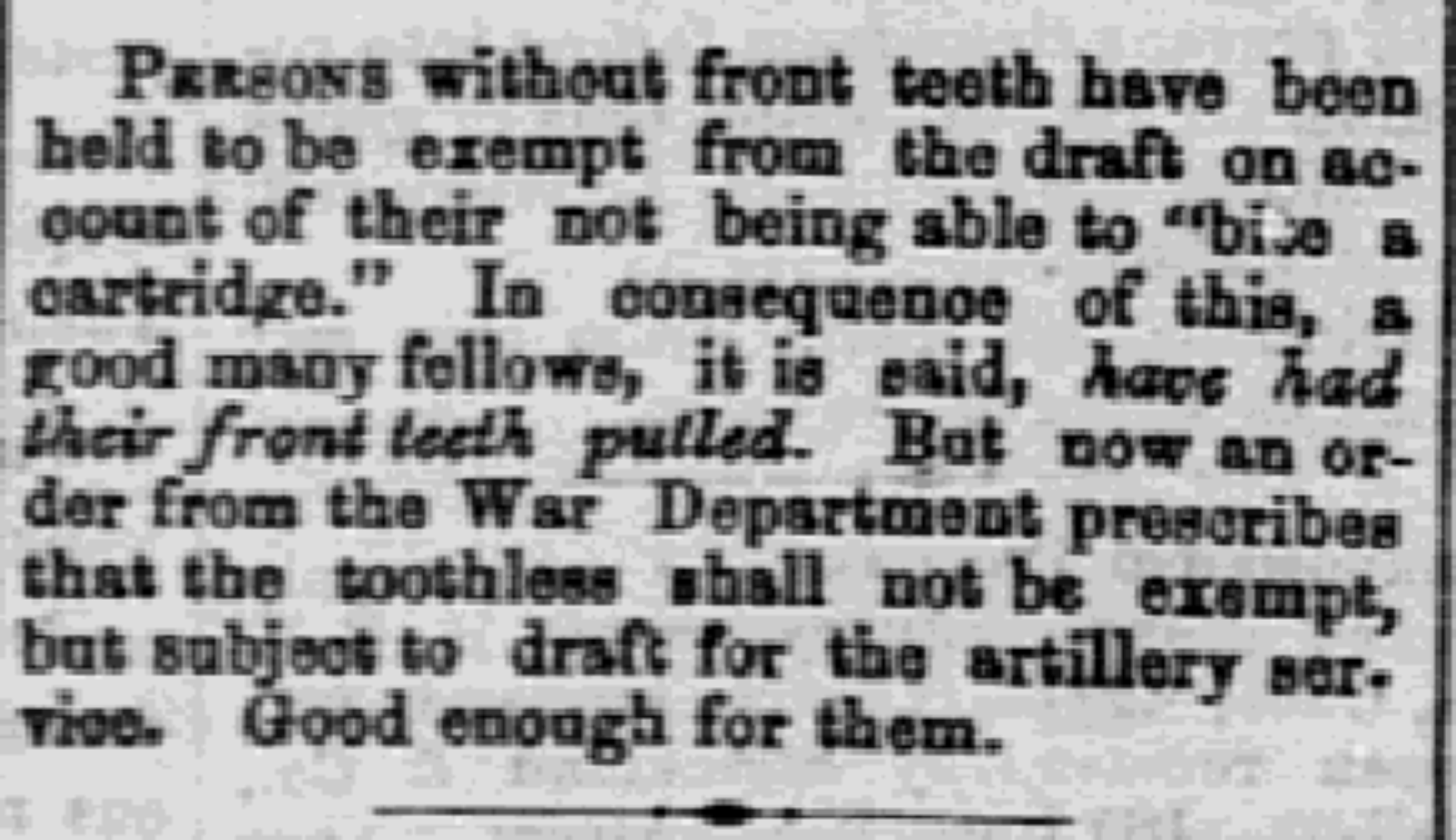
“An afflicted father” – Peter Turck’s 1862 letter to Gen. Butler

This week our attention has been turned to New Orleans, the adopted home of Peter Turck’s eldest son—and Mary (Turck) Clark’s younger brother—Joseph R. Turck. Our previous post, J. R. Turck – from Mequon to New Orleans, sketched a brief outline of Joseph’s life, including a half century lived in the Crescent City. That post also discussed Joseph’s very brief service in a Confederate “home guard” militia unit during the Civil War, and how he had lost touch with his Wisconsin family during and after the capture of New Orleans in 1862.

A rare Peter Turck manuscript

We have a number of examples of Peter Turck’s signature—and an occasional bit of text in his hand—from various land documents, marriage licenses, federal census pages, citizen petitions, and other documents from the 1840s to the 1860s. Today’s document is the only letter I have seen in Peter Turck’s own hand, and it gives us a rare insight into Peter Turck’s paternal feelings (as expressed in the typically florid and deferential language of the era) and some additional details about the life of his eldest son, Joseph.1 It’s an interesting letter, and I thought you might like to read it.

Turck’s letter is preserved as part of National Archives and Record Administration (NARA) publication M345, Papers Relating to Citizens, compiled 1861 – 1867. These are letters sent by U.S. civilians to the Provost Marshal’s office of the Union Army. The Provost Marshal was, essentially, the chief of the military police in an area occupied by Union troops.

This letter was published in NARA series M345, microfilm roll 0270, item Joseph R. Turck. It’s accessible online at Fold3.com (pay site). The transcription is mine, and preserves Peter Turck’s occasional curious spelling or punctuation errors. The original letter appears to cover two sides of a single sheet of paper. The original envelope was not microfilmed; it was probably discarded by the New Orlean’s provost marshal’s staff in 1862.

Milwaukee, July 25th 1862

Turck, Peter to Gen. Benjamin F. Butler, July 25, 1862, page 1 of 2. NARA publication M345 Papers Relating to Citizens, compiled 1861 – 1867. Roll 0270, Joseph R. Turck, Fold3.com, accessed 20 March 2014. Click to open larger image in new window.

Continue reading

J. R. Turck – from Mequon to New Orleans

Mequon kin, down South

Previously, we turned our thoughts to the historic city of New Orleans, and the disastrous impact of then-ongoing Hurricane Ida. Once again the Crescent City was hit by a major hurricane. Ida has since moved on and lessened in intensity, but leaves in its wake significant wind and water damage; over one million Louisiana residents are currently without electricity, gasoline, and fresh water, and it looks like it will take weeks to restore services. We wish a speedy recovery for all those in the affected areas.

I have a more-than-passing interest in New Orleans because our Clark House family has ties to the city; Mary (Turck) Clark’s brother, Joseph Robert Turck (1823-1902), spent most of his adult life there.

New Orleans, Louisiana Sugar and Rice Exchange, c. 1891. Source and credits, below (note 1). Click to open larger image in new window.

Joseph R. Turck

Like his big sister Mary, Joseph R. Turck was born in Athens, Greene county, New York. He was about five years old when the family moved to Wayne county, New York, and about fourteen years old when the family migrated west to Mequon in 1837.

In February, 1845, Joseph purchased 40 acres of his father Peter Turck’s Mequon land.2 Joseph did not keep it long; he sold it back to his father in September of the same year. What happened next? We’re not sure. But by 1848 Joseph had left Wisconsin and relocated to New Orleans.

Continue reading

RBOH: How do you spell “Bonniwell”?

Another short post in our occasional series of Random Bits of History.

On my way to doing more research on Henry M. Clark’s possible service with the Union army, circa 1863-65, I stopped to re-check some essential resources. One of these is the National Park Service’s Civil War Soldiers and Sailors Database. This is a very useful and handy resource when searching for information on individual soldiers and the histories of the units in which they served.

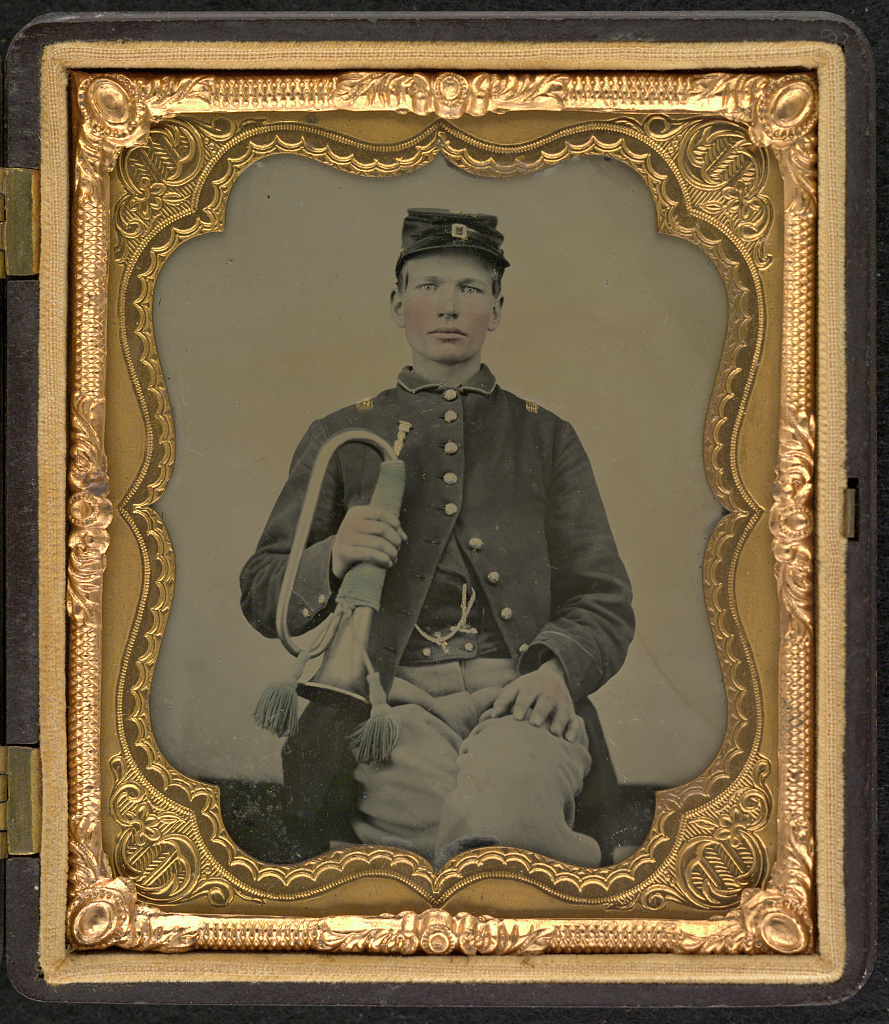
I thought I’d recheck the service info of some other Mequon-born or -related soldiers, including young Evander B. Bonniwell. As mentioned in earlier posts, Evander Bonniwell (1847-1930), was the son of Clark House neighbors James and Phebe (Capes) Bonniwell. Evander served as a bugler, rank of private, Company I, 2nd Regiment, Wisconsin Cavalry. He enlisted at age 14, and served for four years as company bugler.

[Unidentified soldier in Union uniform with bugle], photographer unknown, United States, c. 1861-1865, Library of Congress. Note: this is not a photograph of Evander B. Bonniwell, but of another young, unknown, Union Army bugler from Evander Bonniwell’s era.

Continue reading

Henry Clark’s final resting place

UPDATED, July 4, 2021 to add a photograph of Henry Clark’s memorial inscription.

What we do — and don’t — know about the Clarks’ only son (part 5)

This is the fifth in a series of posts about the life of Henry M. Clark:
• Part 1: Meet the Children: Henry M. Clark
• Part 2: Henry Clark and the Civil War draft
• Part 3: Henry Clark – Civil War draftee

• Part 4: Henry Clark’s last days
• and a related tidbit: Avoiding the draft, 1862 style

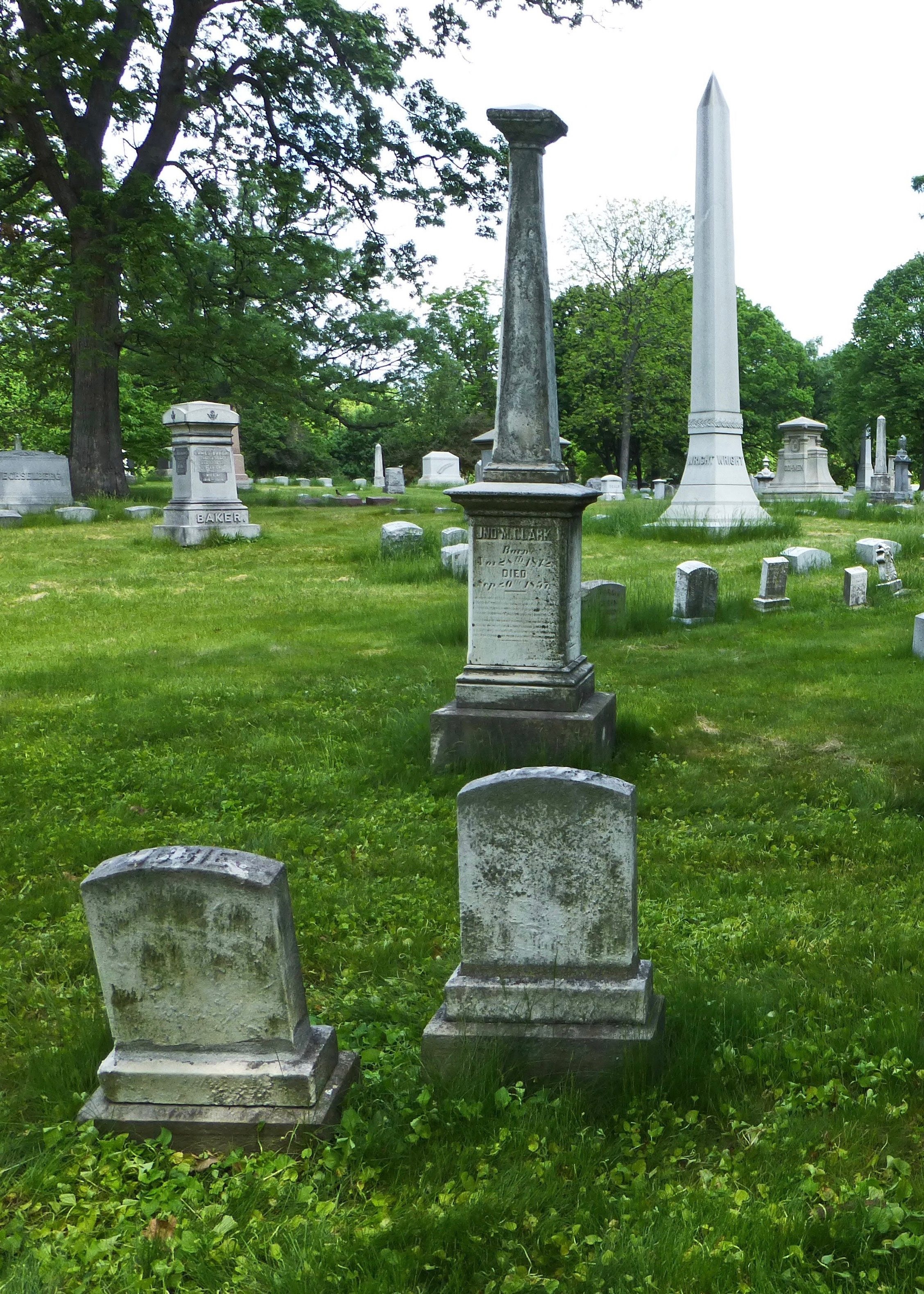
As we learned in our previous post, Henry Clark—only son of Jonathan M. and Mary (Turck) Clark—was buried “in Cedarburg” on Monday, April 23, 1866. But if you seek Henry’s final resting place, you’ll find him next to his father, mother, and sister Josie in the Clark family lot at historic Forest Home Cemetery in Milwaukee. How this came to be, and what this tells us about Clark family history, is the subject of today’s post.

Clark family graves, lot 3, block 44, section 10, Forest Home Cemetery, Milwaukee, Wisconsin. Photo courtesy Liz Hickman, 2016. Click to open new image in larger window.

Continue reading

Henry Clark – Civil War draftee

What we do — and don’t — know about the Clarks’ only son (part 3)

This is the third in a series of posts examining what we do — and don’t — know about Henry Clark, his life, and his possible military service. If you missed them, you may want to look at:
• Part 1: Meet the Children: Henry M. Clark
• Part 2: Henry Clark and the Civil War draft
• and a related tidbit: Avoiding the draft, 1862 style

Henry Clark and the 1863 draft

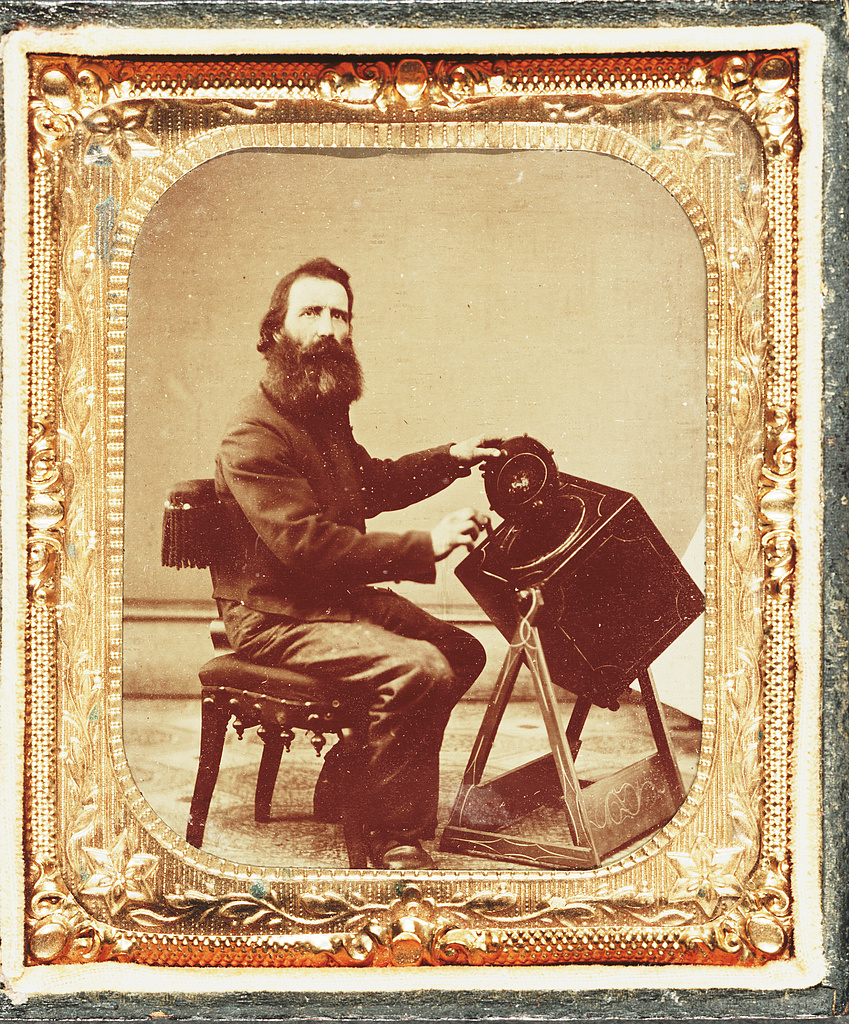
[Civil War induction officer with lottery box.] United States, ca. 1863. Photograph. Library of Congress. Click to open larger image in new window. The draft officials in Milwaukee used a similar box or wheel to draw names in the 1863 draft. (The Wisconsin Historical Society has a wheel-shaped draft drum, circa 1863-1865, in its collections. It’s possible that the WHS lottery wheel may be the exact wheel used during Henry Clark’s November, 1863, draft event. Click here for a photo and accompanying information.)

Our previous post included an image of Henry Clark’s June, 1863, registration for the upcoming military draft. The Milwaukee draft of November, 1863, lasted for several days. The names of draftees from each Milwaukee city ward or county town were written on paper slips and placed in a round wooden “wheel.” The container was spun about to mix the names, and then the draft official would reach in, pull out one slip of paper, read the name aloud, and the clerk (and the press) would record the names as drawn. Once each ward, town, or village reached its quota of draftees, the box would be emptied and a new set of names from another location would be placed in the drum, and the process repeated.

Continue reading

Henry Clark and the Civil War draft

What we do — and don’t — know about the Clarks’ only son (part 2)

This is the second in a series of posts examining what we do — and don’t — know about Henry Clark, his life, and his possible military service. If you missed it, you might want to start with part 1: Meet the Children: Henry M. Clark

Reading, Mass. Selectmen. The union must be preserved! The citizens of Reading are hereby invited to meet at Lyceum Hall to-morrow, Thursday, at 6 o’clock. P.M., to make such arrangements as may seem necessary to raise our proportion of volunteers … Selectmen of Reading. Boston, 1862. Library of Congress Meetings such as this were held all over the North—including Wisconsin—before and after the passage of the Militia Act of 1862. Click to open larger image in a new window.

Continue reading