The Jonathan Clark House is excited to announce a special screening of FernGully, the Last Rainforest. on Saturday, May 3rd, 12:00-2:00 p.m., at the historic Rivoli Theater, W62N567 Washington Avenue in downtown Cedarburg.
This unique event features a pre-screening presentation by Oscar-nominated director Bill Kroyer, featuring behind-the-scenes artwork and film clips.
If you are interested in the history of the Jonathan Clark House, there are a number of published local histories that you might consult. Many of them are available online, as free, searchable, PDF downloads from Internet Archive, GoogleBooks, the Library of Congress, and other digital repositories. This is pretty cool but, as you might expect, not all sources are equal. Some are more reliable than others. Some contain detailed information about early settlement, settlers, government and politicians, pioneer businesses and other local affairs, often drawing upon old primary sources, some of which have since disappeared. Other histories are more content to paraphrase (and sometimes mangle) earlier volumes. How do you know which to trust?
A guide for the perplexed
In today’s post, I’d like to guide you to and through several of the published histories that I’ve spent a lot of time with. I’ll provide links to PDF copies where available, make a few comments on the range and quality of the information in each book, and give each book an overall grade for accuracy, style, and usefulness.
Among the real pleasures of writing a blog like this are the comments I receive from CHH readers. Recently, I heard from reader James Cornelius of nearby Grafton, Wisconsin,1 who had some thoughts about our January 24, 2025, post “Help the Historian: Mysterious (Bible?) Fragment.”2
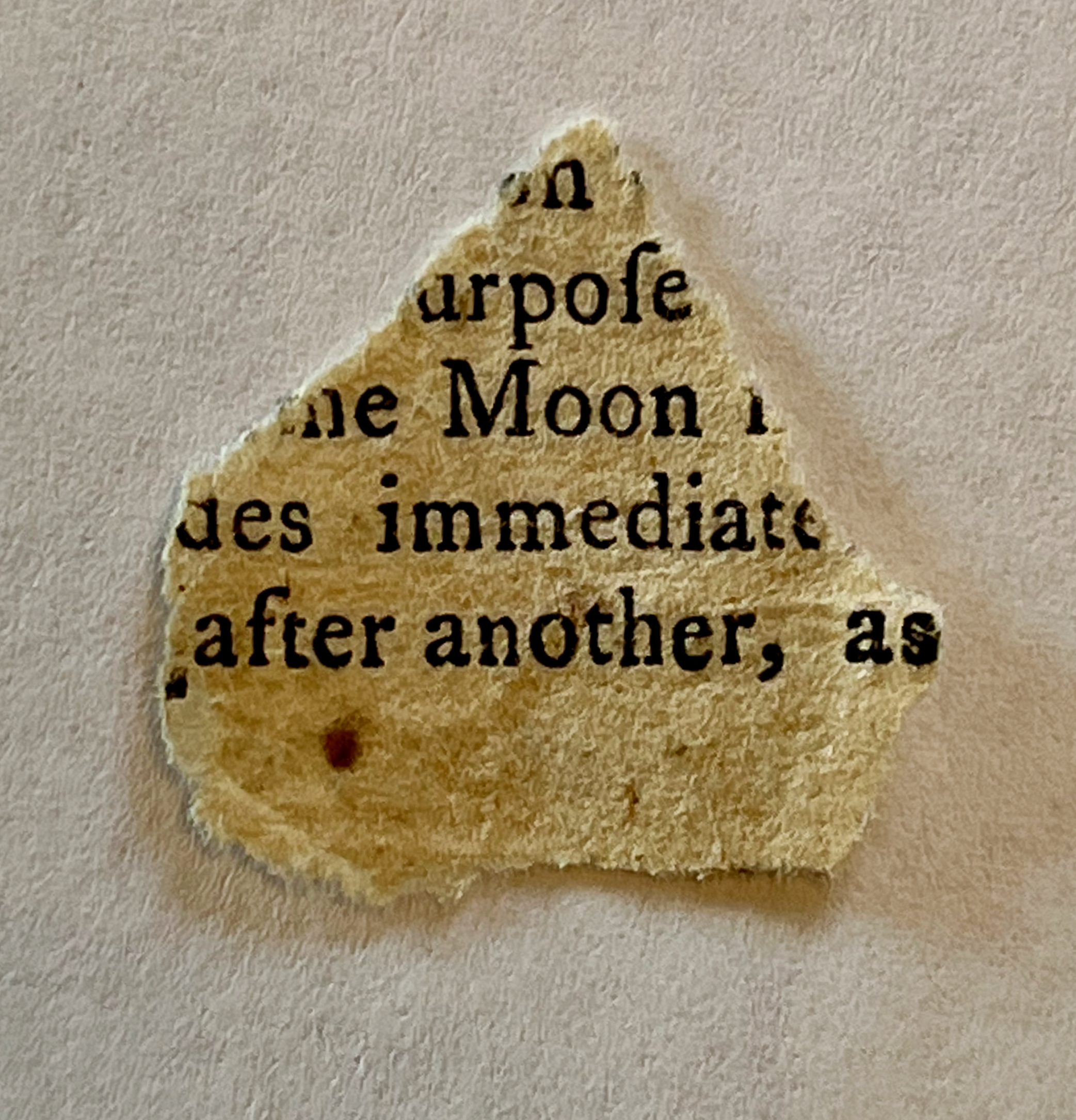
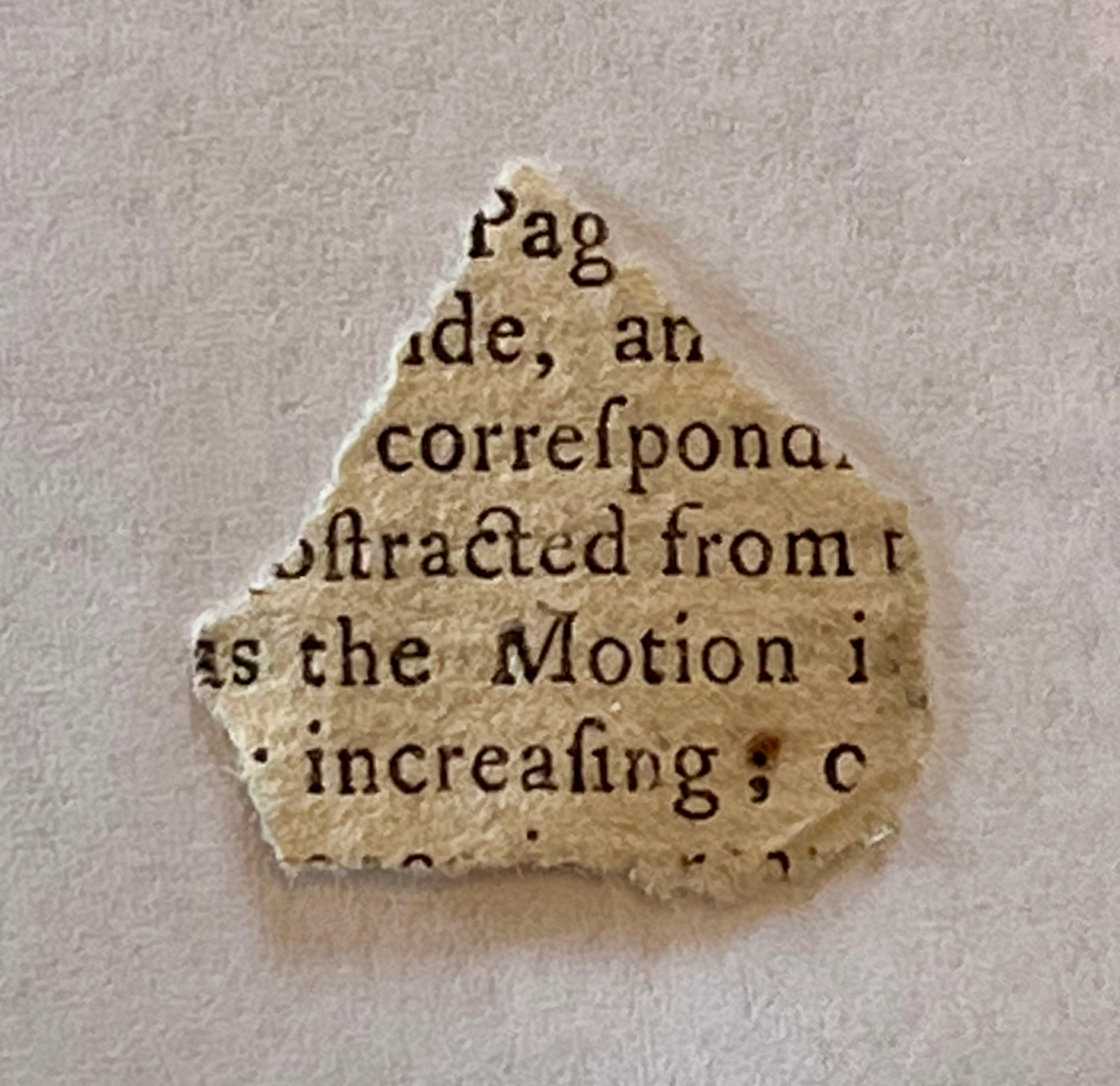
As the original post explained, I had been examining a number of loose Bonniwell papers, scraps, and other ephemera that were donated to the Clark House along with the Bonniwell family Bible itself, and I was particularly interested in one little fragment of printed text that had me baffled.
The mysterious fragment, sides A & B, photo credit: Reed Perkins, 2022.
In my original post, I examined the text and typography of the fragment and estimated that the it was published sometime between the late-sixteenth century (at the very earliest) and—at the very latest—the first decades of the nineteenth century. And the mentions of “Moon” and “motion” and such suggested a source that might be more scientific or philosophical, and not necessarily a sacred text, but I couldn’t think what that might be.
A new possible source: Almanacs!
In his comment, James observed: My hunch is that this triangular scrap /bookmark came from an almanac, likely as common in 1800-1820 U.K. as in U.S. a half-decade later. Many fairly good or detailed ‘scientific’ discussions appeared in the old almanacs or ‘farmer’s friends.’
I think James is on to something. Almanacs seem like a very plausible source. But how common were farmer’s almanacs in the UK, and how likely was it that the Bonniwells had access to these annual “farmer’s friends” in Chatham, Kent, England, in the years before their 1832 immigration to North America?
Just a reminder: Saturday, March 1, 2025, from 9:00 am to Noon, the Jonathan Clark House Museum, at the corner of Bonniwell and Cedarburg Roads in Mequon, will host a special museum open house featuring an up-close exploration of our newly-acquired 1860 Plat Map of Mequon.
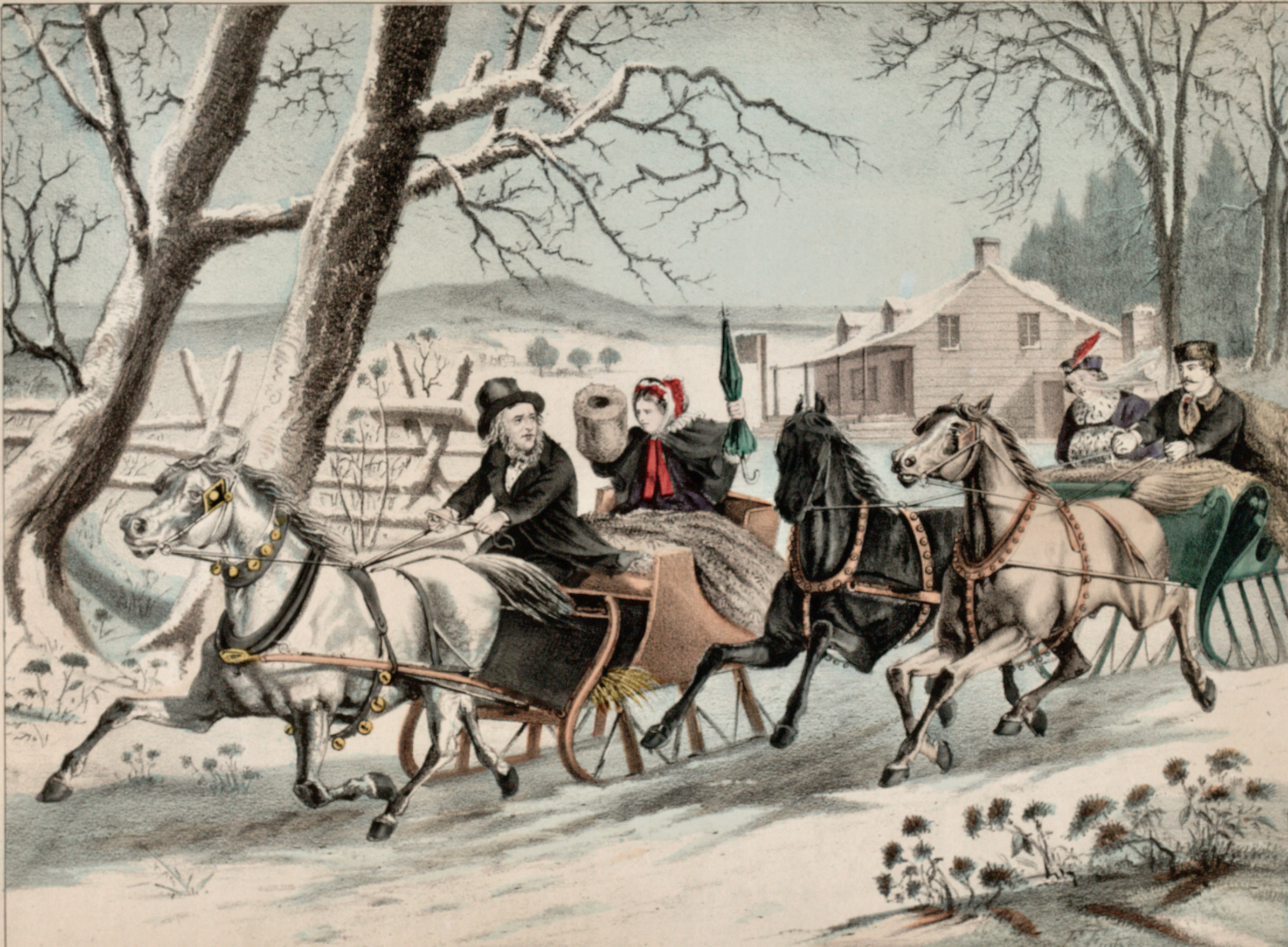
Kimmel and Forster, publishers, “Winter Pleasure in the Country,” circa 1865. National Museum of American History, Peters Prints Collection, Smithsonian Institution.1
Talk of sleighs and sleighing in our recent CHH posts on Snow! and Shoveling out -and other winter chores, plus our January, 2022, essay on Stuff Happens – on a sleigh ride, got me wondering again about winter travel in old Washington/Ozaukee county during the Clarks’ era. Assuming most of the more successful farmers—such as the Clarks, Bonniwells and Turcks—owned a one- or two-horse sleigh, how easy was it to navigate that sleigh on the early county roads? Could you ride all the way to Milwaukee? And if you could, how long might that take?
We’ve had some snow in my corner of southeastern Wisconsin, several modest snowfalls over the past few days. I’ve had to shovel the walks and driveway at our house a few times this week, and there’s more snow—and shoveling—in the forecast. With that in mind, I thought you might enjoy the snow-related images and stories from a revised edition of this post, which originally appeared here in February, 2023.
Homer, Winslow, A Winter-Morning,—Shovelling Out, 1871. Wood engraving. Brooklyn Museum, Gift of Harvey Isbitts.
Winter chores
I empathize with the lads in this 1871 engraving by Winslow Homer. Unlike these fellows, with their (homemade?) wooden shovels, I have a lightweight, sturdy, ergonomic, plastic and metal snow shovel to work with. And although we do get snow in 21st-century Wisconsin, I haven’t had to deal with shoulder-high accumulations like the ones in Homer’s picture since I lived in western Massachusetts in the early 2010s. It looks like our 1871 snow shovelers are dealing with the kind of snowfall that Clark family neighbor Rev. James W. Woodworth described in these January, 1871, diary entries:
Hey there! We finally got some snow in southeastern Wisconsin, which prompts me to republish this essay, which originally appeared in early 2021, and has been updated and re-posted several times since. Have fun outside—or enjoy a warm beverage inside—and admire the snowy winter landscape while you can. Cheers!
Snow, and often lots of it, was a feature of Jonathan and Mary Clark’s life in Wisconsin. And if you wanted to go to town or church or visit your neighbors during the snowy Wisconsin winter—or just enjoy a pleasant winter ride in the country—you’d need a sleigh.
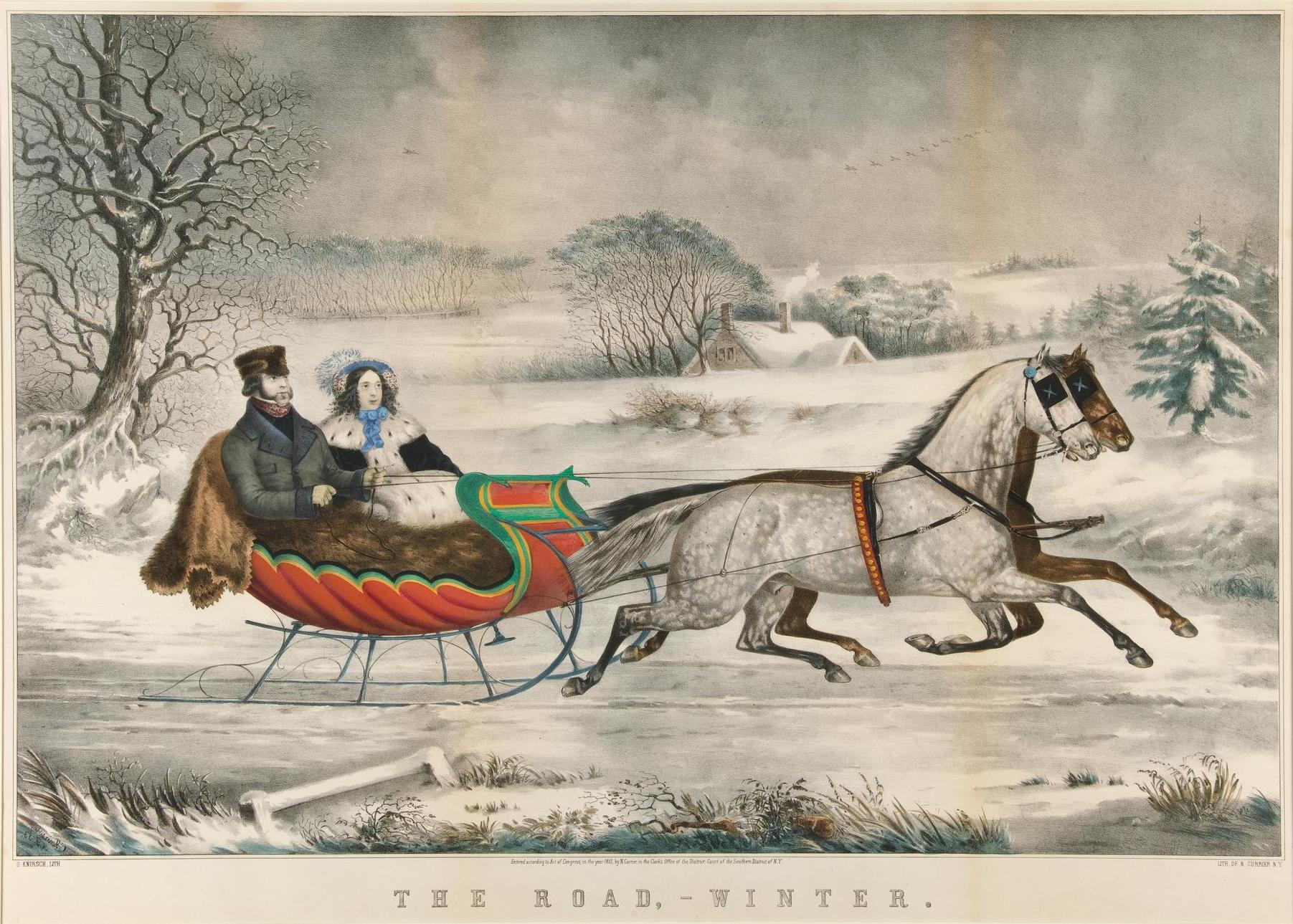
Currier, Nathaniel (1813-1888), The road, winter / O. Knirsch, lith., 1853. New York: Published by Currier & Ives. Yale University Art Museum, Whitney Collections of Sporting Art, given in memory of Harry Payne Whitney (B.A. 1894) and Payne Whitney (B.A. 1898) by Francis P. Garvan (B.A. 1897) June 2, 1932. Public domain. Click to open larger image in new window.1
We don’t know if the Clarks owned a sleigh while they lived in Mequon. I suspect they did, though their sleigh—and their clothing—may not have been quite as posh as those in this Currier & Ives lithograph from 1853.
Today’s post is an updated, corrected and expanded version a post I wrote in July, 2020, outlining what we knew (at the time), about the life of Fred Beckmann, Sr., the man that occupied and farmed the Jonathan Clark farm between 1868 and 1872. Then, in early 2023, I was asked to talk about the Clark House and its Cedarburg connections at the Cedarburg History Museum. I chose to center my talk on Fred Beckmann and his extended German-American immigrant family, as I believe they exemplify a number of important themes in the transformation of Ozaukee county from the initial Anglo-American dominated first wave of local settlement in the 1830s and early ’40s, into the subsequent decades of primarily German-American settlement and development.
Anyway, I had a lot of fun, and learned a lot, in preparing that 2023 talk. And one of the things I learned is that there was some doubt about the year and date of Fred Beckmann’s death. So I recently investigated the issues and have updated images, text, and information for you about the life—and death—of Fred Beckmann, and I managed to solve at least one mystery in the process…
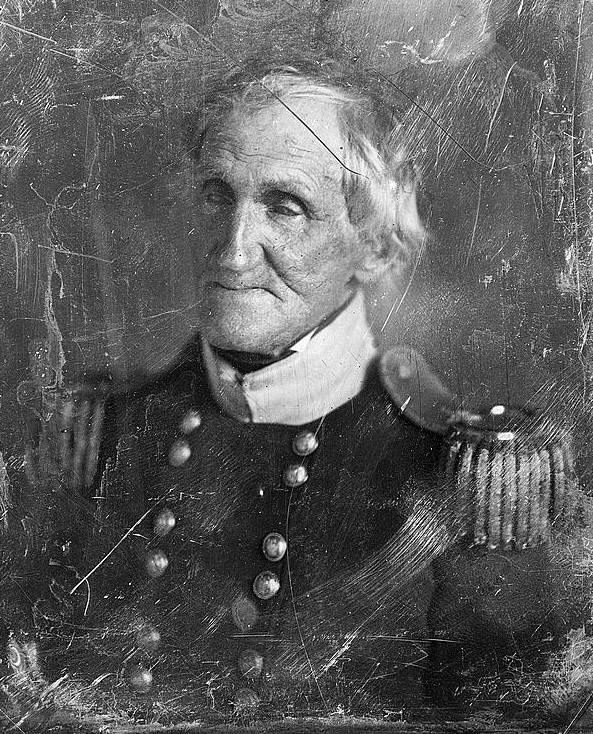
In the summer of 1834, the U.S. Army’s Brevet Brigadier General Hugh Brady made an inspection tour of many of the posts under his command. One of those posts was Fort Howard, at Green Bay, in the then Michigan Territory. In an earlier post, I briefly mentioned the General’s July 17, 1834, visit to the fort and how “Gen. Brady reviewed all the troops, who made a brilliant display of military evolutions, highly gratifying to those who witnessed them, and evidently meriting the approbation they received from the worthy and excellent commander-in-chief.“
Gen. Hugh Brady, c. 1844-1851. Photo credit: see note 1
I have since located the official report of the inspection that Brady sent to his superiors back in Washington, DC. and I want to share it with you today. I think you’ll find that a close reading of the general’s report will give some insights into the daily lives and routines of soldiers—including our Jonathan M. Clark—as they served their country “on the frontier” in the mid-1830s.
I’m spending some of my time this winter on projects related to the cataloging, interpretation and display of our historic Bonniwell Family Bible. One of the items on my “to do” list involves the study of a number of Bonniwell papers and other ephemera that were donated along with the Bible itself. Some of the miscellaneous papers are self-explanatory and easily understood. But one little fragment of printed text has me baffled, and I need your help, history lovers!





 Clark House Historian