JMC: a soldier’s life at Fort Howard, 1834

In the summer of 1834, the U.S. Army’s Brevet Brigadier General Hugh Brady made an inspection tour of many of the posts under his command. One of those posts was Fort Howard, at Green Bay, in the then Michigan Territory. In an earlier post, I briefly mentioned the General’s July 17, 1834, visit to the fort and how “Gen. Brady reviewed all the troops, who made a brilliant display of military evolutions, highly gratifying to those who witnessed them, and evidently meriting the approbation they received from the worthy and excellent commander-in-chief.

Gen. Hugh Brady, c. 1844-1851. Photo credit: see note 1

I have since located the official report of the inspection that Brady sent to his superiors back in Washington, DC. and I want to share it with you today. I think you’ll find that a close reading of the general’s report will give some insights into the daily lives and routines of soldiers—including our Jonathan M. Clark—as they served their country “on the frontier” in the mid-1830s.

Continue reading

Help the Historian: Mysterious (Bible?) Fragment

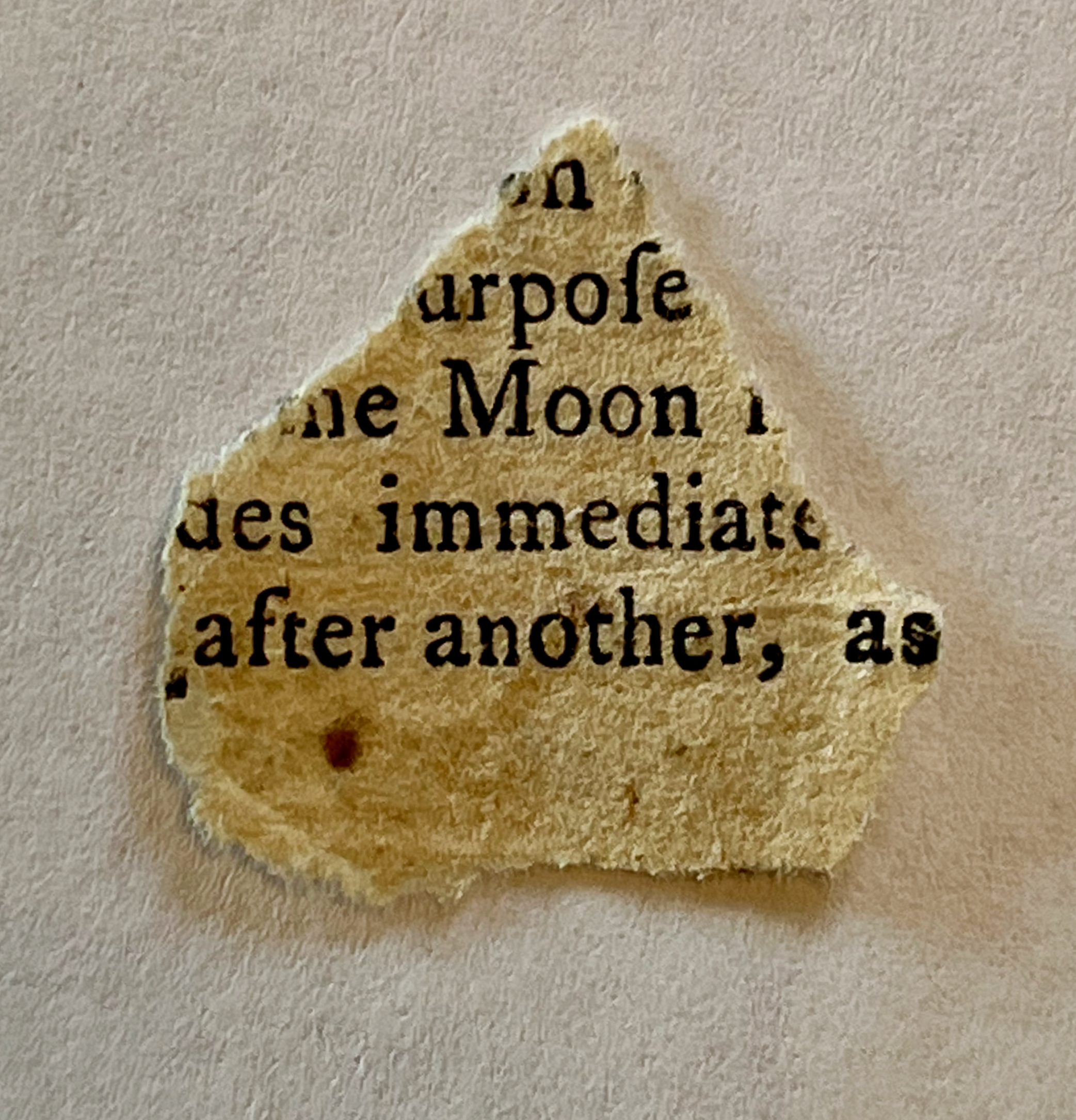
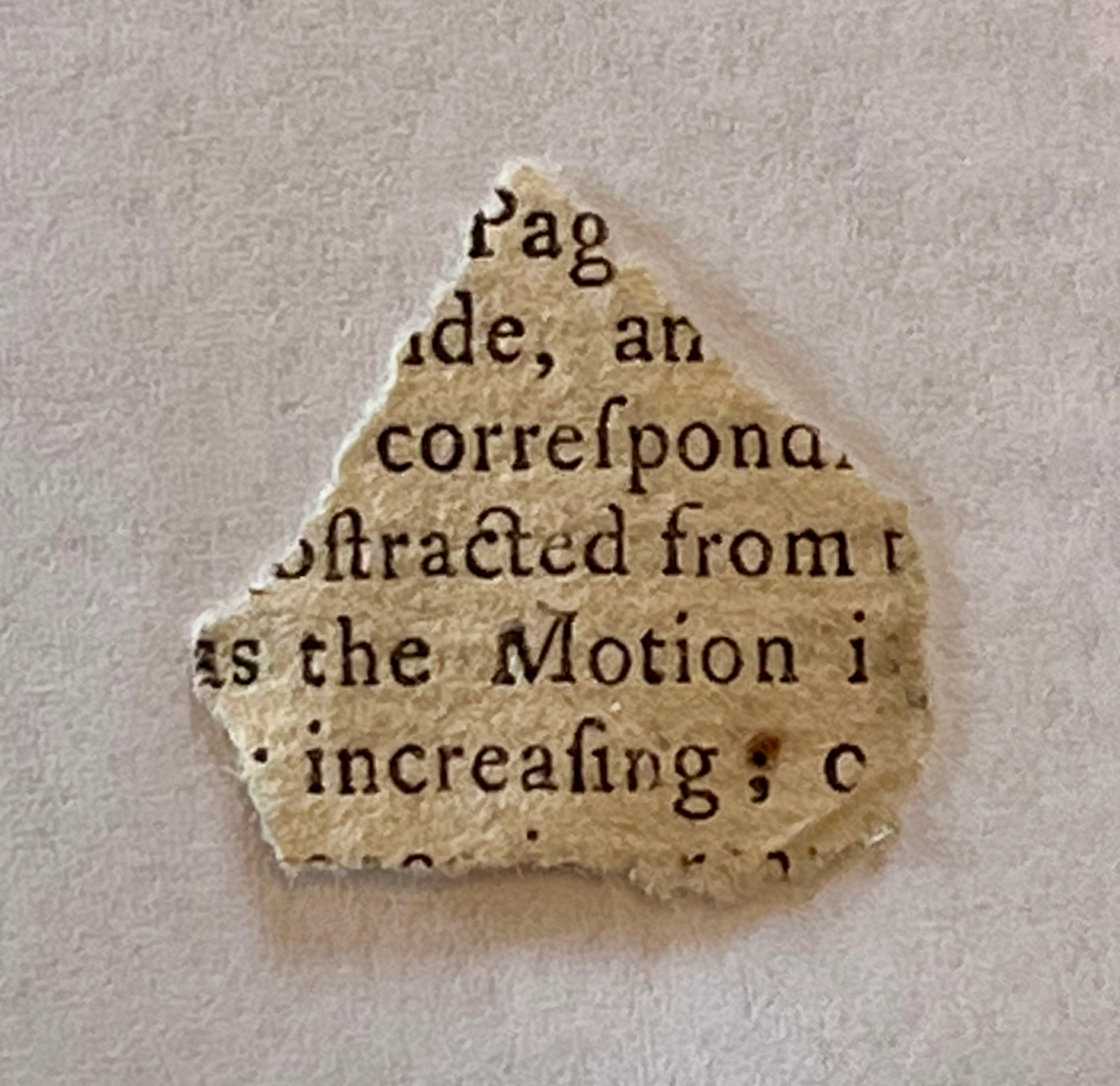
I’m spending some of my time this winter on projects related to the cataloging, interpretation and display of our historic Bonniwell Family Bible. One of the items on my “to do” list involves the study of a number of Bonniwell papers and other ephemera that were donated along with the Bible itself. Some of the miscellaneous papers are self-explanatory and easily understood. But one little fragment of printed text has me baffled, and I need your help, history lovers!

The fragment, sides A & B

Photos credit: Reed Perkins

Continue reading

RBOH: some Beckmann & Cedarburg updates

Revised 17 February 2025 to include some additional material about my Beckmann-related talk at the Cedarburg History Museum in Spring, 2023.

Cedarburg News, October 14, 1885, page 1

I’ve been spending time with historic local newspapers online, searching for those tasty tidbits of local news that never quite make it into the history books, but are often found in the 19th-century local press. Today I was browsing through 1880s to early-1900s issues of the Cedarburg News, Fred. W. Horn, publisher, and found some interesting random bits o’ history that are connected to the Clark House and to some work I’ve done for the Cedarburg History Museum.

Fred. Beckmann and kin

You may remenber a post I wrote back in July, 2020, about newly-married German immigrant Fred. Beckmann, who farmed and lived on the Jonathan Clark property from 1868 until 1873, at which time he and his growing family moved to Cedarburg, where he then owned and ran the Wisconsin House hotel for the better part of the next four decades. I followed that up with an April, 2023 presentation at the Cedarburg History Museum, where I spoke about the life and the extended circle of family, business associates and friends of Fred. Beckmann. His story connects the hardscrabble early days of our area’s Yankee, Irish and German pioneers (Jonathan and Mary Clark’s generation) with the following generation of established and settled German-American farmers, business owners and civic leaders, such as himself. And Fred also connected and illuminated the story of the Jonathan Clark House with those of nearby Hamilton—and its Concordia Mill—and the development of downtown Cedarburg in the 19th-century.

That 2023 presentation was followed by a March, 2024, illustrated talk I gave at the Cedarburg History Museum as part of their big 2024 Civil War exhibition and lecture series. My subject was “From the ‘Burg to the Battlefield…and Back: Cedarburg’s Beckmann Family and the Civil War.” In my talk, I tried to take a more personal and local look at the war by examining the military service of few of Fred. Beckmann’s Cedarburg relatives, including his brother Charles Beckmann, future brother-in-law, Charles Gottschalk, and future father-in-law Henry Hachfeld/Hackfeldt.

Well, I wasn’t really looking for more info on Fred. Beckmann today, but I stumbled across some interesting things, and thought I’d share them with you here…

Continue reading

Santa came!

Image credit: see note 1

Remember my “Dear Santa” wish list post from last month? Well, Santa came, in the form of a cheery email with exciting historical source news from Clark House supporter, eagle-eyed historian, and all-around great friend Ellen Hickman.2

Ellen’s email, I’m happy to report, has opened new pathways to locate all kinds of otherwise hard-to-search primary and secondary historical records and documents from the Clarks’ era. Since receiving it, I’ve been chasing after documents down one formerly-obscure research “rabbit hole” after another, with some gratifying results…

Continue reading

Hail, Smiling morn! – 2025 edition

Happy New Year to all, and best wishes for an excellent 2025. I thought we’d start the year with a lightly edited re-post of an earlier CHH essay about a cheerful, festive song, one that may have been familiar to our Mequon settlers in the 1840s.1

A spot of Spofforth to ring in the New Year…

Our New Year’s sing-along number is “Hail Smiling morn” by the English composer Reginald Spofforth (1769-1827), a vocal quartet featured in the second part of the Milwaukee Beethoven Society’s March 23rd, 1843, premiere concert:

Milwaukee Weekly Sentinel March 15 1843, page 2. Click to open larger image in new window.

Spofforth was a man of many talents, but was particularly known for his glees. A glee is a kind of convivial part-song, typically for three or more voices and usually—but not always—sung without accompaniment. I’ll have more to say about this particular composer and piece later, but for now, it’s well enough to know that “Hail Smiling morn” is—according to musicologist Nicholas Temperly—”possibly the most popular glee in the entire repertory,” and that’s saying something!

Continue reading

Christmas-Tide: an 1860s Turck family tale

A True Story! from an unexpected source

Christmas is here, and I thought you might enjoy a repeat of this seasonal Turck family anecdote, “a true story,” as related in the pages of Correct English magazine, written, edited and published by Mequon pioneer Peter Turck’s granddaughter—and Mary (Turck) Clark’s niece—Josephine Turck Baker, and later collected with other similar tales and published as a book, Correct English in the Home, Chicago, 1909.

In the foreword to her book, the author explains:

When I was a little girl, like most children, I was very fond of listening to stories; but unlike most children, I did not care for fairy tales, my first question invariably being, ” IS IT A TRUE STORY?” I don’t want a “once upon a time” story.

This is a true story. The children, their names, the incidents narrated, are all true. Beatrice, Roschen, and the “Boitie,” are my children […]


For those who like really true stories of really true people with really true names, this little book is written. That it may instruct and entertain all readers, both little and big, young and grown up, is the earnest wish of


Yours for Correct English,
Josephine Turck Baker

Our Protagonists

Photo credits and dates: see notes below. Click gallery for larger images

Continue reading

Santa Claus visits Milwaukee, 1867

Tonight is Christmas Eve, and I thought you might enjoy an expanded reprise of our 1867 Santa Claus story, originally posted in two parts, December 25 and 30, 2017. In 2021 I combined the two original posts and incorporated some new illustrations and a few revisions of the text. Here it is again, for your holiday enjoyment. Ho! Ho! Ho!

Christmas in early America

For many years now, Christmas has been celebrated by Americans as an important religious and (increasingly secular) community holiday. Christians gather to worship and commemorate the birth of Jesus, and they and other Americans enjoy a break from work to gather with family and friends to feast and exchange gifts. But it was not always this way.

In many of the American colonies, Christmas was not observed as a religious or secular holiday. The seventeenth-century Puritan leaders of the Massachusetts Bay Colony considered Christmas to be non-biblical and pagan influenced. In Boston and other parts of New England any observance of Christmas was prohibited and, for a few years, actually illegal:

Penalty for Keeping Christmas, 1659

Records of the Governor and Company of the Massachusetts Bay in New England. Printed by order of the Legislature, edited by Nathaniel B. Shurtleff, M.D., Vol. IV, Part I, 1650-1660, online at mass.gov (accessed 21 Dec. 2021). Click to open larger image in new window.

Transcription:
For preventing disorders arising in several places within this jurisdiction, by reason of some still observing such festivals as were superstitiously kept in other countries, to the great dishonor of God and offence of others, it is therefore ordered by this Court and the authority thereof, that whosoever shall be found observing any such day as Christmas or the like, either by forbearing of labor, feasting, or any other way, upon such accounts as aforesaid, every such person so offending shall pay for every such offence five shillings, as a fine to the country.

Christmas was not generally accepted as a holiday in many parts of the United States until after the federal government made December 25 a national holiday in 1870.

On the other hand…

The Massachusetts Puritans may not have approved of “observing any such day as Christmas or the like, either by forbearing of labor, feasting, or any other way,” but Christmas was “kept in other countries” and increasing numbers of immigrants from those countries to the United States—particularly from Victorian England, Catholic Europe, and the German Lands—celebrated the day in their new American homes with many of their accustomed religious observances and national traditions.

Continue reading

Random Bits o’ Holiday News…

Well, whaddya know? Christmas is just around the corner…

JCH Parlour with Christmas tree and decor. Photo credit Reed Perkins

Holiday Lights 2024

December 2 & 3, 2024, brought us the latest edition of our Holiday Lights gathering of Clark house friends old and new. There was good food, tasty beverages, lively conversation, and fine seasonal music, all dished up in the unique ambience of our historic Jonathan Clark House Museum.

As we do every year, the house was decorated with appropriate 1840s-style decorations, including the table-top Christmas tree and ornaments, and the evergreen bough decorations on the window sills, shown above.

Continue reading

“Dear Santa,”

The Clark House Historian’s Christmas Wish List

Kriss Kringle’s Christmas Tree [title page], E. Ferrett & Co., Philadelphia, 1845. Library of Congress

I grew up in the Chicago suburbs, and I remember the holiday thrill of riding the Chicago & Northwestern commuter train downtown with my parents, and then walking into the majestic State Street headquarters of Chicago’s grandest department store, Marshall Field & Company. Our mission? A trip up to the “toy floor” at Field’s, where we would wait in line to tell Santa all the wonderful things we would like to receive for Christmas that year.1

It goes without saying that I haven’t been able to fit on Santa’s lap for a very long time. But as the Clark House Historian, I still have holiday dreams and wishes, and today I’d like to share some of them with you. Who knows, perhaps Santa will work his magic once again?

(Official disclaimer: I do not serve on the JCH Board of Directors, or any of its committees. This is my Christmas daydream, a fantasy of what I’d like to see unfold at my favorite museum, given unlimited resources. And besides, as the great Chicago architect and city planner Daniel Burnham famously said: “Make no little plans. They have no magic to stir men’s blood!”)

My list is organized into several parts, the first of these is…

Continue reading