Meet the Neighbors: the Desmond family (part 1)

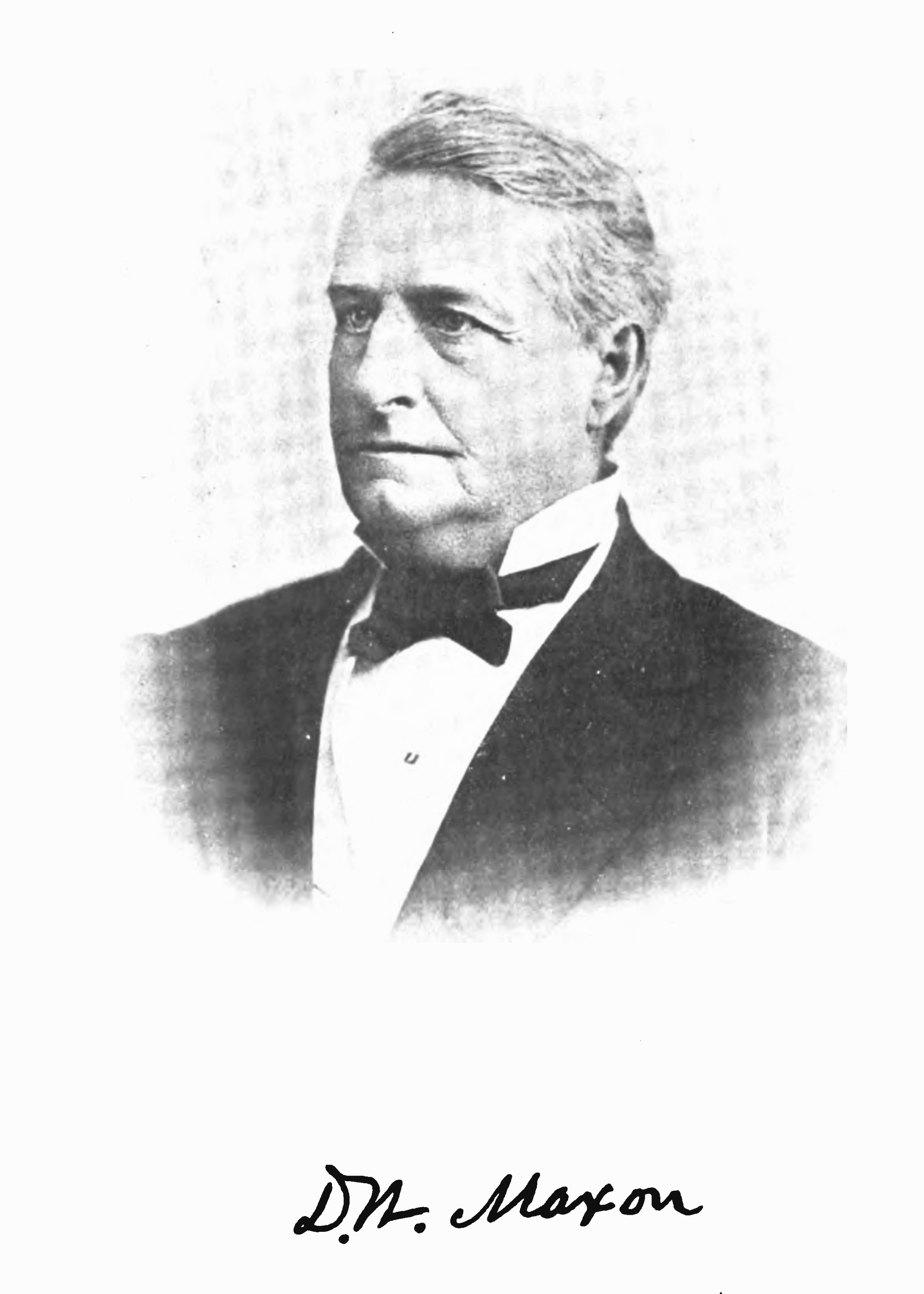
In an earlier post, I mentioned a local history source that was previously unknown to me, the Memoir of Thomas Desmond, written by his son Henry Desmond. It was cited by Walter D. Corrigan in the bibliography of his otherwise error-prone and forgettable History of the town of Mequon, Ozaukee County, Wisconsin, brought down to about 1870.

I was intrigued. I already knew that Thomas Desmond and his brother Dennis were pioneer residents of the Town of Mequon and neighbors of the Jonathan Clark family for several decades. The Thomas and Dennis Desmond farm parcels were located in the NW quarter of Section 3, T9N-R21E, Town of Mequon. The Desmond farms, and the adjacent John Corcoran farm, were situated due north of the Jesse Hubbard, Jr., farm, due west of the Ferdinand and Friedrich Groth properties, and immediately adjacent to the northwest corner of the Jonathan and Mary Clark farm, which occupied all of the southeast quarter of section 3.

You can see the Thomas Desmond and Dennis Desmond parcels in the upper left quadrant of this detail from the Shoolmap of the Town of Mequon / School Map of the Town of Mequon, pre-1872, UW-Milwaukee–AGS Digital Map Collection, showing Sec. 3, T9N-R21E. The southeast quarter section is labeled “Widow Clark,” and suggests that the map was made sometime after Jonathan Clark’s death in 1857, but before Mary Turck Clark and her daughters sold the property in 1872. (For more on this unique, useful map, see our post Monday: Map Day! – “Shoolmap” of Mequon, c. 1872.)

A Memoir

A memoir of any early Mequon settler, especially a Clark family neighbor, is always something I’d like to read. But the Desmond memoir was privately published, in 1905, in an edition of only 50 copies, to be distributed only to the immediate family. I checked Worldcat, and it had a citation for the book, but did not know of any libraries that had a copy. Might someone, somewhere, have this little book? Well…

Continue reading

“Intensely Cold Weather”

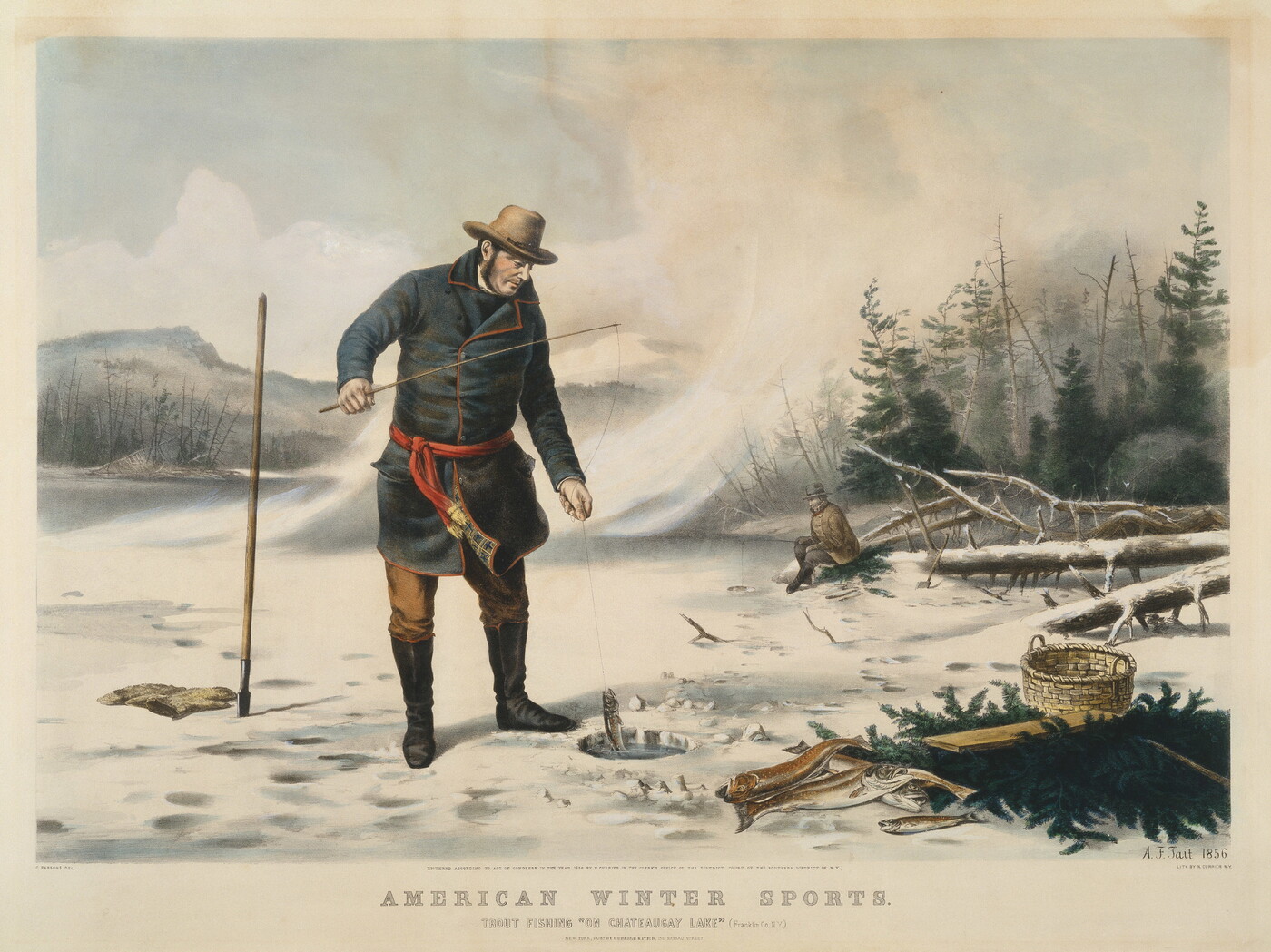
We’re having some very cold weather this weekend, not unusual for Wisconsin in mid-winter. But it got me thinking, wondering what sort of winter weather did the Clarks and Turcks and Bonniwells experience, and what effect the did the cold have on their daily lives?

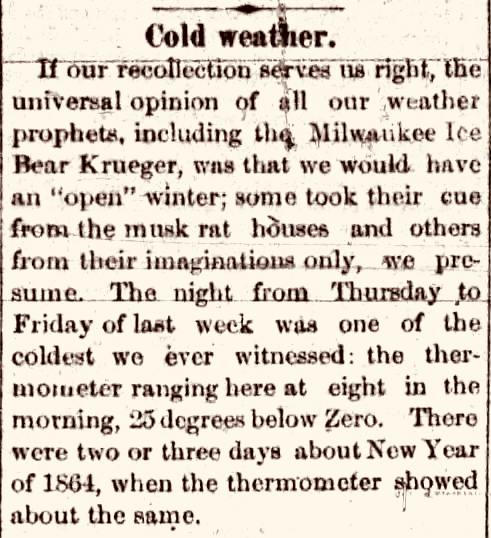
To find out, I started by searching digitized old newspapers, looking for the phrase “below zero,” in Wisconsin, between the years 1833-1899. Oh boy, did I get results! After narrowing my search to more local sources, I found this news item on page 2 of the Wednesday, January 2, 1884 issue of the Cedarburg News:

This article suggests that the winter of 1883-1884 was expected to be somewhat mild; an “open” winter was one with little or no snow cover on the ground. All the signs and predictions thought this would be the case. Apparently, the local muskrats had built their houses differently in 1883, as muskrats do when they expect a milder winter. The “universal opinion” of the “local weather prophets”—including Milwaukee’s famed “Ice Bear,” Henry Kroeger—thought so, too. But on the night of December 28-29, 1883, the thermometers in Cedarburg—just a few miles from the old Jonathan Clark farm—dropped to 25 degrees below zero (Farenheit). It was the coldest morning in decades.

But by the 1880s many of the older members of the Clark, Turck, and Bonniwell families had died, and many of the younger generation had left Ozaukee county and relocated to Milwaukee, Chicago, Minnesota, and elsewhere. Some or most of them may have missed this late-1883 cold snap. But this short article also mentions another, similar record cold spell, one that Mary Turck Clark and her children actually lived through, in Milwaukee, around the New Year of 1864.

Continue reading

CHH Year in Review, 2025

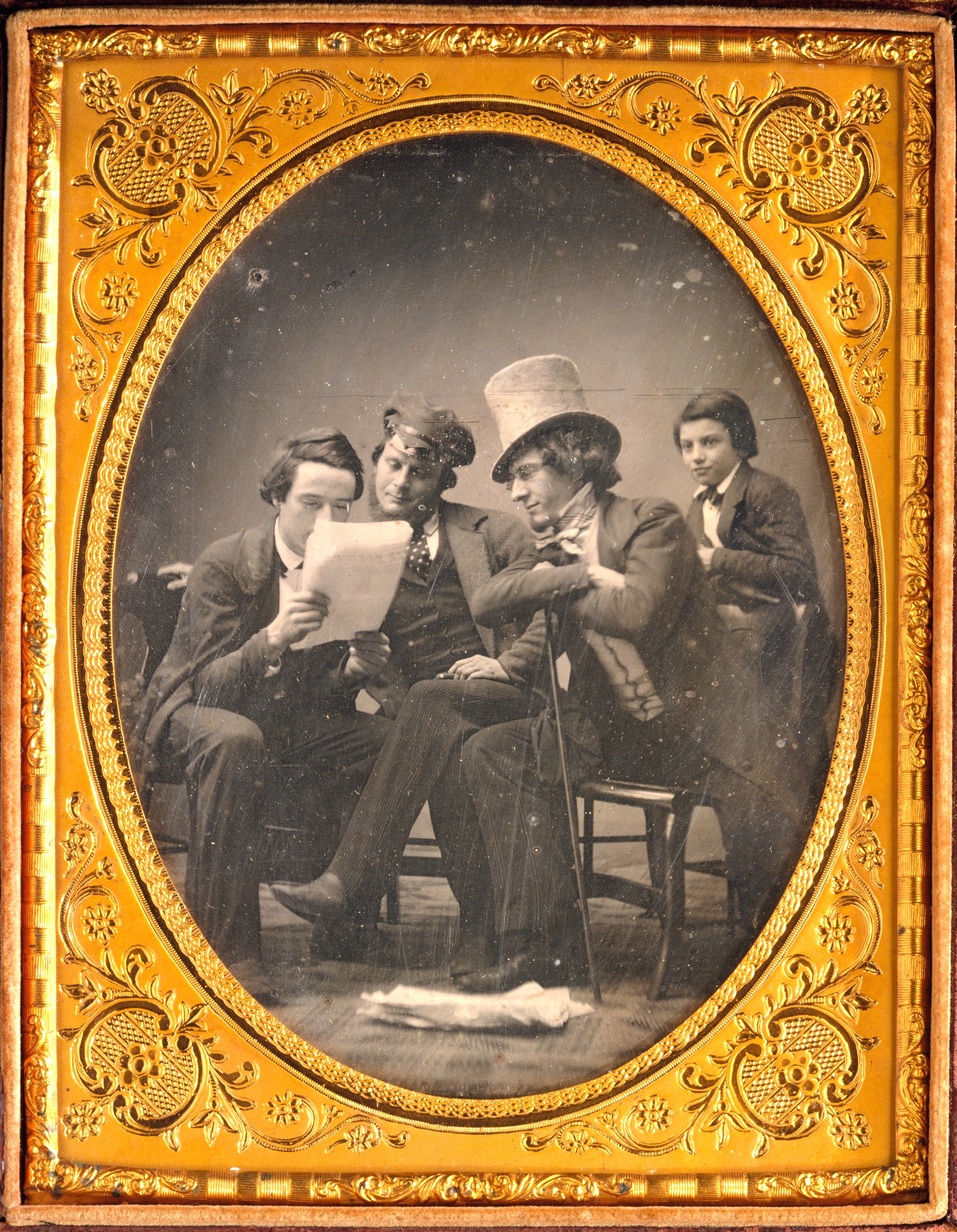
Harrison, Gabriel, “California News,” Daguerreotype, c. 1850. Metropolitan Museum of Art

What’s the news? I’ve gathered the expert—and stylish—editorial staff of Clark House Historian (see above) and together we proudly present the latest installment of our more-or-less annual Blog Year in Review!

Let’s begin with some blog statistics for 2025:

In some ways, 2025 was not a particularly productive year for CHH. I only managed to publish 35 posts, averaging less than one per week. Most posts were new material, but some were revised repeats of favorite seasonal and holiday topics, such as Christmas, Memorial Day, Veterans Day and such.

Meanwhile, “behind the scenes,” I was busy with some non-blog research projects, one focused on the post-Fred Beckmann history of the Wisconsin House building in Cedarburg, and another centered on the history and construction of the Jonathan Clark House.

Not surprisingly, with the number of CHH posts down, reader engagement dropped also, to a low of only 3 “likes” and 34 comments for the year. Just to be clear, I really do like to hear from y’all, so let me encourage you “like,” comment, and ask questions more often in 2026. Even if I’m working on a larger, longer, research project—which tends to slow my online blog production—I really enjoy reading and replying to your queries.

On the other hand, the number of blog subscribers increased in the past year. Clark House Historian currently has 86 subscribers. If you’d like to comment or subscribe, but don’t know how, click this link for all the “how to” details.

Monthly readership

As you can see (below), even though the number of new posts in 2025 was lower than in previous years, total blog readership was up substantially over 2024:

Continue reading

Happy New Year!

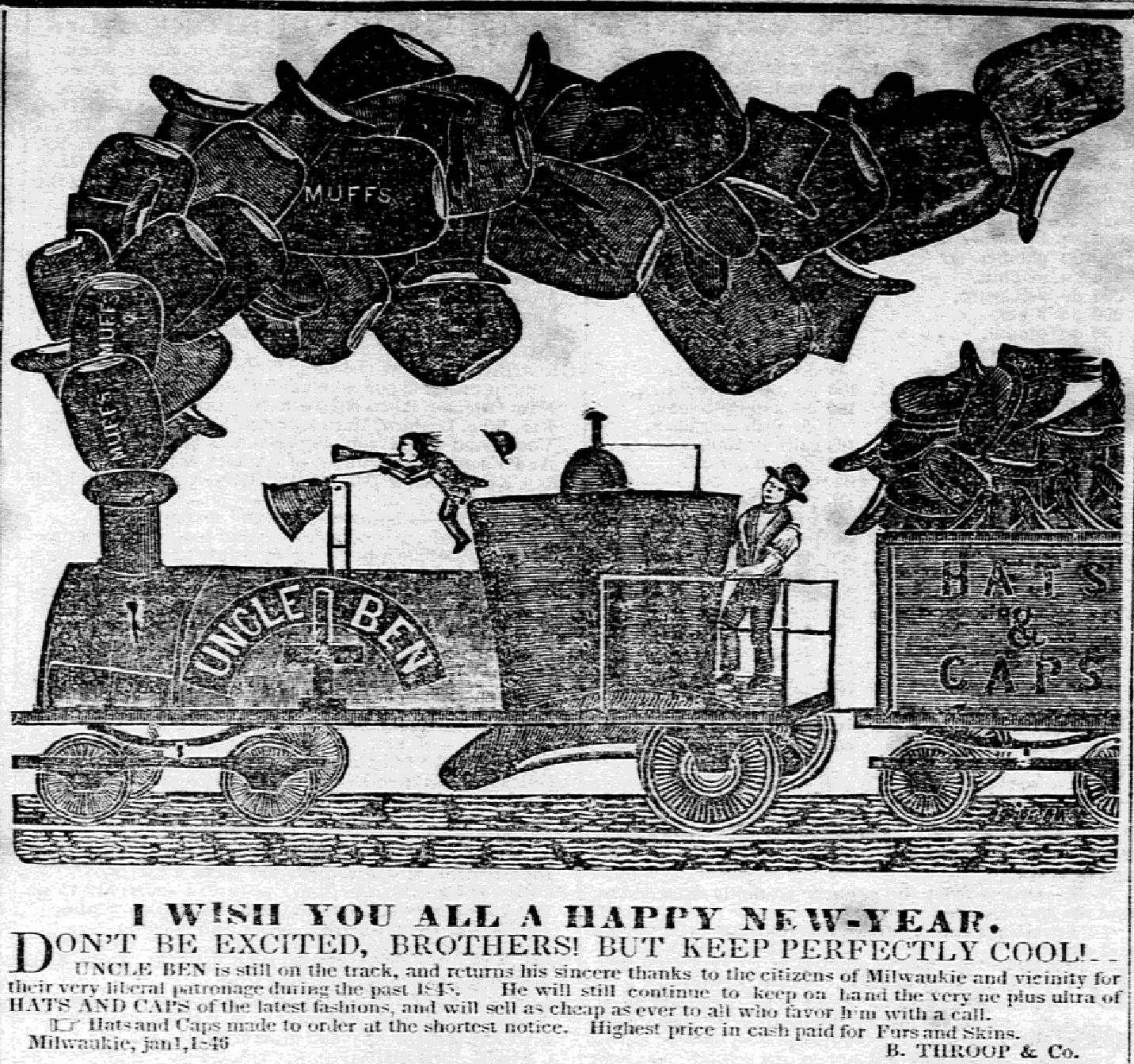
180 years ago, on New Year’s Day, 1846, this amusing woodcut appeared on page 3 of the Milwaukee Daily Sentinel, advertising the shop of pioneering Milwaukee merchant—and local character—Bazille “Uncle Ben” Throop:

That same morning, Jonathan and Mary Clark awoke to their fifth New Year’s Day together as a married couple. Living with them were their first three (of an eventual eight) children: Caroline (5 years old), Henry (almost 3) and Elizabeth “Libbie” (9 months). They were probably still living in their original log cabin home; it would be at least two more years until Jonathan M. Clark carved his name and “1848” in the keystone above the front door lintel of the two-story stone house that is now the Jonathan Clark House Museum.

Did the Clarks see “Uncle Ben’s” ad on January 1st? It’s not impossible, but I’d be at least mildly surprised if our young farm couple spent their earnings on a subscription to a Milwaukee daily newspaper. On the other hand, given their love of lifelong learning, it would not be out of character if they did. But we really don’t know.

Continue reading

Holiday Greetings!

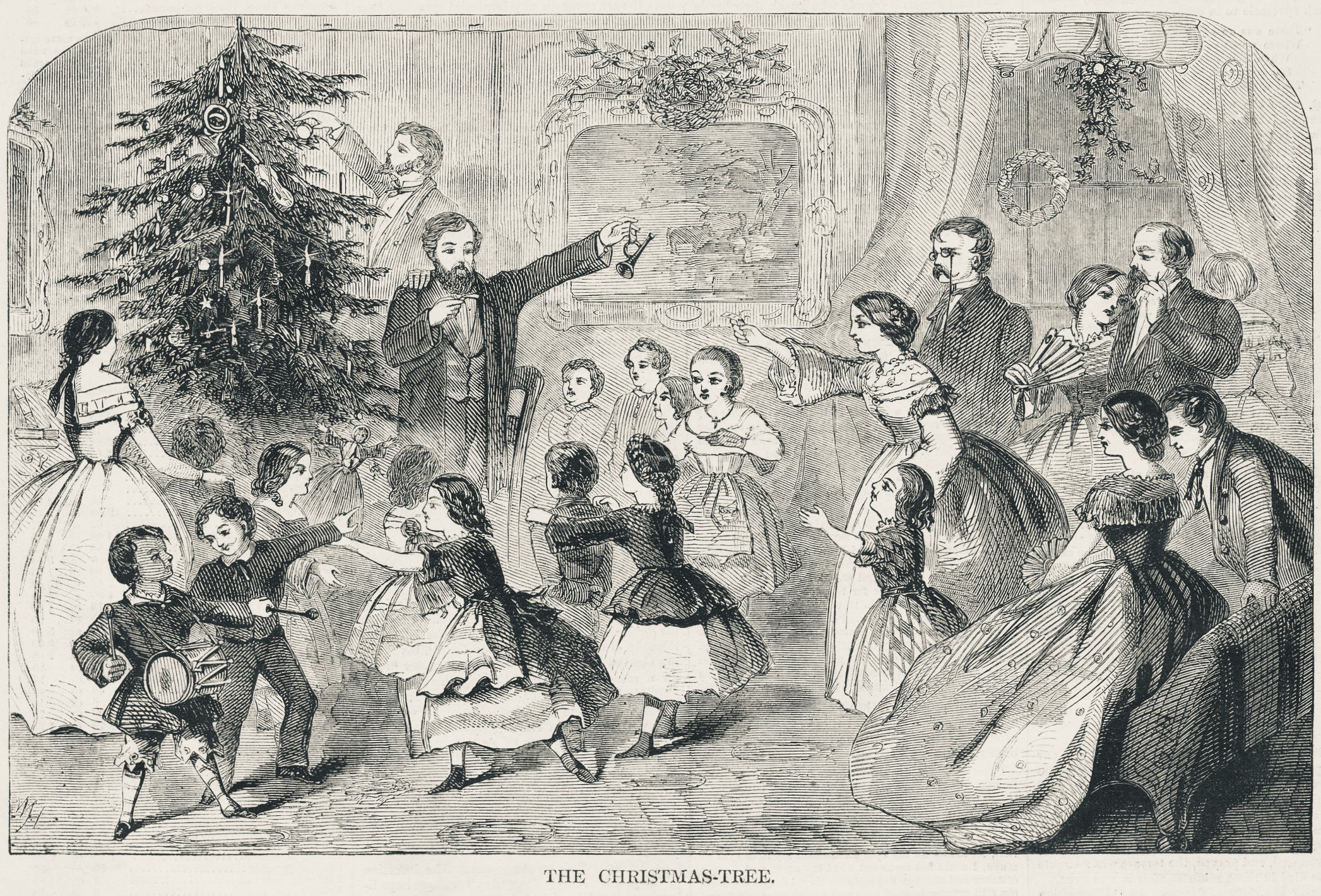
“The Christmas Tree,” after Winslow Homer, Harper’s Weekly, 25 Dec. 1858. Metropolitan Museum of Art, public domain.

Christmas is almost upon us and, frankly, I’ve been too busy—and too tired—this month to write much for the blog. It’s certainly not for lack of topics or sources. I have the beginnings of over 60 [sic!] blog posts sketched out already, and a huge pile of fascinating documents and images set aside to illustrate those posts. The amount of interesting material is daunting, and organizing each topic into one or more coherent posts takes time and energy that have been hard to come by these past few months. Now it’s late December and I’m looking forward to visits from family that will keep me happily preoccupied until early January.

I’ll be back with new material after the New Year. In the meanwhile, below are links to a few holiday-themed favorites from past years for your (re-)reading pleasure. I hope you enjoy them. And in 2026, I look forward to an exciting (and more consistently productive!) year of discoveries here at Clark House Historian.

Continue reading

“Dashing through the snow…”

As I write this, southeastern Wisconsin is in the midst of our first substantial snowfall of Winter, 2025-2026. In Jonathan and Mary Clark’s lifetime, the day after a storm like this meant it was time to hitch up the sleigh and have some fun “dashing through the snow.” Here’s a lightly-revised and expanded repeat of a post that celebrates Clark-era “sleighing time” and “jingle bells.” (And be sure to click the highlighted links for more vintage wintertime images and info.)

Kimmel and Forster, publishers, “Winter Pleasure in the Country,” circa 1865. National Museum of American History, Peters Prints Collection, Smithsonian Institution.1 Note the modest straps of jingle bells on the one-horse sleigh and the much more ostentatious—and louder—straps of bells on the two-horse sleigh.

Last winter, our earlier CHH posts Snow!, Shoveling out -and other winter chores and Stuff Happens – on a sleigh ride, got me wondering again about winter travel in old Washington/Ozaukee county during the Clarks’ era of the mid-1830s through the 1860s or so. Assuming most of the more successful farmers—such as the Clarks, Bonniwells and Turcks—owned a one- or two-horse sleigh, how easy was it to navigate that sleigh on the early county roads? Could you sleigh ride all the way to Milwaukee? And if you could, how long might that take?

Continue reading

Home to Thanksgiving

Tomorrow is Thanksgiving. To celebrate the holiday, I thought I’d reprint a lightly revised version of our now-annual CHH Thanksgiving post, to share with you a few vintage recipes and a nice Currier & Ives lithograph from the period.1

Thanksgiving, 1867

Durrie, George H. and John Schutler, Home to Thanksgiving, ca. 1867, New York, Currier & Ives. National Gallery of Art, Collection of Mr. and Mrs. Paul Mellon. Public Domain. Click to to open larger image in a new window.

By 1867, when this sentimental lithograph was first published, the Clark family had been living in the City of Milwaukee’s seventh ward for about six years. Family patriarch Jonathan M. Clark had died a decade earlier, and his only son, Henry M. Clark, had been gone for about a year and a half. Family matriarch Mary (Turck) Clark was living in a house in Milwaukee with her unmarried daughters, Libbie, Persie, Theresa, Laura, Josie and Jennie.

Continue reading

The American Revolution: are you watching?

The American War of Independence began 250 years ago, more than half a century before the forced removal of Wisconsin’s original native peoples and the beginnings of large-scale, government-sponsored, white settlement in the Wisconsin Territory of the 1830s.

Verger, Jean Baptiste Antoine De, artist, [Soldiers in Uniform], 1781 (detail). The soldier on the right was a New England militiaman, one of many New Englanders (including, we believe, Jonathan Clark’s kin) that fought for the Patriot cause. More on this image, below.

PBS is commemorating the big anniversary by sponsoring and broadcasting “The American Revolution,” a six-part, 12-hour documentary film by Ken Burns and company, exploring the roots of the conflict, the military and diplomatic progress of the war, and the contributions to, and effects of, the war on its many military and civilian participants, including white, Black, and Native American men and women, both Loyalists & Patriots.

I’ve seen the first four episodes and found them lively, interesting, informative, and sometimes deeply moving. I’m no expert on the Revolutionary era, but I know quite a bit, and I find the series includes all the “important” events and persons that one would expect, along with all kinds of nuance and detail which are new to me.

It’s an excellent documentary, well worth your time, and is currently streaming—for free—on PBS.org. And in case you are wondering: yes, there are many topics in this Revolutionary War documentary that connect to, and later influence, the lives many of the early Mequon settler families, including the Clark and Turck families. In particular, be sure to watch the whole first episode, a clear and detailed explanation of the complex background and causes of the fight for American independence.

Continue reading

Veterans Day, 2025

Veterans Day is today. For a perspective on the day—and our early Mequon veterans—here’s a post originally published at Clark House Historian on November 11, 2016, and revised, expanded and republished several times since.

Armistice Day — Veterans Day

One hundred and seven years ago today, at the eleventh hour, of the eleventh day, of the eleventh month—Paris time—the Armistice of Compiègne took effect, officially ending the fighting on the Western Front and marking the end of World War I, the optimistically named “War to End All Wars.”

In the United States, the commemoration of the war dead and the Allied victory began in 1919 as Armistice Day, by proclamation of President Woodrow Wilson. Congress created Armistice Day as a legal holiday in 1938. Starting in 1945, a World War II veteran named Raymond Weeks proposed that the commemorations of November 11 be expanded to celebrate all veterans, living and dead. In 1954 Congress and President Eisenhower made that idea official, and this is what we commemorate today. There are many veterans with a connection to the Jonathan Clark house. We honor a few of them in this post.

114th Regimental Reunion, May 30, 1897, Norwich, N. Y., Library of Congress [cropped and adjusted]. Many Clark neighbors served during the Civil War, and many remained active in the Grand Army of the Republic, the national organization for Union Army veterans, including these men from rural New York, gathered together in 1897.

Continue reading

Finding what you want: a few tips for readers

Sometimes a blog is like a labyrinth…

JCH Bonniwell family Bible, MS inscription “John” and drawing of a Labyrinth, First […] Concordance, sig. A1 verso (detail)

I’m looking forward to blogging more regularly, and I hope you enjoy the upcoming posts. But I’ve been publishing Clark House Historian for almost ten years (!), and I know it can be hard to navigate the blog and find the particular historical information, photos, maps and other images that you might be looking for. Today’s post has a few tips to help you make your way through the twists and turns of the Clark House Historian information labyrinth.

Tip No. 1: Click the links!

If you’d like to view a larger, clearer version of almost any image on the blog: click the image (or, sometimes, the link in the caption), and a new full-size image will open in a new window. Other links (highlighted in the blog’s signature minty-green color) will connect you with related blog posts and online sources for further information.

And by the way, you can read the blog on your phone and open and zoom in on the photos, drawings, maps and other images. But I create the CHH posts on a device with a good-sized screen, and I recommend viewing on the largest screen that you can.

Finally, and most importantly, be sure to click the Continue reading—> link, typically found after the first image and paragraph or two. There is a lot more to be found “below the fold.”

Continue reading