How y’all doing? I can’t believe it’s been almost a month since my last post. Sorry about that! It’s that time of year, and I’ve been busier at my day job. But I’ve also been occupied with more pleasant, seasonal, activities…

How y’all doing? I can’t believe it’s been almost a month since my last post. Sorry about that! It’s that time of year, and I’ve been busier at my day job. But I’ve also been occupied with more pleasant, seasonal, activities…
It’s Thanksgiving tomorrow, and I’m taking a few days off to spend time with family. But in the spirit of the holiday, I thought I’d reprint a lightly revised version of our now-annual Thanksgiving post, to share with you a few vintage recipes and a nice Currier & Ives lithograph from the period.1
Thanksgiving, 1867
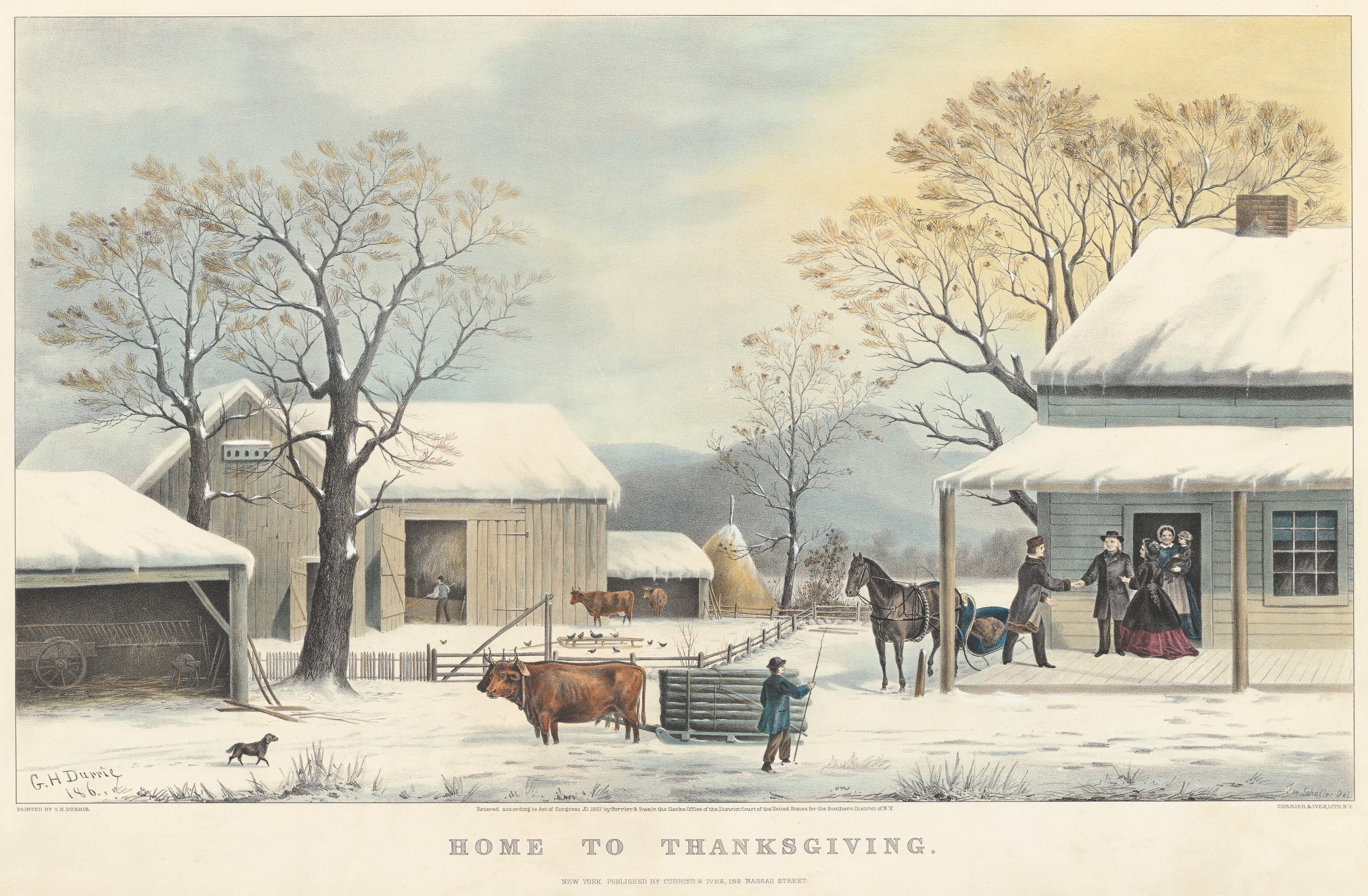
Durrie, George H. and John Schutler, Home to Thanksgiving, ca. 1867, New York, Currier & Ives. National Gallery of Art, Collection of Mr. and Mrs. Paul Mellon. Public Domain. Click to to open larger image in a new window.
Continue readingI’m behind in my writing. Sorry about that. My Clark House history research continues “behind the scenes,” but I’ve been busy with typical fall chores around the house and garden, and that’s kept me from writing, proofreading, and annotating fresh blog posts.
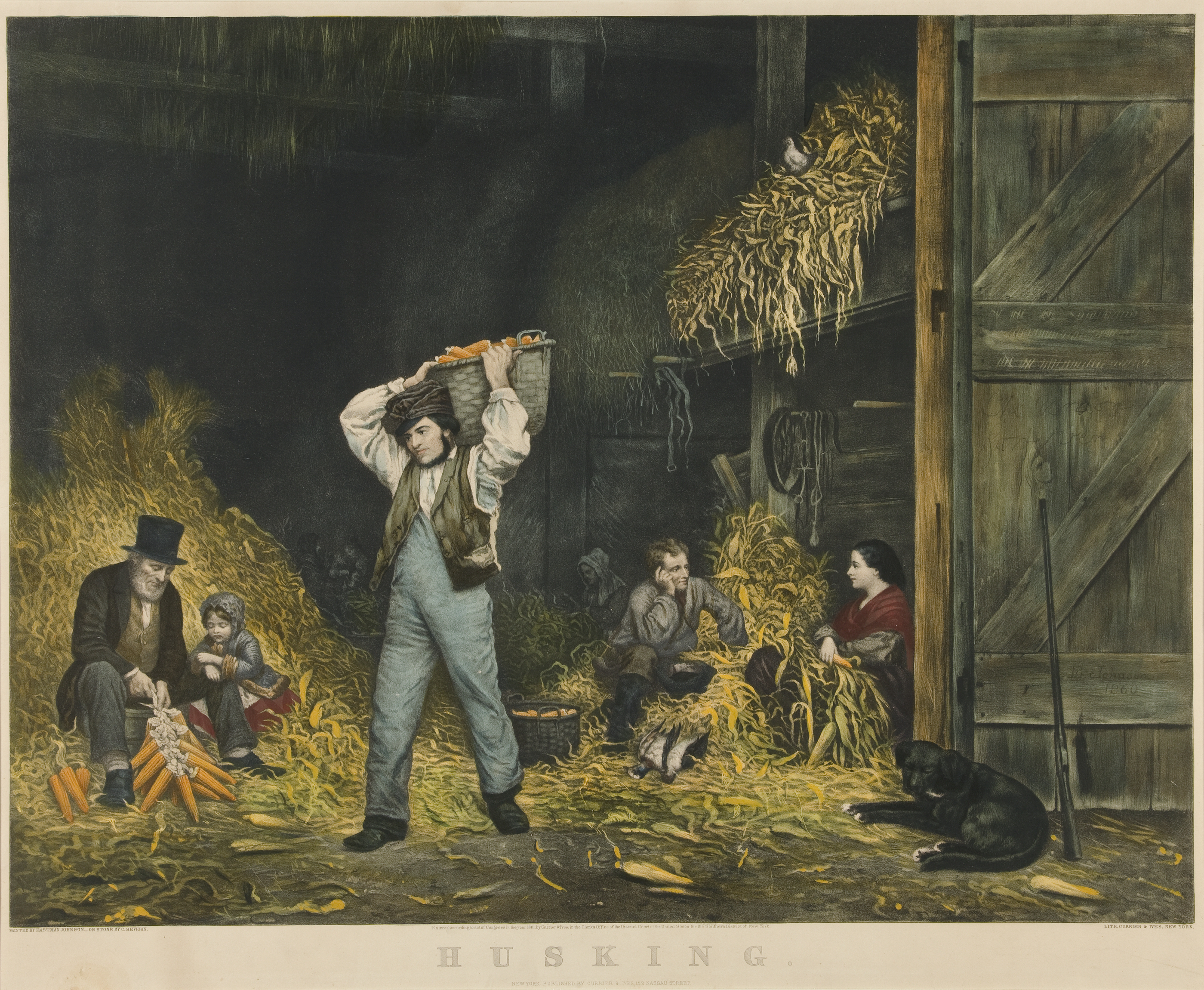
Anyway, Thanksgiving is almost here, so look for my annual holiday post (with historic recipes!) later this week. And in the meantime, let’s reflect on how thankful we should be that we don’t have to process a barn full of harvested corn by hand anymore…
Veterans Day is today. For a perspective on the day—and our early Mequon veterans—here’s a post originally published at Clark House Historian on November 11, 2016, and revised, expanded and republished several times since. For Veterans Day, 2023 I have added several new links and one new photograph.
Armistice Day
One hundred and five years ago, on the eleventh day, of the eleventh month, at the eleventh hour—Paris time—the Armistice of Compiègne took effect, officially ending the fighting on the Western Front and marking the end of World War I, the optimistically named “War to End All Wars.”
In the United States, the commemoration of the war dead and the Allied victory began in 1919 as Armistice Day, by proclamation of President Woodrow Wilson. Congress created Armistice Day as a legal holiday in 1938. Starting in 1945, a World War II veteran named Raymond Weeks proposed that the commemorations of November 11 be expanded to celebrate all veterans, living and dead. In 1954 Congress and President Eisenhower made that idea official, and this is what we commemorate today. There are many veterans with a connection to the Jonathan Clark house. We honor a few of them in this post.
Jonathan Clark, Henry Clark, and the U.S. Army
Jonathan M. Clark (1812-1857) enlisted as a Private in Company K, Fifth Regiment of the U. S. Army, and served at Ft. Howard, Michigan (later Wisconsin) Territory, from 1833 until mustering out, as Sargent Jonathan M. Clark, in 1836. In the 1830s, Fort Howard was on the nation’s northwestern frontier. Jonathan’s Co. K spent much of the summers of 1835 and 1836 cutting the military road across Wisconsin, from Ft. Howard toward Ft. Winnebago, near modern Portage, Wisconsin.

Fort Howard, Wisconsin Territory, circa 1855, from Marryat, Frederick, and State Historical Society Of Wisconsin. “An English officer’s description of Wisconsin in 1837.” Madison: Democrat Printing Company, State Printers, 1898. Library of Congress. Click to open larger image in new window.
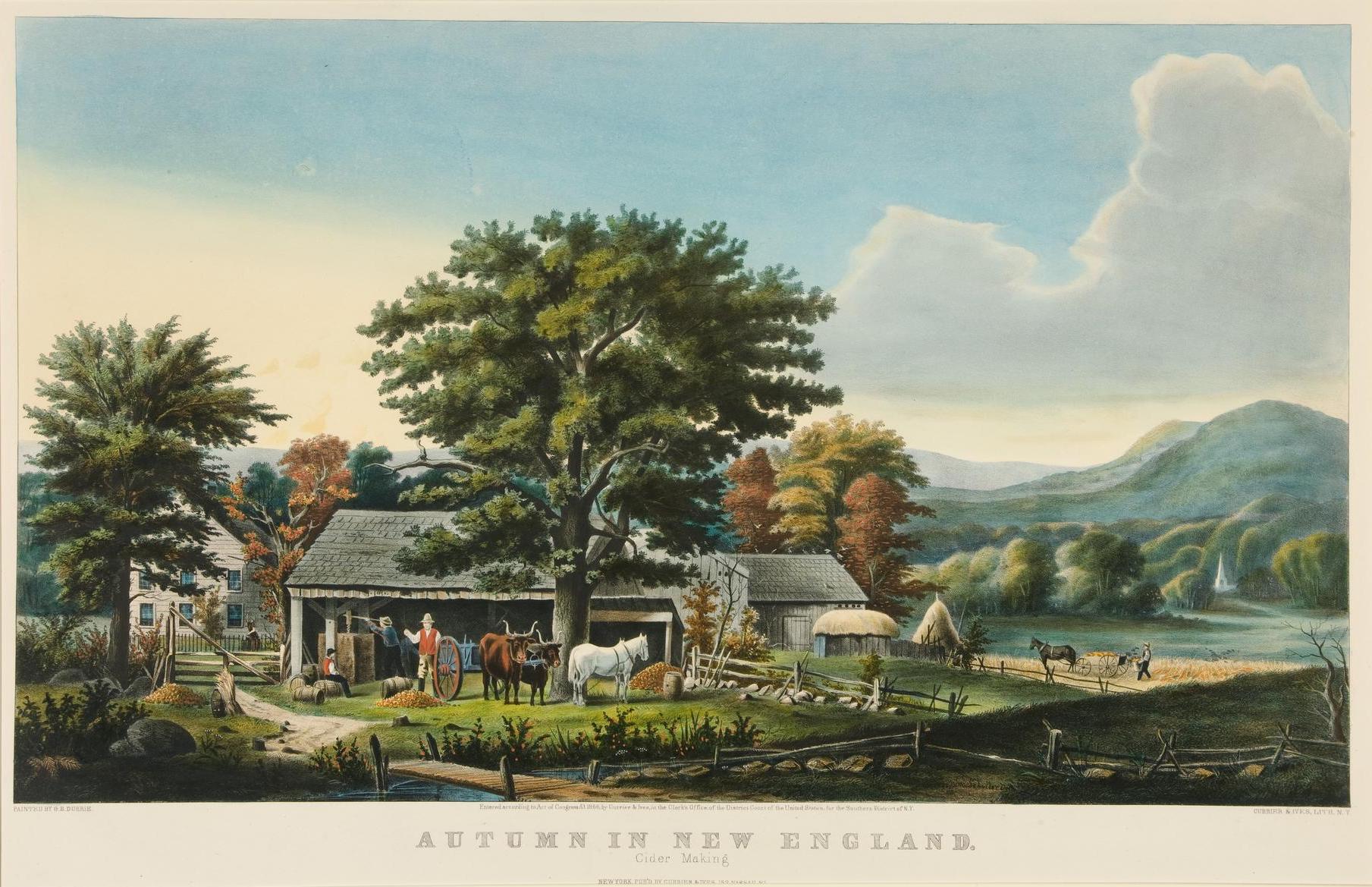
Continue readingI’ve been distracted by my day job lately, and work on the Search for JMC’s Roots is progressing slowly. So while I keep chipping away at finding and organizing data from 1790s Lower Canada sources, here’s another evocative lithograph from Currier & Ives, depicting a scene that Jonathan Clark might have experienced in his youth.
I’m still reading and transcribing the various “Returns of Persons names who have taken the Oaths” that I’ve found (so far) among the Land Petitions of Lower Canada, 1764-1841. The list-making has been slow going, and nothing is quite ready for posting.
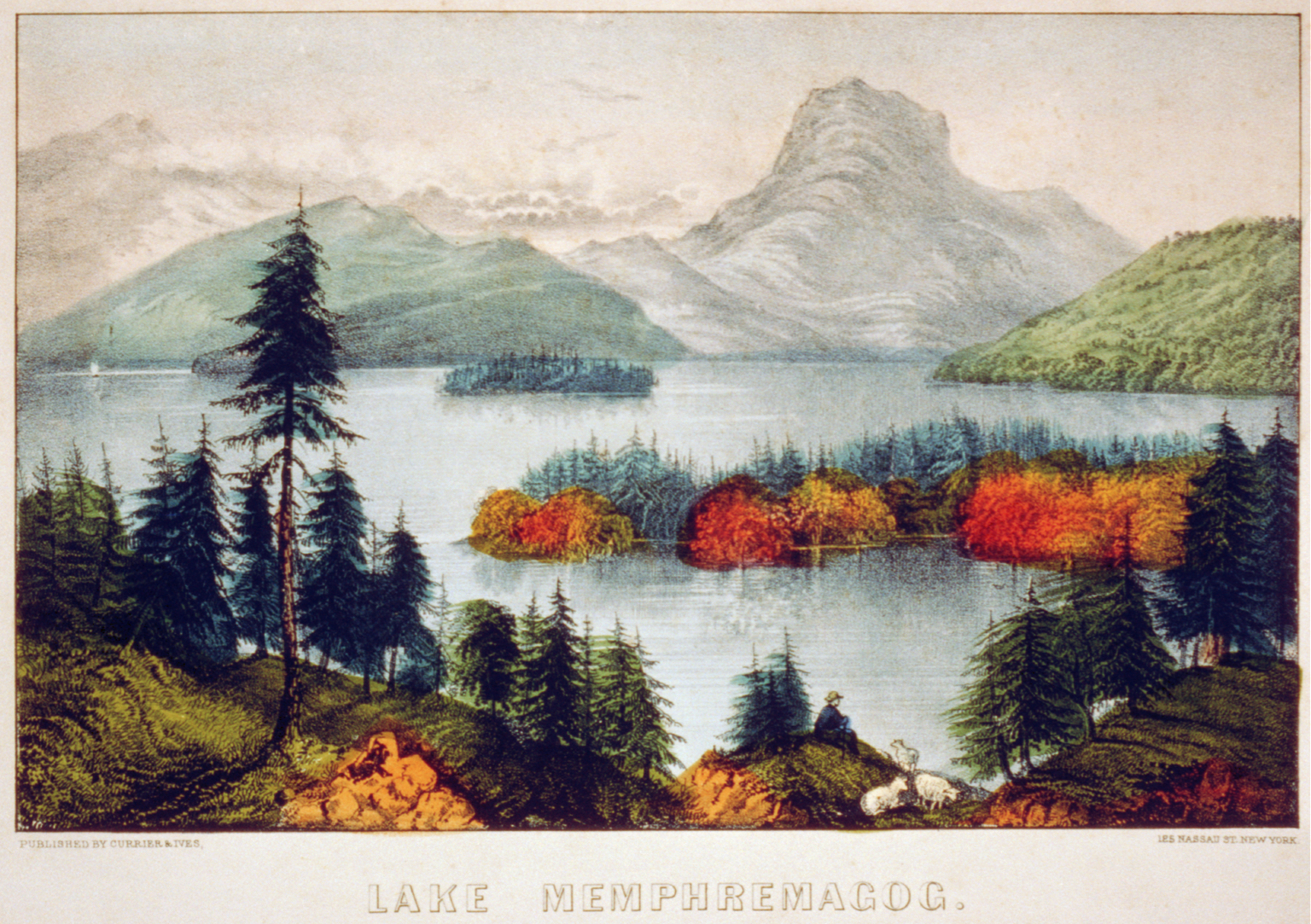
So while you’re waiting for the next installment of our “Searching for JMC’s roots” investigation, I thought you might enjoy this autumnal, hand-colored lithograph of Lake Memphremagog, looking westward across the lake from the shoreline of the northwest part of Stanstead Township—or possibly southwest Hatley Township— toward the mountain known as the Owl’s Head in Potton Township.

Recently, we examined two competing petitions seeking a grant of land for what would become the township of Stanstead, Lower Canada. The first petition was successful, the second, not. We also suspect that many, if not most, of the signers of those petitions—including more that a dozen with Clark surnames—were probably not seriously interested in obtaining Crown lands and then pioneering in the wilderness of the 1790s Eastern Townships. As we continue our search for Jonathan M. Clark’s parents or other kin in 1790s and 1800s Lower Canada and adjacent Vermont and New Hampshire, how can we identify which Clarks might be related to JMC and which are not? What were the next steps for serious prospective Lower Canada immigrants and landowners?
In reviewing the secondary literature (part 1 and part 2) I learned, in a general way, what the next steps were for bona fide immigrants to Lower Canada, people that actually intended to settle in the townships and that desired a land grant. But some of the details were a bit vague. So I went and found the government’s official proclamation outlining the new land grant policy:
Continue readingUPDATED, Oct. 31, 2023. Rearranged a few paragraphs to highlight the information about a son and grandson of Isaac “Old Rifle” Clark, Satterlee Clark, senior and junior.

As we proceed in our search for Jonathan M. Clark’s kin in the area where southern Québec meets northern Vermont and New Hampshire, I thought it would be useful to begin a list of various Clark-surnamed people that show up in our search, but we know (with reasonable certainty) are not JMC’s parents or other relatives.
I’m not going into great detail for each subject, but I’ll try and give enough info to make clear whom we are talking about, and why they are on the “Nope, not our Clark family…” list. Here is today’s installment.
Sir Alured Clarke, (c. 1745-1832)
Lieutenant Governor of Lower Canada, he helped implement the Constitutional Act of 1791—and its provisions for making grants of the Crown’s “Waste Lands” in the province—and his name appears on many of the early Lower Canada land petitions, including those for Stanstead and Hatley. The Dictionary of Canadian Biography has a fine, lengthy entry (illustrated with an engraved portrait) which concludes that Clarke was “a professional soldier whose modest talents and courteous manner had enabled him to discharge the civil duties of a colonial administrator without either distinguishing or disgracing himself.”
Continue readingOur previous post, Searching for JMC’s roots: Stanstead’s original Associates petition, 1792, went into some detail about the creation of the original petition to the Crown for the township that would become Stanstead, Lower Canada. In order to avoid repetition—and keep today’s post to a manageable length—I’m going to recommend that you read that post before reading this one. Because today we have another, competing petition, by a (mostly?) different set of Leaders and Associates, also signed in Rutland, Vermont, not quite two weeks after the previous petition.
I’m not going to examine all the aspects of this second petition today, but there are some features that we should note as we search for Jonathan M. Clark’s kin along the New England and Lower Canada border regions in the 1790s and early 1800s.
John Prentiss…and Associates
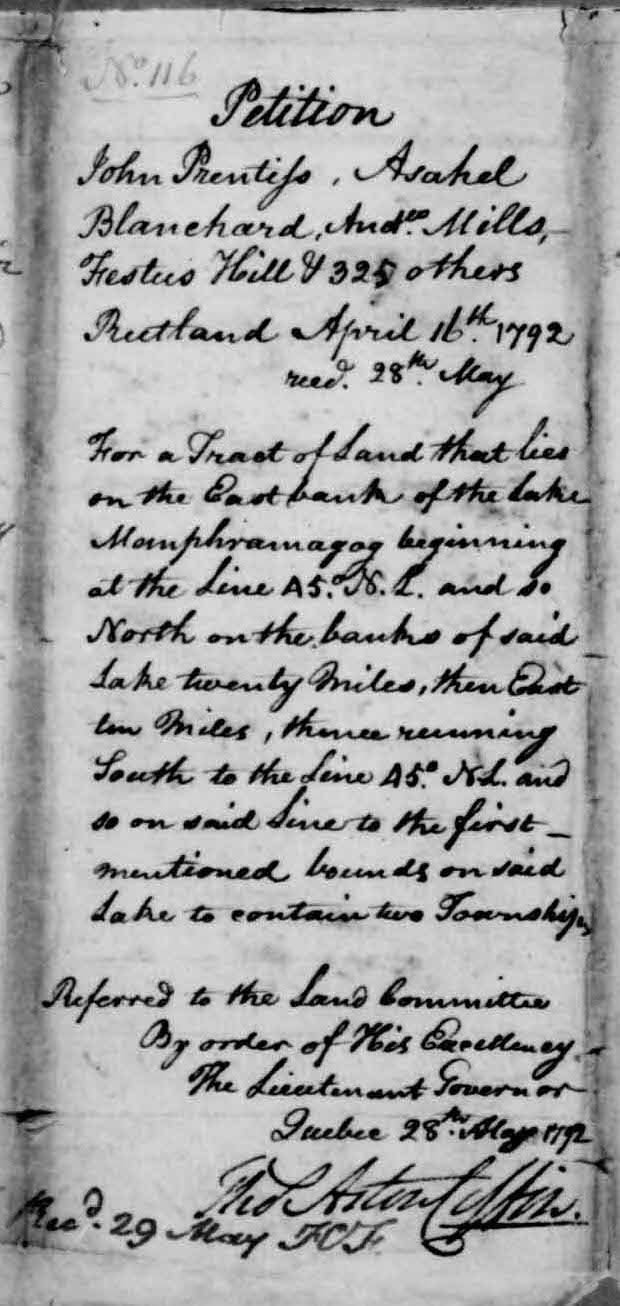
Library and Archives Canada, Petition of John Prentiss, detail showing government notations. See below for full citation.
The organizing meeting for this second group of would-be Stanstead (and Hatley) associates appears to have been held in Rutland, Vermont, on April 16th, 1792. As you’ll see (below), the ink and handwriting of the first signer, John Prentiss, appear identical with that of the petition statement itself (and many of the other signatures at the head of the petition!).
According to the Land Committee clerk’s handwritten notes (above), the petition was presented by and endorsed with the signatures of [presumed Leader] John Prentiss, [presumed Associates] Asahel Blanchard, Andw. [Andrew] Mills, Festus Hill and 325 others in Rutland, April 16th, 1792. It was received by the Lieutenant Governor’s office on May 28th and referred to the Land Committee the next day.
The petition, front side
Below is the front side to the original, complete, Associates petition for the two proposed townships, as found among the Land Petitions of Lower Canada, 1764-1841, RG 1 L3L, Vol. 160, archival page number 78473. As with the previous (Josiah Sawyer) petition, it appears that the microfilm camera operator needed two exposures to capture the full contents of the front side of this oversized page. I have used software to stitch the overlapping images back together, so that you can view the page as it looked in 1792:
Continue readingUPDATED: 25, 27 and 28 Oct. 2023. See note 8 for details.
Under the unique Leaders and Associates land grant system of early Lower Canada, one of the first and essential steps in obtaining a grant of land from the Crown was to assemble at least 40 (purported) would-be immigrants—often from northern New York and the New England states—and have them sign an official petition requesting a grant of such land. The leaders might be directly involved in the signature gathering process, or they might delegate their tasks to an “agent.”
In 1791, when the Constitutional Act creating Upper and Lower Canada was passed by the British Parliament, Stanstead’s original leaders Eleazar Fitch and Issac Ogden were living and doing business in St. John’s and Montréal, respectively. It’s probable that neither man ever got close to the future Stanstead Township, or northern New York and the New England states1. As we suggested at the end of an earlier post, Fitch and Ogden appear to have delegated the petition process to a farmer (and would-be “Leader” of yet another Eastern Township or two) named Josiah Sawyer.2

Library and Archives Canada, search results for today’s petition. See below for full citation.
Josiah Sawyer, agent
From what I can surmise, one of the main functions of an Agent in the Lower Canada land grant process was to begin the new township project by obtaining the signatures of the required minimum number of Associates on a petition to the government for that land. As we learned earlier, this would usually include a payment from the Leaders to each petition-signing Associate, and—for those Associates that did not intend to actually settle in the new township—the collection of the necessary signed forms deeding the Associates’ hoped-for 200 acre allotments back to the Leaders, for them to hold or re-sell as they deemed most profitable.
The organizing meeting for Stanstead’s associates appears to have been held in Rutland3, Vermont, on April 3rd, 1792. The ink and handwriting of the first signer, Josiah Sawyer, appear identical with that of the petition statement itself, suggesting that Josiah Sawyer was, indeed, the man that organized the signing of this document.
The original petition, front side
Here is the front side to the original, complete Associates’ petition for the proposed Township of Stanstead, as found in the Land Petitions of Lower Canada, 1764-1841, RG 1 L3L, Vol. 175, archival page number 84887. Originally, the microfilm camera operator needed two exposures to capture the full contents of each side of this oversized page.4 I have used software to stitch the overlapping images back together, so that you can view (and try to read!) the document as it looked in 1792.
Continue reading Clark House Historian