In a recent CHH post I wrote about my Saturday, August 16 visit to, and presentation at, the WSDAR’s excellent Fort Winnebago Surgeons Quarters historic site. That was worth a road trip in itself. But since I was heading up to Portage, I decided to make a history weekend out of the occasion. So on Friday the 15th, I spent a fine few hours touring the nearby Historic Indian Agency House and museum, just a short distance from the Surgeon’s Quarters across the old channel of the Fox River.

Historic Indian Agency House, 2025. Photo credit: Reed Perkins
The Historic Indian Agency House
The Historic Indian Agency House (HIAH) is one of Wisconsin’s oldest museums and a “must see”, for those of you interested in the early days of the Wisconsin Territory and the history of the state’s original Native American inhabitants and their forced removal during white settlement in the 1820s, ’30s and beyond. Like the nearby Fort Winnebago and its remaining Surgeon’s Quarters, the story of the HIAH overlaps and intersects with the story of Jonathan M. Clark and his 1833-1836 military service at Fort Winnebago’s headquarters post, Fort Howard, in Green Bay.
Located at the ancient trail between the legendary Fox and Wisconsin Rivers, this building survives as a poignant reminder of the juncture at which the Ho-Chunk Nation was forcibly expelled from their homeland. It was a time of intense political debate, social change, conflict, opportunity-seeking, moral testing, trauma, and new beginnings. A swift and stark transformation of the historical, cultural, and physical landscape ensued.
The Indian agency house was built in 1832 to house Indian sub-agent John H. Kinzie and his wife, Juliette. This sub-agency was established as a means of fulfilling the treaty of 1829 between the United States government and the indigenous Ho-Chunk (Winnebago) tribe. A lead mining boom had caused such an influx of settlers on Ho-Chunk lands that the government resolved to forcibly purchase the area from the tribe in order to squelch conflict and open up the land to further settlement and development. This resulting treaty promised the tribe a yearly annuity payment in silver along with blacksmithing services and goods in return for their land east and south of the Wisconsin River. — HIAH website: “Historical Overview”
Lots to see, lots to learn…
The HIAH has been open as an historic site since 1932. For 93 years the house was ably preserved, managed and interpreted by the Wisconsin chapter of the National Society of the Colonial Dames of America. Since Fall, 2024, the HIAH has been run as an independent 501(c)3 organization.
During its over 90 years existence as a museum, the HIAH has been carefully restored to its 1830s appearance and furnished with a huge array of period furnishings and artifacts, including a few items that originally belonged to John and Juliette Kinzie. As frontier houses of the territorial era go, it’s quite a spacious and impressive building. But not inappropriately so, considering that it was, in essence, the official “ambassador’s residence” for the U.S. government’s representative to the Ho-Chunk Nation and their neighbors.


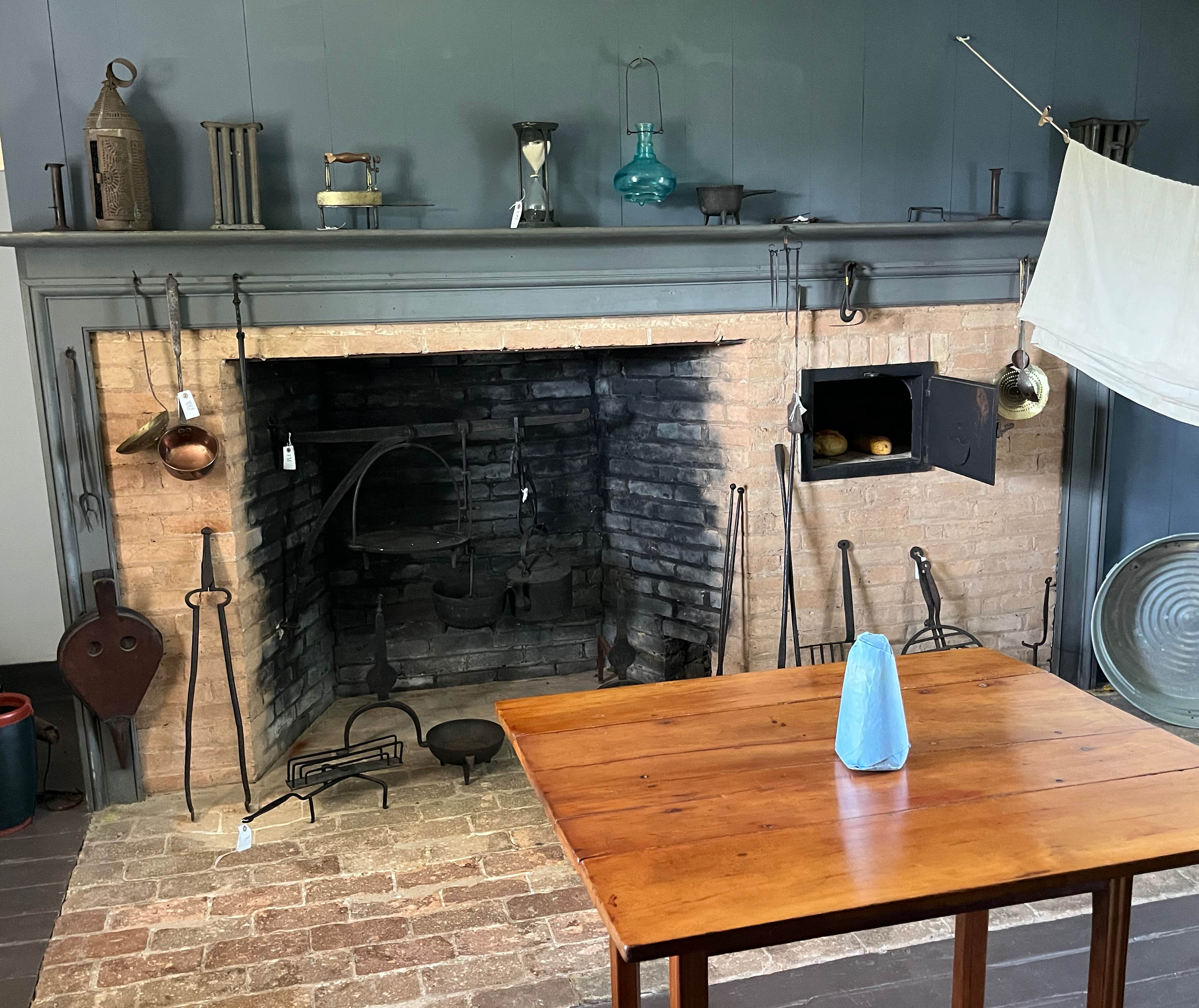
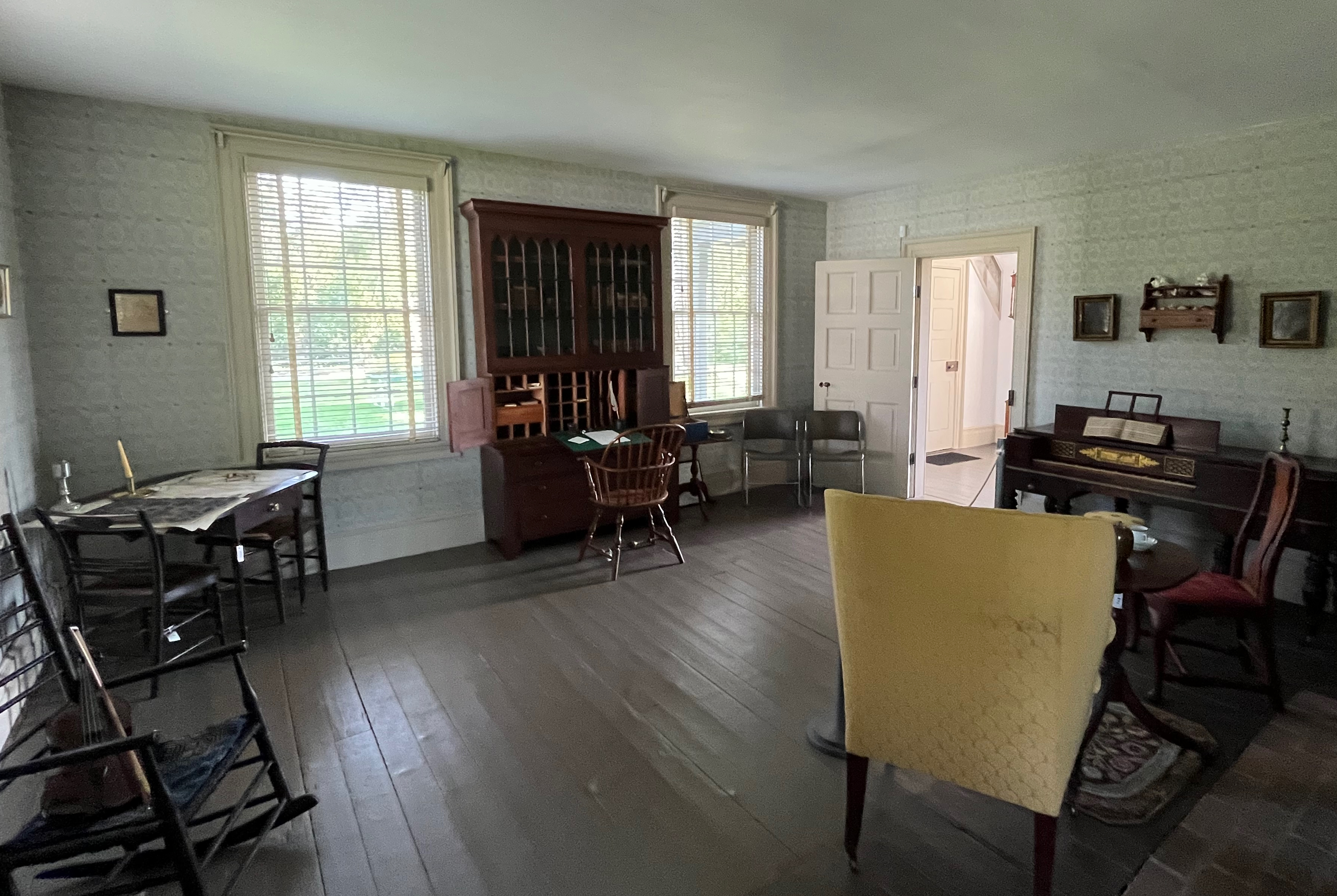
In addition to the Historic Indian Agency House itself, the property features a fascinating museum filled with vintage images and historical objects that interpret the natural and human history of the HIAH and the Portage, as well as outdoor spaces and trails that interpret the history of the Fox-Wisconsin river portage, and especially the lives of the region’s original Native American inhabitants, primarily the Ho-Chunk Nation.

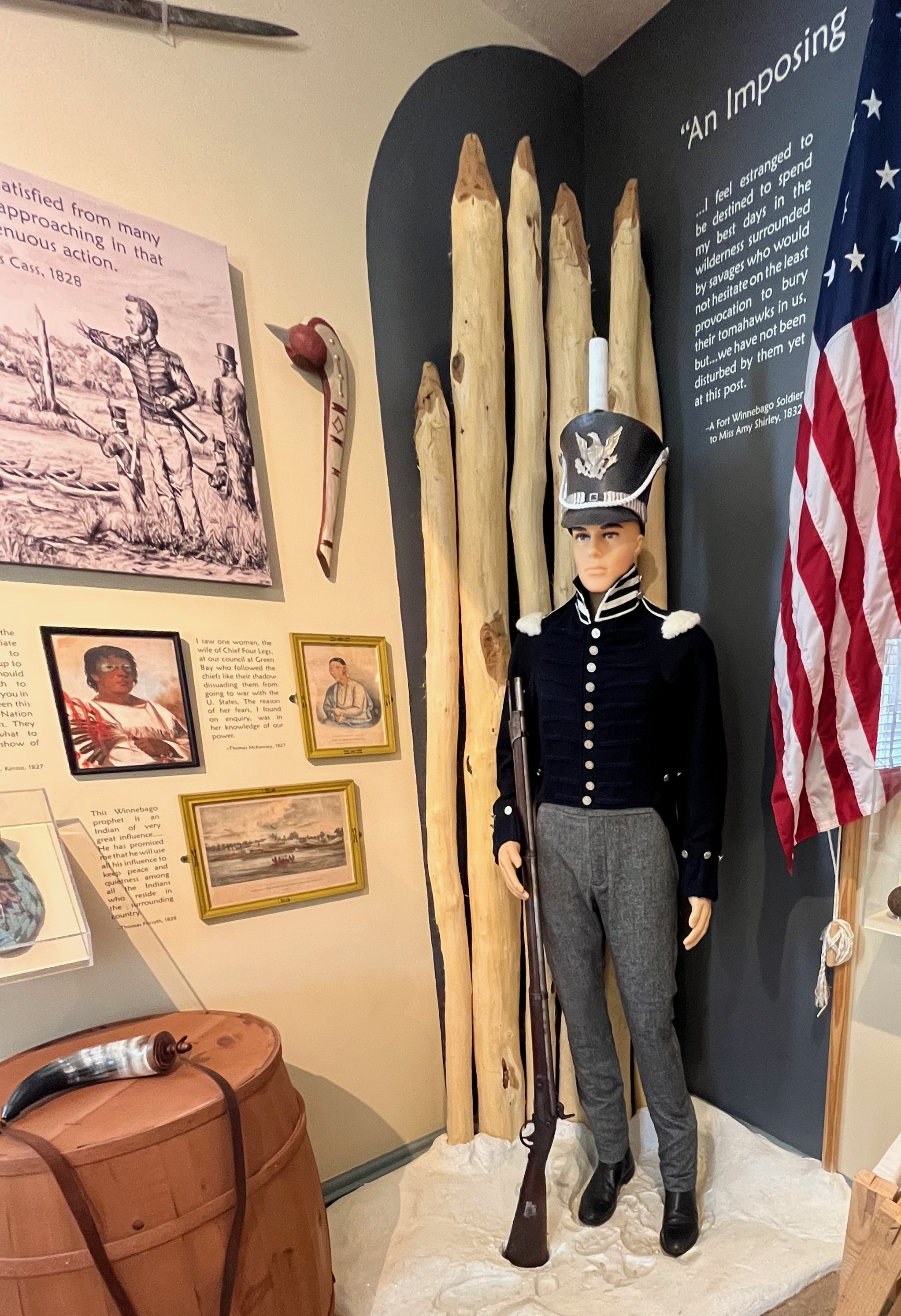


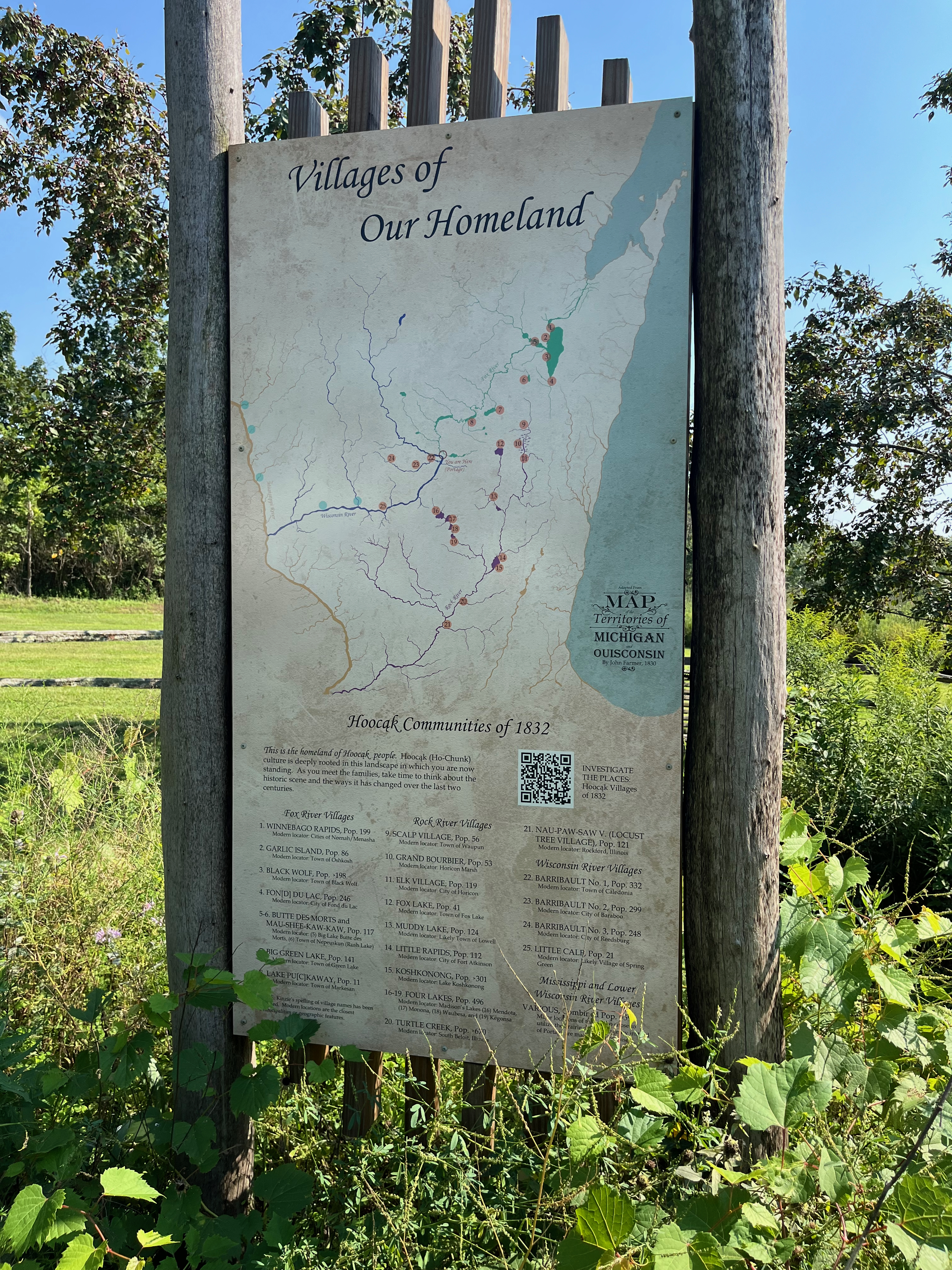
As in the 1830s, only a few hundred yards—and the Fox River—separate the Historic Indian Agency House and the Fort Winnebago Surgeons Quarters from each other. You’ll need about three minutes to make the drive from one to the other. I highly recommend a visit to both sites. Both are open for tours until mid-October. Click the links (above) for full details on each museum’s opening days and hours.
Allow yourself at least an hour to tour each site. Or, if you’re like me and you like to read all the labels, and ask questions of the excellent volunteer staff, you should allow for more time.
But that’s not all!
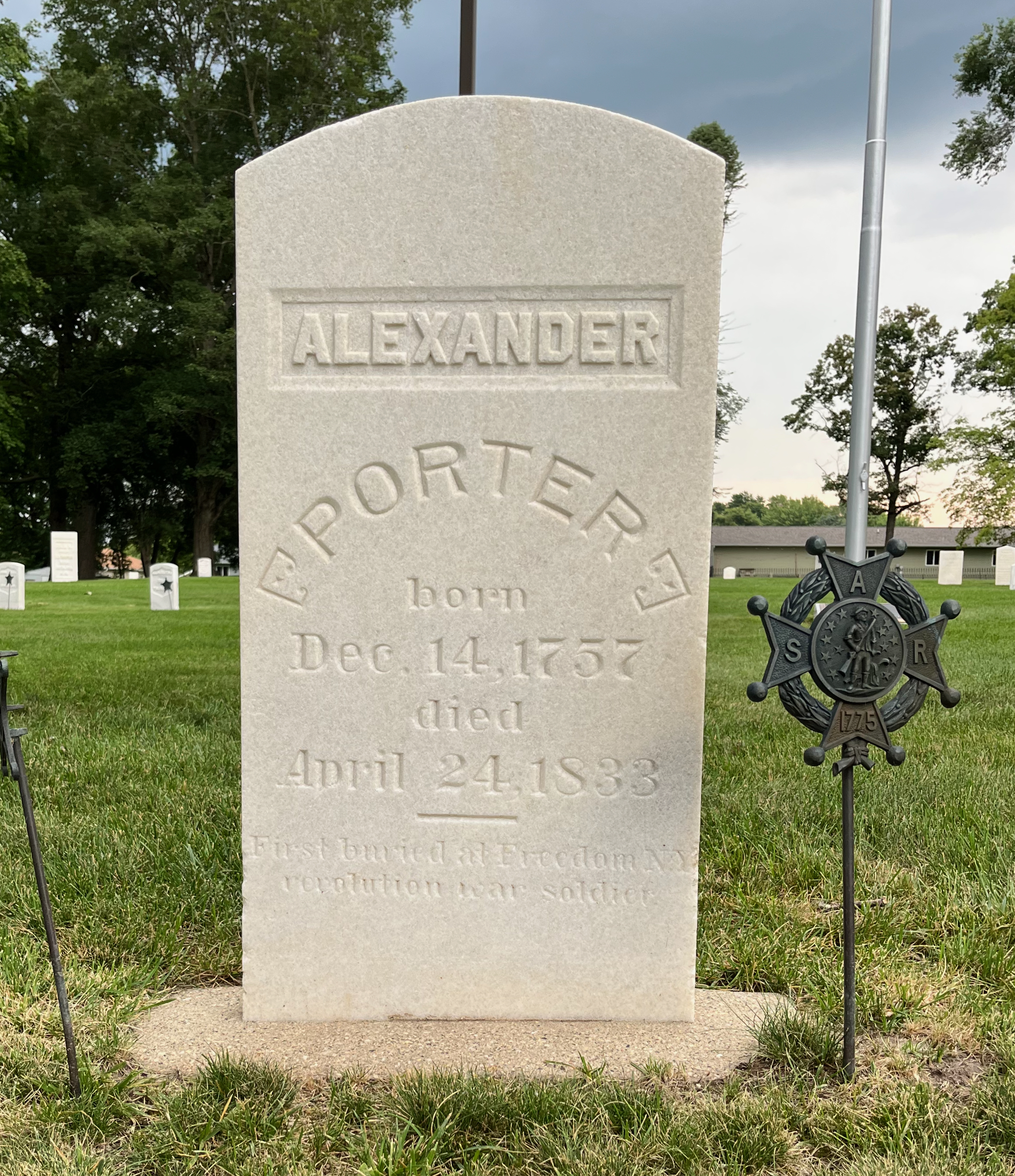
And while you’re in the neighborhood, be sure to drop by and visit the historic Old Fort Winnebago Cemetery. It’s just a quarter mile further east of entrance to the Fort Winnebago Surgeons Quarters and worth a short visit. The cemetery is open from dawn to dusk. It is a national cemetery, maintained with the support of the Wisconsin Society of the Daughters of the American Revolution, and is the final resting place of two Revolutionary War veterans as well as soldiers and civilians from other eras, including the War of 1812, the Black Hawk War, the Civil War, and the Spanish-American War. Click the link above for full details and driving information.


Comments? Questions? I really enjoy your feedback. You can “Leave a comment” (below) as part of our public history conversation, or you can use the blog’s CONTACT page to send me a private message.
I’ll be back soon with more Clark House history. See you then!
 Clark House Historian
Pingback: “Dashing through the snow…” | Clark House Historian
Pingback: Indexing. Again! | Clark House Historian