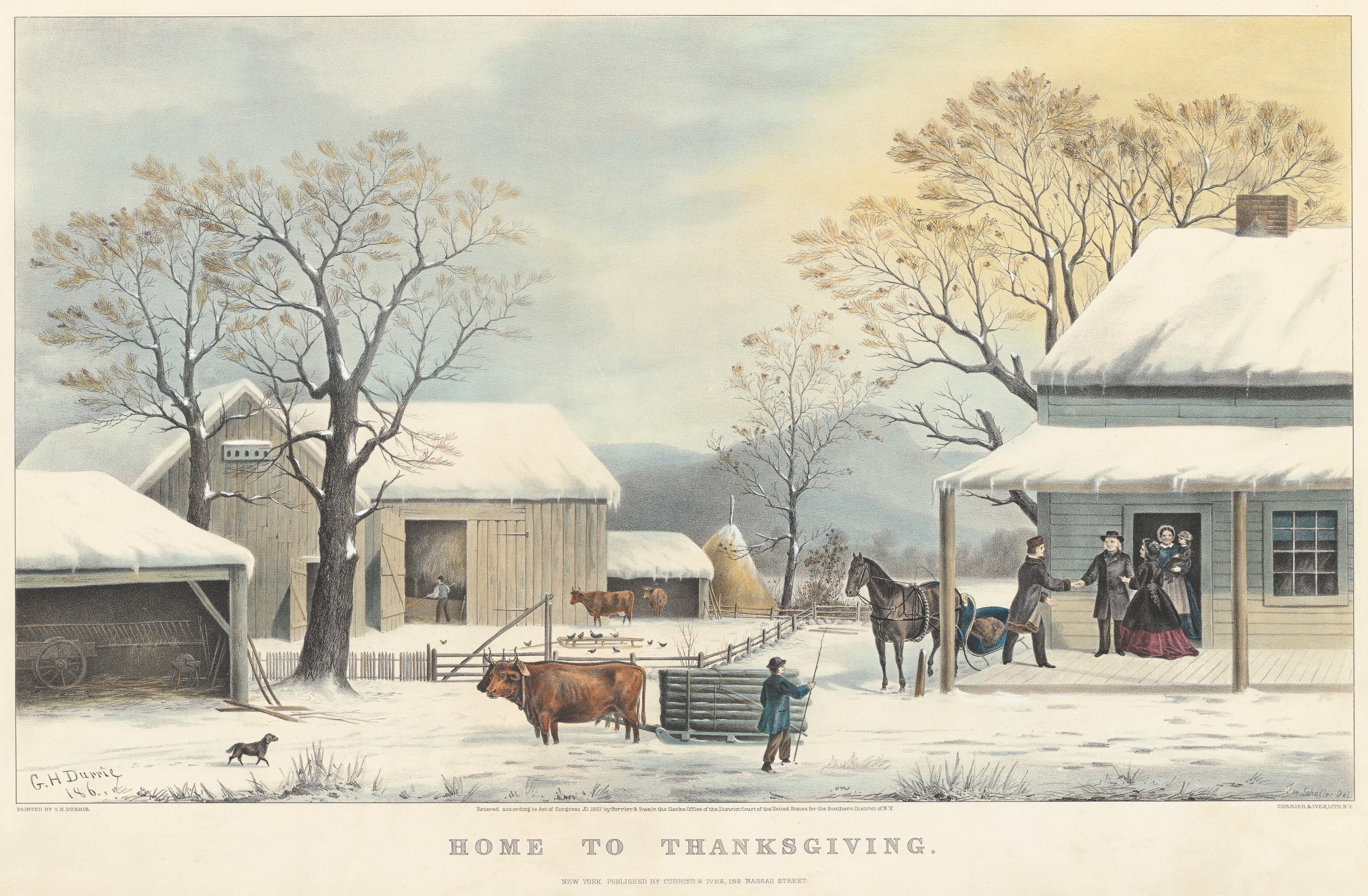
It’s Thanksgiving tomorrow, and I’m taking a few days off to spend time with family. But in the spirit of the holiday, I thought I’d reprint a lightly revised version of our now-annual Thanksgiving post, to share with you a few vintage recipes and a nice Currier & Ives lithograph from the period.1
Thanksgiving, 1867
Durrie, George H. and John Schutler, Home to Thanksgiving, ca. 1867, New York, Currier & Ives. National Gallery of Art, Collection of Mr. and Mrs. Paul Mellon. Public Domain. Click to to open larger image in a new window.
I’m behind in my writing. Sorry about that. My Clark House history research continues “behind the scenes,” but I’ve been busy with typical fall chores around the house and garden, and that’s kept me from writing, proofreading, and annotating fresh blog posts.
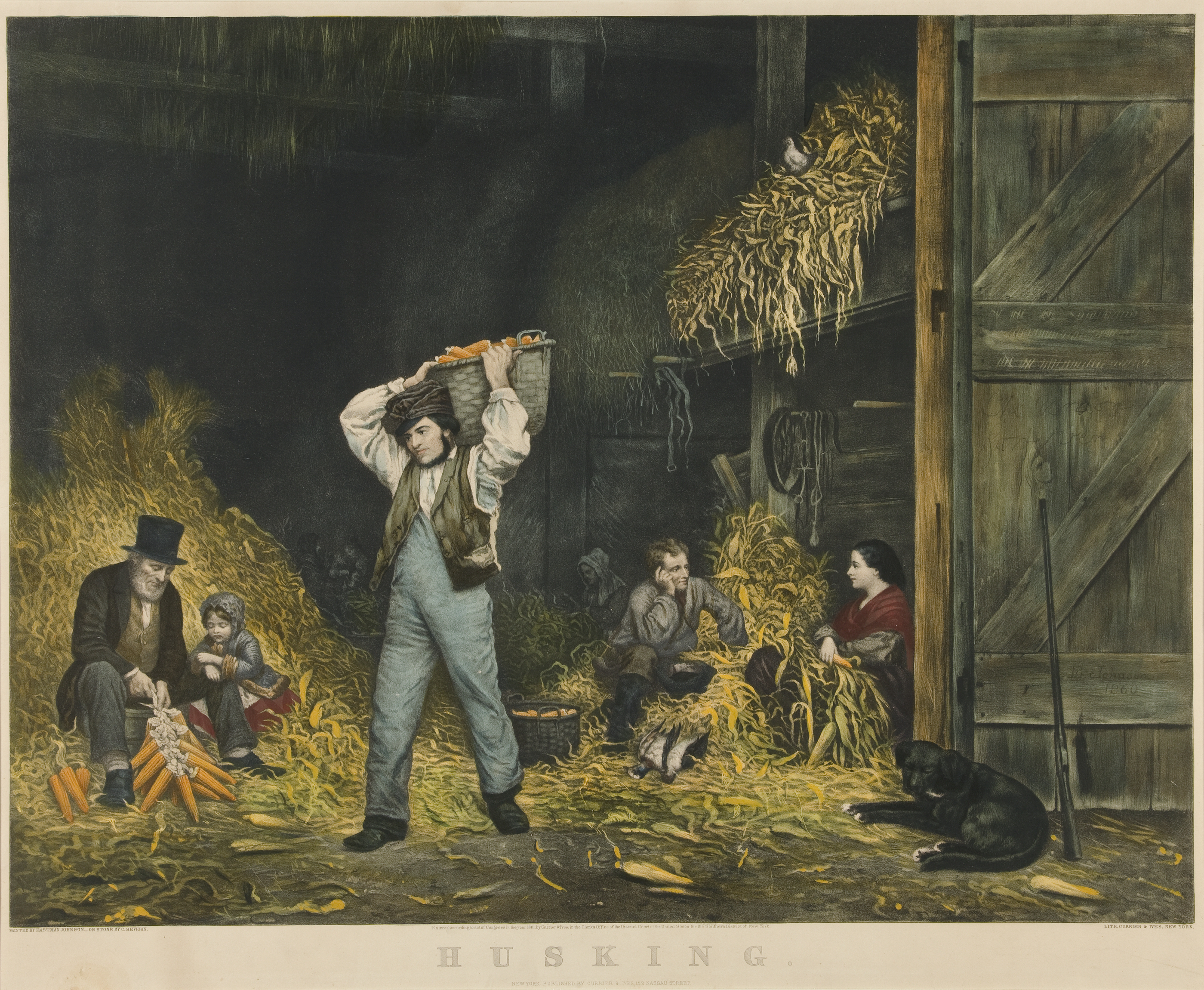
Anyway, Thanksgiving is almost here, so look for my annual holiday post (with historic recipes!) later this week. And in the meantime, let’s reflect on how thankful we should be that we don’t have to process a barn full of harvested corn by hand anymore…
Veterans Day is today. For a perspective on the day—and our early Mequon veterans—here’s a post originally published at Clark House Historian on November 11, 2016, and revised, expanded and republished several times since. For Veterans Day, 2023 I have added several new links and one new photograph.
Armistice Day
One hundred and five years ago, on the eleventh day, of the eleventh month, at the eleventh hour—Paris time—the Armistice of Compiègne took effect, officially ending the fighting on the Western Front and marking the end of World War I, the optimistically named “War to End All Wars.”
In the United States, the commemoration of the war dead and the Allied victory began in 1919 as Armistice Day, by proclamation of President Woodrow Wilson. Congress created Armistice Day as a legal holiday in 1938. Starting in 1945, a World War II veteran named Raymond Weeks proposed that the commemorations of November 11 be expanded to celebrate all veterans, living and dead. In 1954 Congress and President Eisenhower made that idea official, and this is what we commemorate today. There are many veterans with a connection to the Jonathan Clark house. We honor a few of them in this post.
Jonathan Clark, Henry Clark, and the U.S. Army
Jonathan M. Clark (1812-1857) enlisted as a Private in Company K, Fifth Regiment of the U. S. Army, and served at Ft. Howard, Michigan (later Wisconsin) Territory, from 1833 until mustering out, as Sargent Jonathan M. Clark, in 1836. In the 1830s, Fort Howard was on the nation’s northwestern frontier. Jonathan’s Co. K spent much of the summers of 1835 and 1836 cutting the military road across Wisconsin, from Ft. Howard toward Ft. Winnebago, near modern Portage, Wisconsin.
Fort Howard, Wisconsin Territory, circa 1855, from Marryat, Frederick, and State Historical Society Of Wisconsin. “An English officer’s description of Wisconsin in 1837.” Madison: Democrat Printing Company, State Printers, 1898. Library of Congress. Click to open larger image in new window.
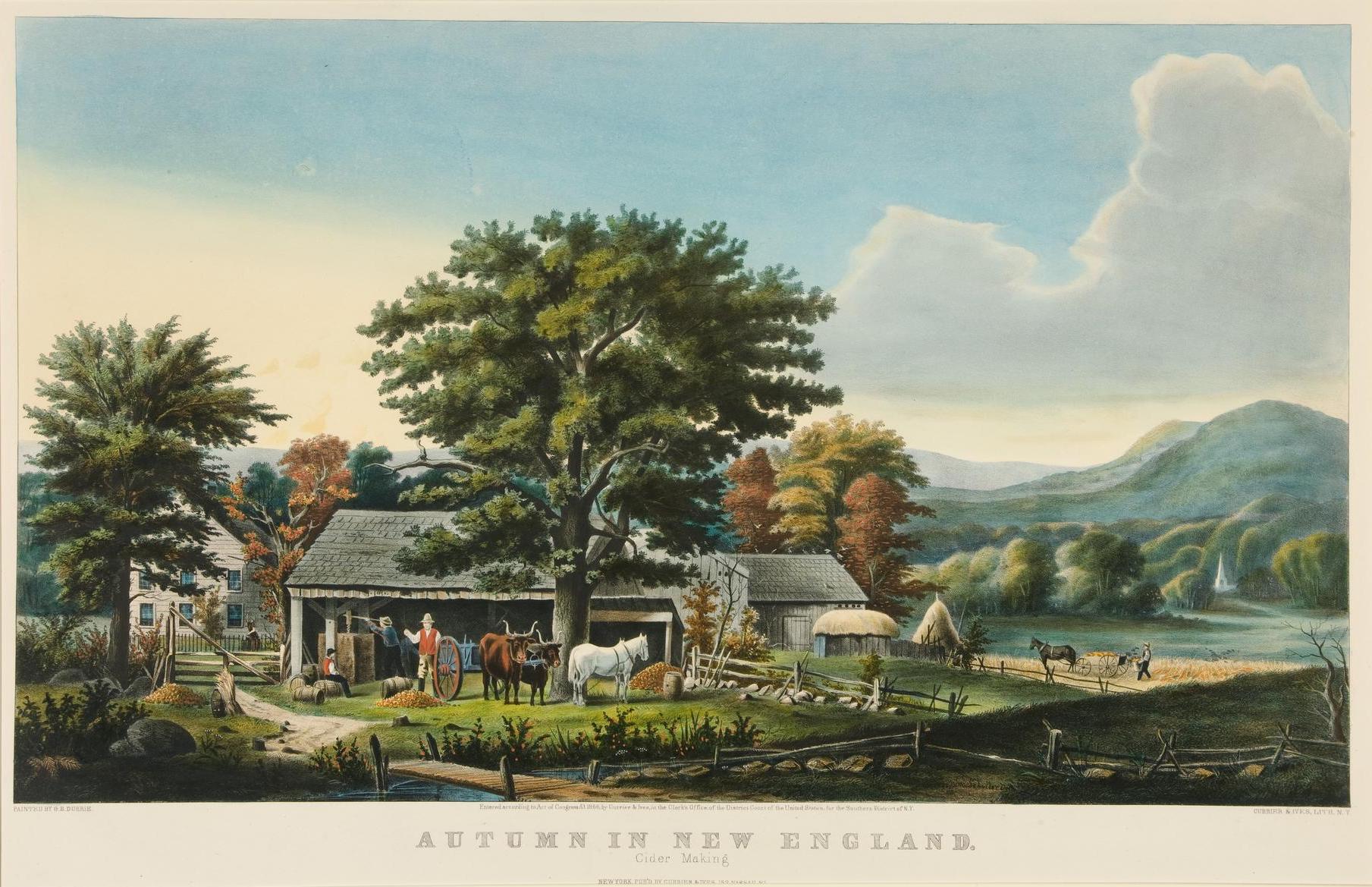
I’ve been distracted by my day job lately, and work on the Search for JMC’s Roots is progressing slowly. So while I keep chipping away at finding and organizing data from 1790s Lower Canada sources, here’s another evocative lithograph from Currier & Ives, depicting a scene that Jonathan Clark might have experienced in his youth.
I’m still reading and transcribing the various “Returns of Persons names who have taken the Oaths” that I’ve found (so far) among the Land Petitions of Lower Canada, 1764-1841. The list-making has been slow going, and nothing is quite ready for posting.
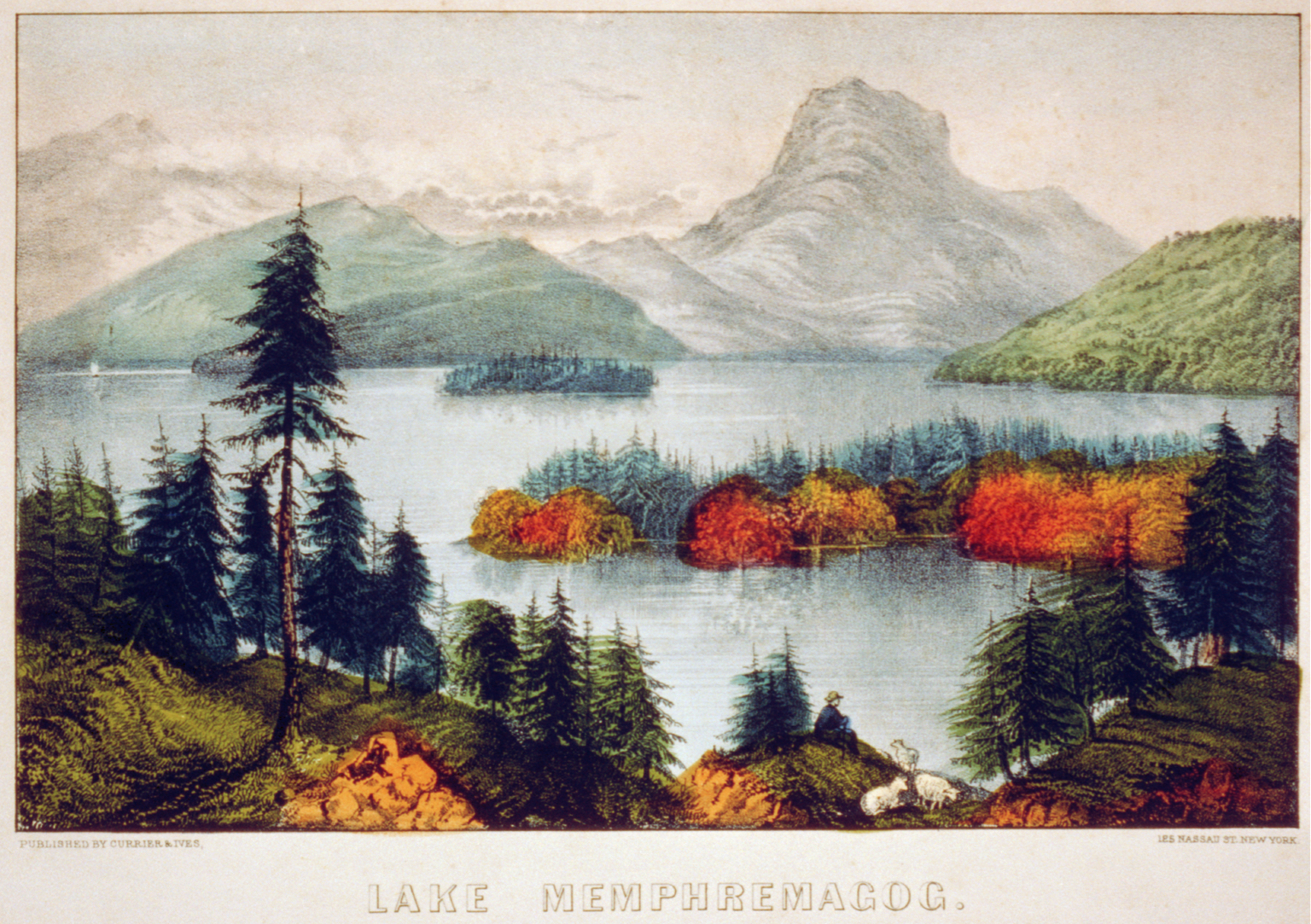
So while you’re waiting for the next installment of our “Searching for JMC’s roots” investigation, I thought you might enjoy this autumnal, hand-colored lithograph of Lake Memphremagog, looking westward across the lake from the shoreline of the northwest part of Stanstead Township—or possibly southwest Hatley Township— toward the mountain known as the Owl’s Head in Potton Township.
Recently, we examined two competing petitions seeking a grant of land for what would become the township of Stanstead, Lower Canada. The first petition was successful, the second, not. We also suspect that many, if not most, of the signers of those petitions—including more that a dozen with Clark surnames—were probably not seriously interested in obtaining Crown lands and then pioneering in the wilderness of the 1790s Eastern Townships. As we continue our search for Jonathan M. Clark’s parents or other kin in 1790s and 1800s Lower Canada and adjacent Vermont and New Hampshire, how can we identify which Clarks might be related to JMC and which are not? What were the next steps for serious prospective Lower Canada immigrants and landowners?
In reviewing the secondary literature (part 1 and part 2) I learned, in a general way, what the next steps were for bona fide immigrants to Lower Canada, people that actually intended to settle in the townships and that desired a land grant. But some of the details were a bit vague. So I went and found the government’s official proclamation outlining the new land grant policy:


 Clark House Historian